The Year in a Traveler’s Life – 2025

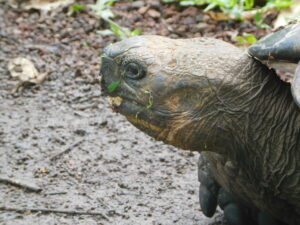
Galapagos Giant TortoiseIt’s time for my annual Year in a Traveler’s Life even though I’m not quite done traveling for the year. You can read about 2024 year here and follow the links to previous years.

I repeated my pattern of the last few years by starting off slowly. The first quarter of the year is usually kept close to home to meet Abraham Lincoln-related obligations, including the Lincoln Memorial birthday wreath laying and various Lincoln Group of DC events. March is always tight because of the Abraham Lincoln Institute Symposium held at Ford’s Theatre, which I always attend and often have introduction duties (and in 2023 was a speaker). I also was locked in front of my computer most of the spring writing Lincoln in New England: In Search of His Forgotten Tours, which is scheduled for release March 3, 2026.

April got things rolling with a road trip. The previous two years I had road tripped around New England doing research for the book. This year took me through upstate New York on my way to Vermont to attend the very first Lincoln Forum Spring Conference at Hildene, the Robert Lincoln family home in Manchester. I drove from DC up to Westfield, NY to see the statues of Lincoln and Grace Bedell, the 11-year-old girl who had written Lincoln to encourage him to grow “whiskers.” From there it was on to Buffalo for two Lincoln statues, with a quick trip over the border to Canadian Niagara Falls for the Tesla power plant (which caused some consternation with the border agent who couldn’t understand why I had driven from Virigina to spend only three hours in Canada). Next was over to Rochester for Lincoln-Frederick Douglass, around two finger lakes an on to Seneca Falls for the women’s voting rights exhibits, to Auburn for the William Seward house, to Syracuse for two Lincoln statues, and finally on to Hildene.

The rest of the spring I was writing, with a day trip to tour Rock Creek Cemetery in Washington, DC with the Lincoln Group’s ace tour guide, Craig Howell. I also joined Craig for a tour of Congressional Cemetery in October, where I got my own 15 minutes of fame touting the history of Alexander Dallas Bache. On May 30, I submitted my manuscript to the publisher!

July began a whirlwind of overseas travel. An invitation to a wedding at Oxford University provided a great excuse for the UK road trip we had been talking about for a long time. A flight to Edinburgh gave a few days in Scotland before renting a car (manual shift, left side of the road) to wiggle down through England and Wales over several days before the wedding. Mostly the trip was guided by locations of Lincoln statues, necessitating stops at an old novitiate, Manchester (I’ve been in Manchester cities in multiple states and countries now), Newport (Wales), and Bath. One of the greatest thrills was a stop along the English/Welsh border to visit the home of a famous sculptor whose double-faced Lincoln bust is one of the most unique in the world. I then had to convince the people at the American Museum and Gardens in Bath that they also had a copy, which I eventually talked the one person who knew about it into showing me in the private spaces not open to the public.

The following month really got things going. In mid-August we flew to Lima, Peru to start a Road Scholar tour. From Lima it was on to Cusco, the Sacred Valley, and Machu Picchu, where we climbed up to the terraces to get the ubiquitous photograph before hiking through the city itself. Luckily the altitude (up to 12,000 feet in Cusco) didn’t cause too much of a problem. Then it was on to Quito, Ecuador before flying out to the Galapagos Islands for a week on a boat hopping around between eight islands. Every perfect day involved a hiking trip to see birds, iguanas, sea lions, and more, plus also a snorkeling and/or kayaking trip to see them all underwater. Snorkeling with huge green sea turtles and kayaking with playful sea lions has been on my bucket list since my early marine biologist days.

The fall was busy but domestic. I attended a Lincoln statue dedication at the African American Civil War Museum in DC in September, then in November make my annual trek up to Gettysburg for the Lincoln Forum Conference, followed a week later by a longer road trip up to Massachusetts for Thanksgiving with family.

But the travel isn’t over for year. I have one short jaunt out of the country relaxing in the Bahamas over Christmas.

Which gets me to 2026.

Spring 2025 was writing Lincoln in New England, so Spring 2026 is promoting it. I have several speaking gigs already arranged and more in process, both in New England and in the DC area, that will keep me busy for several months after the March 3 release. I may go out to Springfield, Illinois for the Abraham Lincoln Association birthday symposium in February, but almost certainly will be in Illinois in June. I will definitely be in Vermont the first weekend of May as I will be on the program of the 2nd Lincoln Forum Spring Conference at Hildene. More info on that here soon.

Beyond that, I am booked on a long overseas trip that will take me first to Mongolia in September, led by a friend of mine who arranges cool trips every year. Four days after that ends I’ll start a Road Scholar tour of Southeast Asia covering Thailand, Laos, Cambodia, and Vietnam. I’m obviously not coming back to the states in between, so will be adding in a short trip, probably to Taiwan.

November will take me back to Gettysburg for the Forum. I’m sure I’ll squeeze in other shorter, domestic trips during the year, with spots like Philadelphia, New York City, Pittsburgh, and West Virginia high on my “go to” list next year. We’ll see if I hit the 5 new countries goal. I might not, since I’ve already been to Thailand and Vietnam. Still a lot of places I want to go.

I’ll have my annual Year in the Writer’s Life post up shortly before New Year’s.

[Photo of Giant Galapagos Tortoise, David J. Kent, 2025]
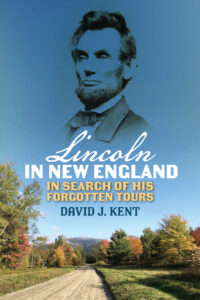
 

Lincoln in New England book cover

Coming in March 2026: Lincoln in New England: In Search of His Forgotten Tours

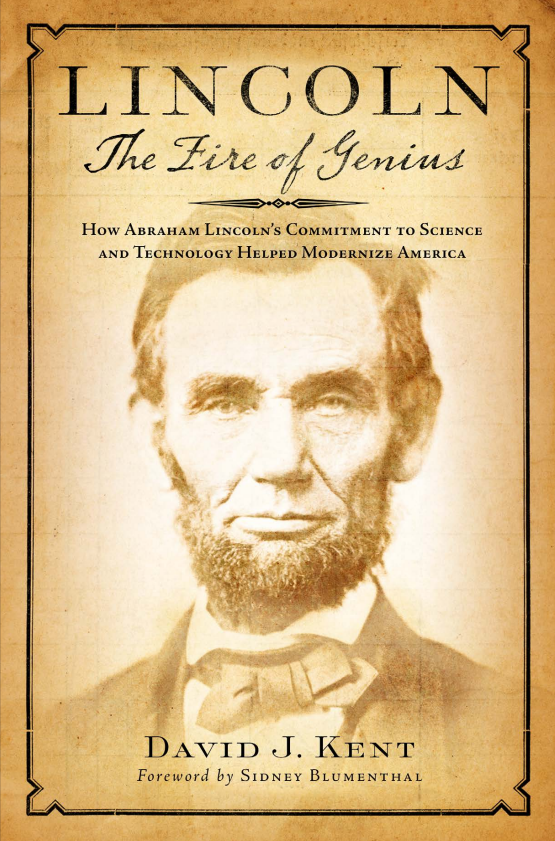
Also see – Lincoln: The Fire of Genius: How Abraham Lincoln’s Commitment to Science and Technology Helped Modernize America.

Join me on Goodreads, the database where I keep track of my reading. Please leave a review on Goodreads and Amazon if you like the book.

You also follow my author page on Facebook and on Instagram.

David J. Kent is Immediate Past President of the Lincoln Group of DC and the author of Lincoln: The Fire of Genius: How Abraham Lincoln’s Commitment to Science and Technology Helped Modernize America and Lincoln: The Man Who Saved America.

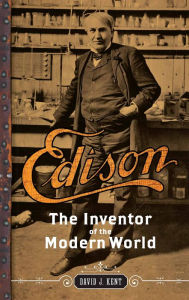
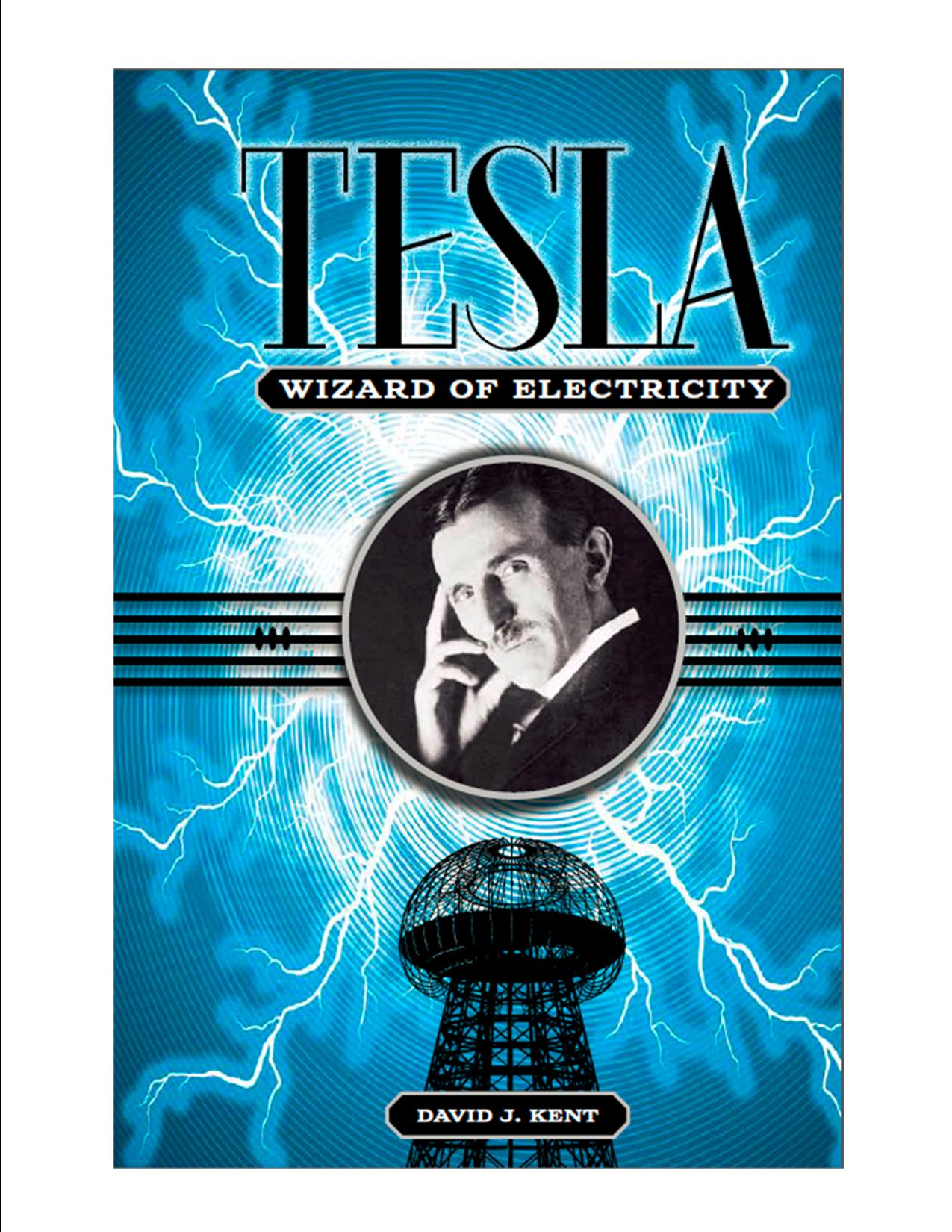
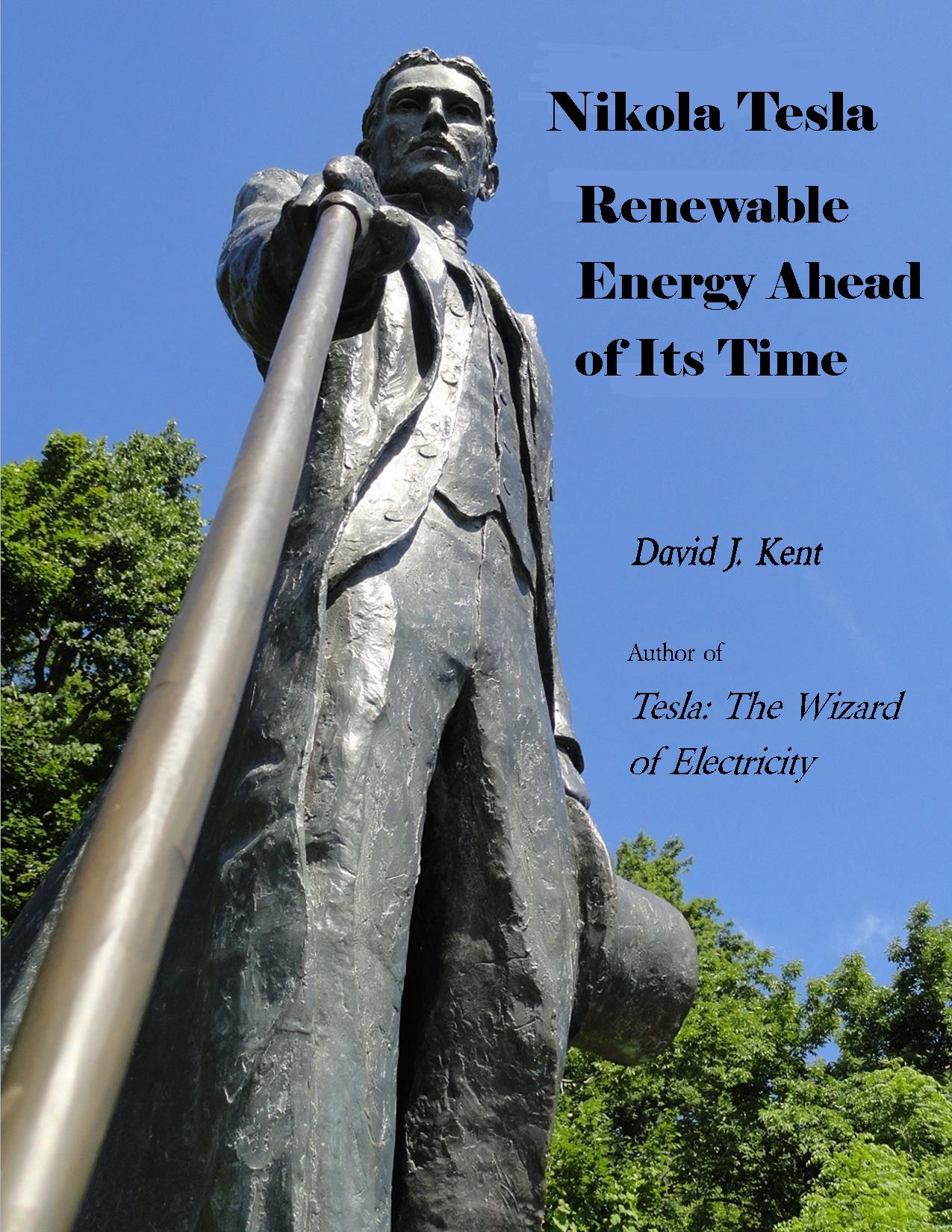
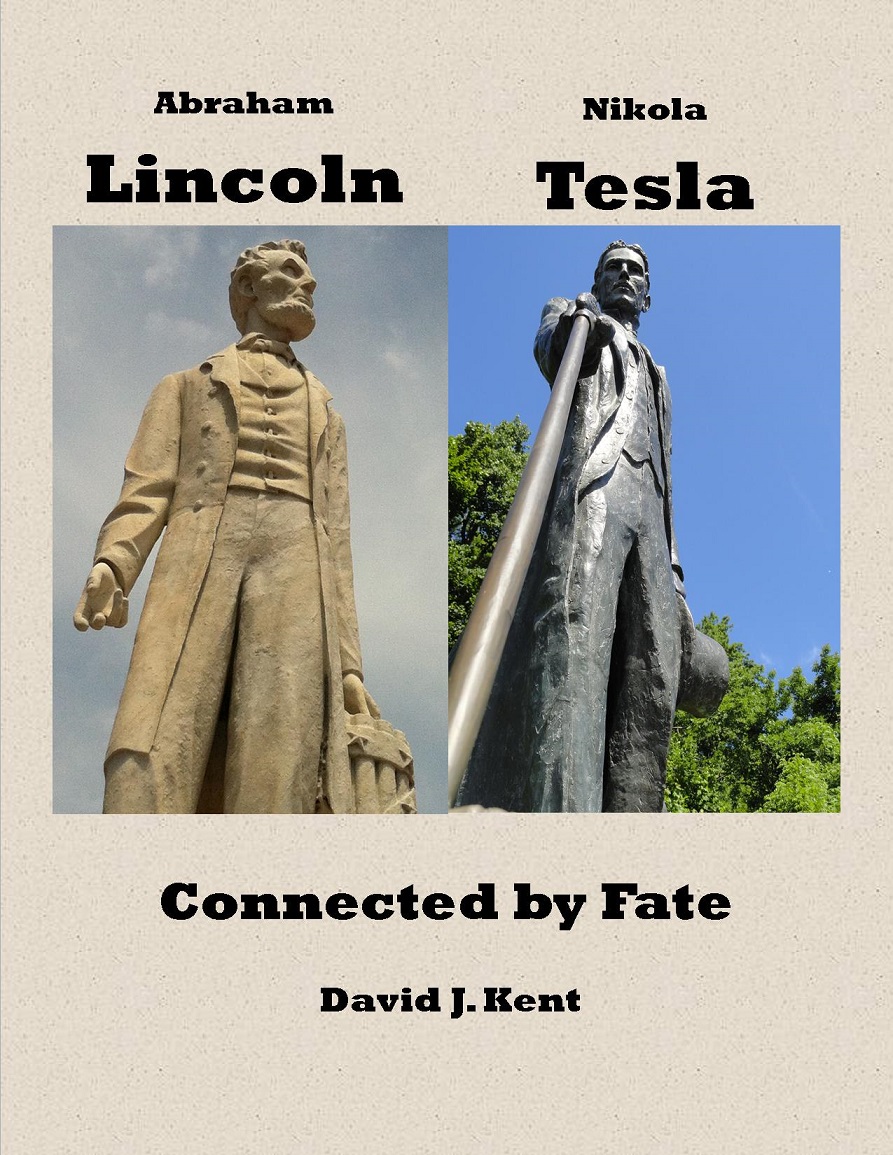
His previous books include Tesla: The Wizard of Electricity and Edison: The Inventor of the Modern World and two specialty e-books: Nikola Tesla: Renewable Energy Ahead of Its Time and Abraham Lincoln and Nikola Tesla: Connected by Fate.
Turn Right at Machu Picchu, Plus Galapagos

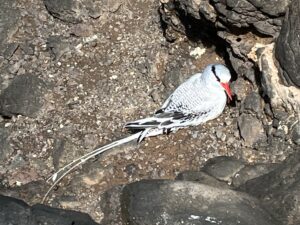
Red-billed tropicbirdI finally made it to Machu Picchu!

I had planned to go back in 2016, but that trip got punted in favor of a trip to Serbia instead (which I documented here). No problem, I thought. I’ll schedule it for the next year. That didn’t happen (I went to South Korea, China, Australia, and New Zealand instead). Another 40+ countries and nine years later I finally did the Machu Picchu trip. And threw in the Galapagos Islands as a bonus.

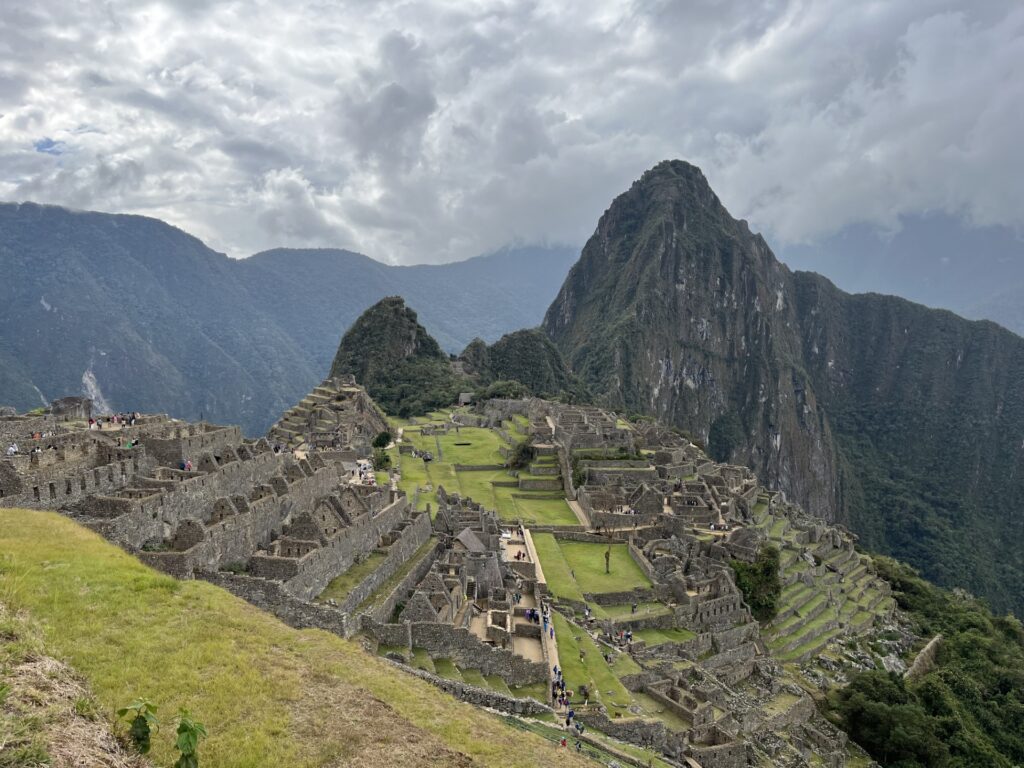
We booked a tour with Road Scholar, a 50-year-old company specializing in educational learning, which was important to us. I’ll have more details later, but here are some highlights of the trip. Joining fourteen others from around the United States, we flew first to Lima, Peru. Touring the city one day, we then flew on to Cusco, only to head out to the Sacred Valley to climb the Ollantaytambo ruins and visit an alpaca/llama/vicuna farm. After a day or so there we headed back to Ollantaytambo to take the famous rail line to Aguas Calientes (aka, Machu Picchu Village), where we spent the night. Taking the treacherous bus ride up to the Machu Picchu gate was worth it. Finally being able to stand in the iconic viewing spot to get a photo of the ancient Incan village was a dream come true. We also got to hike around the village itself and learn from a guide with traditional ancestry.

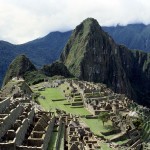
Machu Picchu

Eventually we headed back to Cusco for a couple of days, touring the city and going out to the Sacsayhuamen ruins just outside of town. In both Machu Picchu and Sacsayhuamen we got to see the amazing Incan craftmanship, with many-ton blocks of rock placed together so tightly you can’t slip a piece of paper between them. We also got to experience local Peruvian music and hear lectures on Peruvian agriculture (including 4000 varieties of potatoes and corn), Inca and pre-Inca history, and musical instruments. We even had a lesson in making ceviche.

Then it was off to Ecuador with a quick flight from Cusco to Lima and then on to Quito. After touring Quito for a day or so, we hopped on another plane, stopping in Guayaquil to refuel and trade passengers, then out to the Galapagos for the second half of the adventure. This really was two trips in one. The Peru part was all about ancient culture and civilizations. The Galapagos part was all about communing with nature.

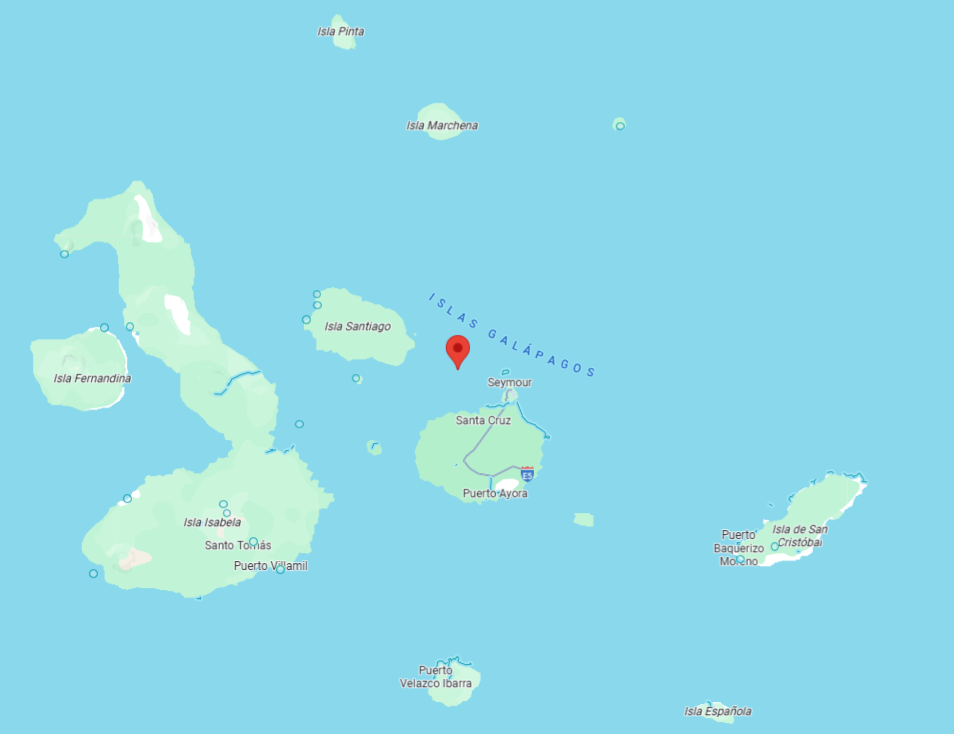
Galapagos map

In all, we visited eight Galapagos Islands in the middle and eastern part of the archipelago (there is a separate tour for the western islands). We arrived in Baltra, which is mostly airport, then spent time on Santa Cruz, the amazing bird island of Genovesa, Plaza Sur (South Island), Santa Fe, Floreana, Espanola, and San Cristobal. Mostly we were by ourselves on the islands, sometimes overlapping with another tour boat. All tours are limited to no more than 16 passengers to help protect the native flora and fauna. During the week in the Galapagos, we had plenty of opportunity to snorkel with green turtles and sea lions, kayak around the rocky inlets (often with young sea lions frolicking around us), and hiking in the bird-filled environments. There were plenty of blue-footed, red-footed, and Nazca boobies, albatross, and tons of other birds and their babies, not to mention land and marine iguanas, and unique species like lava lizards and lava herons.

It was hard to come home after 17 days on the road (and in the air and on the water), and it didn’t help that I got a bad cold upon my return. But the time spent in both Peru and Ecuador is something I’ll treasure forever.

More stories and photos coming soon.

[All photos by David J. Kent; map adapted from Google maps]

Lincoln in New England cover coming soon

Coming in March 2026: Lincoln in New England: In Search of His Forgotten Tours

Also see – Lincoln: The Fire of Genius: How Abraham Lincoln’s Commitment to Science and Technology Helped Modernize America.

Join me on Goodreads, the database where I keep track of my reading. Please leave a review on Goodreads and Amazon if you like the book.

You also follow my author page on Facebook. Also follow me on Instagram.

David J. Kent is Immediate Past President of the Lincoln Group of DC and the author of Lincoln: The Fire of Genius: How Abraham Lincoln’s Commitment to Science and Technology Helped Modernize America and Lincoln: The Man Who Saved America.

His previous books include Tesla: The Wizard of Electricity and Edison: The Inventor of the Modern World and two specialty e-books: Nikola Tesla: Renewable Energy Ahead of Its Time and Abraham Lincoln and Nikola Tesla: Connected by Fate.

Machu Picchu, or, Serbia? That is the Question

It seems I have to make a choice. The plan was to go to Machu Picchu in the Peruvian Andes in May. I even wrote a post last month, Preparing for Machu Picchu, in which I compared the area to a previous trip I made to the Argentinian Andes.

Machu Picchu

I admit I’ve been lax in following through on those preparations, some of which must be made sufficiently in advance to ensure getting in the queue. May is getting very close and arrangements are still not set.

And now a complication. The Tesla Science Foundation is planning a conference for July in Belgrade, Serbia. Attached to the conference is a 9-day trip that includes Belgrade (with a private reception with the reigning Prince and Princess), Montenegro, and Dubrovnik. I’ve always wanted to get to Serbia, and especially to the Nikola Tesla Museum in Belgrade, a place that I’ve held dear since the release of my book, Tesla: The Wizard of Electricity.

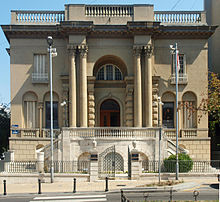
Nikola Tesla Museum, Belgrade

Logistically I can’t do both this year. Which sets up a choice. Given my dearth of organization for Peru I’m thinking that trip might best be put off until next year, and with the extra time to prepare, possibly expanded to include Lake Titicaca, northern Argentina, and Iguazu Falls. The Serbian trip would take less preparation on my part because it’s being planned by a highly skilled tour planner that also just happens to be a key player in the Tesla Science Foundation.

So this week is the time to decide all of this. I’ll let you know what happens.

David J. Kent has been a scientist for thirty-five years, is an avid science traveler, and an independent Abraham Lincoln historian. He is the author of Tesla: The Wizard of Electricity (now in its 5th printing) and two e-books: Nikola Tesla: Renewable Energy Ahead of Its Time and Abraham Lincoln and Nikola Tesla: Connected by Fate. His book on Thomas Edison is due in Barnes and Noble stores in spring 2016.

Follow me by subscribing by email on the home page.  And feel free to “Like” my Facebook author’s page and connect on LinkedIn.  Share with your friends using the buttons below.

Book Review – Turn Right at Machu Picchu by Mark Adams

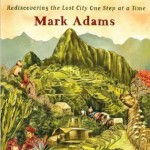
Turn Right at Machu PicchuMark Adams is an editor and writer for adventure magazines who had never done anything at all adventurous. That is, until he became obsessed with Hiram Bingham III, the Yale lecturer and explorer who discovered Machu Picchu. Adams decides to follow in the steps of Bingham, and so begins a modern trek over ancient lands.
While Bingham may have indirectly been the inspiration for Indiana Jones, Adams is led on his adventure by a guide more closely related to Crocodile Dundee. John Leivers is an Aussie who has traveled to the remotest places in the world, usually under an 80-pound backpack. With four Peruvian natives manning the mules, carrying supplies, and cooking meals as they camp in the wilds, Adams and Leivers hike to Incan ruins ignored by modern tourists but discovered by Bingham a hundred years ago.

As the story unfolds, Adams reveals that “discovered” might be somewhat of a misnomer. Still, the triad of expeditions by Bingham are brought to life through Adams’s recreation of the events and retelling of Bingham’s rather comprehensive and detailed (i.e., boring) reports. The style of the book is to interweave the author’s own personal background and trials (along with that of John and the Peruvian guides) with Bingham’s history. Also interwoven is the history of the Incas from Atahulapa (murdered by Spanish conqueror Francisco Pizarro after extracting a ransom of gold and silver) to Manco Inca’s guerrilla warfare (and escape into the mountains) to the discovery of the ruins of Vitcos, Espritu Pampa, and Machu Picchu.

The book provides a sense of the territory being traversed and the culture both of the Incas and modern Peruvians. Adams’s writing is fluid and light, laced with rye humor, and constructed in very short chapters that make the book a delightful read. It does get sluggish in a few places, most notably immediately after Machu Picchu and Adams’s return to New York, but picks up again as he makes a return trip to hike the Inca Trail. Insights into local customs, ancient rites, and modern inconveniences are knitted deftly throughout the book.

Turn Right at Machu Picchu” was recommended to me as a preview for my upcoming visit to the ancient city. I found that it aroused my curiosity and excitement for the trip. If you’re planning such a trip, or simply are interested in a good adventure tail about the area, then this is the book for you.

David J. Kent has been a scientist for thirty-five years, is an avid science traveler, and an independent Abraham Lincoln historian. He is the author of Tesla: The Wizard of Electricity (now in its 5th printing) and two e-books: Nikola Tesla: Renewable Energy Ahead of Its Time and Abraham Lincoln and Nikola Tesla: Connected by Fate. His book on Thomas Edison is due in Barnes and Noble stores in spring 2016.

Follow me by subscribing by email on the home page.  And feel free to “Like” my Facebook author’s page and connect on LinkedIn.  Share with your friends using the buttons below.

Preparing for Machu Picchu

Machu PicchuMachu Picchu is on my science traveling list for this year, so I’m doing some preparation and planning for the trip. That includes some background reading like the book, Turn Right at Machu Picchu: Rediscovering the Lost City One Step at a Time, by Mark Adams. I’m only about 20% into it so can’t comment about the quality of the book yet, but already it’s given me some ideas for the future…and brought back some cool memories of a past trip.
The author is retracing the footsteps of Hiram Bingham III, the Yale professor who is credited with discovering Machu Picchu in 1911. As with many great discoveries, there is some intrigue about whether he was the first or not and how much it was an accident of faith to find it, but that’s a story for another time. What Bingham was actually looking for was the “Lost City of the Incas.” Before stumbling on Machu Picchu he actually first found a place called Choquequirao.

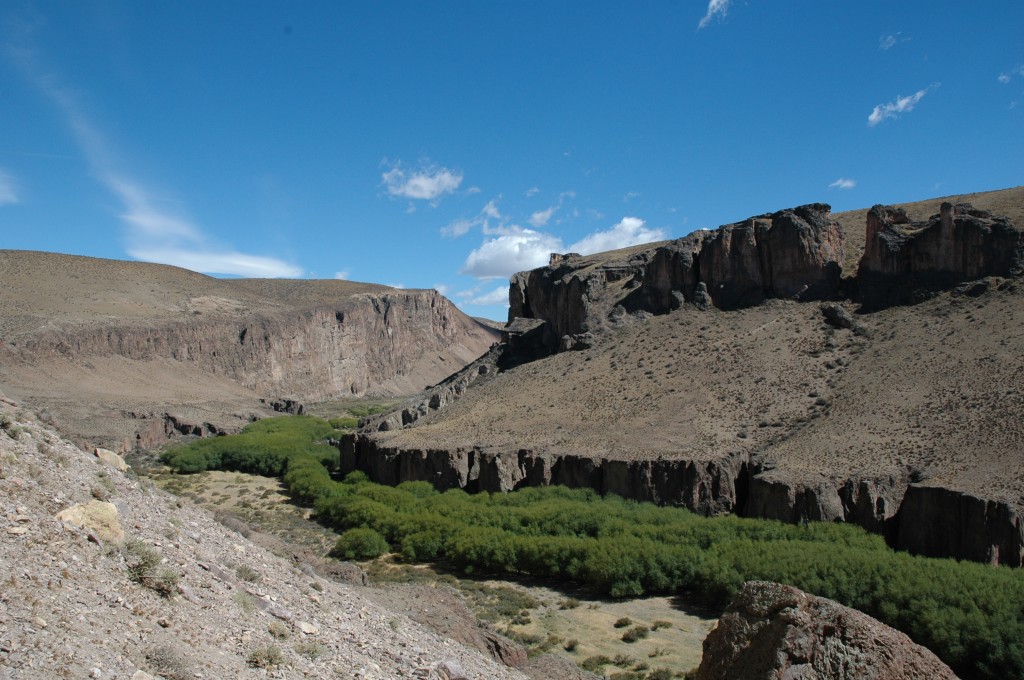
Choquequirao is considered a sister site to Machu Picchu; to this day it remains largely uncovered and undefiled by the tourist hordes. What struck me about Choquequirao was the eerily familiar approach. Adams has a photo that looks like a lot like this:

Pinturas River valley


My photo above is the approach to the Cueva de las Manos (the Cave of the Hands) in southern Patagonia, Argentina. Those are full size trees in the valley. The caption in the Adams photo says that his valley was mine on steroids – though only six miles total it took “two grueling days” of hiking down, then up. My valley was done in a long half-day, but to me it seemed no less grueling.

Reading the book gives me a taste of what to expect on the trip, as well as some fantastic background history on Inca culture and Andean geography. But it also gave me something completely unexpected – a connection to Abraham Lincoln. It seems that joining Bingham on his expedition to Choquequirao was a “well-connected young man” by the name of Clarence Hay. If that name sounds familiar it’s because Clarence Hay is the son of John Hay, the former Secretary of State to Presidents McKinley and Roosevelt – and former personal secretary to yet another president, Abraham Lincoln.

As I continue reading the book, and continue to prepare for Machu Picchu, I also find myself wanting to write more about my previous trip to Patagonia. I’ll be doing that in the near future. Until then you can read my earlier reminiscences of Patagonia here.

David J. Kent has been a scientist for thirty-five years, is an avid science traveler, and an independent Abraham Lincoln historian. He is the author of Tesla: The Wizard of Electricity (now in its 5th printing) and two e-books: Nikola Tesla: Renewable Energy Ahead of Its Time and Abraham Lincoln and Nikola Tesla: Connected by Fate. His book on Thomas Edison is due in Barnes and Noble stores in spring 2016.

Follow me by subscribing by email on the home page.  And feel free to “Like” my Facebook author’s page and connect on LinkedIn.  Share with your friends using the buttons below.