Tremont Temple Baptist Church, Boston, Massachusetts
Congressman Abraham Lincoln traveled to Massachusetts in 1848 to campaign for Zachary Taylor. The last stop on his two-week itinerary was Tremont Temple in Boston. There he would meet the man who became his most important political collaborator – and rival – William Seward. I thought of the Tremont Temple recently after seeing an article about it undergoing major renovations with the help of some former inmates.
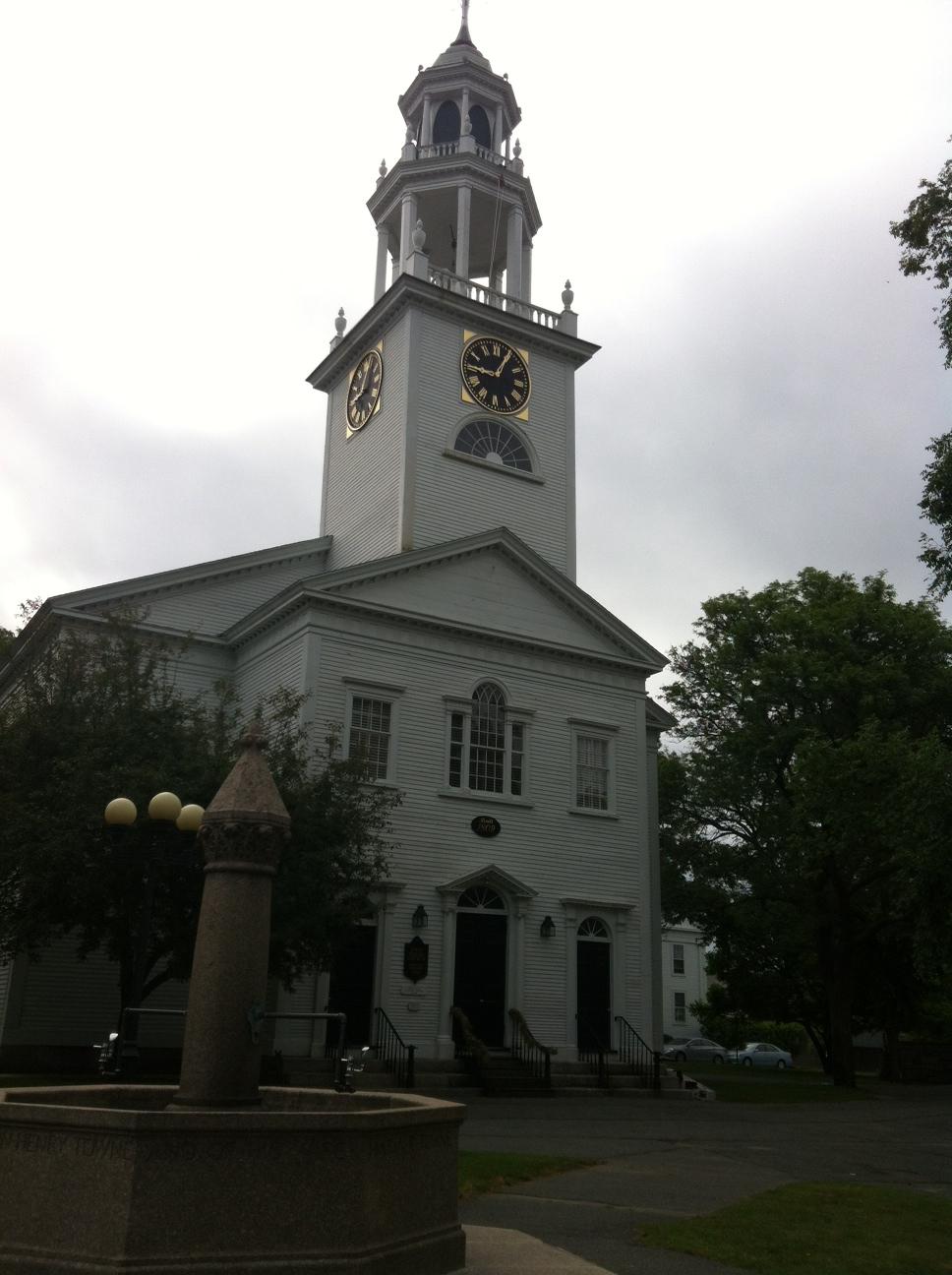
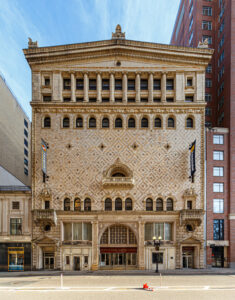
Notwithstanding its name and the building’s facade, the Temple is actually a Baptist Church. In retrospect, the Tremont Temple was a perfect location to boost Lincoln’s awareness of the growing importance of slavery to our national survival. Formed a decade before as the Free Baptist Church, it was the first integrated church in America. I visited the current building during my travels for Lincoln in New England. which was an enlarged rebuild following a series of fires in the years since Lincoln’s visit. The façade reminds me more of a Jewish Temple, but it remains the Tremont Temple Baptist Church. It was one of the first churches in America to be racially integrated. Back in 1838, an abolitionist and deacon named Timothy Gilbert, angry that his church, Charles Street Baptist, barred African Americans from sitting in the main sanctuary. forced the issue by bringing a black friend along to his pew. After the inevitable fight with church leaders, Gilbert left and started a new congregation. It grew quickly as antislavery sentiment grew in Boston, soon hosting speeches by abolitionists like William Lloyd Garrison and Frederick Douglass.
For the Whig event in 1848, the Boston Atlas listed the speakers as William Seward (the keynote), “Abram Lincoln” (despite inviting him as a sitting congressman, the papers still could not get the spelling of his name right), textile industrialist Abbott Lawrence, and Richard Fletcher (former congressman and first president of the American Statistical Association formed in Boston).
The event almost didn’t happen. Lincoln had been in Massachusetts trying to coax a runaway Whig faction called the Free Soilers to stay within the party. The Free Soil people, knowing that the Whigs were planning a huge political meeting, had rented out all the available meeting spaces. That forced the Whigs to schedule their rally for outside in Court Square between the old city hall and the courthouse. Then a deluge hit, with heavy rain making it impossible to hold a rally outside. Luckily, a Dr. Cotton released his hold on the Tremont Temple, a half block across the street from where Lincoln was staying.
Lincoln, who spoke after Seward, by now had become accustomed to his standard talking points attempting to explain why Zachary Taylor, “a man who owns…two hundred men, women, and children,” (as the Democratic-leaning Boston Post put it), was the best person to fight the “slaveocracy.” This was his last speech on the Massachusetts trip, and he was less about trying out new material than absorbing new insights for the future. Nathaniel Hawthorne later described Lincoln as having “an unmistakably Yankee look” that James Schouler thought made him seem “kinsman” to eastern men unfamiliar with Lincoln’s “fifey and shrill” voice. But at this point in his political life, Lincoln was largely unknown in the East and was treated more as a “prime example of a Sucker Whig,” that is, an entertaining hick from the west who told funny stories.
William Henry Seward, on the other hand, was already an accomplished lawyer, a former state legislator, a former New York governor, and about to be elected U.S. Senator. He was an established Whig leader and a vocal opponent of slavery, which was why he was the headliner for the evening. The comparison of the ungainly westerner with his odd southern-western drawl and unmanageable hair against Seward’s erudite eastern formality and stiffness must have been profoundly amusing to the largely learned Boston elite. Whereas Lincoln was forced to argue the inconsistency of Taylor’s Whig credentials, Seward spoke in loftier terms of “providence” and not “bow[ing] before the aristocracy of the South,” which a splinter vote for the Free Soil third party would assure. Seward argued that “all Whigs agree – that Slavery shall not be extended into any territory now free – and they are doubtless willing to go one step further – that it shall be abolished where it now exists under the immediate protection of the General Government.” He “believed in the force of moral power” and that “the time would come…when the free people would free the slaves in this country. That night in the Tremont Temple climaxed with the admittedly partisan crowd giving three hearty cheers for “Old Zach,” three more for Governor Seward, and three more for Mr. Lincoln, according to the Atlas.
While the Atlas lauded Lincoln’s speech as “powerful and convincing…which was cheered to the echo, Seward seemed less impressed. Two decades later, after the Civil War and Lincoln’s life had ended, Francis Carpenter reported Seward’s recollection of that night. In Seward’s memory, Lincoln gave a “rambling, story-telling speech, putting the audience in good humor, but avoiding any extended discussion of the slavery question.” Then there was the story that Lincoln told Seward the day after his 1848 remarks: “I have been thinking about what you said in your speech. I reckon you are right. We have got to deal with this slavery question and got to give much more attention to it hereafter than we have been doing.” Whether that conversation ever happened is debatable, but the visit did give Lincoln a lot to think about.
Now in 2025, Tremont Temple Baptist Church is getting a much-needed makeover, readying the current building for the attention it will receive next year when the nation celebrates its 250th anniversary and the Declaration of Independence. Lincoln was a huge proponent of the Declaration as an aspirational lodestar for the country. In fact, one of the places I write is for Lincoln250.org, a source for information about Lincoln’s admiration for the Declaration of Independence. Check it out.
[Adapted from Lincoln in New England: In Search of His Forgotten Tours, due for release on March 3, 2026]
[Photo of front of Tremont Temple in 2024, Kenneth C. Zirkel, Wikimedia Commons Public Domain]
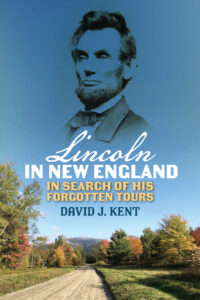
Coming in March 2026: Lincoln in New England: In Search of His Forgotten Tours
Join me on Goodreads, the database where I keep track of my reading. Please leave a review on Goodreads and Amazon if you like the book.
You also follow my author page on Facebook. Also follow me on Instagram.
David J. Kent is Immediate Past President of the Lincoln Group of DC and the author of Lincoln: The Fire of Genius: How Abraham Lincoln’s Commitment to Science and Technology Helped Modernize America and Lincoln: The Man Who Saved America.
His previous books include Tesla: The Wizard of Electricity and Edison: The Inventor of the Modern World and two specialty e-books: Nikola Tesla: Renewable Energy Ahead of Its Time and Abraham Lincoln and Nikola Tesla: Connected by Fate.
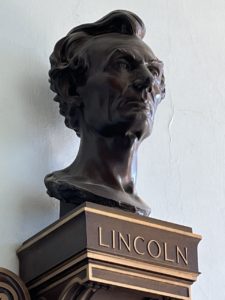 On June 11, 1848, congressman Abraham Lincoln arrived back in Washington, D.C. after having traveled all night from Philadelphia, where he attended the Whig National Convention that nominated Zachary Taylor for president. Upon his return he finds a letter from his wife Mary, who has been visiting her family in Kentucky for several months. These two events begin a campaign and a mystery.