Abraham Lincoln never traveled outside the United States other than a few hours on the Canadian side of Niagara Falls. While he had planned to after his presidency, he never traveled overseas. He definitely never went to Edinburgh or anywhere else in Scotland. And yet, Edinburgh has not only a statue of Lincoln but also other connections to our sixteenth president. I became aware of these connections during my recent Lincoln-themed road trip around the United Kingdom.
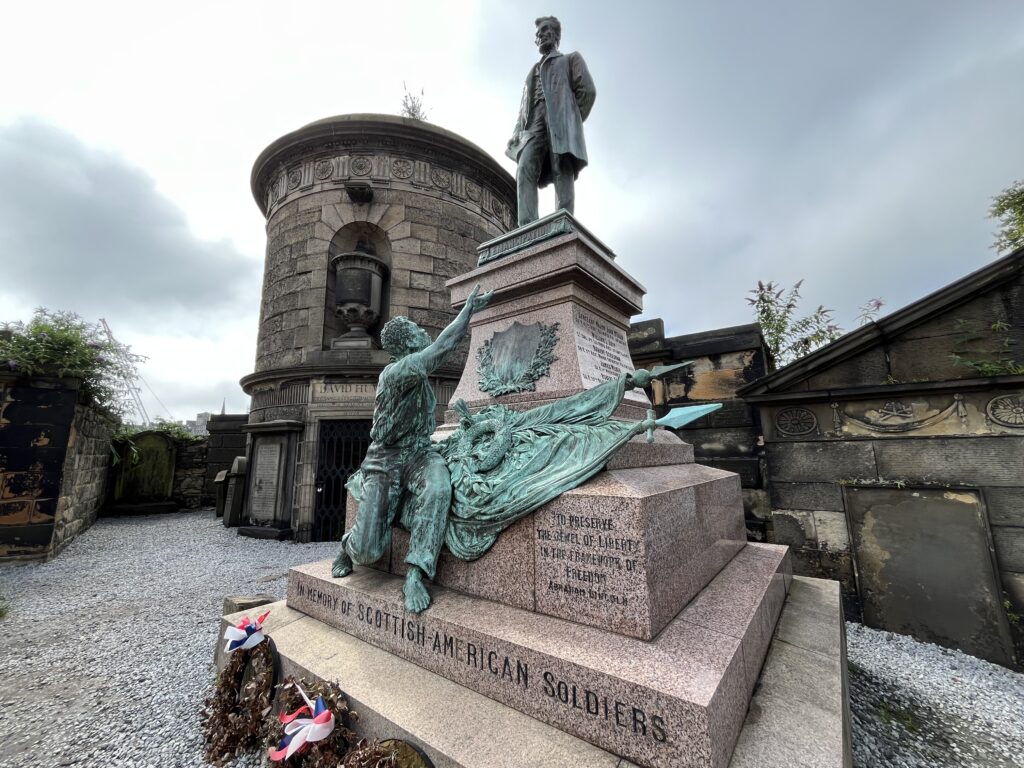
The most obvious is a grand full-length statue of Lincoln that tops the Emancipation Monument in Edinburgh’s Old Calton Burial Ground. Created by the well-known American sculptor George E. Bissell (whose bust of Lincoln sits two feet from me as I type these words), the monument also includes a second figure, a crouching, freed formerly enslaved man extending his arms in gratitude to the imposing Lincoln above him. In a sense, the juxtaposition is reminiscent of the more controversial Thomas Ball Emancipation (Freedman’s) Memorial in Washington, DC. Unlike the Ball statue, however, this figure is fully clothed and resting on furled flags, symbols of victory. This remains the only American Civil War Memorial outside the United States and is a tribute not just to Lincoln but to the memory of Scottish American soldiers who fought in the war. Unveiled in 1893, the Lincoln statue was the first life-sized statue of an American President unveiled in Europe. Philosopher David Hume’s stone tower serves as an impressive backdrop to the Lincoln monument.
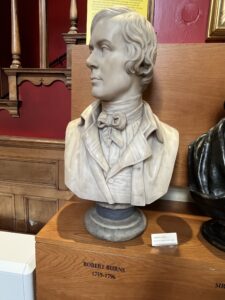 Another connection is to Robert Burns, the Scottish poet whom Lincoln had a particular fascination. Lincoln had supposedly discovered Burns from Jack Kelso, an enigmatic friend from Lincoln’s New Salem days. Kelso had emigrated to the United States from Scotland, where he had previously been a Glasgow schoolteacher. He apparently owned many volumes of Burns that Lincoln read over and over (ditto for Shakespeare). Lincoln was hooked and recited Burns from memory on many occasions through his life. Robert Burns is eminently present in Edinburgh, including a large monument at the foot of Calton Hill (not far from the aforementioned Lincoln statue). Burns is also one of the three Scottish writers featured in the Writers’ Museum tucked into Lady Stair’s Close a few steps off the Royal Mile that leads to the Edinburgh Castle. He is joined there by Robert Louis Stevenson and Sir Walter Scott.
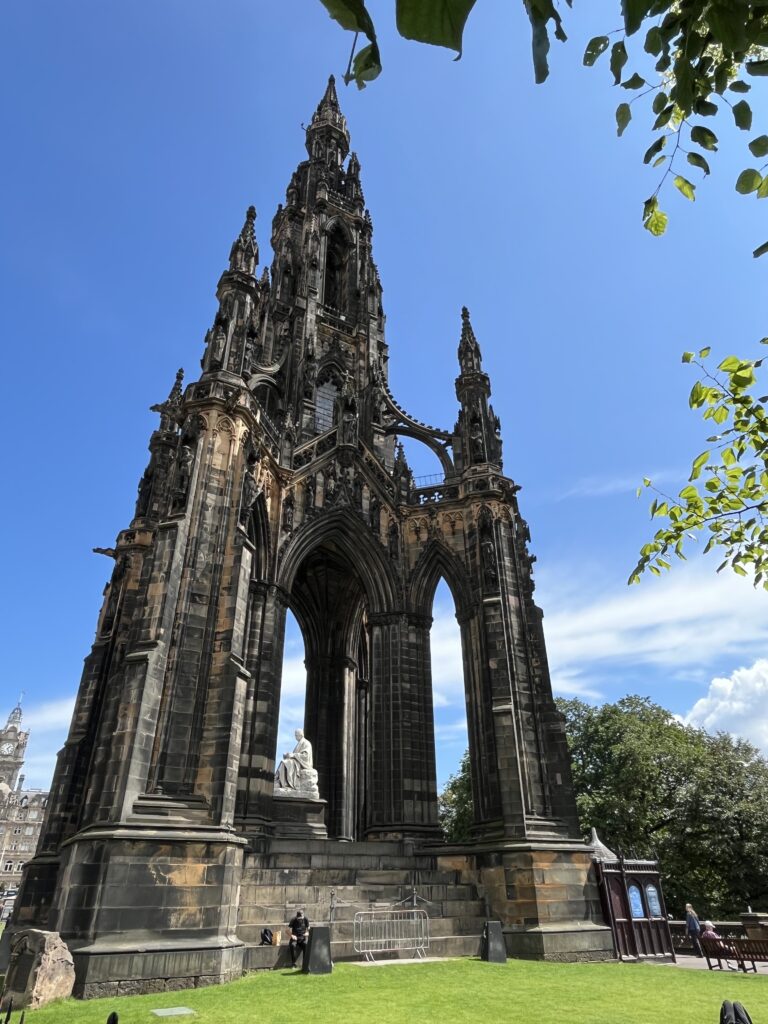
Sir Walter Scott provides yet another, albeit somewhat indirect, connection to Lincoln. The Scott Monument is a Victorian Gothic multi-towered structure that is the second-largest monument in the world to a writer. It dominates the skyline from most of Edinburgh along Princes Street near the Waverly Railway Station (named after Scott’s Waverly novels). Here’s where the Lincoln connection comes in. Way back in 1838 a man named Frederick Bailey escaped from slavery, moved briefly to New York and married Anna Murray, changing their last name to Johnson. They quickly moved on to New Bedford, Massachusetts, where they stayed with Nathan and Mary Johnson. It turns out Johnson was a common name and seeking something more distinctive, Frederick asked Nathan to help pick a new last name. Nathan was a fan of, you guessed it, Sir Walter Scott, and suggested Frederick take on the name Douglas, the name of two principal characters in Scott’s poem “The Lady of the Lake.” Frederick decided to give it a little flair and added the extra “s,” giving us the man we all know today as Frederick Douglass.
There is another, more obscure, connection to Lincoln in Scotland. During my travels I also stayed one night in an old mansion overlooking the cliffs in Dunbar on the far eastern Scottish coast. Dunbar is the birthplace of John Muir, who as I discussed in a previous post, was instrumental in making Yosemite a National Park. Lincoln, of course, had designated Yosemite as the first federal land to be set aside for protection.
I’ll have more on my Lincoln road trip through the UK in future posts, so stay tuned.
[Photos by David J. Kent, 2025]
Coming in March 2026: Lincoln in New England: In Search of His Forgotten Tours
Join me on Goodreads, the database where I keep track of my reading. Please leave a review on Goodreads and Amazon if you like the book.
You also follow my author page on Facebook. Also follow me on Instagram.
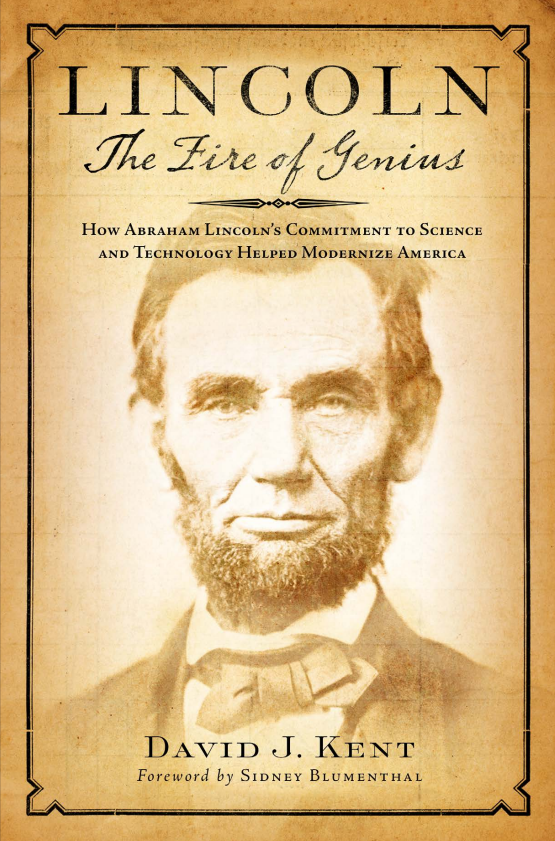
David J. Kent is Immediate Past President of the Lincoln Group of DC and the author of Lincoln: The Fire of Genius: How Abraham Lincoln’s Commitment to Science and Technology Helped Modernize America and Lincoln: The Man Who Saved America.
His previous books include Tesla: The Wizard of Electricity and Edison: The Inventor of the Modern World and two specialty e-books: Nikola Tesla: Renewable Energy Ahead of Its Time and Abraham Lincoln and Nikola Tesla: Connected by Fate.