The Big Reveal – Cover Art for Lincoln in New England

In my last post I teased “the big reveal,” the cover for my new book, Lincoln in New England: In Search of His Forgotten Tours. The time has come for that reveal.

As I mentioned, the cover is brilliantly colored. And it has a picture of Lincoln on it! Okay, that’s no big surprise. It’s basically a commandment written on stone tablets that any book on Abraham Lincoln must have a picture of Lincoln on the cover. I’ll explain more about the book below the photo, but without further ado, here’s the cover (trust me, you can hear the drum roll in your head right now):
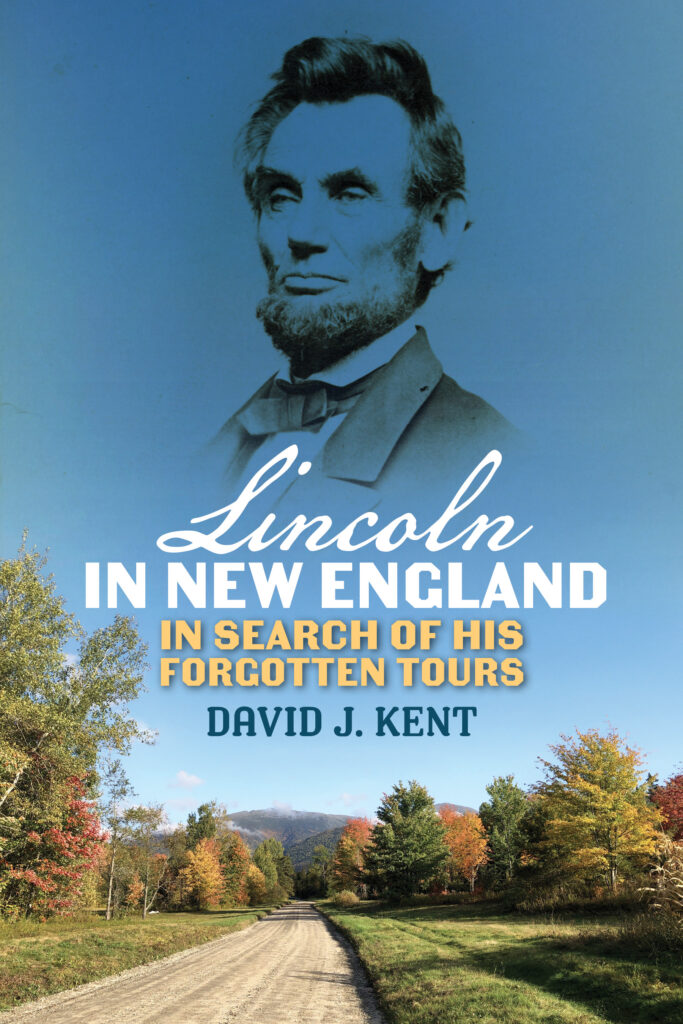
Lincoln in New England book cover

The book is in an entertaining “ride-along” style. That means you get to come along with me as I visit the places Lincoln visited on his two tours through New England. The road through the New England landscape on the cover gives a sense of the thousands of miles I drove on Lincoln’s trail while I talked with dozens of experts and locals about Lincoln’s legacy. I wrote a post describing the book that has the details (see here), but here are the highlights:

Lincoln’s first trip was in 1848. He was an awkward-looking, ungainly, westerner little known to the sophisticated East other than he supposedly told funny stories. He was serving what was his only term as a U.S. congressman but was charged with going up to Massachusetts to campaign on behalf of Zachary Taylor, the Whig nominee for president. Taylor was a strange choice for the Whigs because of his role in the Mexican War (which Whigs “very generally opposed”) and as a southern slaveholder (Whigs, at least in the North, were against expansion of slavery into the newly gained western territories). Picking Taylor caused one faction of the Whigs to split off and form their own Free Soil Party, which threatened to sink the Whig chances. While speaking in nine locations over nearly two weeks, Lincoln was exposed to even more splits in the Whig Party, Conscience vs. Cotton Whigs, and a growing abolitionist movement. He was also influenced by the great Transcendentalist writers like Henry David Thoreau, Ralph Waldo Emerson, Louisa May Alcott, and Nathaniel Hawthorne. While mostly he attracted crowds for his entertainment value, Lincoln came away with a more mature view of himself, his party, and the struggles that the nation faced because of slavery.

During a tumultuous decade where slavery grew to be the defining issue leading to civil war, Lincoln was out of political office. He struggled to get back into politics, losing two senate races. The second loss, however, in which he engaged in seven highly publicized debates with Stephen A. Douglas, made him a household name. That led to an invitation to his February 1860 speech at Cooper Union, an address many call “the speech that made Lincoln president.”

But the speech was just the first of what became another two-week jaunt into New England in early 1860, this time through Rhode Island, New Hampshire, and Connecticut. No longer an unknown and occurring two months before the new Republican Party held its convention to pick a nominee, Lincoln was campaigning both for the party’s position on slavery and his own chances of gaining that nomination. He spoke in Providence and Woonsocket, RI, in four cities around Exeter, NH, where his son Robert was attending preparatory school to get into Harvard, and five stops in Connecticut, including Hartford and New Haven, where he encountered the Wide Awakes, a new grassroots organization that would help Republicans across the North. He tackled the issues of the day, most notably slavery, and was taken much more seriously than his 1848 visit, which was largely forgotten.

I had a lot of fun writing this book and traveling around my home state of Massachusetts and the other New England states where Lincoln visited. I also visited Maine and Vermont; places Lincoln never got to but became incredibly important to his nomination and his legacy. I spoke with tons of people, both experts and locals, to get a sense of how Lincoln was remembered (if at all). The book is an enjoyable ride, blending past and present, and even a bit of crystal-balling of the future. I hope you’ll join me.

Lincoln in New England: In Search of His Forgotten Tours is being published by Globe Pequot and is scheduled for release on March 3, 2026. The book is already available for pre-order, with price guarantees (if the price goes down, you’ll get the lower price). Check out the Globe Pequot page for links to Amazon, Barnes and Noble, Books-a-Million, and Bookshop, and of course, please check in with your local independent bookstore and encourage them to order the book.

I’ll be doing a grand promotion tour in the spring, so check here for my ongoing schedule. And feel free to contact me to speak at your organization.


[Lincoln in New England book cover created by Globe Pequot]
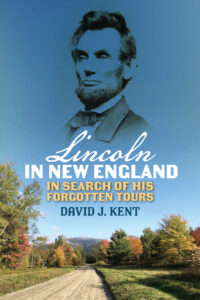
Lincoln in New England book cover

Coming in March 2026: Lincoln in New England: In Search of His Forgotten Tours

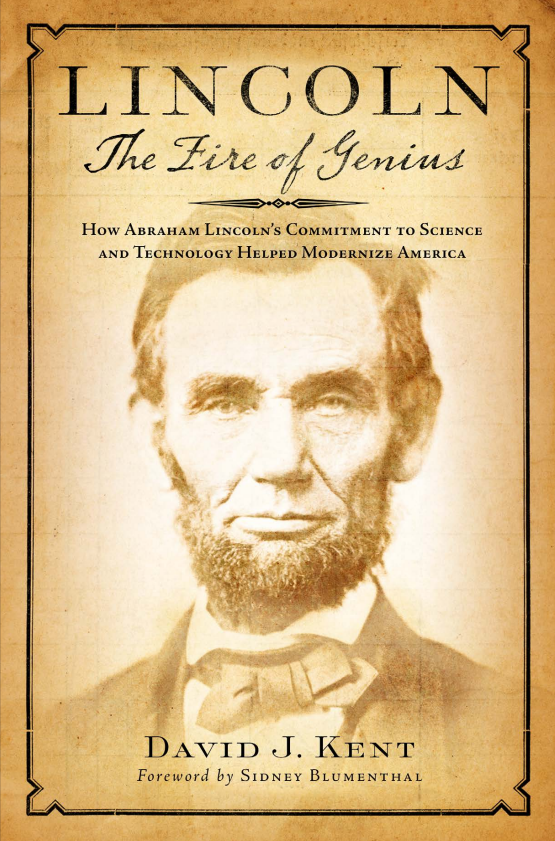
Also see – Lincoln: The Fire of Genius: How Abraham Lincoln’s Commitment to Science and Technology Helped Modernize America.

Join me on Goodreads, the database where I keep track of my reading. Please leave a review on Goodreads and Amazon if you like the book.

You also follow my author page on Facebook. Also follow me on Instagram.

David J. Kent is Immediate Past President of the Lincoln Group of DC and the author of Lincoln: The Fire of Genius: How Abraham Lincoln’s Commitment to Science and Technology Helped Modernize America and Lincoln: The Man Who Saved America.

His previous books include Tesla: The Wizard of Electricity and Edison: The Inventor of the Modern World and two specialty e-books: Nikola Tesla: Renewable Energy Ahead of Its Time and Abraham Lincoln and Nikola Tesla: Connected by Fate.
Of Abraham Lincoln Statues and Lincoln in New England Cover Reveals

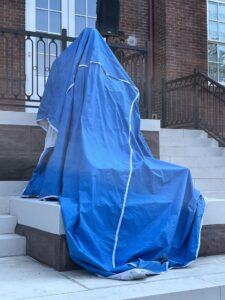
Lincoln statue under wrapsHow time flies! The list of Lincoln statues grows, I get interviewed for a documentary, more tasks accumulate, and the big Lincoln in New England cover reveal nears. And that’s just in the last week.

Let’s start with the new Abraham Lincoln statue. Yesterday, September 22, on the anniversary of Lincoln issuing the Preliminary Emancipation Proclamation, a new statue was unveiled on the steps of the African American Civil War Museum in Washington. The Lincoln Group of DC (of which I am immediate past president) was the principal organizer of the dedication event, and current LGDC president Ed Epstein deserves a huge pat on the back for his efforts to create this wonderful event. I’ve already written a piece for the Lincolnian.org blog and won’t regurgitate it here, so please take a quick hop over to this post to read all about. [But hop right back, because there’s more]

My last post on this site (the one where you’re reading this, assuming you hopped back) gave a quick overview of my recent trip to Machu Picchu and the Galapagos. I’ll have more on that trip soon. I did write about the infamous sea-faring lost shoes on my Hot White Snow blog (the personal side of the writing life), so you can catch up on that here.

Last week I was interviewed for a Civil War medicine documentary project. Before that I reviewed the final proof pages of the manuscript for my new book, Lincoln in New England, which is due out March 3, 2026, from Globe Pequot. I also reviewed the back cover text and have started reaching out to prominent historians for back cover blurbs. More on that soon.

The big news is that all the moving parts are starting to mesh and that I will be revealing the cover graphics for Lincoln in New England: In Search of His Forgotten Tours shortly.

I’ll give you a preview, of sorts, and tell you that the cover is brilliantly colored. And it has – no surprise here – a picture of Lincoln on it!

Check back soon for the big reveal!

[Photo by David J. Kent of the new Lincoln statue under wraps (or maybe it’s the Lincoln in New England book cover?)]

Lincoln in New England cover coming soon

Coming in March 2026: Lincoln in New England: In Search of His Forgotten Tours

Also see – Lincoln: The Fire of Genius: How Abraham Lincoln’s Commitment to Science and Technology Helped Modernize America.

Join me on Goodreads, the database where I keep track of my reading. Please leave a review on Goodreads and Amazon if you like the book.

You also follow my author page on Facebook. Also follow me on Instagram.

David J. Kent is Immediate Past President of the Lincoln Group of DC and the author of Lincoln: The Fire of Genius: How Abraham Lincoln’s Commitment to Science and Technology Helped Modernize America and Lincoln: The Man Who Saved America.

His previous books include Tesla: The Wizard of Electricity and Edison: The Inventor of the Modern World and two specialty e-books: Nikola Tesla: Renewable Energy Ahead of Its Time and Abraham Lincoln and Nikola Tesla: Connected by Fate.

Turn Right at Machu Picchu, Plus Galapagos

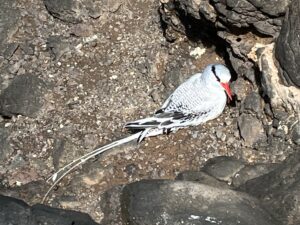
Red-billed tropicbirdI finally made it to Machu Picchu!
I had planned to go back in 2016, but that trip got punted in favor of a trip to Serbia instead (which I documented here). No problem, I thought. I’ll schedule it for the next year. That didn’t happen (I went to South Korea, China, Australia, and New Zealand instead). Another 40+ countries and nine years later I finally did the Machu Picchu trip. And threw in the Galapagos Islands as a bonus.

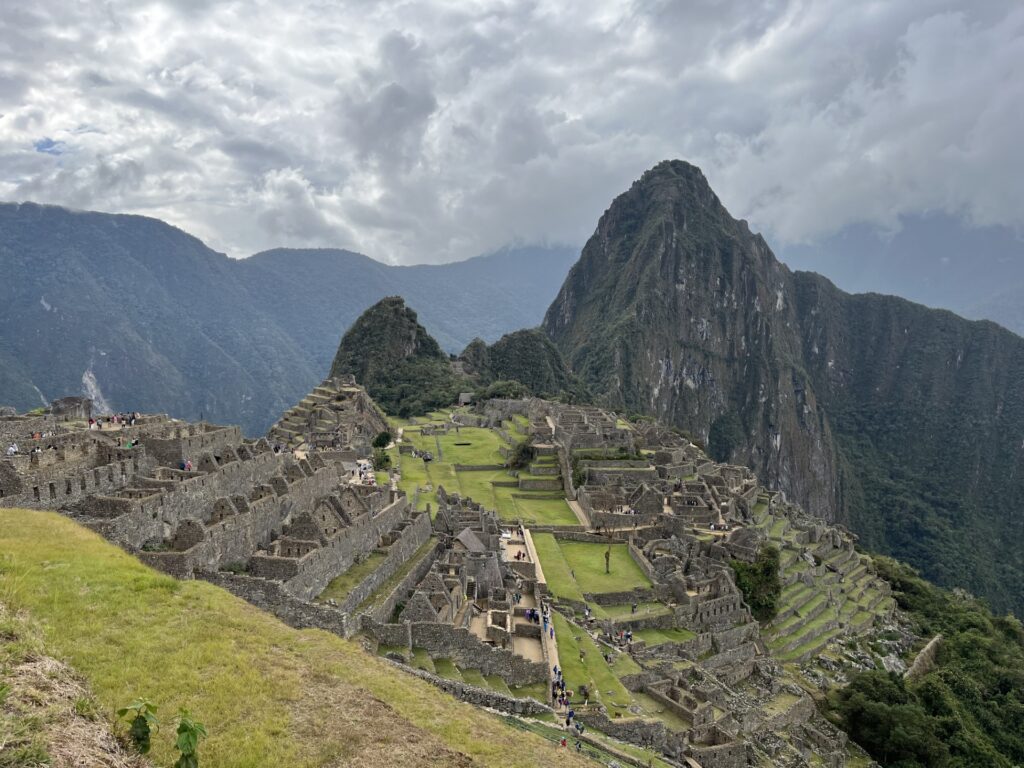
We booked a tour with Road Scholar, a 50-year-old company specializing in educational learning, which was important to us. I’ll have more details later, but here are some highlights of the trip. Joining fourteen others from around the United States, we flew first to Lima, Peru. Touring the city one day, we then flew on to Cusco, only to head out to the Sacred Valley to climb the Ollantaytambo ruins and visit an alpaca/llama/vicuna farm. After a day or so there we headed back to Ollantaytambo to take the famous rail line to Aguas Calientes (aka, Machu Picchu Village), where we spent the night. Taking the treacherous bus ride up to the Machu Picchu gate was worth it. Finally being able to stand in the iconic viewing spot to get a photo of the ancient Incan village was a dream come true. We also got to hike around the village itself and learn from a guide with traditional ancestry.

Machu Picchu

Eventually we headed back to Cusco for a couple of days, touring the city and going out to the Sacsayhuamen ruins just outside of town. In both Machu Picchu and Sacsayhuamen we got to see the amazing Incan craftmanship, with many-ton blocks of rock placed together so tightly you can’t slip a piece of paper between them. We also got to experience local Peruvian music and hear lectures on Peruvian agriculture (including 4000 varieties of potatoes and corn), Inca and pre-Inca history, and musical instruments. We even had a lesson in making ceviche.

Then it was off to Ecuador with a quick flight from Cusco to Lima and then on to Quito. After touring Quito for a day or so, we hopped on another plane, stopping in Guayaquil to refuel and trade passengers, then out to the Galapagos for the second half of the adventure. This really was two trips in one. The Peru part was all about ancient culture and civilizations. The Galapagos part was all about communing with nature.

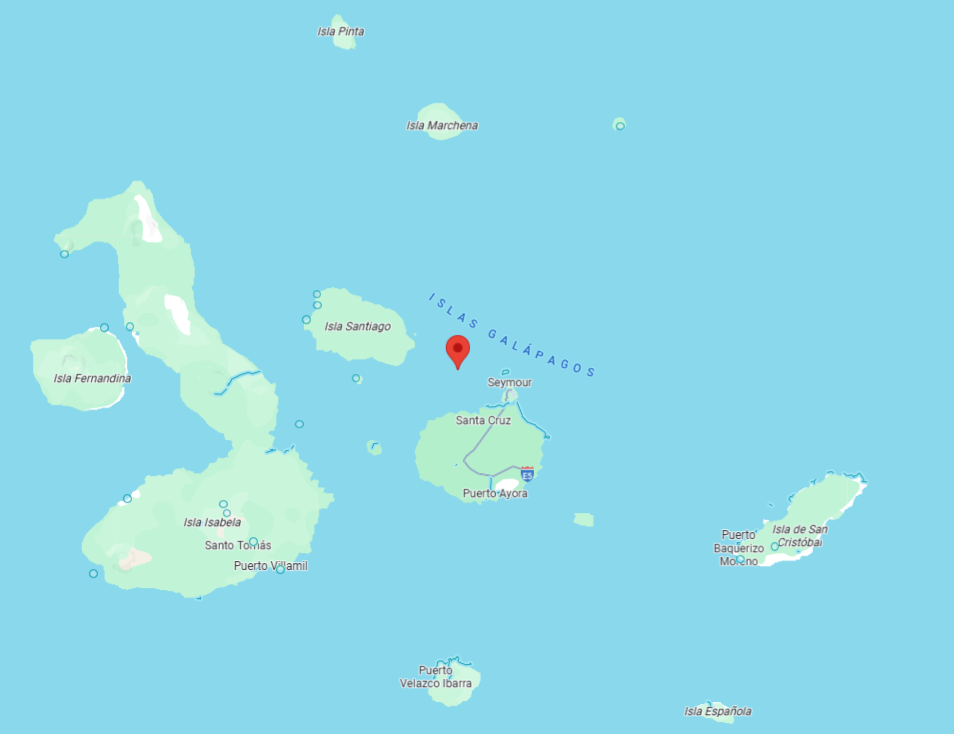
Galapagos map

In all, we visited eight Galapagos Islands in the middle and eastern part of the archipelago (there is a separate tour for the western islands). We arrived in Baltra, which is mostly airport, then spent time on Santa Cruz, the amazing bird island of Genovesa, Plaza Sur (South Island), Santa Fe, Floreana, Espanola, and San Cristobal. Mostly we were by ourselves on the islands, sometimes overlapping with another tour boat. All tours are limited to no more than 16 passengers to help protect the native flora and fauna. During the week in the Galapagos, we had plenty of opportunity to snorkel with green turtles and sea lions, kayak around the rocky inlets (often with young sea lions frolicking around us), and hiking in the bird-filled environments. There were plenty of blue-footed, red-footed, and Nazca boobies, albatross, and tons of other birds and their babies, not to mention land and marine iguanas, and unique species like lava lizards and lava herons.

It was hard to come home after 17 days on the road (and in the air and on the water), and it didn’t help that I got a bad cold upon my return. But the time spent in both Peru and Ecuador is something I’ll treasure forever.

More stories and photos coming soon.

[All photos by David J. Kent; map adapted from Google maps]

Lincoln in New England cover coming soon

Coming in March 2026: Lincoln in New England: In Search of His Forgotten Tours

Also see – Lincoln: The Fire of Genius: How Abraham Lincoln’s Commitment to Science and Technology Helped Modernize America.

Join me on Goodreads, the database where I keep track of my reading. Please leave a review on Goodreads and Amazon if you like the book.

You also follow my author page on Facebook. Also follow me on Instagram.

David J. Kent is Immediate Past President of the Lincoln Group of DC and the author of Lincoln: The Fire of Genius: How Abraham Lincoln’s Commitment to Science and Technology Helped Modernize America and Lincoln: The Man Who Saved America.

His previous books include Tesla: The Wizard of Electricity and Edison: The Inventor of the Modern World and two specialty e-books: Nikola Tesla: Renewable Energy Ahead of Its Time and Abraham Lincoln and Nikola Tesla: Connected by Fate.