 The year in a writer’s life was spectacular. My new book was released, I did tons of media, and wrote constantly, while also juggling my duties as president of the Lincoln Group of DC. Sometimes those two lives blended to the point where the line between them wasn’t so easy to determine. Adding in my year in a traveler’s life, my reading time, and my Abraham Lincoln book acquisitions, 2022 was a busy year. [See last year’s Life here]
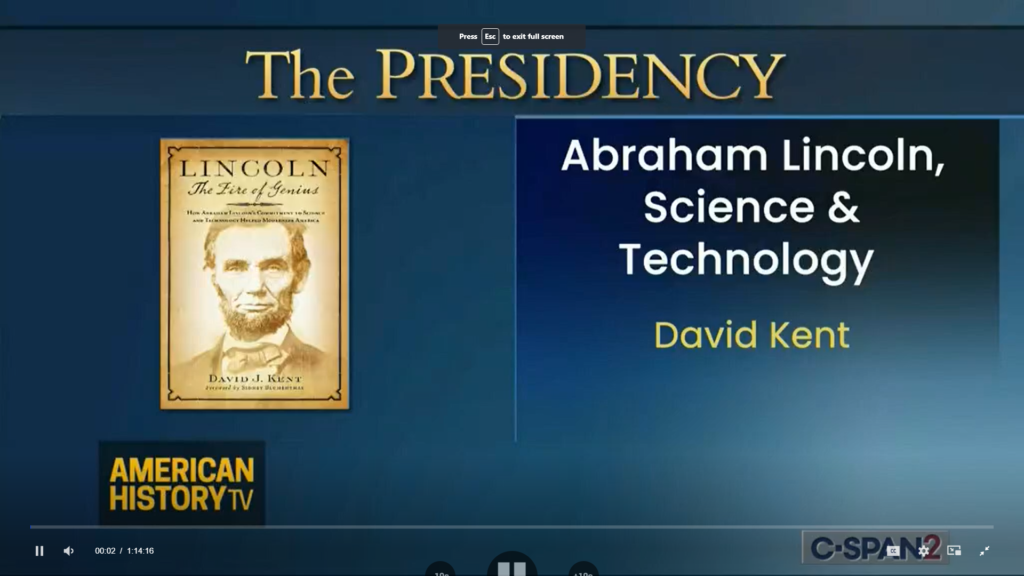
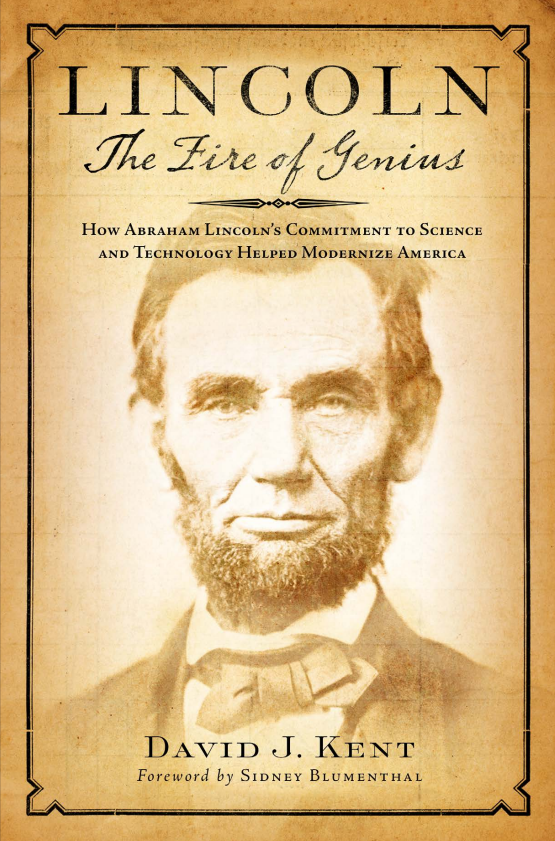
Much of my writing activity this year was driven by the release of my newest book, Lincoln: The Fire of Genius, which came out in September. Feedback on the book has been universally positive, with the public and Lincoln scholars alike praising it as “a fascinating new perspective about Lincoln’s personality and mind” and “an enjoyable dive into the type of public leaders we used to have.” One Goodreads reviewer said that he “was truly fascinated by this aspect of Lincoln that has been overshadowed by his equally notable political and military activities.” Marc Rothenberg, former Editor of the Joseph Henry Papers and Historian at the National Academy of Sciences noted:
“This is the first in-depth study of Abraham Lincoln’s interest in technology and science and how that interest impacted his life and his Presidency. As Kent demonstrates, Lincoln was a catalyst for some of that transformation wrought by science and technology.”
Harold Holzer, perhaps the most prominent and respected Lincoln historian alive, added that:
“David J. Kent has melded deep research, genuine expertise, and a fine way with an anecdote to produce a study that fills a long-missing niche in the Lincoln literature.”
Others were equally effusive. I was honored by the reception the book received from both historians and the public. I’m a bit surprised that reviews and ratings have been slow to come, but I hope that all those reading the book will leave a short note on Goodreads and Amazon and other sites so that others can be encouraged to pick up the book.
Beginning in August I gave at least 18 presentations related to Lincoln: The Fire of Genius. Some were to Lincoln groups, others to Civil War Round Tables, one was to an Arts Club. In addition, I gave many presentations, moderated many meetings, and twice gave a course on Lincoln developed for Encore Learning, an adult continuing education program based in Arlington, VA. I also was interviewed in all media formats – print, radio, podcast, and video. You can read/listen/watch some of them via links on my Media page, plus see what events I have coming up. I already have 6 presentations related to Lincoln: The Fire of Genius scheduled for the beginning of 2023, so the coming year promises to be busy as well.
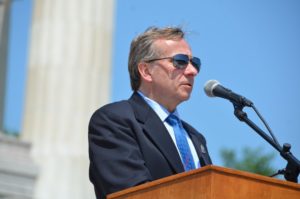
Unexpectedly, my writing life took me into the full breadth of the funeral industry in 2022. The year began normally with my representing the Lincoln Group of DC laying a wreath on Lincoln’s birthday in February at the Lincoln Memorial (which I plan to do again this year). The Memorial was also the site of the Lincoln Memorial Centennial commemoration in May, for which I was the primary organizer and served as Master of Ceremonies. Those were within the realm of activities that I’ve done before. But in June, I found myself in a funeral home hosting a special Lincoln Group meeting. There have been “presidents, vice presidents, Supreme Court justices, members of Congress, cabinet secretaries, military leaders and foreign dignitaries who were honored at Joseph Gawler’s Sons,” and they have the original coffin in which Abraham Lincoln’s last direct descendant, Robert Todd Lincoln Beckwith was held in before his cremation in 1985. In September I was invited to give a presentation at the unveiling of a new monument at Congressional Cemetery in Washington, DC. The intricate memorial honored famed Civil War photographer Mathew Brady with two large granite columbaria with inlaid photos related to Brady as well as life-size bronze statues of both Abraham Lincoln and Frederick Douglass, as well as a bronze replica of a Brady camera of the time period. Finally, in October I was in church, having been asked to give a eulogy at a memorial service for a long-time member and past president of the Lincoln Group who had passed away.
Outside of the Fire of Genius related activities, I continued to write for the quarterly Lincoln Group Lincolnian newsletter, for which I wrote eight book reviews and several shorter articles. I write constantly for the Lincolnian.org website, around 150 articles in the last couple of years. I also wrote an article for the Lincoln Forum Bulletin. Then there were dozens of articles each for this David J. Kent website and my Hot White Snow blog. Last year I mentioned that I planned to finish a Confederate Monuments book, but that took a back seat to other activities, so I’ll add it to this year’s list. There were also a couple of other writing projects I worked on, one or more of which should come out this year.
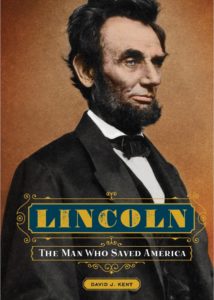
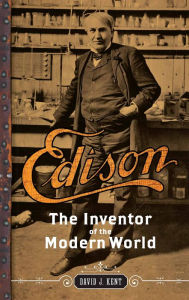
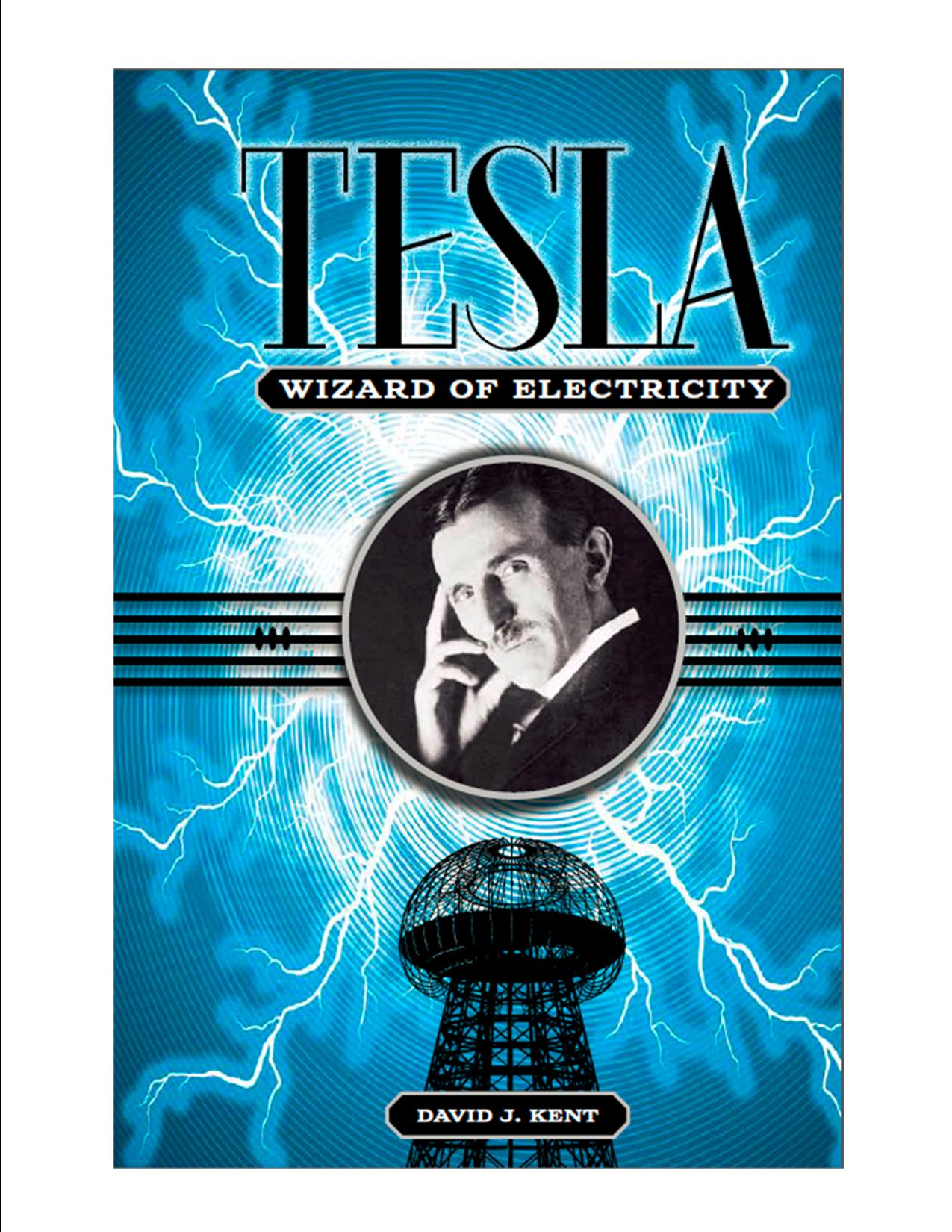
As with all writers, we survive on royalties for our work. I’m still getting royalties from my earlier traditionally published books on Nikola Tesla, Thomas Edison, and Abraham Lincoln. The graphically oriented style made them popular with the general public and with younger adult readers (and even middle schoolers). The royalties aren’t making me rich, but it’s nice to see them still dribbling in. I also receive a little bit from the two specialty e-books on Amazon, both of which I make available for a low price to bring information on Tesla and Lincoln to a wider audience. You can see the previous books and directly order the two e-books on my Buy the Books page (scroll down to see them all). Since most publishers pay out royalties only twice a year and my Fire of Genius book was released in the second half of 2022, the first chance of receiving royalties will be in May 2023.
What is the plan for 2023?
This year is set to begin as a continuation of the last with promotion related to Lincoln: The Fire of Genius. I have six presentations already scheduled for the next few months, with likely many more being added to my Media page soon. [You can also see previous videos/podcasts on the Media page]
I’ll continue to write book reviews for the Lincolnian newsletter and plan to submit to the Lincoln Herald, Journal of the Abraham Lincoln Association, and Civil War Times. There should be a review of Fire of Genius in the next issue of the latter, which also says they still want to do an excerpt. In addition to reviews, I have articles in preparation for the first two that I hope will be published this year. I’ll also be posting reviews at the Abraham Lincoln Bibliography Project.
Last year I thought I would be publishing a book related to the Confederate monument debate. It got pushed to the back burner then, but I hope to get it out this year. I’m also working on a new Tesla book that I’ll put out as a print volume on Amazon.
Of course, I’ll continue to write blog posts on Lincolnian.org, DavidJKent-Writer.com, and HotWhiteSnow.wordpress.com. And as time permits, I’ll write fiction pieces and enter writing contests.
Finally, the new work in progress I was researching last year seems to have been bumped by a new Lincoln topic. I had a conversation with my agent before the holidays who said the publisher of Fire of Genius was interested in working with me on a new book, and the ensuing discussion led me in a slightly different direction. The goal is to get a one-pager to the publisher this week so they can start doing market research, then get them a formal proposal with sample chapters this spring. Meanwhile, I have two (or even three) potential collaborations on books that may come to fore in 2023. Stay tuned!
[Photo by Bruce Guthrie, Lincoln Memorial Centennial, May 22, 2022]
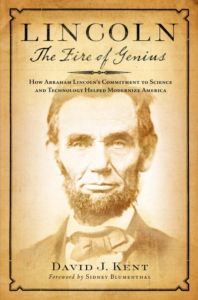
Lincoln: The Fire of Genius: How Abraham Lincoln’s Commitment to Science and Technology Helped Modernize America is available at booksellers nationwide.
Limited signed copies are available via this website. The book also listed on Goodreads, the database where I keep track of my reading. Click on the “Want to Read” button to put it on your reading list. Please leave a review on Goodreads and Amazon if you like the book.
You also follow my author page on Facebook.
David J. Kent is President of the Lincoln Group of DC and the author of Lincoln: The Fire of Genius: How Abraham Lincoln’s Commitment to Science and Technology Helped Modernize America and Lincoln: The Man Who Saved America.
His previous books include Tesla: The Wizard of Electricity and Edison: The Inventor of the Modern World and two specialty e-books: Nikola Tesla: Renewable Energy Ahead of Its Time and Abraham Lincoln and Nikola Tesla: Connected by Fate.


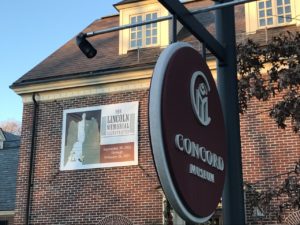 It seems Abraham Lincoln is everywhere. Our continuing “unexpected Lincoln” series takes us to Concord, Massachusetts, home of Henry David Thoreau and just steps away from “the shot heard round the world.” I stopped in Concord on a recent road trip to see a special Lincoln Memorial Centennial exhibit at Concord Museum. Not only was Lincoln there, but it turns out Concord was a hotbed of abolitionist fever – and famous thinkers so thick you couldn’t help running into one in the 1840s-50s.

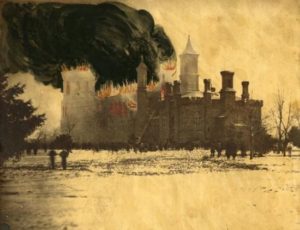 One scientific institution that Lincoln had protected and advanced during the war took a major hit on the frigid winter’s afternoon of January 24, 1865. Joseph Henry sat in his third-floor office in the Smithsonian Castle, alternatively updating his notebook and staring out the great rose window squeezed between the two front towers. Stirring, he noticed a sooty burning odor. Likewise, his daughter Mary was reading in the library until she noticed the room darkening, a thick cloud of smoke obscuring the view. The Castle was on fire!
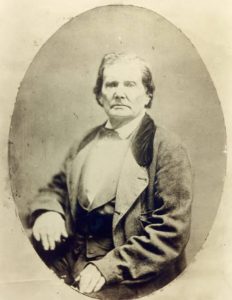 Abraham Lincoln’s father, Thomas Lincoln, died on January 17, 1851, at the ripe old age of 73. Abraham opted not to travel to see his father in his waning days, in part because they were no longer close, but also because Lincoln’s third son, Willie, had been born about a month before and his wife, Mary, was exhibiting significant post=partum sickness. I visited the Lincoln homestead and gravesite near Lerna, Illinois, a few years ago in order to learn more about Thomas and


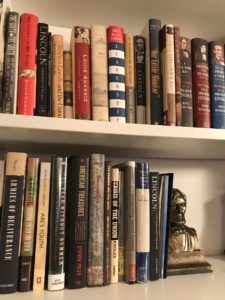 Even when I’m trying to reduce the number of books in my house I end up with more. My Abraham Lincoln book acquisition total for 2022 is 34, and that number includes some books that are Lincoln-ish. You can read about past years acquisitions by