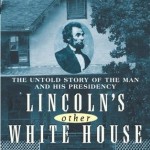
 Abraham Lincoln lived in the White House from March 1861 until his assassination in April 1865. Or did he? In fact, he spent most of the summer months of 1862 through 1864 – about a quarter of his presidency – living in the Soldier’s Home. Author Elizabeth Smith Brownstein gives us a fascinating, as well as delightful, look at Lincoln’s Other White House.
The book unfolds in two parts. The first part groups three chapters into a sort of preamble as Lincoln’s “long journey to the Soldier’s Home.” Here we find the history of the airy cottage originally belonging to the Riggs banking family but now transformed into a home for aging veterans. We also get a sense for why Lincoln was eager to escape to the home, both from the pressures of constant office seekers and from the diseases and smells permeating the capitol during the steamy summer months.
The second part is split into 15 chapters exploring a variety of issues and people Lincoln dealt with as the war raged outside his doors. Not all of the action takes place at the Soldier’s Home, but the home life is delicately interwoven throughout the stories. Brownstein brings us into the complexities of the Lincoln marriage, his interactions with various cabinet members and Generals, and the importance of his time at the Soldier’s Home during the development of the Emancipation Proclamation.
Along with discussions of Lincoln’s views on freedom and his interest in the tools of war are more unique insights. We see some of the poems on slavery that rose from the pens of such icons as Henry Wadsworth Longfellow, Herman Melville, John Greenleaf Whittier, and Walt Whitman. An occasional poet himself, no doubt Lincoln appreciated their ways with words. We also get a sense of Lincoln’s favorite storytellers, including the inimitable characters Petroleum V. Nasby, Artemus Ward, and Orpheus C. Kerr (a play on “office seeker”).
Brownstein’s writing is crisp and light. She covers a lot of territory as she hops in and out of key events and interrelationships during Lincoln’s time at the Soldier’s Home. I found it to be a delightful book indeed, and I highly recommend it to readers.
[Note: I read this book after Elizabeth Brownstein noticed that I had reviewed Matthew Pinsker’s book on the soldier’s home. I recommend both books as they provide different perspectives on Lincoln and the importance of his time there.]
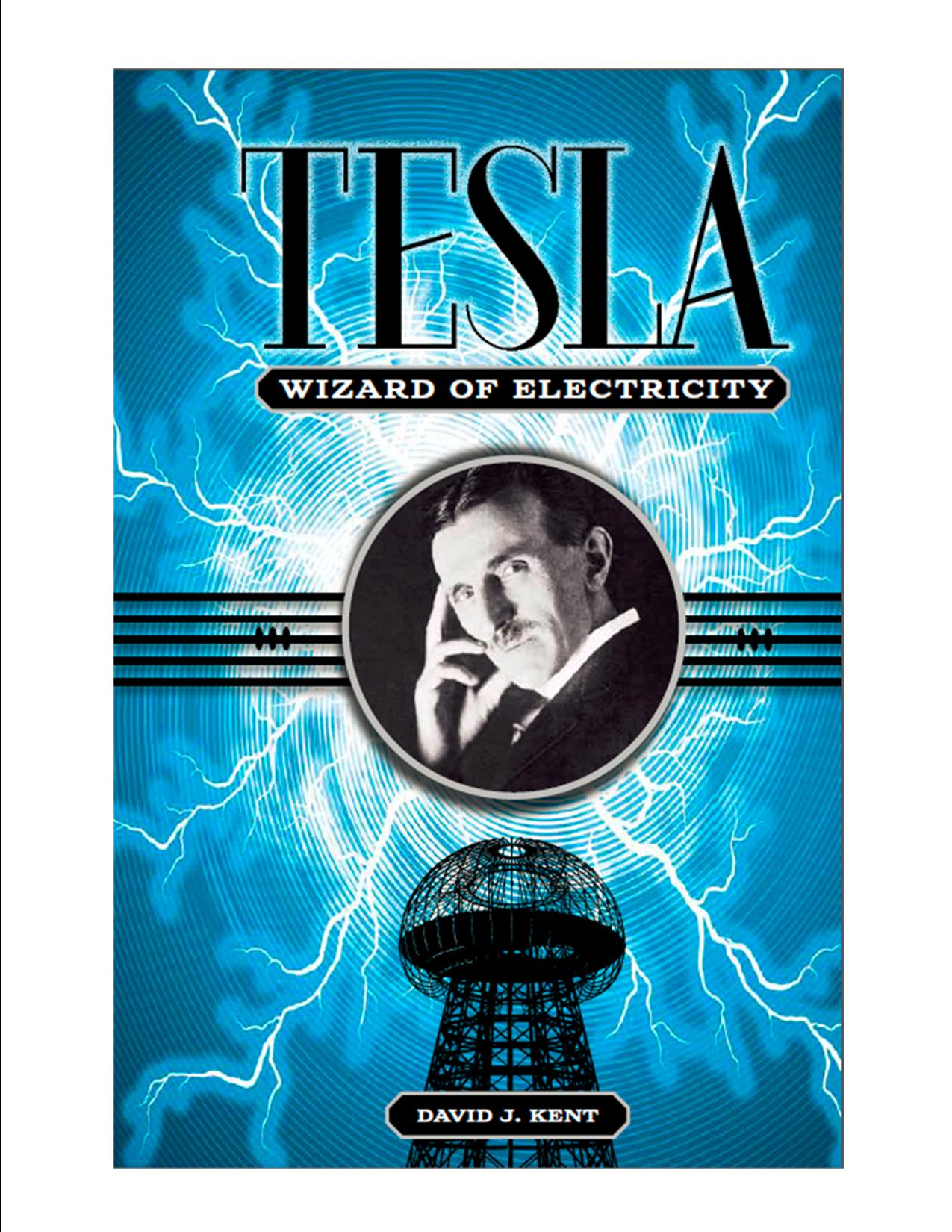
David J. Kent is an avid Lincolnophile and the author of Tesla: The Wizard of Electricity. You can order a signed copy directly from me, download the ebook at barnesandnoble.com, and find hard copies exclusively at Barnes and Noble bookstores.
Follow me by subscribing by email on the home page. And feel free to “Like” my Facebook author’s page and connect on LinkedIn. Share with your friends using the buttons below.
 This 1992 book is somewhat uneven and could have used some better editing, but it does provide some excellent insights into Abraham Lincoln’s rhetorical style. The author, Lois J. Einhorn, was an Associate Professor of Rhetoric at the State University of New York.
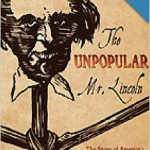 This book, The Unpopular Mr. Lincoln: The Story of America’s Most Reviled President, is a rather extraordinary look at Abraham Lincoln. And a remarkably pleasant surprise given the uncustomary view of Lincoln, as well as the providence of the author. Larry Tagg is not whom you might expect to be writing a biography of Abraham Lincoln. Some will recognize the name from the music world and Tagg’s band Bourgeois Tagg, or from his many years touring with Todd Rundgren, Hall & Oates, and opening for Robert Palmer, Belinda Carlisle and others. Now a high school English and drama teacher in California, Tagg surprises the reader with his deep understanding of Lincoln and his times. And he tackles an often overlooked and difficult facet of how Lincoln was viewed by contemporaries.
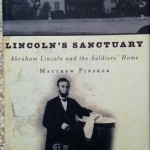 When most people think of Abraham Lincoln, they think of him toiling away in the White House, occasionally making his way to the adjoining War Department to check telegraph news from the front. Few know that Lincoln and his family actually spent much of the summers of 1862, 1863 and 1964 living at the “Soldier’s Home” and commuting daily to the White House.
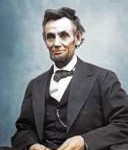 As I do research on Abraham Lincoln for a forthcoming book I periodically post reviews of some of the more interesting and relevant Lincoln scholarship. Which led me to this great book dating back to 1956 called Lincoln and the Tools of War by Robert V. Bruce.
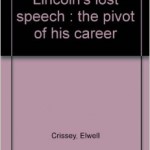 Abraham Lincoln once gave a speech that was so awe-inspiring that all the reporters there forgot to write it down. Sounds implausible, right? Ah, but it’s actually true. Elwell Crissey takes us back to May 29, 1856 with “Lincoln’s Lost Speech: The Pivot of His Career.” And despite the little problem of not having a record of the actual speech, Crissey does a great job enlivening the whole event surrounding its presentation.
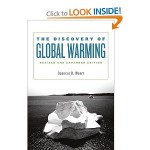 Spencer Weart takes us on a journey into the past. In The Discovery of Global Warming, Weart provides a history of the science that has now come to be known as Anthropomorphic Global Warming (AGW), or more simply, man-made climate change. And in doing so he demonstrates just how robust and voluminous is the scientific case for human induced climate change.
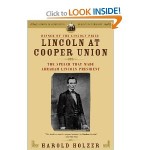 One would think the book’s subtitle “The speech that made Abraham Lincoln President,” would set up an unattainable expectation of greatness. After all, how could a book hold a candle to a great speech? Or perhaps the speech wasn’t so great after all and the author merely wanted to sell more books. And yet, I was wonderfully surprised to see that this really was an exceptional book about an exceptional speech.