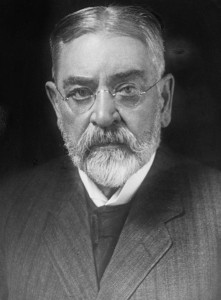
 Robert Todd Lincoln was the oldest of Abraham and Mary Lincoln’s four sons, and apparently an assassination jinx in a story that includes several presidents, Nikola Tesla, and Thomas Edison.
Robert died in 1926 after having lived to the age of 82, a longevity quite unusual for his family, as father Abraham was assassinated at the age of 56 and his mother died at 63. Robert was not only the first to be born, he was the last to die, and the only Lincoln child to even reach adulthood. Second born Eddie lived only three years, dying from tuberculosis. Then there was Willie, who died in the White House at age eleven. Thomas (Tad) managed to recover from the same sickness that took his brother in 1862, only to see his father’s life taken a few years later. Tad made it to the age of 18 before dying of heart failure, perhaps from the strain of his mother’s fragile mental state after the trauma of her husband’s demise.
Robert had many great accomplishments in his own right. He served as Secretary of War under President’s Garfield and Arthur, then minister to the United Kingdom under President Benjamin Harrison. He later became legal counsel to the Pullman railroad car company, and eventually became its president.
Perhaps the most interesting factoid is that Robert was either present or nearby at three Presidential assassinations. The first was his father’s, where he was at the White House and rushed to the Petersen House to witness his father’s last hours. Sixteen years later, while serving as Secretary of War, Robert witnessed the assassination of President Garfield at the Sixth Street train station. And if that was not enough bad luck, Robert was present at the Pan-American Exposition in Buffalo at the invitation of President William McKinley. After McKinley was shot and killed, Robert is said to have refused any further presidential invitations. I suspect Presidents also thought better about inviting him. *(See note)
President McKinley’s assassination happened six months into the second term of his presidency. The exposition was yet another World’s Fair to highlight rapidly changing technology and cultural exchange. McKinley had a busy schedule but managed to slip in a visit to the nearby Niagara Falls. After seeing the gorge with its beautiful falling waters (being careful to remain on the American side to avoid the inevitable political chatter), the President toured Goat Island where a statue of Nikola Tesla would be erected many years later.
One of the main goals of the Niagara Falls trip was to visit the hydroelectric plant, which included the alternating current generators and motors designed by Tesla. It was the alternating current from Tesla’s Niagara Falls system that lit up the entire exposition, including the centerpiece “Electric Tower” and the Temple of Music. There were also electric trains, ambulances, and other vehicles moving people to and from different parts of the fair and the Falls.
After marveling at the ingenuity of Tesla’s designs at Niagara, McKinley returned to Buffalo for a reception at the very same Temple of Music. While shaking hands with well-wishers, McKinley was shot by anarchist Leon Czolgosz. It was September 6, 1901.
In an ironic twist of fate, Tesla’s rival Thomas Edison could have saved McKinley’s life. Doctors were unable to locate the bullet in McKinley’s abdomen, and an early X-ray machine designed by Edison was on display at the Fair. McKinley’s doctors, however, deemed the apparatus too primitive to be of use. Edison quickly sent his most modern X-ray machine from New Jersey up to Buffalo, but aides to the President refused to use it for fear of radiation poisoning. While McKinley at first appeared to be recovering, gangrene set into the wound and he died on September 14th, Edison’s unused machine sitting nearby.
There is another odd connection to assassination. Robert Lincoln’s life was saved by the brother of Abraham Lincoln’s assassin. Here is more on that story.
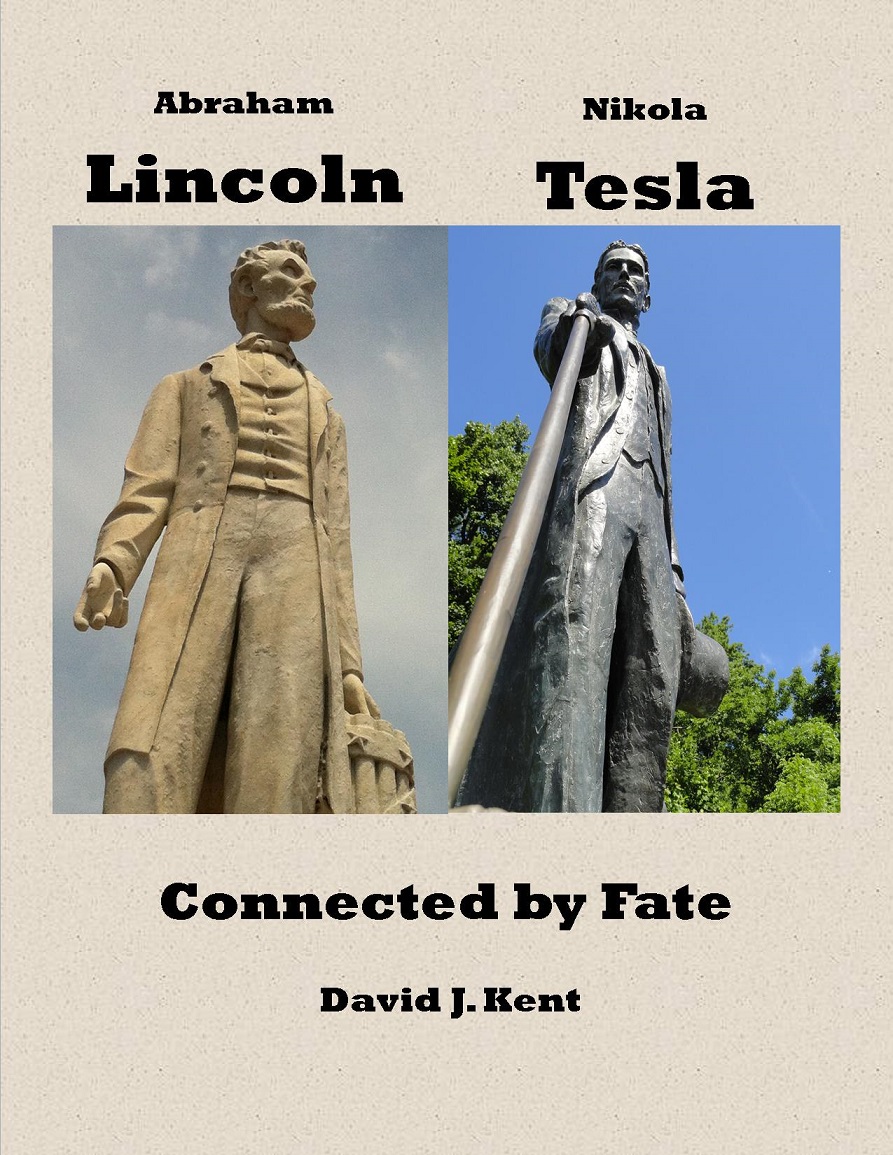
[Adapted from my e-book, Abraham Lincoln and Nikola Tesla: Connected by Fate, available for download on Amazon.]
*Note: The original that this piece was adapted from was written several years ago. Today, Jason Emerson, offered up a clarification on the FB version of this post. I serve with Jason on the Abraham Lincoln Institute Board of Directors, and can safely say he is the reigning expert on Robert Lincoln (as well as Mary Lincoln). Here is what he wrote and readers should defer to his research over my post:
“Actually, Robert was not at the Pan American Expo when McKinley was shot, and he was not invited to be there by President McKinley. Robert was on a train on his way to the Exposition with his family (for a family outing, nothing more) and when he arrived at the Buffalo train station, he was informed of the shooting. Robert also attended presidential events with Roosevelt, Taft, and Harding in later life. It’s all in my biography of Robert Lincoln, “Giant in the Shadows: The Life of Robert T. Lincoln.””
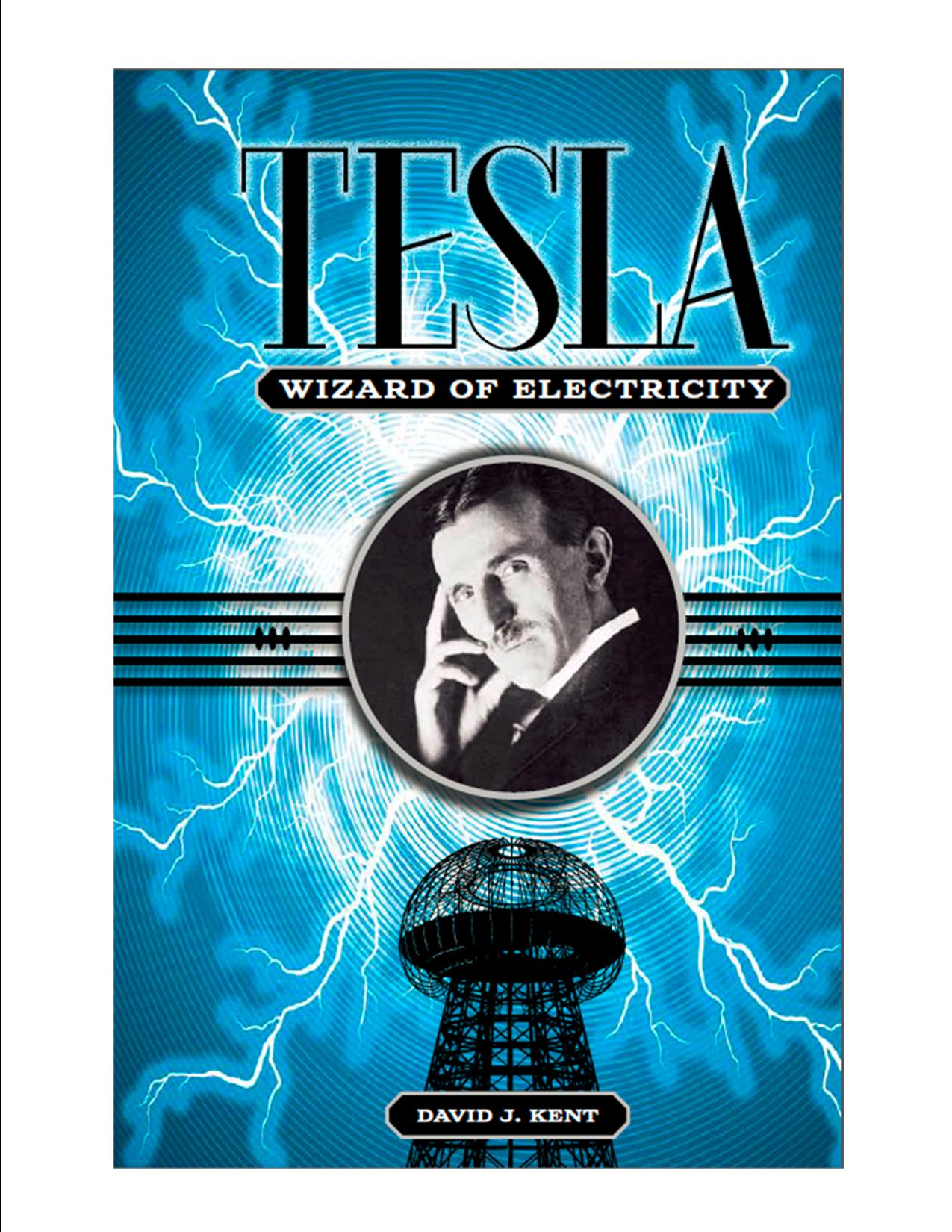
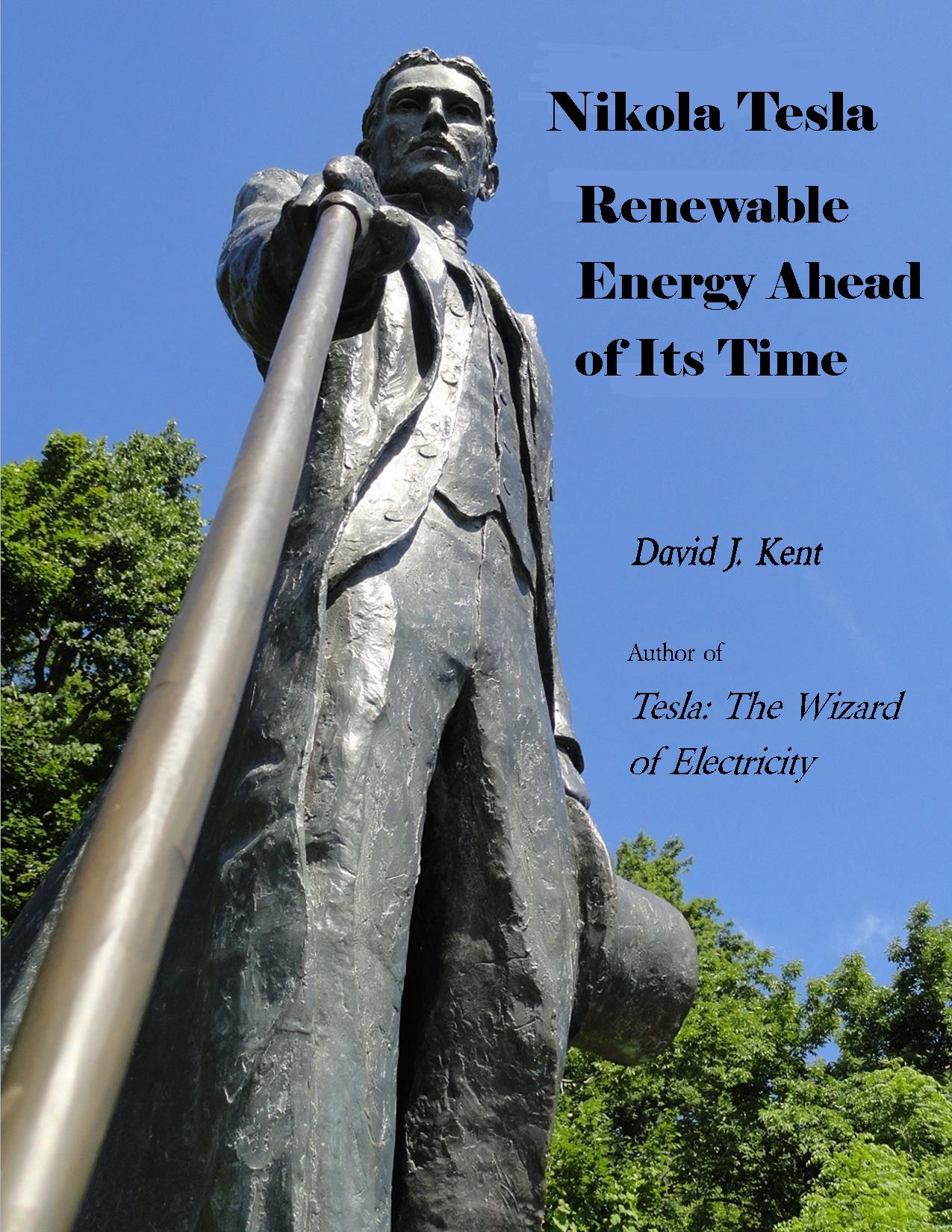
David J. Kent is the author of Lincoln: The Man Who Saved America. His newest Lincoln book is scheduled for release in February 2022. His previous books include Tesla: The Wizard of Electricity and Edison: The Inventor of the Modern World and two specialty e-books: Nikola Tesla: Renewable Energy Ahead of Its Time and Abraham Lincoln and Nikola Tesla: Connected by Fate.
Follow me for updates on my Facebook author page and Goodreads.
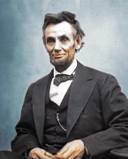 On March 17, 1863, President Lincoln and his wife, Mary, tour the Patent Office. Lincoln is no stranger to the Patent Office. His own
 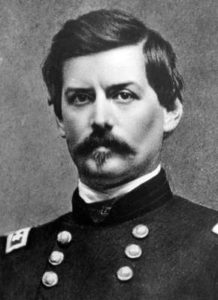 On March 11, 1862, everyone was thinking about George B. McClellan. Lincoln’s cabinet met and groused about their chronic dissatisfaction with the General. Frustrated with McClellan’s “slows,” Lincoln issued War Order No. 3, which fired McClellan as General-in-Chief but retained him as commander of the Army of the Potomac. He spent the rest of the day explaining his decision.
 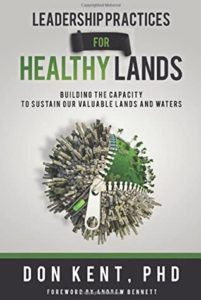 Sure, I write a lot about Abraham Lincoln these days, but for more than thirty years I was a practicing scientist. One area of sciences that was severely lacking was leadership. I’m lucky enough to be related to an expert on leadership in the sciences, and he has a new book out that I want to highlight for all my science colleagues.
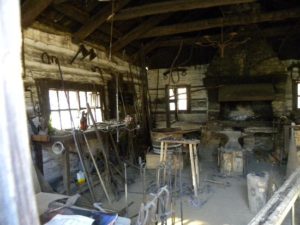 Abraham Lincoln briefly considered apprenticing as a blacksmith. Most subsistence farmers also doubled as tradesmen, working as coopers (barrel makers), tanners (leather makers), distillers (whiskey), brickmakers, shoemakers, or blacksmiths. While still in Indiana he and Dennis Hanks had spent many evenings in the Gentryville general store and at Baldwin’s blacksmith shop trading stories and “yarns,” so Lincoln had seen many an hour of blacksmithing in action.
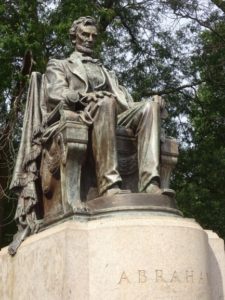 San Francisco targets Abraham Lincoln schools for renaming. Chicago targets Abraham Lincoln and other statues for possible removal. DC Congressional Delegate Eleanor Holmes Norton introduces a bill to remove the Emancipation Memorial statue in Washington, D.C. These efforts are severely misguided, based on political expediency rather than an informed discussion of Lincoln and other past American leaders.
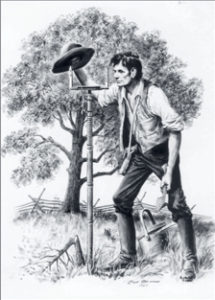 The Sangamon County Deed Record on February 17, 1836 has this notation from Abraham Lincoln, the Surveyor.
 Abraham Lincoln was working in his second floor office on February 10, 1864 when he realized the White House stables were on fire.
 On February 2, 1865, Abraham Lincoln headed to Hampton Roads in Virginia for a peace conference. It almost killed the 13th Amendment.
 If you follow my Facebook page (