The Lincolns and Parker House, Boston

Parker House Boston displayAbraham Lincoln became nationally famous in large part because of the Lincoln-Douglas Debates, the series of joint political debates between himself and incumbent Senator Stephen A. Douglas in 1858. Lincoln lost that senate race to Douglas, but it positioned him as a potential presidential candidate. The following spring, Lincoln was invited along with other likely presidential contenders to attend an April 1859 dinner in Boston celebrating Thomas Jefferson’s birthday. That may have been a recognition of his minor celebrity status following the debates, but later that year, business magnate and influencer Jesse Fell coaxed Lincoln into providing an autobiographical sketch that was expanded and widely distributed across the country. In addition to enough viability to garner an invitation to give the Cooper Union speech, several of his New England hosts introduced him as presidential or vice-presidential material.

Lincoln’s schedule kept him away from Boston for the 1859 Jefferson birthday event, but he wrote a comprehensive letter to the organizing committee, which was read at the event held in the Parker House in Boston along with similar (but less comprehensive) letters from other prominent Republican politicians unable to attend, including Senator William H. Seward of New York, Governor Salmon P. Chase of Ohio, and Representative Francis P Blair, Jr. of Missouri. Lincoln’s thoughtful letter impressed the attendees.

While Lincoln wasn’t at the Parker House on that occasion, he would have seen it during his 1848 trip to Boston. Campaigning for the Whig presidential nominee of that year, Zachary Taylor, Lincoln stayed at the Tremont House hotel across the street from Parker House, which stands immediately next door to the Tremont Temple Baptist Church where Lincoln and Seward each gave speeches on Lincoln’s last stop of his 1848 campaign swing.

But Abraham wasn’t the only Lincoln to have come across the Parker House. On the morning of November 7, 1861, the first year of Lincoln’s presidency and of the Civil War, Mary Lincoln left New York City where she had been staying and traveled to Boston to visit their son Robert, now at Harvard College. Arriving the same day, Mary took rooms at the Parker House and stayed for several days. Lincoln addressed a telegram to her on November 9 and a band serenaded Mary n November 10, which she acknowledged with a wave of her handkerchief from her balcony room.

The only other time Lincoln himself went to Boston was during his 1860 tour of New England. He didn’t speak in Boston or Massachusetts on that trip but did change trains in Boston on his way from Providence, Rhode Island to Exeter, New Hampshire to see Robert, who at that time was still at Phillips Exeter Academy studying to retake the Harvard entrance exams he had failed the previous year. Needless to say, he passed the second time around, thus his presence in Boston (technically, Cambridge, across the river) to greet his mother in 1861.

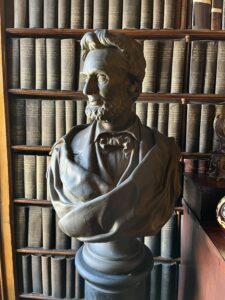
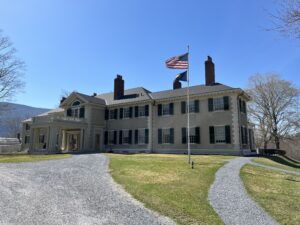
The Parker House remains to this day, now a part of the Omni hotel company. Today there is a display commemorating the Jefferson birthday dinner. It includes the invitation letter sent to Lincoln, a program, the bill of fare for the dinner, and a photo of Lincoln. It’s definitely worth a visit when you’re in Boston. Omni Parker House is conveniently located, a short walk to the Boston Common and the Massachusetts State House.

[Photo compliments of Jeffrey Boutwell]

[Adapted from Lincoln in New England: In Search of His Forgotten Tours]

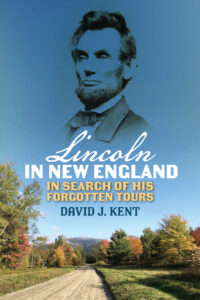
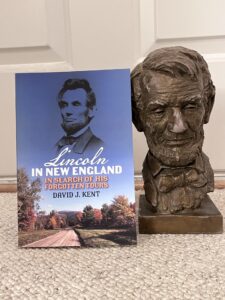
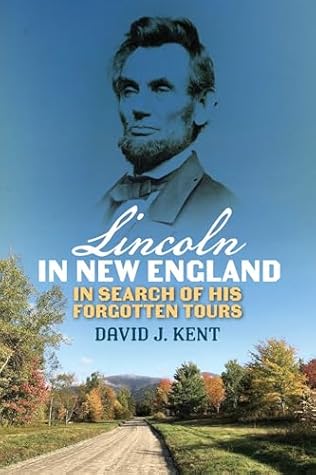
Lincoln in New England book cover

Coming in March 2026: Lincoln in New England: In Search of His Forgotten Tours

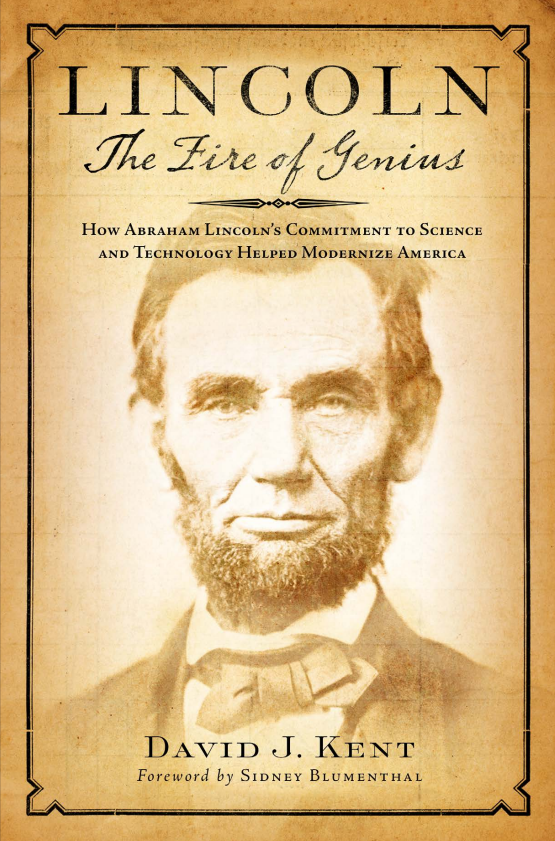
Also see – Lincoln: The Fire of Genius: How Abraham Lincoln’s Commitment to Science and Technology Helped Modernize America.

Join me on Goodreads, the database where I keep track of my reading. Please leave a review on Goodreads and Amazon if you like the book.

You also follow my author page on Facebook and on Instagram.

David J. Kent is Immediate Past President of the Lincoln Group of DC and the author of Lincoln: The Fire of Genius: How Abraham Lincoln’s Commitment to Science and Technology Helped Modernize America and Lincoln: The Man Who Saved America.

His previous books include Tesla: The Wizard of Electricity and Edison: The Inventor of the Modern World and two specialty e-books: Nikola Tesla: Renewable Energy Ahead of Its Time and Abraham Lincoln and Nikola Tesla: Connected by Fate.

Zachary Taylor – A Whig? Lincoln in New England Article

As the process for rolling out my new book, Lincoln in New England: In Search of His Forgotten Tours, continues, I’ve been busy writing shorter articles for various venues. One of them is the For the People newsletter of the Abraham Lincoln Association based in Springfield, Illinois. I wrote about why the selection of Zachary Taylor as the Whig nominee for president in 1848 was, let’s say, problematic. Here is the article as published (continues on the bottom of the second page):

ALA For the People article p1


ALA For the People article p2

I have also written articles that will appear in forthcoming issues of the Lincoln Forum Bulletin, the Lincoln Herald, the Lincolnian, and other venues. Plus, I have commitments for several more to appear in 2026.

Meanwhile, I’m scheduling presentations and interviews for around the time the book comes out in March 2026, so feel free to contact me if you would like me to speak to your organization, either in person or via Zoom.

Lincoln in New England book cover

Coming in March 2026: Lincoln in New England: In Search of His Forgotten Tours

Also see – Lincoln: The Fire of Genius: How Abraham Lincoln’s Commitment to Science and Technology Helped Modernize America.

Join me on Goodreads, the database where I keep track of my reading. Please leave a review on Goodreads and Amazon if you like the book.

You also follow my author page on Facebook and on Instagram.

David J. Kent is Immediate Past President of the Lincoln Group of DC and the author of Lincoln: The Fire of Genius: How Abraham Lincoln’s Commitment to Science and Technology Helped Modernize America and Lincoln: The Man Who Saved America.

His previous books include Tesla: The Wizard of Electricity and Edison: The Inventor of the Modern World and two specialty e-books: Nikola Tesla: Renewable Energy Ahead of Its Time and Abraham Lincoln and Nikola Tesla: Connected by Fate.

Abraham Lincoln Declares “No Kings” For America

Mathew Brady, February 27, 1860, Public Domain, Wikimedia CommonsAbraham Lincoln often warned about the dangers of allowing certain Americans to act as “kings.” Lincoln harkened back to the Declaration of Independence and its self-evident truths “that all men are created equal” and endowed “with certain unalienable Rights, that among these are Life, Liberty and the pursuit of Happiness.” It was on this basis that the united colonies declared their separation from Britain. After the soaring preamble, the remainder of the document is a list of grievances against the British King.

One of the grievances included by Thomas Jefferson in the draft – but removed from the final declaration due to resistance among the biggest slave-holding powers – blamed King George of waging “cruel war against human nature itself” by introducing slavery onto American soil. It was one of many complaints against the rule of Kings. In his Peoria speech, Lincoln noted about slavery that the Founders “found the institution existing among us, which they could not help; and they cast blame upon the British King for having permitted its introduction.” They still couldn’t eradicate slavery completely by the time of the Constitution but took steps to put it on a path toward its ultimate extinction. Unfortunately for them, the invention of the cotton gin and expansion of the new nation’s land area resulted in the opposite, substantial growth in slavery.

In the famous Lincoln-Douglas Debates of 1858, when Lincoln was running against Stephen A. Douglas for a US Senate seat, Lincoln again raised the issue of democracy versus “the divine right of kings.” When forcefully noting that slavery was wrong, Lincoln said:

“That is the real issue. That is the issue that will continue in this country when these poor tongues of Judge Douglas and myself shall be silent. It is the eternal struggle between these two principles—right and wrong—throughout the world. They are the two principles that have stood face to face from the beginning of time; and will ever continue to struggle. The one is the common right of humanity and the other the divine right of kings. It is the same principle in whatever shape it develops itself. It is the same spirit that says, “You work and toil and earn bread, and I’ll eat it.” No matter in what shape it comes, whether from the mouth of a king who seeks to bestride the people of his own nation and live by the fruit of their labor, or from one race of men as an apology for enslaving another race, it is the same tyrannical principle.

It is the duty of all Americans to stand up for the democratic principles that made this country great. We must assure that the Declaration of Independence and the Constitution protect ALL Americans.


[Photo Mathew Brady, February 27, 1860, Public Domain, Wikimedia Commons]

Lincoln in New England book cover

Coming in March 2026: Lincoln in New England: In Search of His Forgotten Tours

Also see – Lincoln: The Fire of Genius: How Abraham Lincoln’s Commitment to Science and Technology Helped Modernize America.

Join me on Goodreads, the database where I keep track of my reading. Please leave a review on Goodreads and Amazon if you like the book.

You also follow my author page on Facebook. Also follow me on Instagram.

David J. Kent is Immediate Past President of the Lincoln Group of DC and the author of Lincoln: The Fire of Genius: How Abraham Lincoln’s Commitment to Science and Technology Helped Modernize America and Lincoln: The Man Who Saved America.

His previous books include Tesla: The Wizard of Electricity and Edison: The Inventor of the Modern World and two specialty e-books: Nikola Tesla: Renewable Energy Ahead of Its Time and Abraham Lincoln and Nikola Tesla: Connected by Fate.


Lincoln Embraces the Declaration of Independence

By German, Christopher S. - Library of Congress, Public Domain, https://commons.wikimedia.org/w/index.php?curid=25149728Abraham Lincoln made his way to Washington, D.C. by a roundabout rail route in February 1861. Among his many stops was the city of Philadelphia, where on George Washington’s birthday he raised the American flag at Independence Hall. Lincoln acknowledged the import of the spot where the Declaration of Independence was signed:

“I am filled with deep emotion at finding myself standing here in the place where were collected together the wisdom, the patriotism, the devotion to principle, from which sprang the institutions under which we live.”

He also understood the import of the task that had fallen to him as the president-elect. Seven southern states had seceded from the Union, violating the intent of the Declaration and the Constitution that implemented its guiding principle. Lincoln embraced the Declaration and its aspirational words that “all men are created equal” and endowed with unalienable rights, including “life, liberty and the pursuit of happiness.” Lincoln stated clearly:

“I can say…that all the political sentiments I entertain have been drawn…from the sentiments which originated, and were given to the world from this hall in which we stand. I have never had a feeling politically that did not spring from the sentiments embodied in the Declaration of Independence.”

Lincoln knew that the Declaration was more than “the mere matter of the separation of the colonies from the mother land.” It was that the Declaration’s ideal of “giving liberty not alone to the people of this country, but hope to the world for all future time.” He added, “It was that which gave promise that in due time the weights should be lifted from the shoulders of all men, and that all should have an equal chance. This is the sentiment embodied in that Declaration of Independence.”

At the time of the Declaration, it’s ideal that “all men are created equal” was still an aspiration. With a large percentage of the population held in bound servitude against their will, Lincoln understood what the Founders had understood, that much work had to be done to achieve a more perfect Union. It would pass to Lincoln to finally remove the stain of slavery from our midst.

But there is a deeper, darker, knowledge that influenced Lincoln’s words that day in Philadelphia. Not only had several states split the Union already, but there was a plot to kill Lincoln even before he had a chance to be inaugurated in as president, never mind take any action the South found objectionable. An assassination plot had been uncovered. Southern sympathizers in Baltimore planned to murder Lincoln as he passed through the city on his way to Washington. In Philadelphia, Lincoln again pointed to the Declaration as the sustaining guidance to the nation and to him.

“Now, my friends, can this country be saved upon that basis [all men having an equal chance]? If it can, I will consider myself one of the happiest men in the world if I can help to save it. If it can’t be saved upon that principle, it will be truly awful. But, if this country cannot be saved without giving up that principle—I was about to say I would rather be assassinated on this spot than to surrender it.”

Now, in my view of the present aspect of affairs, there is no need of bloodshed and war. There is no necessity for it. I am not in favor of such a course, and I may say in advance, there will be no blood shed unless it be forced upon the Government. The Government will not use force unless force is used against it.” (Prolonged applause and cries of “That’s the proper sentiment.”)

As I write this the nation is in the midst of another existential crisis, this one the reverse of what Lincoln had noted. We, the people, must stand for the ideals set forth in the Declaration of Independence and apply the Constitution to ALL Americans.

[Photo by German, Christopher S. – Library of Congress, Public Domain, https://commons.wikimedia.org/w/index.php?curid=25149728]

Lincoln in New England book cover

Coming in March 2026: Lincoln in New England: In Search of His Forgotten Tours

Also see – Lincoln: The Fire of Genius: How Abraham Lincoln’s Commitment to Science and Technology Helped Modernize America.

Join me on Goodreads, the database where I keep track of my reading. Please leave a review on Goodreads and Amazon if you like the book.

You also follow my author page on Facebook. Also follow me on Instagram.

David J. Kent is Immediate Past President of the Lincoln Group of DC and the author of Lincoln: The Fire of Genius: How Abraham Lincoln’s Commitment to Science and Technology Helped Modernize America and Lincoln: The Man Who Saved America.

His previous books include Tesla: The Wizard of Electricity and Edison: The Inventor of the Modern World and two specialty e-books: Nikola Tesla: Renewable Energy Ahead of Its Time and Abraham Lincoln and Nikola Tesla: Connected by Fate.

When Lincoln Spoke at Tremont Temple in Boston

Tremont Temple Baptist Church, Boston. Kenneth C. Zirkel Wikimedia Commons

Tremont Temple Baptist Church, Boston, Massachusetts

Congressman Abraham Lincoln traveled to Massachusetts in 1848 to campaign for Zachary Taylor. The last stop on his two-week itinerary was Tremont Temple in Boston. There he would meet the man who became his most important political collaborator – and rival – William Seward. I thought of the Tremont Temple recently after seeing an article about it undergoing major renovations with the help of some former inmates.

Notwithstanding its name and the building’s facade, the Temple is actually a Baptist Church. In retrospect, the Tremont Temple was a perfect location to boost Lincoln’s awareness of the growing importance of slavery to our national survival. Formed a decade before as the Free Baptist Church, it was the first integrated church in America. I visited the current building during my travels for Lincoln in New England. which was an enlarged rebuild following a series of fires in the years since Lincoln’s visit. The façade reminds me more of a Jewish Temple, but it remains the Tremont Temple Baptist Church. It was one of the first churches in America to be racially integrated. Back in 1838, an abolitionist and deacon named Timothy Gilbert, angry that his church, Charles Street Baptist, barred African Americans from sitting in the main sanctuary. forced the issue by bringing a black friend along to his pew. After the inevitable fight with church leaders, Gilbert left and started a new congregation. It grew quickly as antislavery sentiment grew in Boston, soon hosting speeches by abolitionists like William Lloyd Garrison and Frederick Douglass.

For the Whig event in 1848, the Boston Atlas listed the speakers as William Seward (the keynote), “Abram Lincoln” (despite inviting him as a sitting congressman, the papers still could not get the spelling of his name right), textile industrialist Abbott Lawrence, and Richard Fletcher (former congressman and first president of the American Statistical Association formed in Boston).

The event almost didn’t happen. Lincoln had been in Massachusetts trying to coax a runaway Whig faction called the Free Soilers to stay within the party. The Free Soil people, knowing that the Whigs were planning a huge political meeting, had rented out all the available meeting spaces. That forced the Whigs to schedule their rally for outside in Court Square between the old city hall and the courthouse. Then a deluge hit, with heavy rain making it impossible to hold a rally outside. Luckily, a Dr. Cotton released his hold on the Tremont Temple, a half block across the street from where Lincoln was staying.

Lincoln, who spoke after Seward, by now had become accustomed to his standard talking points attempting to explain why Zachary Taylor, “a man who owns…two hundred men, women, and children,” (as the Democratic-leaning Boston Post put it), was the best person to fight the “slaveocracy.” This was his last speech on the Massachusetts trip, and he was less about trying out new material than absorbing new insights for the future. Nathaniel Hawthorne later described Lincoln as having “an unmistakably Yankee look” that James Schouler thought made him seem “kinsman” to eastern men unfamiliar with Lincoln’s “fifey and shrill” voice. But at this point in his political life, Lincoln was largely unknown in the East and was treated more as a “prime example of a Sucker Whig,” that is, an entertaining hick from the west who told funny stories.

William Henry Seward, on the other hand, was already an accomplished lawyer, a former state legislator, a former New York governor, and about to be elected U.S. Senator. He was an established Whig leader and a vocal opponent of slavery, which was why he was the headliner for the evening. The comparison of the ungainly westerner with his odd southern-western drawl and unmanageable hair against Seward’s erudite eastern formality and stiffness must have been profoundly amusing to the largely learned Boston elite. Whereas Lincoln was forced to argue the inconsistency of Taylor’s Whig credentials, Seward spoke in loftier terms of “providence” and not “bow[ing] before the aristocracy of the South,” which a splinter vote for the Free Soil third party would assure. Seward argued that “all Whigs agree – that Slavery shall not be extended into any territory now free – and they are doubtless willing to go one step further – that it shall be abolished where it now exists under the immediate protection of the General Government.” He “believed in the force of moral power” and that “the time would come…when the free people would free the slaves in this country. That night in the Tremont Temple climaxed with the admittedly partisan crowd giving three hearty cheers for “Old Zach,” three more for Governor Seward, and three more for Mr. Lincoln, according to the Atlas.

While the Atlas lauded Lincoln’s speech as “powerful and convincing…which was cheered to the echo, Seward seemed less impressed. Two decades later, after the Civil War and Lincoln’s life had ended, Francis Carpenter reported Seward’s recollection of that night. In Seward’s memory, Lincoln gave a “rambling, story-telling speech, putting the audience in good humor, but avoiding any extended discussion of the slavery question.” Then there was the story that Lincoln told Seward the day after his 1848 remarks: “I have been thinking about what you said in your speech. I reckon you are right. We have got to deal with this slavery question and got to give much more attention to it hereafter than we have been doing.” Whether that conversation ever happened is debatable, but the visit did give Lincoln a lot to think about.

Now in 2025, Tremont Temple Baptist Church is getting a much-needed makeover, readying the current building for the attention it will receive next year when the nation celebrates its 250th anniversary and the Declaration of Independence. Lincoln was a huge proponent of the Declaration as an aspirational lodestar for the country. In fact, one of the places I write is for Lincoln250.org, a source for information about Lincoln’s admiration for the Declaration of Independence. Check it out.

[Adapted from Lincoln in New England: In Search of His Forgotten Tours, due for release on March 3, 2026]

[Photo of front of Tremont Temple in 2024, Kenneth C. Zirkel, Wikimedia Commons Public Domain]

Lincoln in New England book cover

Coming in March 2026: Lincoln in New England: In Search of His Forgotten Tours

Also see – Lincoln: The Fire of Genius: How Abraham Lincoln’s Commitment to Science and Technology Helped Modernize America.

Join me on Goodreads, the database where I keep track of my reading. Please leave a review on Goodreads and Amazon if you like the book.

You also follow my author page on Facebook. Also follow me on Instagram.

David J. Kent is Immediate Past President of the Lincoln Group of DC and the author of Lincoln: The Fire of Genius: How Abraham Lincoln’s Commitment to Science and Technology Helped Modernize America and Lincoln: The Man Who Saved America.

His previous books include Tesla: The Wizard of Electricity and Edison: The Inventor of the Modern World and two specialty e-books: Nikola Tesla: Renewable Energy Ahead of Its Time and Abraham Lincoln and Nikola Tesla: Connected by Fate.

The Big Reveal – Cover Art for Lincoln in New England

In my last post I teased “the big reveal,” the cover for my new book, Lincoln in New England: In Search of His Forgotten Tours. The time has come for that reveal.

As I mentioned, the cover is brilliantly colored. And it has a picture of Lincoln on it! Okay, that’s no big surprise. It’s basically a commandment written on stone tablets that any book on Abraham Lincoln must have a picture of Lincoln on the cover. I’ll explain more about the book below the photo, but without further ado, here’s the cover (trust me, you can hear the drum roll in your head right now):

Lincoln in New England book cover

The book is in an entertaining “ride-along” style. That means you get to come along with me as I visit the places Lincoln visited on his two tours through New England. The road through the New England landscape on the cover gives a sense of the thousands of miles I drove on Lincoln’s trail while I talked with dozens of experts and locals about Lincoln’s legacy. I wrote a post describing the book that has the details (see here), but here are the highlights:

Lincoln’s first trip was in 1848. He was an awkward-looking, ungainly, westerner little known to the sophisticated East other than he supposedly told funny stories. He was serving what was his only term as a U.S. congressman but was charged with going up to Massachusetts to campaign on behalf of Zachary Taylor, the Whig nominee for president. Taylor was a strange choice for the Whigs because of his role in the Mexican War (which Whigs “very generally opposed”) and as a southern slaveholder (Whigs, at least in the North, were against expansion of slavery into the newly gained western territories). Picking Taylor caused one faction of the Whigs to split off and form their own Free Soil Party, which threatened to sink the Whig chances. While speaking in nine locations over nearly two weeks, Lincoln was exposed to even more splits in the Whig Party, Conscience vs. Cotton Whigs, and a growing abolitionist movement. He was also influenced by the great Transcendentalist writers like Henry David Thoreau, Ralph Waldo Emerson, Louisa May Alcott, and Nathaniel Hawthorne. While mostly he attracted crowds for his entertainment value, Lincoln came away with a more mature view of himself, his party, and the struggles that the nation faced because of slavery.

During a tumultuous decade where slavery grew to be the defining issue leading to civil war, Lincoln was out of political office. He struggled to get back into politics, losing two senate races. The second loss, however, in which he engaged in seven highly publicized debates with Stephen A. Douglas, made him a household name. That led to an invitation to his February 1860 speech at Cooper Union, an address many call “the speech that made Lincoln president.”

But the speech was just the first of what became another two-week jaunt into New England in early 1860, this time through Rhode Island, New Hampshire, and Connecticut. No longer an unknown and occurring two months before the new Republican Party held its convention to pick a nominee, Lincoln was campaigning both for the party’s position on slavery and his own chances of gaining that nomination. He spoke in Providence and Woonsocket, RI, in four cities around Exeter, NH, where his son Robert was attending preparatory school to get into Harvard, and five stops in Connecticut, including Hartford and New Haven, where he encountered the Wide Awakes, a new grassroots organization that would help Republicans across the North. He tackled the issues of the day, most notably slavery, and was taken much more seriously than his 1848 visit, which was largely forgotten.

I had a lot of fun writing this book and traveling around my home state of Massachusetts and the other New England states where Lincoln visited. I also visited Maine and Vermont; places Lincoln never got to but became incredibly important to his nomination and his legacy. I spoke with tons of people, both experts and locals, to get a sense of how Lincoln was remembered (if at all). The book is an enjoyable ride, blending past and present, and even a bit of crystal-balling of the future. I hope you’ll join me.

Lincoln in New England: In Search of His Forgotten Tours is being published by Globe Pequot and is scheduled for release on March 3, 2026. The book is already available for pre-order, with price guarantees (if the price goes down, you’ll get the lower price). Check out the Globe Pequot page for links to Amazon, Barnes and Noble, Books-a-Million, and Bookshop, and of course, please check in with your local independent bookstore and encourage them to order the book.

I’ll be doing a grand promotion tour in the spring, so check here for my ongoing schedule. And feel free to contact me to speak at your organization.


[Lincoln in New England book cover created by Globe Pequot]

Lincoln in New England book cover

Coming in March 2026: Lincoln in New England: In Search of His Forgotten Tours

Also see – Lincoln: The Fire of Genius: How Abraham Lincoln’s Commitment to Science and Technology Helped Modernize America.

Join me on Goodreads, the database where I keep track of my reading. Please leave a review on Goodreads and Amazon if you like the book.

You also follow my author page on Facebook. Also follow me on Instagram.

David J. Kent is Immediate Past President of the Lincoln Group of DC and the author of Lincoln: The Fire of Genius: How Abraham Lincoln’s Commitment to Science and Technology Helped Modernize America and Lincoln: The Man Who Saved America.

His previous books include Tesla: The Wizard of Electricity and Edison: The Inventor of the Modern World and two specialty e-books: Nikola Tesla: Renewable Energy Ahead of Its Time and Abraham Lincoln and Nikola Tesla: Connected by Fate.

Of Abraham Lincoln Statues and Lincoln in New England Cover Reveals

Lincoln statue under wrapsHow time flies! The list of Lincoln statues grows, I get interviewed for a documentary, more tasks accumulate, and the big Lincoln in New England cover reveal nears. And that’s just in the last week.

Let’s start with the new Abraham Lincoln statue. Yesterday, September 22, on the anniversary of Lincoln issuing the Preliminary Emancipation Proclamation, a new statue was unveiled on the steps of the African American Civil War Museum in Washington. The Lincoln Group of DC (of which I am immediate past president) was the principal organizer of the dedication event, and current LGDC president Ed Epstein deserves a huge pat on the back for his efforts to create this wonderful event. I’ve already written a piece for the Lincolnian.org blog and won’t regurgitate it here, so please take a quick hop over to this post to read all about. [But hop right back, because there’s more]

My last post on this site (the one where you’re reading this, assuming you hopped back) gave a quick overview of my recent trip to Machu Picchu and the Galapagos. I’ll have more on that trip soon. I did write about the infamous sea-faring lost shoes on my Hot White Snow blog (the personal side of the writing life), so you can catch up on that here.

Last week I was interviewed for a Civil War medicine documentary project. Before that I reviewed the final proof pages of the manuscript for my new book, Lincoln in New England, which is due out March 3, 2026, from Globe Pequot. I also reviewed the back cover text and have started reaching out to prominent historians for back cover blurbs. More on that soon.

The big news is that all the moving parts are starting to mesh and that I will be revealing the cover graphics for Lincoln in New England: In Search of His Forgotten Tours shortly.

I’ll give you a preview, of sorts, and tell you that the cover is brilliantly colored. And it has – no surprise here – a picture of Lincoln on it!

Check back soon for the big reveal!

[Photo by David J. Kent of the new Lincoln statue under wraps (or maybe it’s the Lincoln in New England book cover?)]

Lincoln in New England cover coming soon

Coming in March 2026: Lincoln in New England: In Search of His Forgotten Tours

Also see – Lincoln: The Fire of Genius: How Abraham Lincoln’s Commitment to Science and Technology Helped Modernize America.

Join me on Goodreads, the database where I keep track of my reading. Please leave a review on Goodreads and Amazon if you like the book.

You also follow my author page on Facebook. Also follow me on Instagram.

David J. Kent is Immediate Past President of the Lincoln Group of DC and the author of Lincoln: The Fire of Genius: How Abraham Lincoln’s Commitment to Science and Technology Helped Modernize America and Lincoln: The Man Who Saved America.

His previous books include Tesla: The Wizard of Electricity and Edison: The Inventor of the Modern World and two specialty e-books: Nikola Tesla: Renewable Energy Ahead of Its Time and Abraham Lincoln and Nikola Tesla: Connected by Fate.

Turn Right at Machu Picchu, Plus Galapagos

Red-billed tropicbirdI finally made it to Machu Picchu!

I had planned to go back in 2016, but that trip got punted in favor of a trip to Serbia instead (which I documented here). No problem, I thought. I’ll schedule it for the next year. That didn’t happen (I went to South Korea, China, Australia, and New Zealand instead). Another 40+ countries and nine years later I finally did the Machu Picchu trip. And threw in the Galapagos Islands as a bonus.

We booked a tour with Road Scholar, a 50-year-old company specializing in educational learning, which was important to us. I’ll have more details later, but here are some highlights of the trip. Joining fourteen others from around the United States, we flew first to Lima, Peru. Touring the city one day, we then flew on to Cusco, only to head out to the Sacred Valley to climb the Ollantaytambo ruins and visit an alpaca/llama/vicuna farm. After a day or so there we headed back to Ollantaytambo to take the famous rail line to Aguas Calientes (aka, Machu Picchu Village), where we spent the night. Taking the treacherous bus ride up to the Machu Picchu gate was worth it. Finally being able to stand in the iconic viewing spot to get a photo of the ancient Incan village was a dream come true. We also got to hike around the village itself and learn from a guide with traditional ancestry.

Machu Picchu

Eventually we headed back to Cusco for a couple of days, touring the city and going out to the Sacsayhuamen ruins just outside of town. In both Machu Picchu and Sacsayhuamen we got to see the amazing Incan craftmanship, with many-ton blocks of rock placed together so tightly you can’t slip a piece of paper between them. We also got to experience local Peruvian music and hear lectures on Peruvian agriculture (including 4000 varieties of potatoes and corn), Inca and pre-Inca history, and musical instruments. We even had a lesson in making ceviche.

Then it was off to Ecuador with a quick flight from Cusco to Lima and then on to Quito. After touring Quito for a day or so, we hopped on another plane, stopping in Guayaquil to refuel and trade passengers, then out to the Galapagos for the second half of the adventure. This really was two trips in one. The Peru part was all about ancient culture and civilizations. The Galapagos part was all about communing with nature.

Galapagos map

In all, we visited eight Galapagos Islands in the middle and eastern part of the archipelago (there is a separate tour for the western islands). We arrived in Baltra, which is mostly airport, then spent time on Santa Cruz, the amazing bird island of Genovesa, Plaza Sur (South Island), Santa Fe, Floreana, Espanola, and San Cristobal. Mostly we were by ourselves on the islands, sometimes overlapping with another tour boat. All tours are limited to no more than 16 passengers to help protect the native flora and fauna. During the week in the Galapagos, we had plenty of opportunity to snorkel with green turtles and sea lions, kayak around the rocky inlets (often with young sea lions frolicking around us), and hiking in the bird-filled environments. There were plenty of blue-footed, red-footed, and Nazca boobies, albatross, and tons of other birds and their babies, not to mention land and marine iguanas, and unique species like lava lizards and lava herons.

It was hard to come home after 17 days on the road (and in the air and on the water), and it didn’t help that I got a bad cold upon my return. But the time spent in both Peru and Ecuador is something I’ll treasure forever.

More stories and photos coming soon.

[All photos by David J. Kent; map adapted from Google maps]

Lincoln in New England cover coming soon

Coming in March 2026: Lincoln in New England: In Search of His Forgotten Tours

Also see – Lincoln: The Fire of Genius: How Abraham Lincoln’s Commitment to Science and Technology Helped Modernize America.

Join me on Goodreads, the database where I keep track of my reading. Please leave a review on Goodreads and Amazon if you like the book.

You also follow my author page on Facebook. Also follow me on Instagram.

David J. Kent is Immediate Past President of the Lincoln Group of DC and the author of Lincoln: The Fire of Genius: How Abraham Lincoln’s Commitment to Science and Technology Helped Modernize America and Lincoln: The Man Who Saved America.

His previous books include Tesla: The Wizard of Electricity and Edison: The Inventor of the Modern World and two specialty e-books: Nikola Tesla: Renewable Energy Ahead of Its Time and Abraham Lincoln and Nikola Tesla: Connected by Fate.

Lincoln in New England – The Two Forgotten Tours

Abraham Lincoln made two tours of New England. The first trip changed him. The second trip changed the country and sent us into Civil War.

1848 Lincoln in New England map

In 1848, Lincoln was a first-term US congressman. He had been a Whig Party leader in Illinois, but he was largely unknown in the influential East – and would largely remain so. As the first session ended, Lincoln was asked to spend the end of his summer stumping for the Whig nominee for president, Zachary Taylor. It wasn’t an easy assignment. Taylor was the hero of the Mexican War, which the Whigs had “very generally opposed.” Taylor was also Southern plantation owner, enslaving up to 200 Americans of African heritage. Lincoln’s job was to go to Massachusetts to try to keep a wayward Whig faction calling themselves the Free Soil Party in the Whig fold. He also found himself exposed to another internal Whig split between Conscience and Cotton Whigs, and a raging abolitionist network. Arriving “with a hayseed in his hair,” Lincoln came away vastly educated in the realities of the world.

And then he was out of political office for a dozen years.

By the time he returned to New England again in 1860, both Lincoln and the nation had been drastically altered. Lincoln was now a leader in the new Republican Party, now famous after the 1858 Lincoln-Douglas debates. Following an earth-shattering address in New York City’s Cooper Union, Lincoln was off to visit his son Robert in Exeter, New Hampshire. He gave a speech in Providence, Rhode Island on the way there, then four more in New Hampshire, to be followed by another five in Connecticut and one more in Rhode Island. While Taylor had already been selected before his 1848 trip, the Republican convention was still three months away in 1860. Which means he was stumping for both the party and, perhaps more surreptitiously, for himself. Now he was setting the agenda that would make him president.


1860 Lincoln in New England map

Lincoln in New England: In Search of His Forgotten Tours is a journey in which the reader “rides-along” with me as I explore the places he visited – and some he didn’t – in order to get a sense of what Lincoln saw as he learned about the states that would play a major role in his nomination and his presidency. Along the way we’ll meet with local authorities, Lincoln experts, and how New England commemorates each of these largely forgotten tours.

Above all, we’ll answer the questions: Why was Lincoln here, and what did he accomplish?

The book is being published by Globe Pequot and was released on March 3, 2026. You can order it here from your favorite bookseller.

I’ll have more information over the next few months. Come back here shortly for the big cover reveal.

And feel free to reach out to me to schedule talks and interviews.

[Maps courtesy of Globe Pequot]

Lincoln in New England with Lincoln

Now Available: Lincoln in New England: In Search of His Forgotten Tours

Also see – Lincoln: The Fire of Genius: How Abraham Lincoln’s Commitment to Science and Technology Helped Modernize America.

Join me on Goodreads, the database where I keep track of my reading. Please leave a review on Goodreads and Amazon if you like the book.

You also follow my author page on Facebook. Also follow me on Instagram.

David J. Kent is Immediate Past President of the Lincoln Group of DC and the author of Lincoln: The Fire of Genius: How Abraham Lincoln’s Commitment to Science and Technology Helped Modernize America and Lincoln: The Man Who Saved America.

His previous books include Tesla: The Wizard of Electricity and Edison: The Inventor of the Modern World and two specialty e-books: Nikola Tesla: Renewable Energy Ahead of Its Time and Abraham Lincoln and Nikola Tesla: Connected by Fate.

Lincoln in Hingham, New England (and Hingham, old England)

Lincoln in Hingham, Massachusetts, New EnglandThere stands a statue of Abraham Lincoln in Hingham, Massachusetts, New England. It’s immediately across the street from the Samuel Lincoln house. In Hingham, England, United Kingdom there is also a statue of Lincoln. But why? And who was Samuel Lincoln?

The original Samuel was an Englishman who left his home near Hingham, England (100+ miles northeast of London) and moved to the Massachusetts Bay Colony in 1637. He settled in, where else, the new town of Hingham, Massachusetts. The New England Hingham is a coastal town southeast of Boston. Think of it this way – if you look out the window of the tallest building in Boston (the John Hancock Tower) and look southeast toward Provincetown on the very tip of Cape Cod, you’re probably looking over Hingham. In any case, Samuel made his way to the New England Hingham from the old England Hingham as a teenager and started a long line of Lincoln descendants, including the one that begat the Abraham Lincoln lineage.

Abraham Lincoln never visited Hingham, Massachusetts (and obviously, not Hingham, England). He did come close once. In 1848, while a sitting congressman, Lincoln did a tour of Massachusetts campaigning for the Whig nominee for president, Zachary Taylor. The Mexican War hero (which the Whigs “very generally opposed” as unnecessary and unconstitutional) and southern slaveholder didn’t sit well with New England’s Conscience Whigs, who spun off into a Free Soil Party. Lincoln was there to try to keep them in the Whig fold. Taylor won the election, but it was closer than it should have been. He then inconveniently died sixteen months into his presidency, thus opening the door for the Compromise of 1850 and the nightmare that turned into. But that’s for another post.

The statue in Hingham, Massachusetts is a full size President Lincoln sculpted by Charles Keck. He is depicted sitting on a large stone staring downward in deep contemplation. The statue sits on a large pedestal. Standing in front of it, he seems to be staring at the viewer (or at his own feet, depending on your perspective).

Lincoln in Hingham, England, old EnglandThe statue in Hingham, England is actually a bust, not a full statue. It was created based on the life mask of Leonard Volk made in 1860 just after Lincoln’s nomination. It depicts a much younger, beardless (and shirtless) Lincoln. It sits in an alcove on the side of St. Andrew’s Church. The bust was installed in 1919 to commemorate the Lincoln ancestry that had for many generations worshiped at the St. Andrew parish.

I’ve had the privilege of seeing both of these Lincoln memorials recently. I visited the statue in Hingham, Massachusetts during my tours of New England tracing Lincoln’s own two tours, one in 1848 and the other in 1860. I visited the bust in St. Andrew’s Church just a few weeks ago as I toured the UK seeing Lincoln statues from Edinburgh to Durham to Manchester to (near) Wales to Bath to Hingham. All of these visits gave me more insights into the Lincoln family tree, which I discuss in my new book, Lincoln in New England: In Search of His Forgotten Tours, which comes out March 3, 2026.


[Photos by David J. Kent, 2023, 2025]

Fire of Genius

Coming in March 2026: Lincoln in New England: In Search of His Forgotten Tours

Also see – Lincoln: The Fire of Genius: How Abraham Lincoln’s Commitment to Science and Technology Helped Modernize America.

Join me on Goodreads, the database where I keep track of my reading. Please leave a review on Goodreads and Amazon if you like the book.

You also follow my author page on Facebook. Also follow me on Instagram.

David J. Kent is Immediate Past President of the Lincoln Group of DC and the author of Lincoln: The Fire of Genius: How Abraham Lincoln’s Commitment to Science and Technology Helped Modernize America and Lincoln: The Man Who Saved America.

His previous books include Tesla: The Wizard of Electricity and Edison: The Inventor of the Modern World and two specialty e-books: Nikola Tesla: Renewable Energy Ahead of Its Time and Abraham Lincoln and Nikola Tesla: Connected by Fate.