 Climate change has already shown impacts not only on the world’s temperatures but on ocean acidification, sea level rise, and effects on plant and animal migration behaviors, among others. The Dake Page periodically reviews science-related books.It isn’t clear whether the impacts noted in Fire in the Turtle House are related to climate change or some other cause, but it reflects how quickly disruptions can result in catastrophic impacts on wildlife. What follows is a short review of Fire in the Turtle House: The Green Sea Turtle and the Fate of the Ocean by Osha Gray Davidson.
The Turtle House is an area in the narrow channel separating Maui from the neighboring island of Moloka’i. Not surprisingly it is a haven for sea turtles, especially the green sea turtle that the locals call honu. And the honu are dying.
The book follows the search for the cause of rampant spread of the disease called FP, most notably characterized by the growth of tumors on the soft tissues of turtles. First noticed in the 1960s, proliferating in the 70s, and clearly epidemic by the 80s, FP has decimated green turtle populations in Hawai’i as well as in Florida. Davidson visits with the key researchers, examines the different investigations into the cause, and personalizes the scientific struggle to understand. In the end the answers are still uncertain, though viruses are clearly implicated, and dinoflagellate biotoxins, human-caused stresses from pollution and nutrient enrichment, and other factors also may be part of the complex genesis that spreads the disease.
Overall this book is well written. It does seem to veer off on tangents, such as stories about Stellar sea cows from a century before, Pfeisteria-based fish diseases, and other sidetracks that eventually are laced back into the turtle narrative with varying success. On a personal note, it was interesting to see mention of names like Archie Carr and Joanne Burkholder and others familiar to my own marine biology days.
One drawback to the book is that it was published in 2001 and thus is somewhat dated. It would be nice to know where the status of the investigation, and hopefully treatment, of FP stands now. Still, I would recommend this book for those who are interested in learning how science works in the complex real world, and how human factors can surreptitiously drive what appear to be nature impacts.
More science-related book reviews can be read here.
[Cross-posted from The Dake Page]
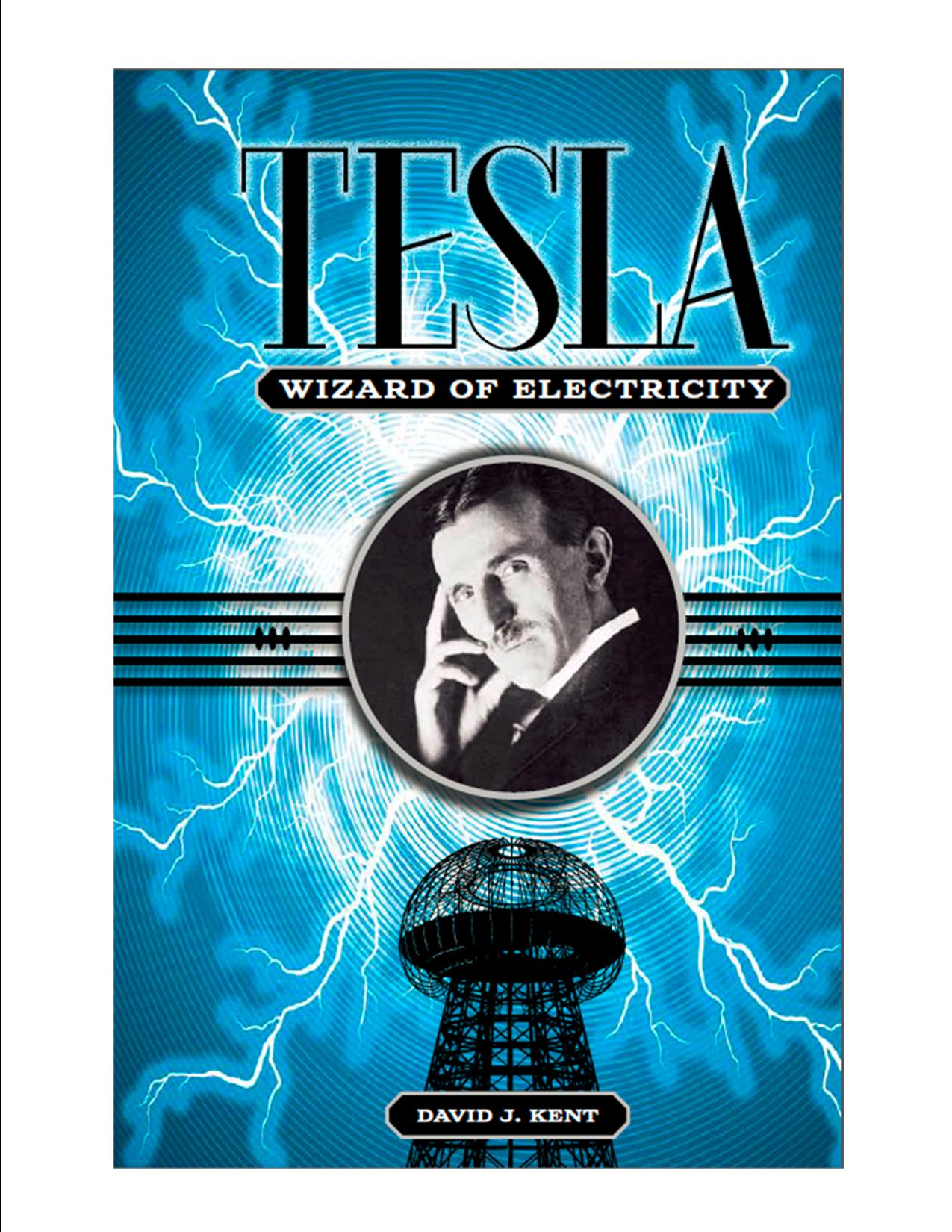
David J. Kent has been a scientist for thirty-five years, is an avid science traveler, and an independent Abraham Lincoln historian. He is the author of Tesla: The Wizard of Electricity (now in its 5th printing) and two e-books: Nikola Tesla: Renewable Energy Ahead of Its Time and Abraham Lincoln and Nikola Tesla: Connected by Fate. His book on Thomas Edison is due in Barnes and Noble stores in spring 2016.
Follow me by subscribing by email on the home page. And feel free to “Like” my Facebook author’s page and connect on LinkedIn. Share with your friends using the buttons below.
 Historian Richard Wightman Fox employs a unique concept in discussing Abraham Lincoln: Lincoln’s body. His body – the physical, the figurative, the aura, and the memory – is used to trace how he was perceived at the time and during several periods since then to the present day. In doing so, Fox has successfully provided a mirror into not only Abraham Lincoln, but ourselves.
 As a writer it’s always interesting to read other people’s writing, especially when they are people I know. Of course, interesting could mean either good or bad depending on the quality of the writing, but it seems I’ve been lucky because the books I’ve read by friends and acquaintances have been wonderful. That includes works by
  An exceptional scholarly treatment. Author Fornieri examines the age-old question of what makes Abraham Lincoln great. His answer lies in the belief that Lincoln was a philosopher statesman, which he defines as being understood in terms of six dimensions of political leadership.
 Harold Holzer shows why he is considered the leading Abraham Lincoln expert as he adds to his tremendous legacy of scholarship. The focus of this latest book is Lincoln’s relationship with the press. It’s important to know that the newspapers of the day were highly partisan and often closely aligned with a particular party or candidate. They were also fiercely antagonistic to each other and to the opposing party. If a politician didn’t have a good relationship with the press, they had no compunction to viciously and directly attacking him, and in many cases, making things up.
 The main thesis of this book is that Abraham Lincoln’s greatness came from his mastery of the “six-books of Euclid” geometry, and the subsequent application of the six elements of Euclid into his logic, reasoning, and speeches.
 Most people only think of Abraham Lincoln as our 16th President, but prior to that Lincoln had a long career as a lawyer. Much of his legal work was mundane, but he did occasionally get involved in some high profile cases that showed his logic and guile.
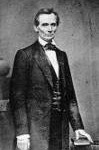 Abraham Lincoln grew up reading everything he could get his hands on in the largely illiterate western frontier of 19th century America. So it’s no small irony that estimates of books written about Abraham Lincoln run over 15,000 volumes. Some day I’ll count up the number of books about Lincoln I’ve read (I’m guessing over 200) but for now I’ll give you three quick reviews of books related to Lincoln’s own love of books. All of these and more can be found on
 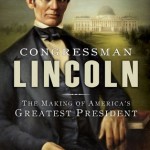 Author Chris DeRose takes a more detailed look at a period in Abraham Lincoln’s life that is normally glossed over in other biographies – his single term as a U.S. Congressman. The first few chapters highlight the political status of the time, as well as the political wrangling between different factions both within and external to the Whig party. The book goes into various aspects of the key question of the day, slavery. Doing so makes it clear that the post-Civil War reinvention of history to suggest the South wasn’t fighting to maintain and expand slavery is hogwash.