The Forgotten Hodgenville, Kentucky – Abraham Lincoln’s Birthplace

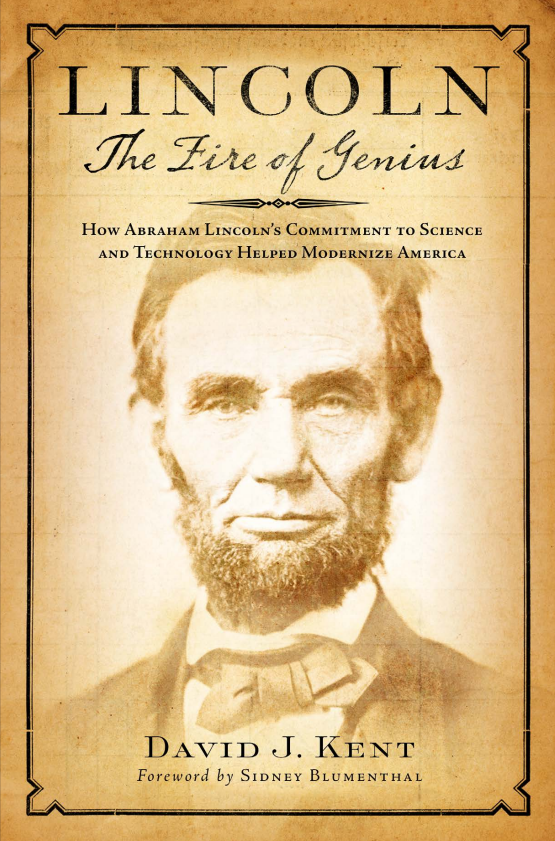
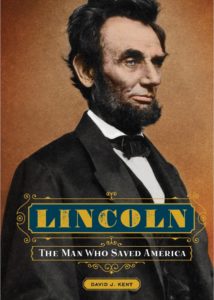
Hodgenville, Kentucky is where Lincoln was born, though the town seems forgotten by all by die-hard Lincolnophiles (call it a guilty pleasure). As I wrote in my book, Lincoln: The Man Who Saved America:

When Nancy was heavily pregnant with Abraham, Thomas moved to Sinking Spring Farm, a 300-acre tract near Hodgenville, Kentucky, named after a spring bubbling up from a sunken cave. He quickly erected a one-room log cabin, barely in time for Abraham’s birth on February 12, 1809. The Lincoln family likely believed this would be an ideal location to raise their growing family, as it had plenty of acreage and was only a few miles from Nancy’s aunt and uncle, Elizabeth and Thomas Sparrow.

Within two years, however, the Lincolns were on the move again. While initially idyllic, Sinking Spring turned out to be poor farmland and subject to a legal dispute over the title. After losing his land and his investment, Thomas sought to restart by purchasing 230 acres of land about ten miles away at Knob Creek Farm. Here Thomas was his most prosperous as a Kentucky farmer.

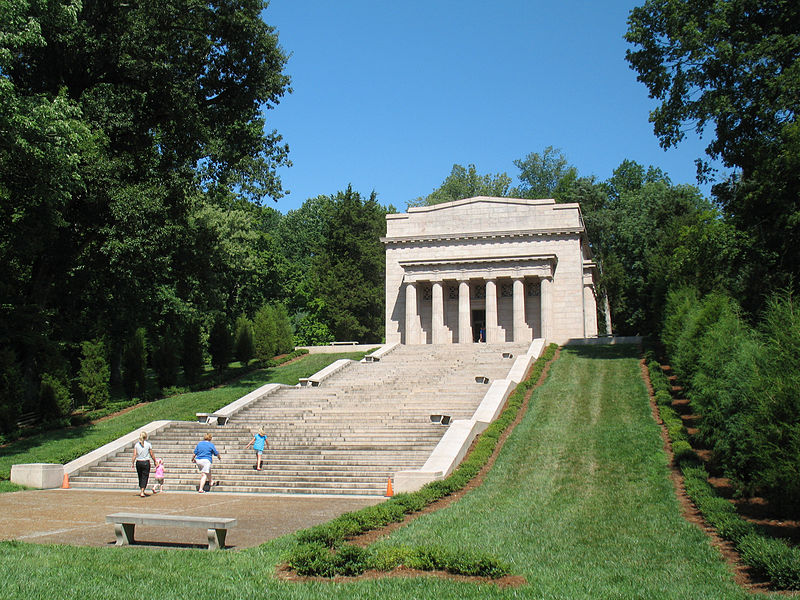
Both the Sinking Spring and Knob Creek farms are now part of the Abraham Lincoln Birthplace National Historical Park run by the National Park Service. Both are well-visited and I’ll talk more about them later. Today we focus on the town of Hodgenville itself, which virtually everyone passes through on the road between the two farm sites, but too few stop in. That’s a mistake.

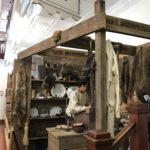
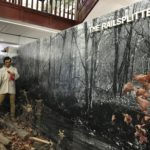
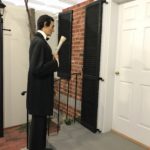
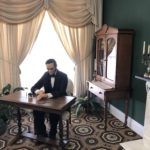
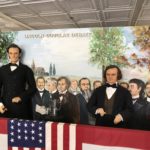
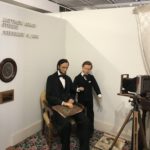
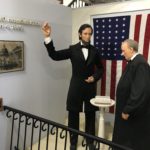
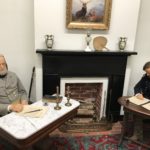
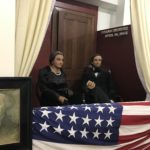
Hodgenville, which was originally simply Hodgen’s Mill, is tiny. It’s 3000 or so residents are squeezed into an area less than 2 square miles. From a visitor’s point of view it consists of a traffic circle surrounded by buildings sporting the Lincoln name. One of those buildings is the Lincoln Museum and it is not to be missed. The main part of the museum is a series of life-size wax figure vignettes of Lincoln’s life. Here you’ll find him growing up in the log cabin, tending a general store, making his name as the railsplitter, courting Mary Todd, preparing bills as a congressman, debating Steven A. Douglas, having his photo taken by Matthew Brady with Tad, being sworn in at his second inaugural, and after a quick look at Grant and Lee at Appomattox, relaxing on that fateful night at Ford’s Theatre. Photos of the scenes are in the slide show below.
Upstairs in the museum you’ll find period clothing, furniture, accessories, and a wonderful art gallery. Back on the main floor is a gift shop filled with souvenirs and books.

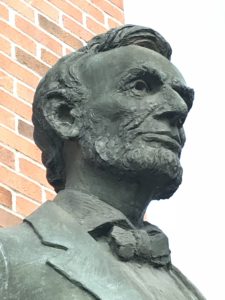
After visiting the museum, look both ways (and down the side streets), then hop over to the center of the traffic circle. Here you’ll find not one but two statues of Abraham Lincoln. The first one you’ll notice is a traditional seated Lincoln in all his presidential grandeur. Sculpted by Adolph A. Weinman as part of the centennial celebrations of Lincoln’s life, it was dedicated on March 31, 1909.

Facing it on the opposite side of the circle is a much more recent addition. Dedicated on March 31, 2008, the small bronze shows a youthful Lincoln with his dog “Honey.” Created by the Daub-Firmin-Hendrickson Sculpture Group, it represents Lincoln as he would have appeared shortly before leaving Kentucky for Indiana.

If you missed them, check out my previous posts from my Chasing Abraham Lincoln tour. Much more to come so check back regularly.

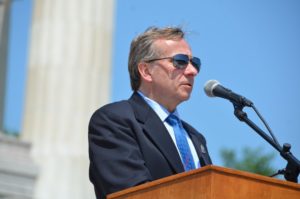
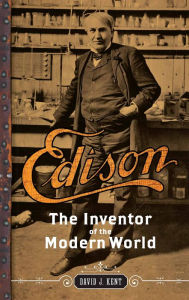
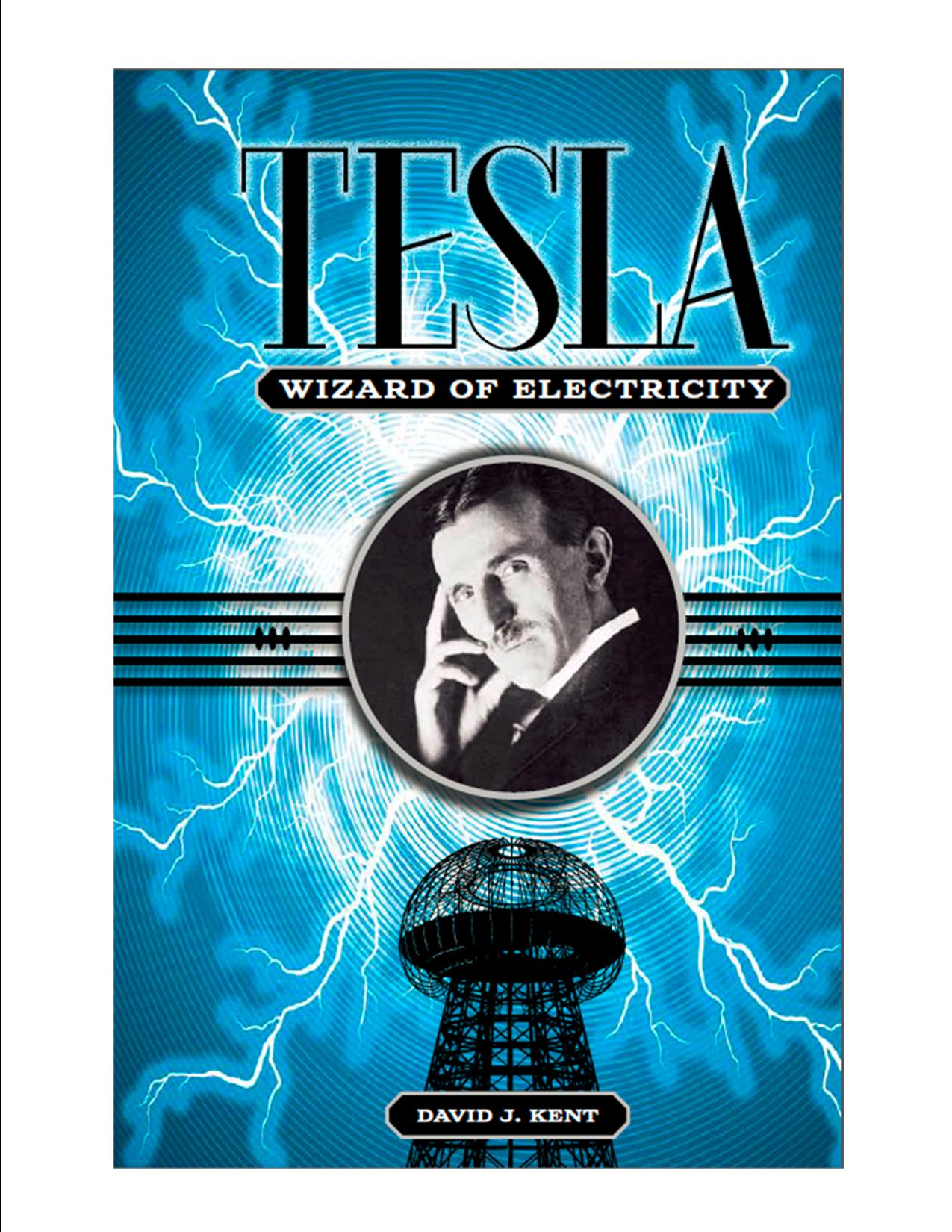
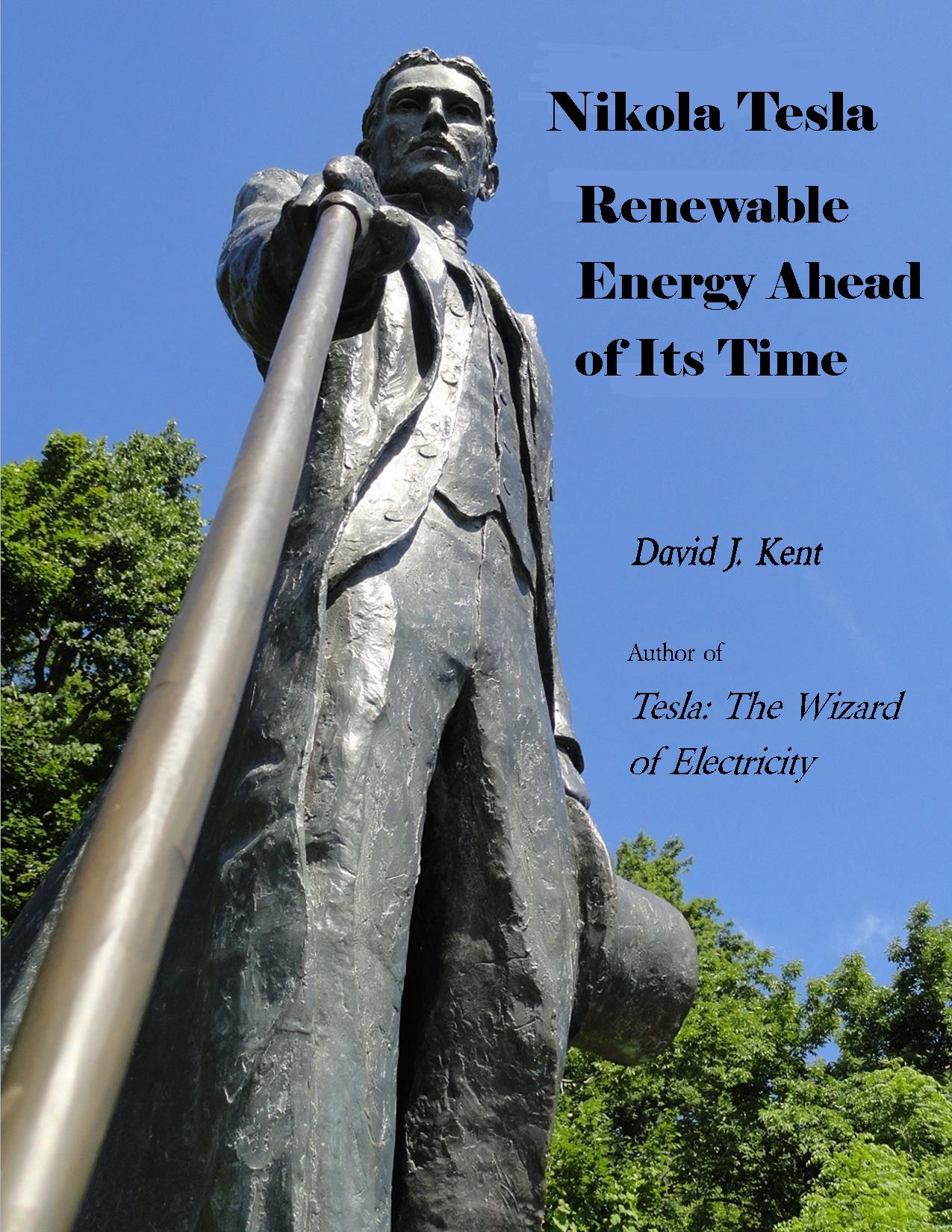
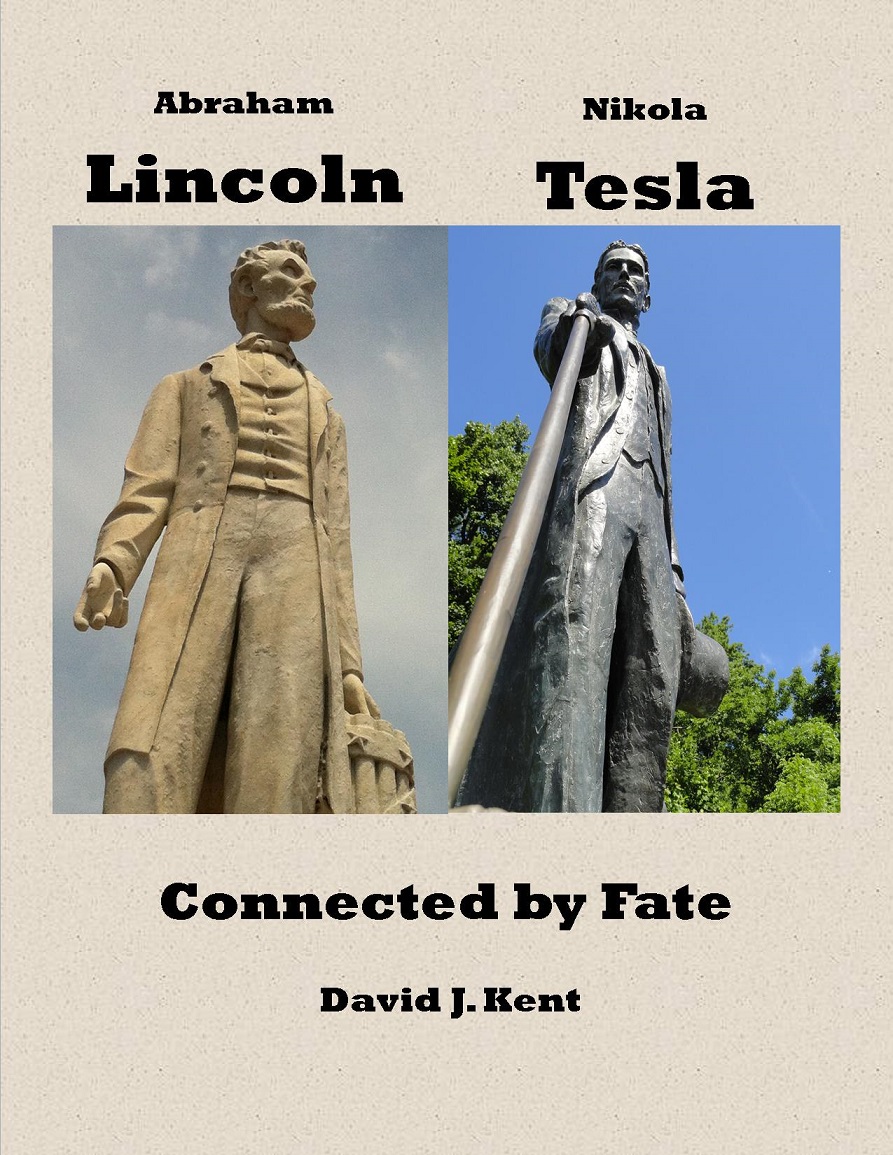
David J. Kent is the author of Lincoln: The Man Who Saved America, in Barnes and Noble stores now. His previous books include Tesla: The Wizard of Electricity (2013) and Edison: The Inventor of the Modern World (2016) and two e-books: Nikola Tesla: Renewable Energy Ahead of Its Time and Abraham Lincoln and Nikola Tesla: Connected by Fate.

Check out my Goodreads author page. While you’re at it, “Like” my Facebook author page for more updates!
Abraham Lincoln Dies, Thomas Lincoln Gets Married – The Lincoln Homestead

I finally managed (on my third try) to complete Part 1 of my Chasing Abraham Lincoln tour. Last week I wrote about my first stop at the Abraham Lincoln Library and Museum, which is on the campus of Lincoln Memorial University. My next stop was the homestead where Abraham Lincoln died and Thomas Lincoln got married.

That may sound a little confusing at first. Consider how I started chapter one of my book, Lincoln: The Man Who Saved America:

Abraham Lincoln was killed by an Indian in the spring of 1786. This was the namesake grandfather of the future president. Thomas Lincoln, the president’s father, was nearly killed at the same time. Only 8 years old, young Thomas was being dragged away by his father’s murderer when Mordecai, his 15-year-old brother, killed the attacker with a shot from the family musket. Thus, Thomas was saved and the family line leading to Abraham Lincoln’s birth remained intact. Had Thomas died as a child, the future of the United States would have been substantially different, if the country existed at all.

The Lincoln Homestead is the farm where Abraham Lincoln (the grandfather) was killed. It’s also where Thomas Lincoln (Abe Lincoln’s father) courted Nancy Hanks, Lincoln’s mother.

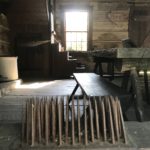
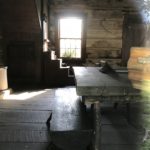
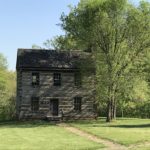
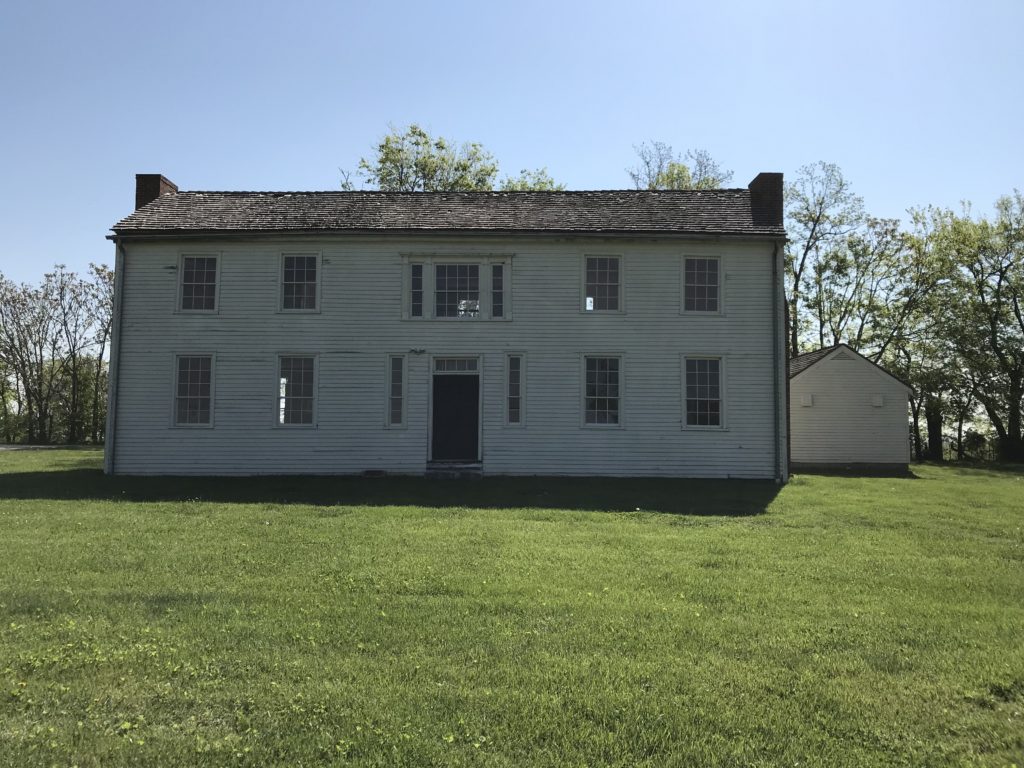
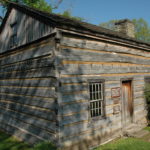
The site itself was closed the day I arrived, which meant I couldn’t get inside the buildings. I could, however, walk around the grounds and take photos. The “Lincoln Cabin” is  a reconstruction, as is the “Lincoln Workshop.” These are set up as they would have been when Thomas Lincoln was growing up. The third building is an original structure. The two story Francis Berry House is where Nancy Hanks was working as a seamstress while being courted by Thomas. Thomas proposed in front of the big fireplace. I couldn’t get inside but did snap a few photos through the windows.

Mordecai Lincoln house

As I mention in the book excerpt above, Thomas’s older brother Mordecai had killed their father Abraham’s killer. Through the ancestral law of primogeniture, the entire estate passed to the eldest brother Mordecai when he gained adulthood, at which point he likely turned the 12-year-old Thomas out of the house to work for others. Mordecai then built the much larger house above about a mile down the road. He lived out the rest of his life in that house, farming the large tract of land that now encompasses the Lincoln Homestead State Park (and an 18-hole golf course).

And here is where the story gets weird. Mordecai gained even more pedigree by marrying Mary Mudd from one of the “first families” of Washington County, Kentucky. If that name sounds familiar it’s because she is a distant cousin to Samuel Mudd, the doctor who set John Wilkes Booth’s broken leg after he assassinated Abraham Lincoln.

From the Lincoln Homestead I headed for Knob Creek and the Lincoln Birthplace. More on those in following posts.

David J. Kent is the author of Lincoln: The Man Who Saved America, in Barnes and Noble stores now. His previous books include Tesla: The Wizard of Electricity (2013) and Edison: The Inventor of the Modern World (2016) and two e-books: Nikola Tesla: Renewable Energy Ahead of Its Time and Abraham Lincoln and Nikola Tesla: Connected by Fate.

Check out my Goodreads author page. While you’re at it, “Like” my Facebook author page for more updates!
Abraham Lincoln Library and Museum, Harrogate, Tennessee

Abraham Lincoln Library and MuseumEveryone knows about the Abraham Lincoln Presidential Library and Museum in Springfield, Illinois, but there is another Abraham Lincoln Library and Museum. This one is in Harrogate, Tennessee in the campus of Lincoln Memorial University. And I spent the day there. It was an incredible experience.

Generally the visitors pay a very reasonable entrance fee, but I was met at the door by the Director, Michael Lynch, and the Assistant Director/Curator, Steven Wilson. After a quick tour around the museum (which is undergoing both short and long term remodeling) they led me into the vault. Yes, the vault. This is where the original letters, books, and other original materials are kept. If that isn’t enough, there is a second vault upstairs.

I was lucky enough to hold a small see-through container holding a lock of Abraham Lincoln’s hair, as well as a necklace holding the hair of Mary Lincoln and a locket holding young Willie Lincoln’s hair. I also got to touch letters to and from other major players in the Civil War.

Then it was time for work. Michael brought in a large binder holding many original documents related to John Worden, commander of the USS Monitor ironclad famous for the battle with the CSS Virginia (formerly USS Merrimack). Among the many treasures was a handwritten letter by Worden discussing Lincoln’s visit to him as he recuperated following the injuries he sustained in the Monitor/Merrimack battle. Perfect for my next book.

I also got to go through several volumes of an incredible set of scrapbooks put together by John Brown. They include thousands of original photographs, tickets, CDVs, advertisements, and so much more. Oh, and in order to find any particular one I used a prehistoric Google device once known as a “card catalogue.” Yes, these things still exist.

Thanks again to Michael Lynch and Steven Wilson (who was also kind enough to give me a copy of his recent presentation on Lincoln and Technology). It will take me a while to go through all the photos I took and the data I collected. Something for me to do once I finish my trip. As you read this I’ve already moved on to the next piece of my adventure.

David J. Kent is the author of Lincoln: The Man Who Saved America, in Barnes and Noble stores now. His previous books include Tesla: The Wizard of Electricity (2013) and Edison: The Inventor of the Modern World (2016) and two e-books: Nikola Tesla: Renewable Energy Ahead of Its Time and Abraham Lincoln and Nikola Tesla: Connected by Fate.

Check out my Goodreads author page. While you’re at it, “Like” my Facebook author page for more updates!
 

Chasing Abraham Lincoln – The Plan

Chasing Abraham LincolnI’ll soon be off chasing Abraham Lincoln. Lincoln is everywhere it seems – Cuba, Norway, Scotland, the UK – but he spent most of his life in Kentucky, Indiana, and Illinois. And that’s where I’m going on my Chasing Abraham Lincoln Tour of 2018.
Like rock star tours, this one will highlight Lincoln’s greatest hits. I’ll be splitting it into two major parts, though the overall tour consists of many smaller parts as well.

Part 1 this spring takes me to Lincoln’s early life…and the end of it. I’ll be speaking at West Virginia Wesleyan College on my book, Lincoln: The Man Who Saved America. Taking advantage of the location, I’ll then drive down to Harrogate, Tennessee to visit the Abraham Lincoln Library and Museum at Lincoln Memorial University. From there I turn north and head for Lincoln’s Birthplace National Park, Lincoln’s Boyhood Home, and Lincoln Homestead National Park, all in Kentucky. Then I’ll track his family’s move across the Ohio River at Grandview and Rockport, Indiana before heading up to the exhibits at the Indiana State Library in Indianapolis and the documents at the Allen County Public Library in Fort Wayne. This will get me through the major Indiana stops, but not all my stops.

Abraham Lincoln Birthplace NHS

A three hour drive north of Fort Wayne gets me into Michigan and Henry Ford’s famous museum. At Ford’s Greenfield Village I’ll find the original Logan County Courthouse where Lincoln practiced law from 1840-1847. And then there is the end of Lincoln’s life – the original high-backed rocking chair in which Lincoln was sitting when he was tragically struck down by John Wilkes Booth.

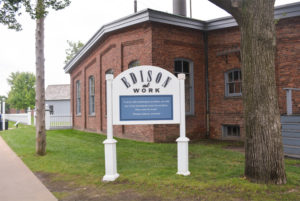
While I’m at Greenfield Village I’ll also check out the recreated Menlo Park Laboratory of Thomas Edison, star of my second book, Edison: The Inventor of the Modern World. The lab site includes Edison’s original glass house, carbon shed, and even truckloads of Menlo Park (now Edison), New Jersey dirt. Another part of the Village has the Edison Illuminating Company’s Station A, where a young Henry Ford worked as a steam engineer in the 1890s.

Edison at Work, Greenfield Village

From Michigan I’ll pass through Dayton and Cincinnati, Ohio to gawk at some famous Lincoln statues before working my way towards home

Keep in mind this is just Part 1 of my Chasing Abraham Lincoln Tour. Part 2 will take me this summer into Illinois to follow Lincoln and Stephen A. Douglas around their famous debate sites, plus check out the remnant of the Illinois and Michigan Canal that Lincoln helped create. Of course, these 2018 trips come after my 2016 trip Visiting Abraham Lincoln’s Illinois, which I documented in Part I and Part II and this special post on How Bloomington, IL made Lincoln Great (click on the links).

Eventually I’ll have covered all of Abraham Lincoln’s life (I’ve already lived for three months in Edinburgh, Scotland, which boasts the only Lincoln and Civil War statue outside the U.S.). I’ve also hit most of the Washington, D.C. area sites and was recently down in Newport News and City Point. A bit inefficient to spread this over the years, but it’s slowly coming together. I’ll have plenty of photos and stories from the 2018 tours so keep checking back here for more info.

David J. Kent is the author of Lincoln: The Man Who Saved America, in Barnes and Noble stores now. His previous books include Tesla: The Wizard of Electricity (2013) and Edison: The Inventor of the Modern World (2016) and two e-books: Nikola Tesla: Renewable Energy Ahead of Its Time and Abraham Lincoln and Nikola Tesla: Connected by Fate.

Check out my Goodreads author page. While you’re at it, “Like” my Facebook author page for more updates!