Abraham Lincoln made two tours of New England. The first trip changed him. The second trip changed the country and sent us into Civil War.
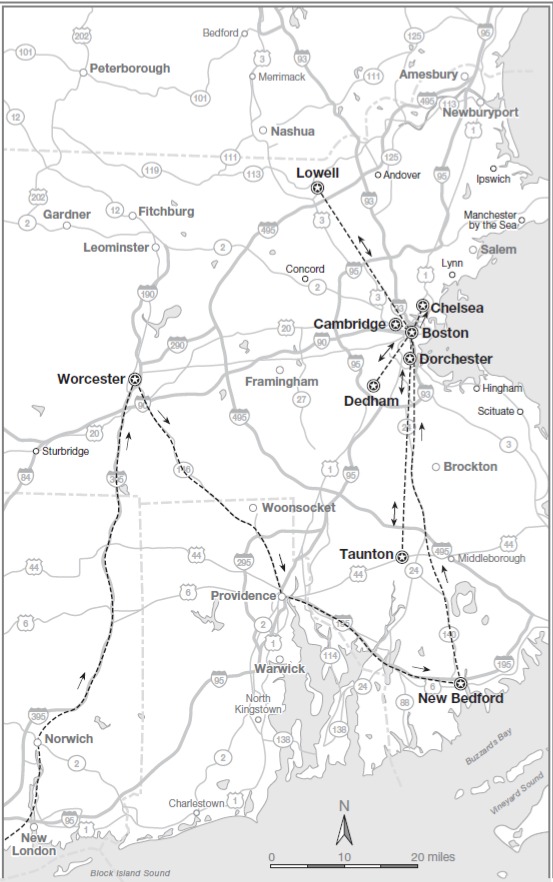
In 1848, Lincoln was a first-term US congressman. He had been a Whig Party leader in Illinois, but he was largely unknown in the influential East – and would largely remain so. As the first session ended, Lincoln was asked to spend the end of his summer stumping for the Whig nominee for president, Zachary Taylor. It wasn’t an easy assignment. Taylor was the hero of the Mexican War, which the Whigs had “very generally opposed.” Taylor was also Southern plantation owner, enslaving up to 200 Americans of African heritage. Lincoln’s job was to go to Massachusetts to try to keep a wayward Whig faction calling themselves the Free Soil Party in the Whig fold. He also found himself exposed to another internal Whig split between Conscience and Cotton Whigs, and a raging abolitionist network. Arriving “with a hayseed in his hair,” Lincoln came away vastly educated in the realities of the world.
And then he was out of political office for a dozen years.
By the time he returned to New England again in 1860, both Lincoln and the nation had been drastically altered. Lincoln was now a leader in the new Republican Party, now famous after the 1858 Lincoln-Douglas debates. Following an earth-shattering address in New York City’s Cooper Union, Lincoln was off to visit his son Robert in Exeter, New Hampshire. He gave a speech in Providence, Rhode Island on the way there, then four more in New Hampshire, to be followed by another five in Connecticut and one more in Rhode Island. While Taylor had already been selected before his 1848 trip, the Republican convention was still three months away in 1860. Which means he was stumping for both the party and, perhaps more surreptitiously, for himself. Now he was setting the agenda that would make him president.

Lincoln in New England: In Search of His Forgotten Tours is a journey in which the reader “rides-along” with me as I explore the places he visited – and some he didn’t – in order to get a sense of what Lincoln saw as he learned about the states that would play a major role in his nomination and his presidency. Along the way we’ll meet with local authorities, Lincoln experts, and how New England commemorates each of these largely forgotten tours.
Above all, we’ll answer the questions: Why was Lincoln here, and what did he accomplish?
The book is being published by Globe Pequot and is scheduled for release on March 3, 2026. You can already pre-order it from your favorite bookseller.
I’ll have more information over the next few months. Come back here shortly for the big cover reveal.
And feel free to reach out to me to schedule talks and interviews.
[Maps courtesy of Globe Pequot]

Coming in March 2026: Lincoln in New England: In Search of His Forgotten Tours
Join me on Goodreads, the database where I keep track of my reading. Please leave a review on Goodreads and Amazon if you like the book.
You also follow my author page on Facebook. Also follow me on Instagram.
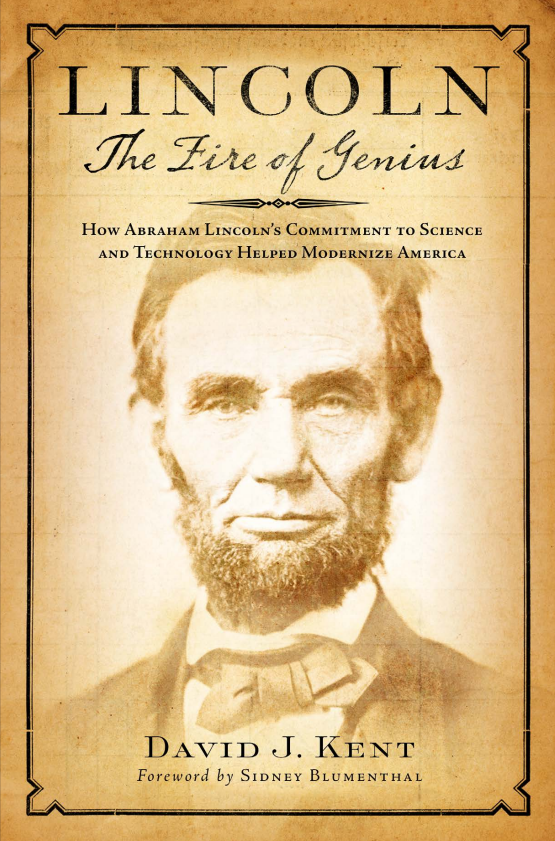
David J. Kent is Immediate Past President of the Lincoln Group of DC and the author of Lincoln: The Fire of Genius: How Abraham Lincoln’s Commitment to Science and Technology Helped Modernize America and Lincoln: The Man Who Saved America.
His previous books include Tesla: The Wizard of Electricity and Edison: The Inventor of the Modern World and two specialty e-books: Nikola Tesla: Renewable Energy Ahead of Its Time and Abraham Lincoln and Nikola Tesla: Connected by Fate.
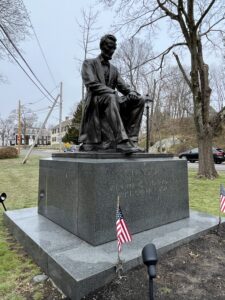 There stands a statue of Abraham Lincoln in Hingham, Massachusetts, New England. It’s immediately across the street from the Samuel Lincoln house. In Hingham, England, United Kingdom there is also a statue of Lincoln. But why? And who was Samuel Lincoln?
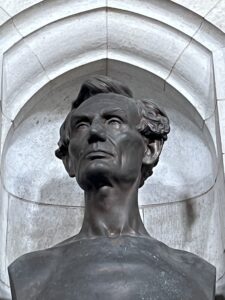 The statue in Hingham, England is actually a bust, not a full statue. It was created based on the life mask of Leonard Volk made in 1860 just after Lincoln’s nomination. It depicts a much younger, beardless (and shirtless) Lincoln. It sits in an alcove on the side of St. Andrew’s Church. The bust was installed in 1919 to commemorate the Lincoln ancestry that had for many generations worshiped at the St. Andrew parish.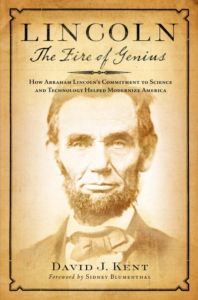
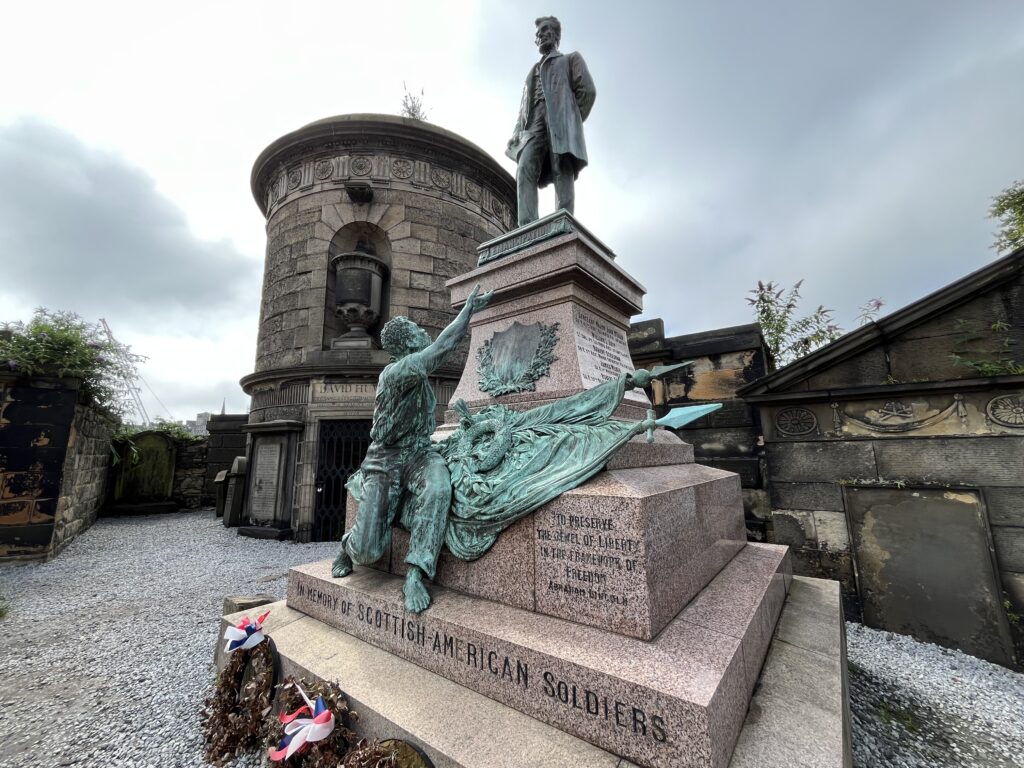
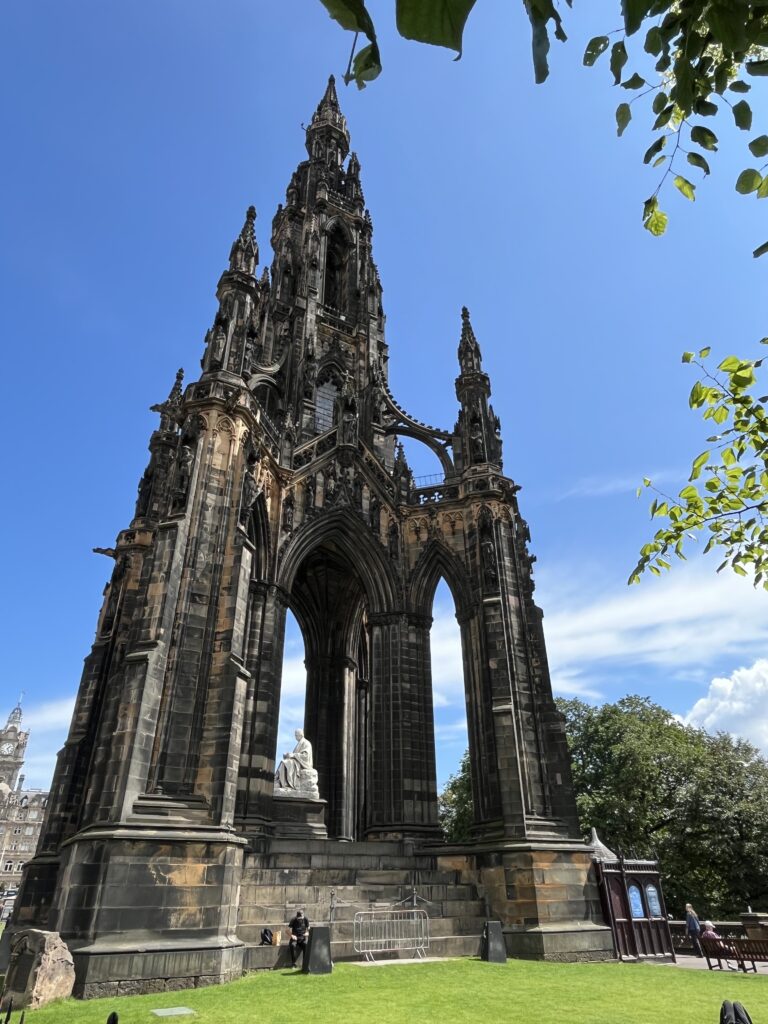
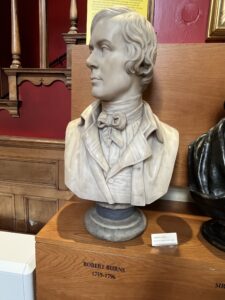 Another connection is to Robert Burns, the Scottish poet whom Lincoln had a particular fascination. Lincoln had supposedly discovered Burns from Jack Kelso, an enigmatic friend from Lincoln’s New Salem days. Kelso had emigrated to the United States from Scotland, where he had previously been a Glasgow schoolteacher. He apparently owned many volumes of Burns that Lincoln read over and over (ditto for Shakespeare). Lincoln was hooked and recited Burns from memory on many occasions through his life. Robert Burns is eminently present in Edinburgh, including a large monument at the foot of Calton Hill (not far from the aforementioned Lincoln statue). Burns is also one of the three Scottish writers featured in the Writers’ Museum tucked into Lady Stair’s Close a few steps off the Royal Mile that leads to the Edinburgh Castle. He is joined there by Robert Louis Stevenson and Sir Walter Scott.