 Finally! The long-delayed renovations to the Lincoln Memorial are about to start. My colleague in the Lincoln Group of DC, Ed Epstein, reported on the official U.S. National Park Service announcement this morning. Writing on the Lincolnian.org blog, Epstein notes:
The National Park Service in coming weeks will finally start work on long discussed and long- delayed work to vastly expand visitor space under Washington’s landmark Lincoln Memorial, by far the most visited of the capital city’s many monuments and memorials.
Most of the century-old memorial will remain open during the work, which is expected to last at least four years, the Park Service said in unveiling news of the project’s kickoff. The project was originally announced in 2016, with an $18.6 million donation from billionaire David Rubenstein, a philanthropist who has played a major role in several ventures involving historical preservation in Washington, including paying $7.5 million for repairing the Washington Memorial after a 2010 earthquake. Among other projects, he also bought an original copy of the Magna Carta from 1297 for $21.3 million and has lent it to the National Archives to put on display.
The current visitors center in the Lincoln Memorial’s basement, or undercroft, is 800 square feet. That will grow to 15,000 square feet. The project will also include new restrooms, a larger bookstore and elevator replacement work. The current bookstore is in a cramped space off the northeast corner of the memorial’s main chamber, not far from where the words of Lincoln’s Second Inaugural Address are carved into the wall.
The Park Service said the new visitors center will feature ceiling-to-floor glass walls that will offer a view of some of the undercroft’s arched supports, which were sunk deep into the marshy land on which the memorial was built to provide support for the massive 38,000-ton granite and marble structure. The latest trends in museum design will include an “immersive theater presentation” that will flash images of the many historic events that have taken place at the memorial onto the foundations.
Displays will explain the epic construction of the memorial and talk about how the Lincoln Memorial became the site of major civil rights demonstrations, most notably the August 1963 march on Washington, at which the Rev. Martin Luther King Jr. delivered his “I have a dream” speech before a crowd of a few hundred thousand people.
“We’re essentially building a modern glass structure inside this historic space,” said Jeffrey Reinbold, superintendent of the park service’s National Mall and Memorial Parks. In an interview with the Washington Post, he added, “And all of the challenges of how visitors would move throughout the space, interact with this historic space … took a little longer than we expected” to plan.
The work is supposed to finish in 2026, in time for the 250th anniversary of the Declaration of Independence on July 4th. But given the vagaries of construction work, that could be optimistic.
Go here to read the full article by Ed Epstein on the Lincolnian.org website.
This is exciting news, and the Lincoln Group of DC will keep everyone up to date as the project progresses.
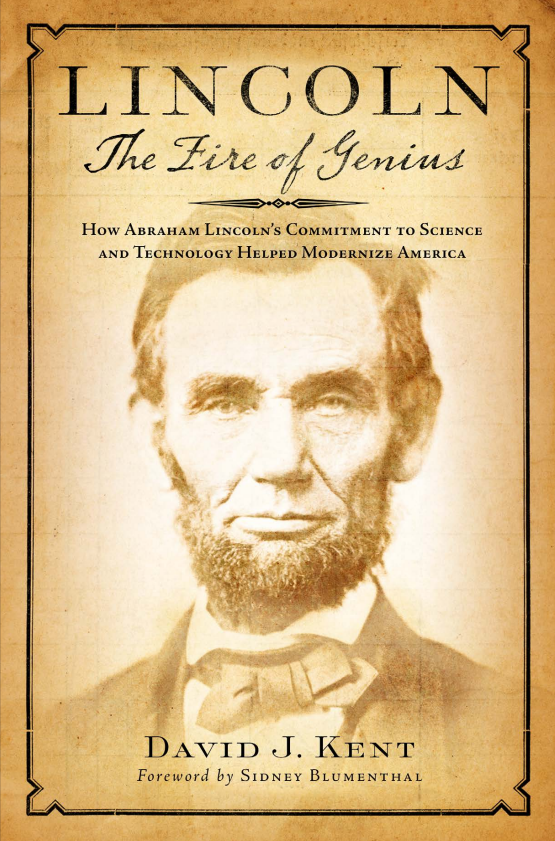
Meanwhile, my tour celebrating the release of Lincoln: The Fire of Genius continues with upcoming presentations at the Abraham Lincoln Institute’s annual symposium at Ford’s Theatre in March and the Lincoln Society of Peekskill’s annual banquet in April. You can catch any or all of the interviews and presentations I’ve done for Lincoln: The Fire of Genius. Just scroll through my Media page for events with President Lincoln’s Cottage, the Abraham Lincoln Looking for Lincoln program, my interview on The Pat Williams Show (founder of the Orlando Magic basketball team), the Our American Stories radio program, and much more. Plus, check out upcoming events.
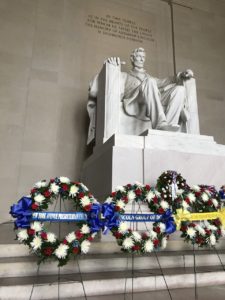
[Photo by David J. Kent, February 12, 2023, at the annual wreath laying ceremony for Lincoln’s birthday]
Lincoln: The Fire of Genius: How Abraham Lincoln’s Commitment to Science and Technology Helped Modernize America is available at booksellers nationwide.
Limited signed copies are available via this website. The book also listed on Goodreads, the database where I keep track of my reading. Click on the “Want to Read” button to put it on your reading list. Please leave a review on Goodreads and Amazon if you like the book.
You also follow my author page on Facebook.
David J. Kent is President of the Lincoln Group of DC and the author of Lincoln: The Fire of Genius: How Abraham Lincoln’s Commitment to Science and Technology Helped Modernize America and Lincoln: The Man Who Saved America.
His previous books include Tesla: The Wizard of Electricity and Edison: The Inventor of the Modern World and two specialty e-books: Nikola Tesla: Renewable Energy Ahead of Its Time and Abraham Lincoln and Nikola Tesla: Connected by Fate.
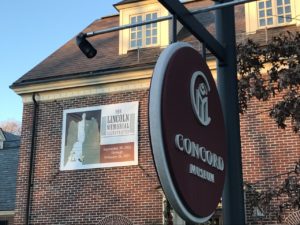 It seems Abraham Lincoln is everywhere. Our continuing “unexpected Lincoln” series takes us to Concord, Massachusetts, home of Henry David Thoreau and just steps away from “the shot heard round the world.” I stopped in Concord on a recent road trip to see a special Lincoln Memorial Centennial exhibit at Concord Museum. Not only was Lincoln there, but it turns out Concord was a hotbed of abolitionist fever – and famous thinkers so thick you couldn’t help running into one in the 1840s-50s.

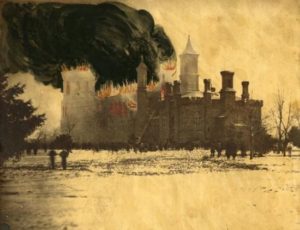 One scientific institution that Lincoln had protected and advanced during the war took a major hit on the frigid winter’s afternoon of January 24, 1865. Joseph Henry sat in his third-floor office in the Smithsonian Castle, alternatively updating his notebook and staring out the great rose window squeezed between the two front towers. Stirring, he noticed a sooty burning odor. Likewise, his daughter Mary was reading in the library until she noticed the room darkening, a thick cloud of smoke obscuring the view. The Castle was on fire!
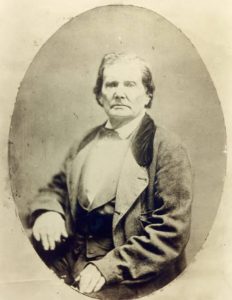 Abraham Lincoln’s father, Thomas Lincoln, died on January 17, 1851, at the ripe old age of 73. Abraham opted not to travel to see his father in his waning days, in part because they were no longer close, but also because Lincoln’s third son, Willie, had been born about a month before and his wife, Mary, was exhibiting significant post=partum sickness. I visited the Lincoln homestead and gravesite near Lerna, Illinois, a few years ago in order to learn more about Thomas and


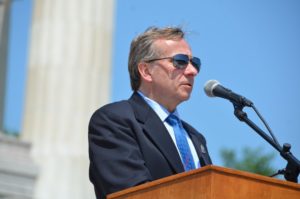 The year in a writer’s life was spectacular. My new book was released, I did tons of media, and wrote constantly, while also juggling my duties as president of the Lincoln Group of DC. Sometimes those two lives blended to the point where the line between them wasn’t so easy to determine. Adding in my
 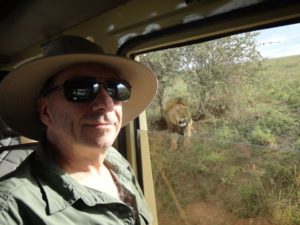 Some followers will recall that my annual travel roundup has been called “
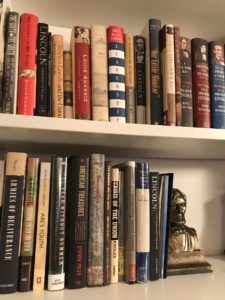 Even when I’m trying to reduce the number of books in my house I end up with more. My Abraham Lincoln book acquisition total for 2022 is 34, and that number includes some books that are Lincoln-ish. You can read about past years acquisitions by