The spring issue of the Lincolnian, the newsletter of the Lincoln Group of DC, included my most recent article about Lincoln’s two trips to New England. As Lincoln toured around Rhode Island, New Hampshire, and Connecticut, many of the people introducing his dozen speeches announced him as “the next vice president of the United States). At least one introduced him as “the next President” of the United States in anticipation of the Republican National Convention coming up in just over two months.
Some of this was the usual pumping up the importance of the speaker that the audience would have to listen to for the next two hours or so. But many of these state party leaders were beginning to think of him as a member of the Republican Party ticket. Most of them still assumed that the heir-apparent, William H. Seward was the presumptive nominee, but that Lincoln might be a good vice president. After all, Lincoln had received 110 votes to be the vice-presidential running mate of John C. Fremont in 1856 (the spot eventually went to William L. Dayton), so he wasn’t a complete unknown.
Still Lincoln wasn’t expected to be in the running for the 1860 presidential nomination. How New England helped him win is the topic of my article. Take a look below (hover over the first page and click the arrow at the bottom to see the second and third pages):
While you’re here, check out the various Lincoln in New England events on my media page.
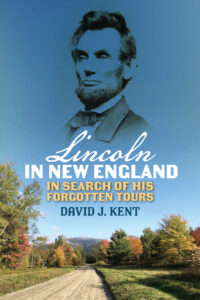
Now Available: Lincoln in New England: In Search of His Forgotten Tours. Or Order directly at:
Amazon Barnes & Noble Books-a-Million Bookshop
Join me on Goodreads, the database where I keep track of my reading. Please leave a review on Goodreads and Amazon if you like the book.
You also follow my author page on Facebook and on Instagram.
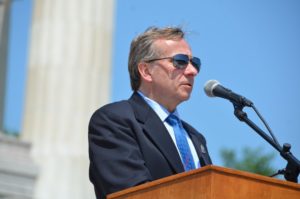
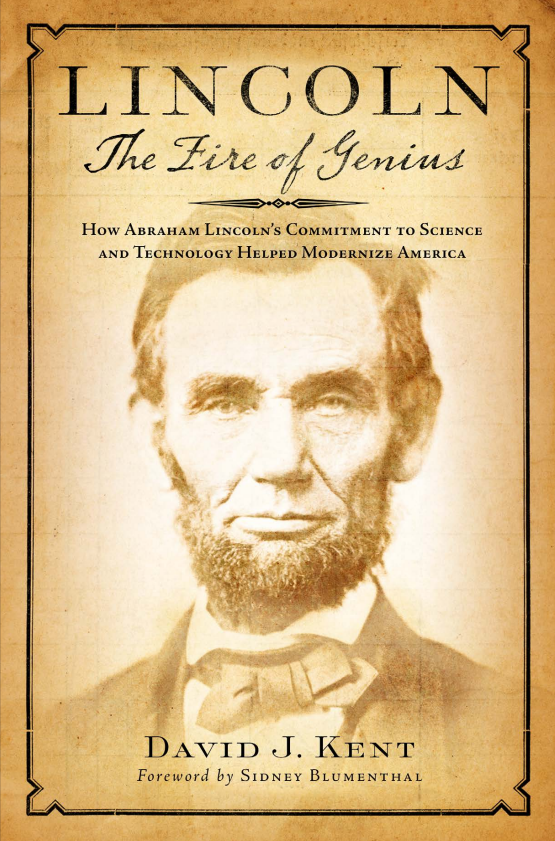
David J. Kent is Immediate Past President of the Lincoln Group of DC and the author of many books on Abraham Lincoln, Nikola Tesla, and Thomas Edison.
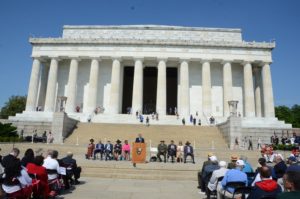
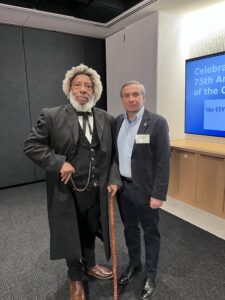 In honor of Abraham Lincoln’s birthday, the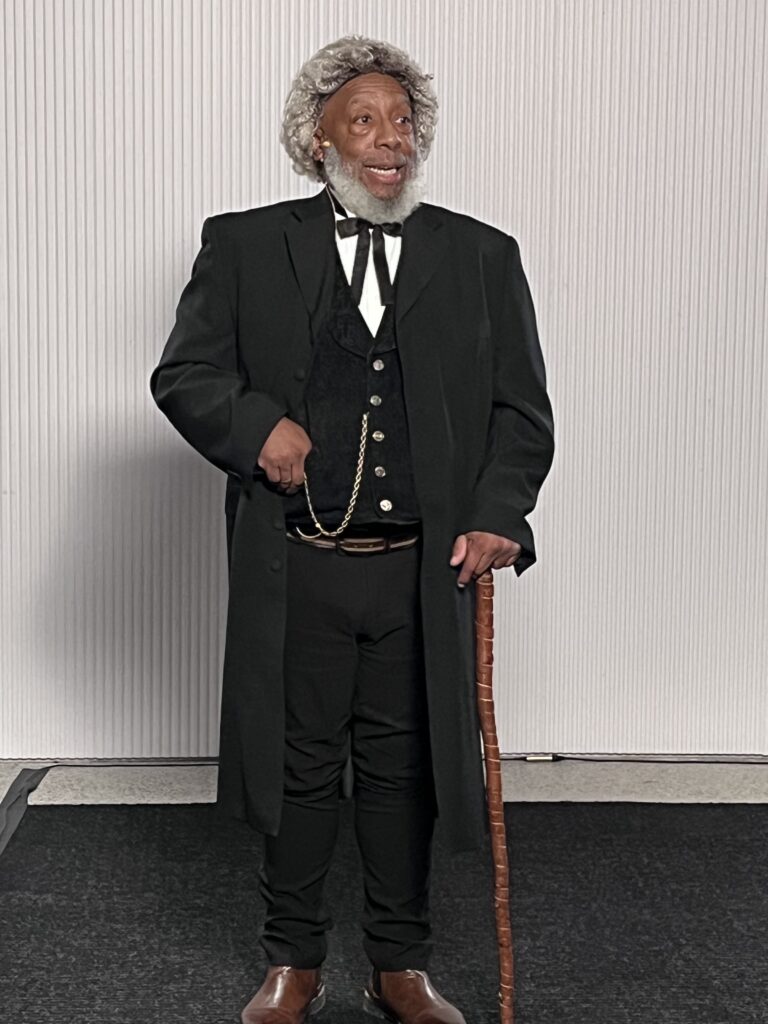
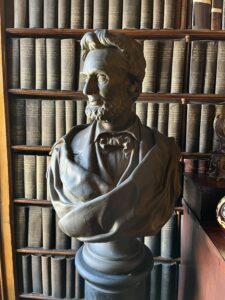 February through April is peak “Abraham Lincoln Season,” with many events associated with his birthday, final stages of the war, and assassination. The year 2026 is also the 250th anniversary of the Declaration of Independence, and Lincoln was a stalwart adherence to its principle of “all men are created equal.” And this year also sees the release of my newest book,
 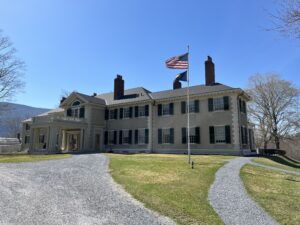 The Lincoln Forum meets annually in November in Gettysburg, PA. But in 2025 the Forum started a new tradition – a spring symposium at Robert Lincoln’s home in Manchester, Vermont he called Hildene. I attended the first meeting and I’m officially on the program as a speaker for the 2026 program running from May 1 to 3, 2026.
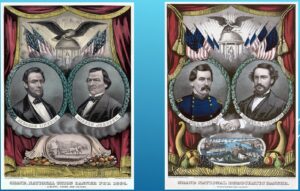 Abraham Lincoln won reelection in 1864. Or so we remember. But the results may not be what they seem, and some of the states had questionable legitimacy. I’ll be discussing this topic in a new presentation scheduled for Tuesday, October 29, 2024.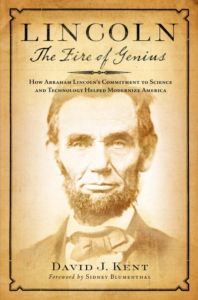
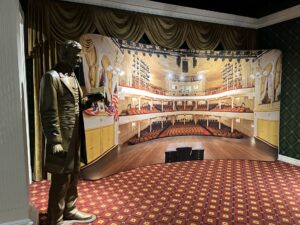 Ford’s Theatre plays an important role in the legacy of Abraham Lincoln. It was here that Lincoln was assassinated by a slavery sympathizer and actor. Today, Ford’s does double duty as a working theater and a memorial to our 16th president. Last night I did something I had never done in all my years of going to Ford’s. I took an after-hours tour.
 A funny thing happened on the last