 Join me and author Michael Vorenberg on Thursday, March 13, 2025, for the White House Historical Association’s History Happy Hour. The program is free and begins at 6 pm ET. Register Here to receive the Zoom link.
The White House Historical Association (WHHA) is “a private, nonprofit, educational organization with a mission to enhance the understanding and appreciation of the Executive Mansion.” One of their many initiatives is History Happy Hour, which enables experts to present topics related to the White House and the presidency. True to its name, the Happy Hour begins with a cocktail created by James coming to us from the Publick House in Sturbridge, Massachusetts.
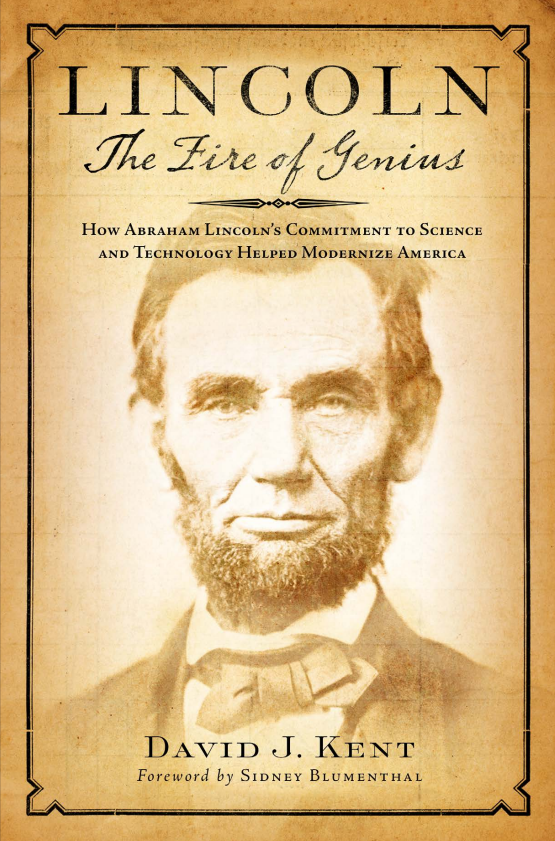
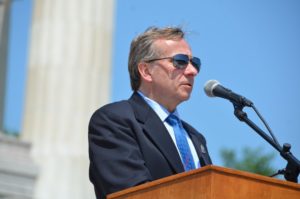
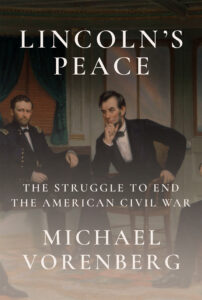
Last year I presented a program for the History Happy Hour on my book, Lincoln: The Fire of Genius, focusing on how Lincoln helped institutionalize science and technology in the federal government [Click the link to watch the video]. This time I will be moderating the program, which features a presentation by Brown University history professor Michael Vorenberg. He’ll be discussing his newest book, Lincoln’s Peace: The Struggle to End the American Civil War. Then I will moderate and lead the Q&A with Michael for the rest of the program.
Again, the program is free, but you’ll need to Register Here to get the Zoom link.
The title of the book, and the cover, is based on “The Peacemakers,” an 1868 painting by George P.A. Healy, which has been an important part of the White House Collection since 1947. The piece depicts President Abraham Lincoln and his top military commanders, Maj. Gen. William T. Sherman, Lt. Gen. Ulysses S. Grant, and Rear Adm. David D. Porter, seated in the after cabin of the Union steamer River Queen less than a week before the fall of Petersburg, Virginia to plan the end of the Civil War and the nature of the peace terms to follow on March 27, 1865. Two weeks later, Robert E. Lee surrendered at Appomattox.
Although Healy’s painting tells a story of a glorious, peaceful end to the war, through artistic choices, such as the rainbow glowing just beyond Lincoln’s tilted head, Michael Vorenberg’s new book, “Lincoln’s Peace: The Struggle to End the American Civil War,” which bears this image on its cover, reveals an alternative narrative. Within its pages, he details an end filled with chaos and strife rather than one pioneered by peace.
So, how and when did the Civil War? Tune in on Thursday, March 13, 2025, to find out!
[Photo compliments of Michael Vorenberg]
Coming in February 2026: Unable to Escape This Toil
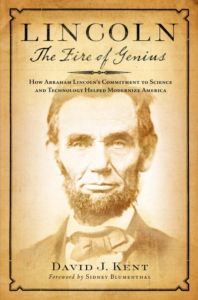
Available now – Lincoln: The Fire of Genius: How Abraham Lincoln’s Commitment to Science and Technology Helped Modernize America is available at booksellers nationwide.
Limited signed copies are available via this website. The book also listed on Goodreads, the database where I keep track of my reading. Click on the “Want to Read” button to put it on your reading list. Please leave a review on Goodreads and Amazon if you like the book.
You also follow my author page on Facebook.
David J. Kent is President of the Lincoln Group of DC and the author of Lincoln: The Fire of Genius: How Abraham Lincoln’s Commitment to Science and Technology Helped Modernize America and Lincoln: The Man Who Saved America.
His previous books include Tesla: The Wizard of Electricity and Edison: The Inventor of the Modern World and two specialty e-books: Nikola Tesla: Renewable Energy Ahead of Its Time and Abraham Lincoln and Nikola Tesla: Connected by Fate.
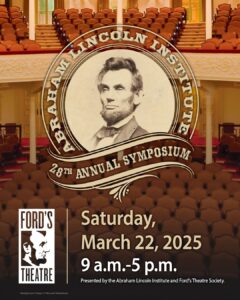 The Annual Abraham Lincoln Institute (ALI) Symposium is set for March 22, 2025, at historic Ford’s Theatre in downtown Washington, DC. The full day program starts at 9 am and runs to 5 pm.
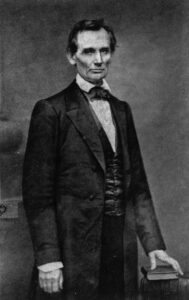 In February 1860, the western-bred Abraham Lincoln must have been astonished by the hustle and bustle around lower New York City. Having crossed the Hudson River from Jersey City to Manhattan, Lincoln made his way to the Astor House, one of most luxurious hotels in New York City, conveniently located near City Hall and Publishers Row (aka, Newspaper Row or Printing House Square) housing the city’s most important newspapers. New York City had grown by over fifty percent just in the last decade, many of whom were immigrants from Ireland, Germany, and other European nations. If Lincoln’s room was on the ground floor of the Astor House, he would have looked out on St. Paul’s Chapel, built in 1766 and where George Washington attended services immediately after taking the oath of office as the first president of the United States. No doubt Lincoln would have looked into the chapel. Today, from a vantage point on Broadway, you can see the new One World Trade Center looming behind the Chapel’s historic spire. From the other side, standing in the burying ground facing the skyscraper, is a “Bell of Hope” rung every year on September 11 to reflect both the mourning of that day and the Chapel’s role as a refuge during that warm, clear cataclysmic day in 2001.
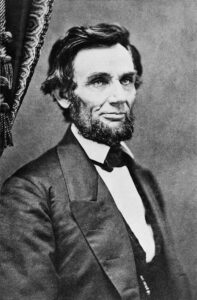 The newly bearded President-Elect Abraham Lincoln is making his way from Springfield, Illinois to Washington for his inauguration as president of the United States. But today, February 18, 1861, he was spending an eventful day traveling to Albany, New York.
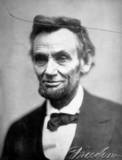 While Abraham Lincoln had a well-deserved reputation as a soft touch during the Civil War, readily finding excuses to offer mercy to Union soldiers who had fallen asleep or abandoned their posts, he also approved the hanging of the only slave trader ever to be executed by the United States. Captain Nathaniel Gordon was a repeat offender, caught with nearly 900 enslaved men, women, and children crammed into the tiny space below decks off the coast of Congo. But Gordon wasn’t particularly worried. For the first 40+ years of the law that made international slave trading illegal and punishable by death, no man was ever executed. Why now? And why by Lincoln?
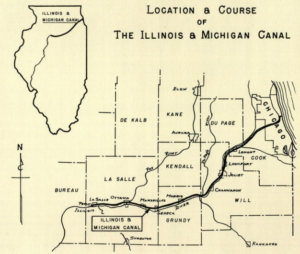 Abraham Lincoln was a steady proponent of Internal Improvements projects in Illinois. That said, there were problems. The few projects initiated randomly to encourage widespread district support resulted in a hodgepodge of disconnected rail lines, many of which ran only a few miles to nowhere in particular. Most projects simply disappeared.
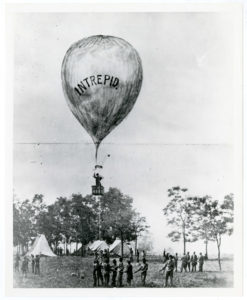 Abraham Lincoln was always interested in technology, so when the Civil War arrived as soon as he was inaugurated, he worked hard to convince the usually conservative military to employ the latest technological advances. One such advance caused him to look to the skies to give every advantage to Union troops. That was the use of balloons in war.
 As 2024 comes to an end, it’s time to recap how it all went in the writer’s life. At least for this one writer. Once again, it was a busy year, with some residual events related to Lincoln: The Fire of Genius, some new obligations, and some really big news (really!). You can check out my other year-end posts by reading about
  Traveling seems to be done for the year. At least mostly (there might be one short overnight trip squeezed in before New Years). Enough to look back on the year in a traveler’s life. You can see the
 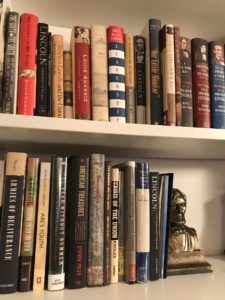 How time flies. The year 2024 is almost over and I think I’ve finished accumulated new books for the year, to it’s time for my annual Abraham Lincoln book acquisitions post. As you’ll quickly see, my goal to reduce the number of books I buy has been relatively successful-the total number of books acquired is definitely fewer-coming in at 25 new acquisitions. Reducing the total number of books? Not so successful. You can read about past years acquisitions by