 Abraham Lincoln rejects gift of elephants from Siam by pointing out the advantages of steam power. Lincoln would promote many scientific and technological improvements in his lifetime and his presidency.
On February 3, 1862, President Lincoln writes to the King of Siam declining the King’s offer of “a stock from which a supply of elephants might be raised on our own soil.” Understanding the importance of good diplomacy, Lincoln explains the climate of America was not conducive to raising elephants:
“This Government would not hesitate to avail itself of so generous an offer if the object were one which could be made practically useful in the present condition of the United States. Our political jurisdiction, however, does not reach a latitude so low as to favor the multiplication of the elephant…”
Lincoln goes on to note that “steam on land, as well as on water, has been our best and most efficient agent of transportation in internal commerce.”
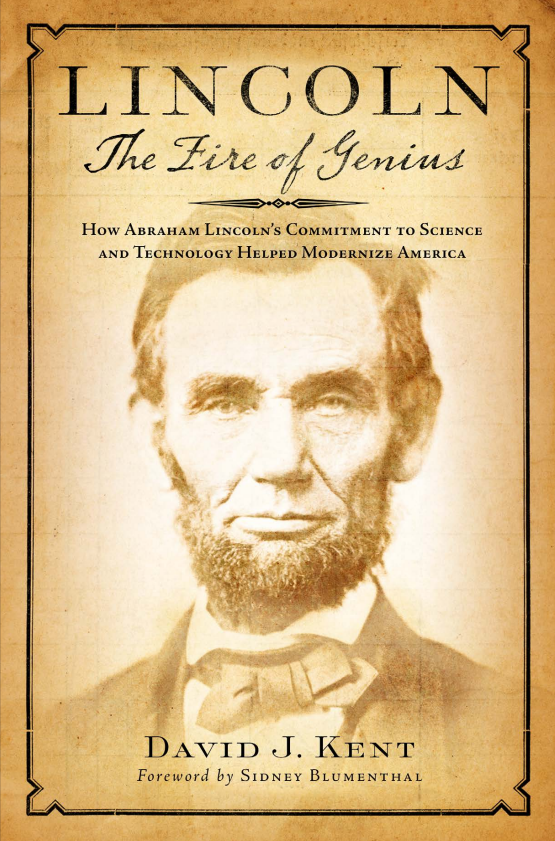
Indeed, steam locomotives, steamships, and steam-powered ironclad gunboats on inland waterways have become major contributors to the Northern military strategy during the Civil War. I discuss this more deeply in my forthcoming book, Lincoln: The Fire of Genius, scheduled for release on September 1, 2022 and available for pre-order now on Amazon and Barnes and Noble.
While the offer of elephants was rejected, the King of Siam (present day Thailand) had also sent along royal gifts to Lincoln, including “a sword of costly materials and exquisite workmanship; a photographic likeness of Your Majesty and of Your Majesty’s beloved daughter; and also two elephants’ tusks of length and magnitude such as indicate that they could have belonged only to an animal which was a native of Siam.” Lincoln accepted those gifts for the people of the United States, explaining:
Your Majesty’s letters show an understanding that our laws forbid the President from receiving these rich presents as treasures. They are therefore accepted in accordance with Your Majesty’s desire as tokens of your good will and friendship for the American People. Congress being now in session at this capital, I have had great pleasure in making known to them this manifestation of Your Majesty’s munificence and kind consideration. Under their directions the gifts will be placed among the archives of the Government, where they will remain perpetually as tokens of mutual esteem and pacific dispositions more honorable to both nations than any trophies of conquest could be.
No Siamese elephants reached the United States, but many camels did in an experiment conducted in the 1850s deemed the “Camel Corps.” As European-heritage settlers moved west displacing Native American populations, they found the desert climates of the southwest inhospitable to horses and mules. Camels were imported and found to be especially adept at handling the dry climate. The experiment was dropped, and seemingly forgotten completely, by the Civil War, but that is a story in itself.
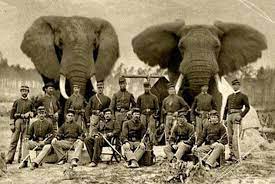
[Photo is, not surprisingly, a photoshopped image showing elephants with the 3rd Indiana Cavalry at Petersburg. Thanks to Melissa Winn at CWT for presenting the image on FB in 2020. And yes, those are African elephants, not Asian elephants. Apparently the photoshopper didn’t know the difference.]
Pre-order Lincoln: The Fire of Genius now on Amazon and Barnes and Noble (click on the respective links to pre-order). The price is likely to drop before the final shipment, and any pre-orders will automatically get charged the lower price at fulfillment. Pre-ordering now helps the publisher get a sense of the interest, which could mean a bigger print run. So please go ahead and pre-order without worries. While you’re there, check out my other books.
The book is also listed on Goodreads, the database where I keep track of my reading. Click on the “Want to Read” button to put it on your reading list. That will also ensure you get informed of the release date AND will let you try for one of ten free hardcover copies of the book that I’ll be giving away this summer. I’ll also be giving away as many as a hundred e-books. [The book will also be put out on audio]
You also follow my author page on Facebook.
I’ll have much more about the book over the next few months, so join my mailing list here to keep informed.
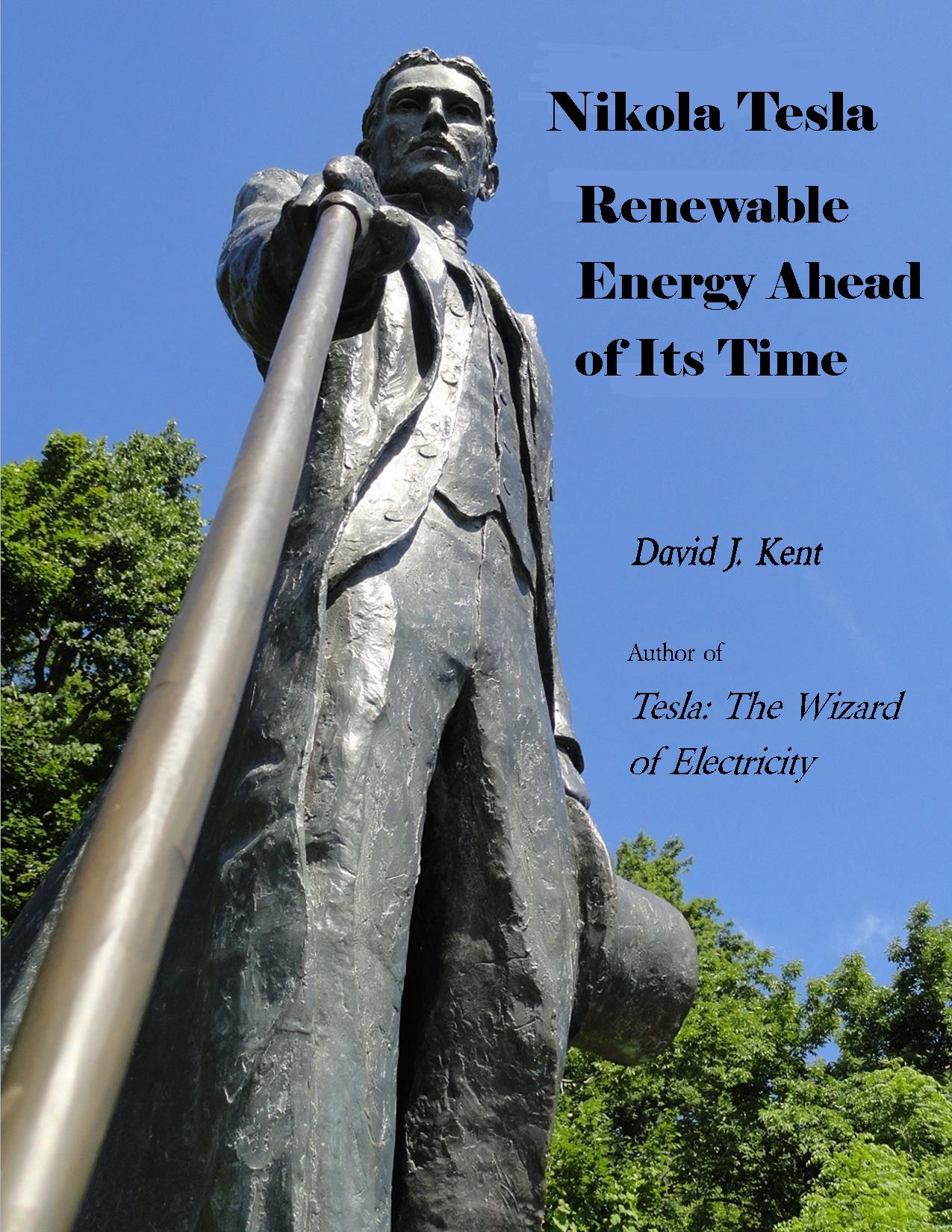
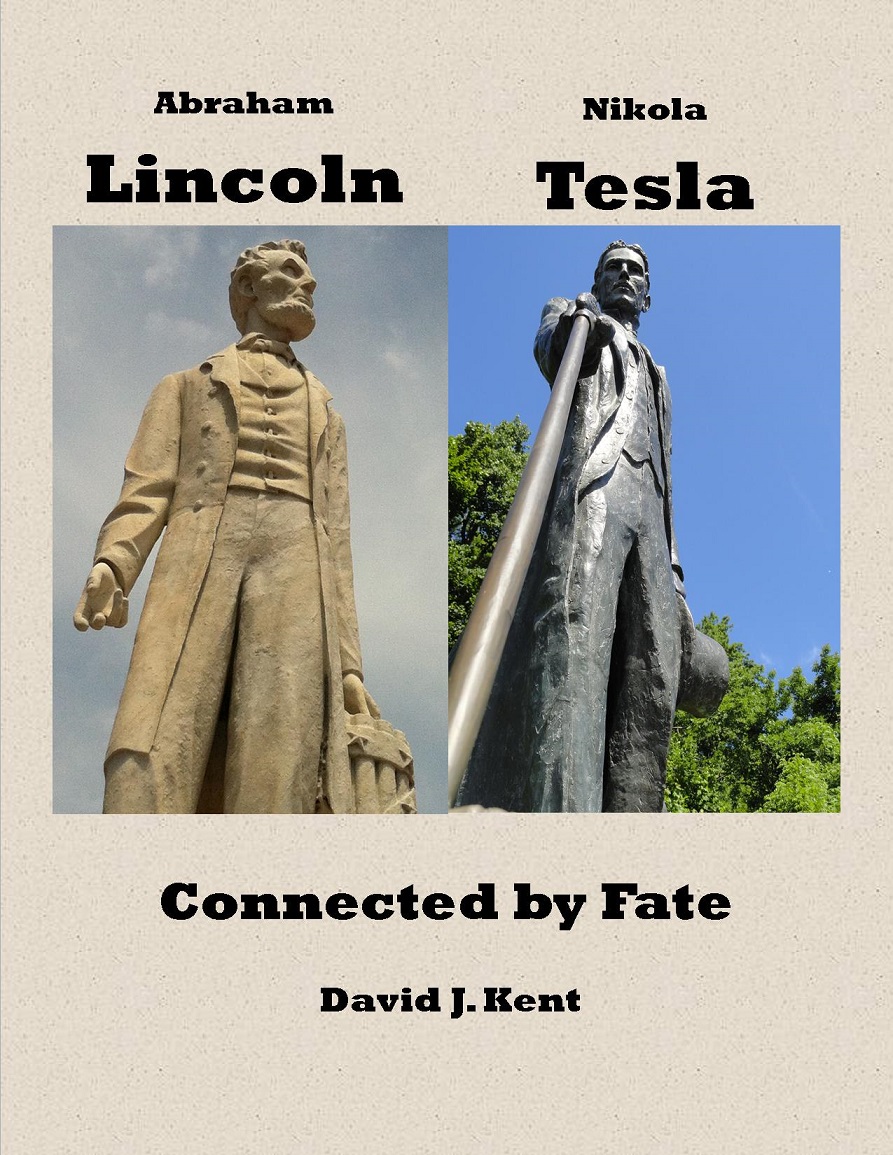
David J. Kent is President of the Lincoln Group of DC and the author of Lincoln: The Man Who Saved America. His previous books include Tesla: The Wizard of Electricity and Edison: The Inventor of the Modern World and two specialty e-books: Nikola Tesla: Renewable Energy Ahead of Its Time and Abraham Lincoln and Nikola Tesla: Connected by Fate.
Check out my Goodreads author page. While you’re at it, “Like” my Facebook author page for more updates!
 As mentioned last time, Lincoln: The Fire of Genius is now open for pre-order on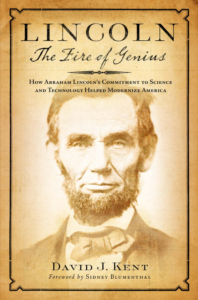
 The year in a writer’s life actually went much more to plan than
  The biggest feature of my Abraham Lincoln book acquisitions for 2021 is that most of the books I acquired aren’t even mine. As usual, I begin my annual “Year in the Life” posts with my Lincoln book collection. You can
  Few people know that Abraham Lincoln was also a philanthropist. We remember him for saving the union and the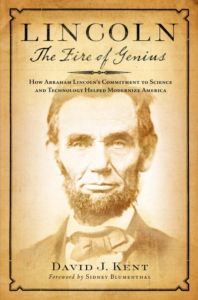
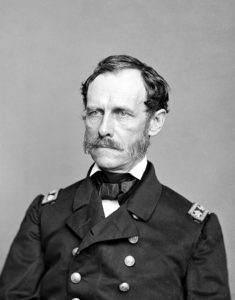 Lincoln liked John A. Dahlgren, his weapons guy, of sorts. On December 8, 1862, Lincoln sent a telegram to the Washington Navy Yard with the succinct request: “Will Capt. Dahlgren please call and see me at once?”
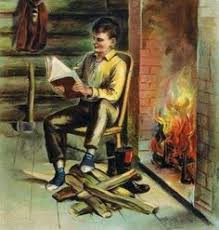 “Upon the subject of education,” Abraham Lincoln wrote in his Communication to the People of Sangamo County in 1832, “I can only say that I view it as the most important subject which we as a people can be engaged in.”
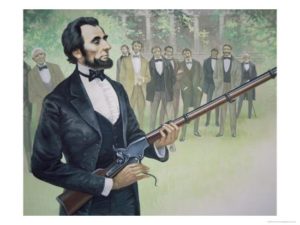 Lincoln took a scientific approach to military strategy. The Anaconda plan’s focus was on securing the coastlines and the Mississippi River. Recognizing New Orleans as the hub of the cotton trade and commerce, Lincoln saw it as the first port to be targeted for blockade. He also hoped to block southern ship traffic from Charleston, South Carolina to cut off Confederate attempts to woo Great Britain and France to their side. Helping him make this happen was Alexander Dallas Bache and the Coast Survey. The Coast Survey had been authorized by Thomas Jefferson, and Bache, who was Benjamin Franklin’s great-grandson, was quick to send nautical charts of the Chesapeake Bay to Lincoln. He also forwarded two terrestrial maps produced by the Survey that had far-reaching influence on Lincoln’s decisions on emancipation and military strategy.
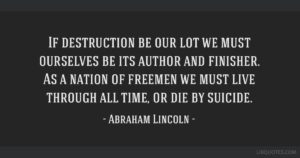 Abraham Lincoln spoke these words in a speech generally referred to as the