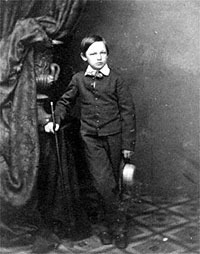
 William Wallace Lincoln, “Willie,” died of typhoid fever on February 20, 1862. President Abraham Lincoln and his wife Mary Lincoln were devastated. Willie’s younger brother Tad was also afflicted, but would live. This personal tragedy on top of the ongoing Civil War was almost too much to bear for both of them; Mary would never completely recover. But Willie’s death, and those of 700,000 soldiers during the Civil War, also ushered in advances in the embalming sciences.
Called in to care for the body, the Charles D. Brown and Joseph B. Alexander undertaking firm embalmed Willie Lincoln using a new process. Their senior employee, Henry Platt Cattell did the actual embalming, as well as that for President Lincoln three years later.
The process of embalming was relatively new. Generally the blood was drained from the body, although it wasn’t necessary in all cases to do so. In Willie’s (and Abraham’s) case, blood was drained through the jugular vein in the neck, while the embalming fluid was pumped into the body via the femoral artery in the thigh. There were several recipes for the embalming fluid. Zinc chloride was the most common preservative, often made by dissolving strips of zine sheets in hydrochloric acid. The fluid slowed down the degradation process, thus preserving the appearance of the body for a longer period of time.
Because of the ongoing Civil War, Willie Lincoln was interred in Oak Hill Cemetery in the Georgetown neighborhood of Washington, DC. He remained in the Carroll family mausoleum until Lincoln’s assassination, after which Willie’s body accompanied that of the fallen President on the train back to Springfield, Illinois, where both were interred in Oak Ridge Cemetery. Later, all the Lincolns except Robert were laid to rest in the Lincoln Tomb in Oak Ridge Cemetery. Because of his brief Civil War military service and his long service to subsequent presidents, Robert’s tomb is in Arlington National Cemetery across the river from the Lincoln Memorial.
Interestingly, the Carroll family mausoleum, long forgotten as the temporary location of Willie’s body, has one again become a tourist destination following the 2017 publication of Lincoln in the Bardo, a novel by George Saunders. The book takes place in the Oak Hill Cemetery, where Lincoln visits the site of his son’s tomb. The “bardo” is an intermediate space between life and rebirth; the book features conversations with various specters dealing with their sudden deaths, all watching Lincoln’s overwhelming grief.
Prior to the Civil War, those who died were buried quickly to avoid the nastiness of decomposing bodies. Because of advances made in the art and science of embalming during the Civil War and after, led by the work of Dr. Thomas Holmes, it became standard practice to preserve the dead so that they may make the long trips home for proper burial by their families. When Lincoln himself was embalmed, Dr. Brown remained with the funeral train through its winding route from Washington to Springfield, making necessary touchups along the way to preserve Lincoln as much as possible for the grieving populace. To many, we still grieve today, asking ourselves and those around us – What would Lincoln do?
David J. Kent is an avid science traveler and the author of Lincoln: The Man Who Saved America, in Barnes and Noble stores now. His previous books include Tesla: The Wizard of Electricity and Edison: The Inventor of the Modern World and two e-books: Nikola Tesla: Renewable Energy Ahead of Its Time and Abraham Lincoln and Nikola Tesla: Connected by Fate.
Check out my Goodreads author page. While you’re at it, “Like” my Facebook author page for more updates!
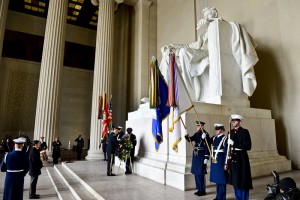 If you aren’t already a member, please consider joining the Lincoln Group of DC. We have members all over the country. For those who are local to the District of Columbia, we have monthly dinner meetings featuring well-known authors and Lincoln scholars, run at least one Civil War battlefield tour a year, have an engaging monthly book study group, and a host of other events and meetings. The Lincolnian newsletter comes out quarterly and includes news about the group as well as scholarly articles about Abraham Lincoln.
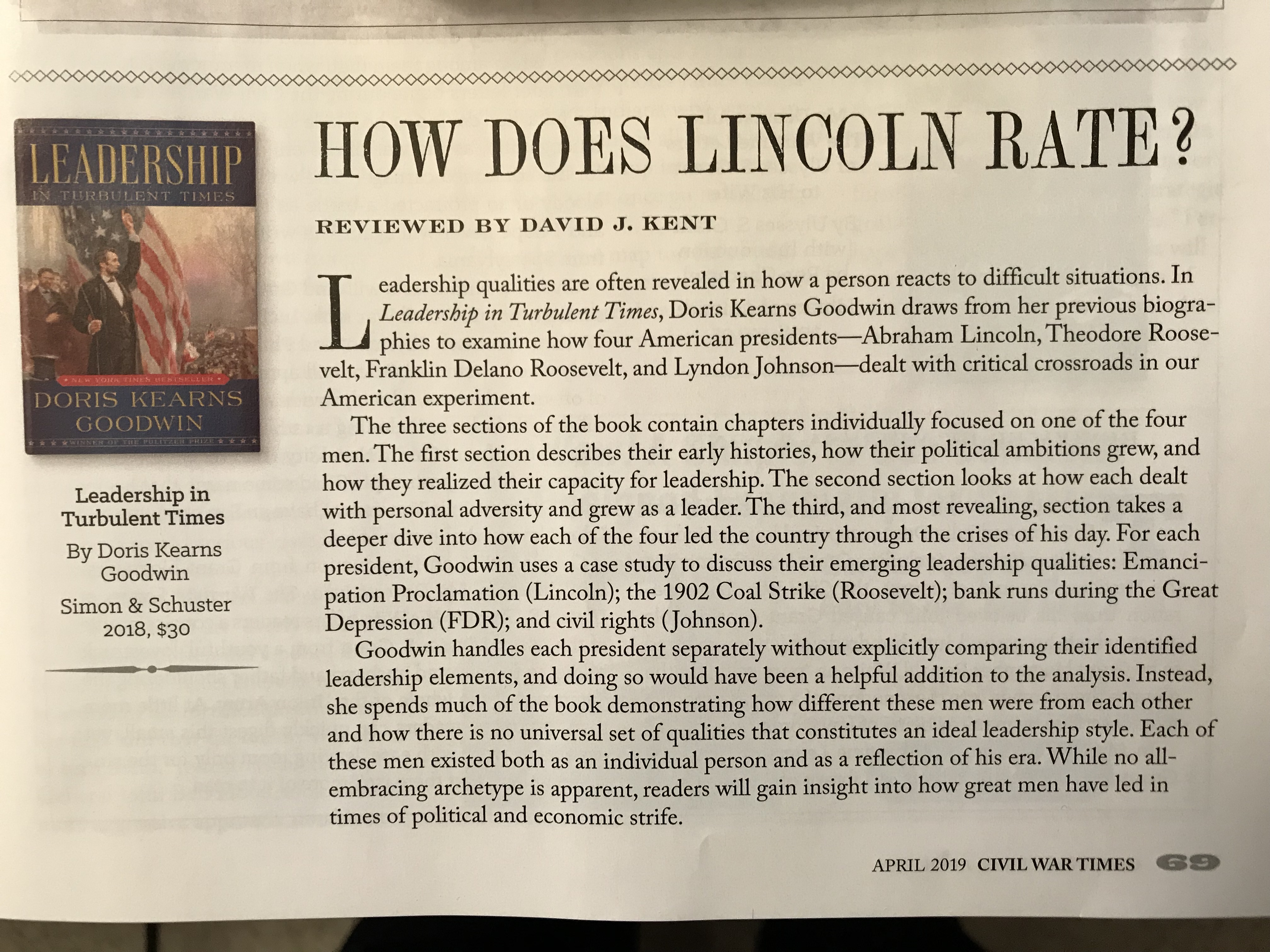 Most people of heard of Doris Kearns Goodwin from her bestselling book, Team of Rivals, about Abraham Lincoln picking many of his political rivals to key cabinet positions. Initially well sold, it got a huge boost after then-candidate Barack Obama was seen carrying it on the campaign trail prior to his 2008 election, then again when Obama picked his rival Hillary Clinton to be Secretary of State, much like Lincoln put William Seward in that position. Another boost came from Steven Spielberg’s movie, Lincoln, which was based on a tiny part of Goodwin’s book.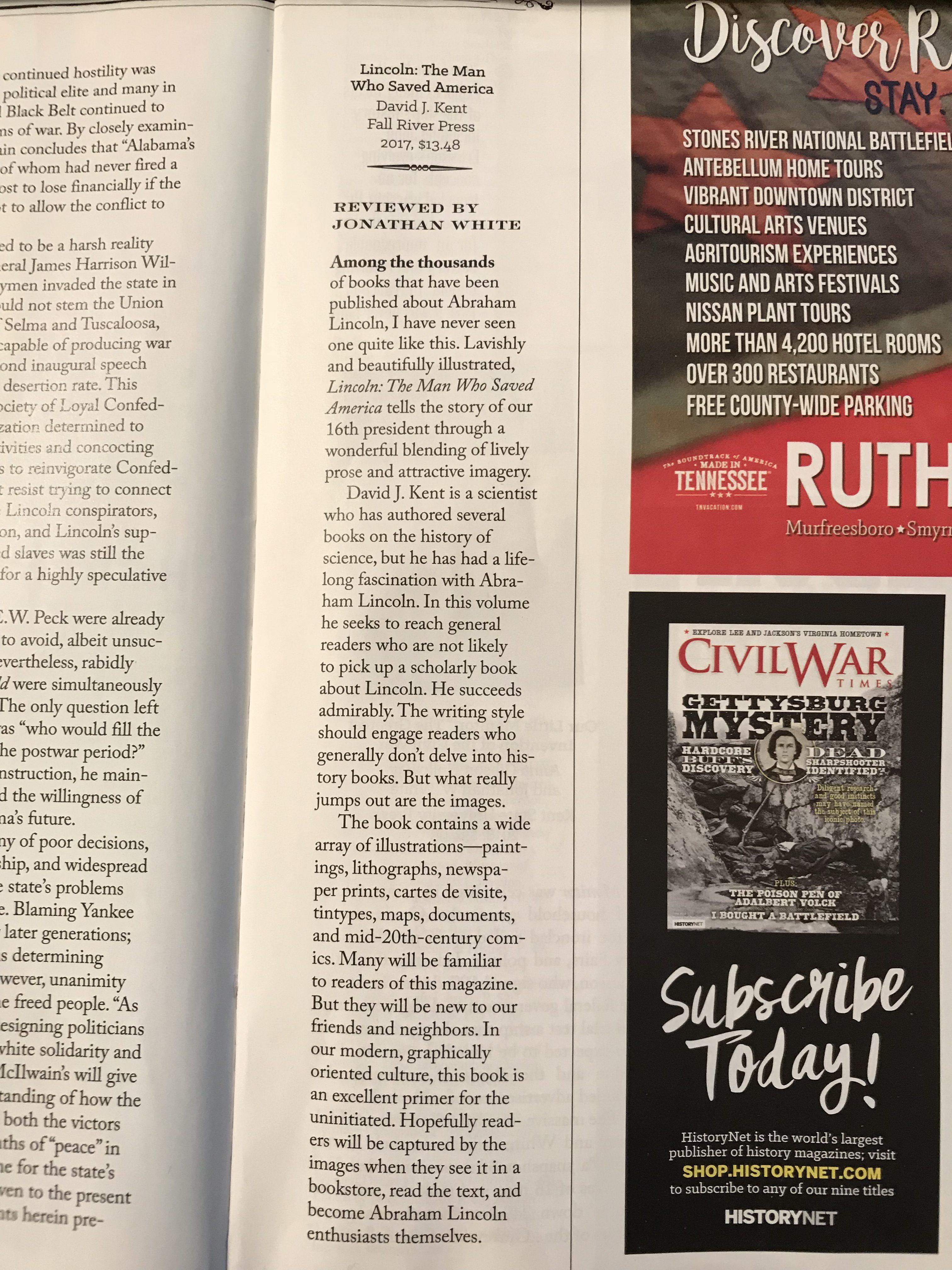


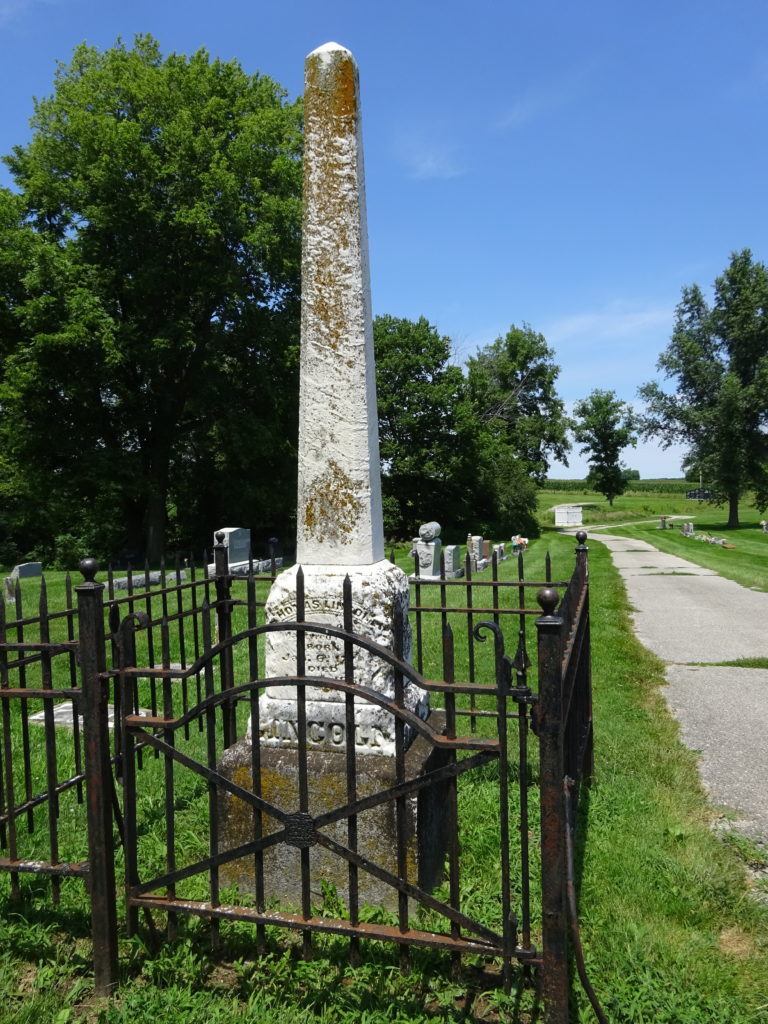 George Balch, a local farmer and poet who knew Thomas and Sarah Lincoln, wrote a poem years later to bring public attention to the neglected condition of the grave. A portion graces the waymarker sign; the following presents the entire poem.
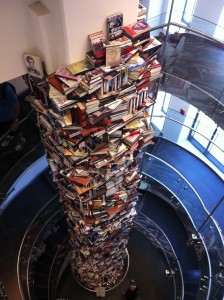 My Abraham Lincoln book collection continues to grow, quickly filling the new library space I created last year. I acquired 69 new Lincoln books in 2018. This compares to 59 in
  A few days before Christmas 1864, Abraham Lincoln received a Christmas present from General William T. Sherman –


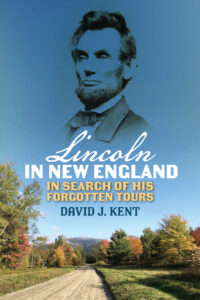
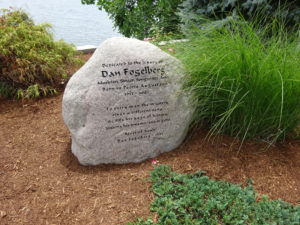 “Will it play in Peoria?” It did. They did. And I did. How a


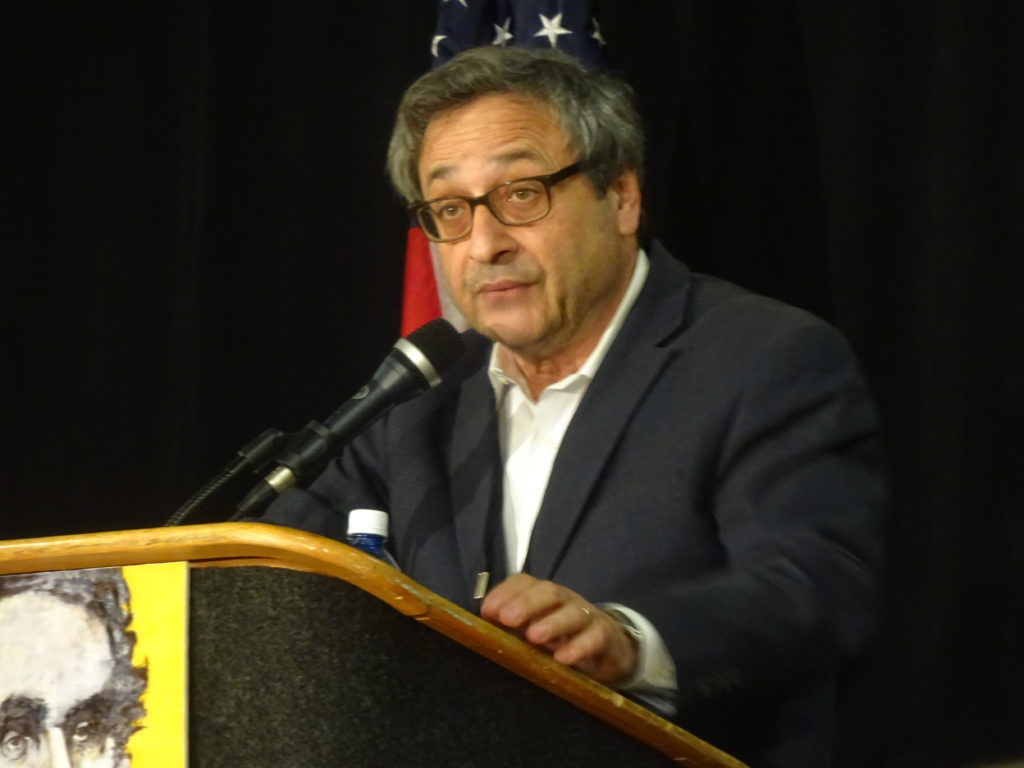
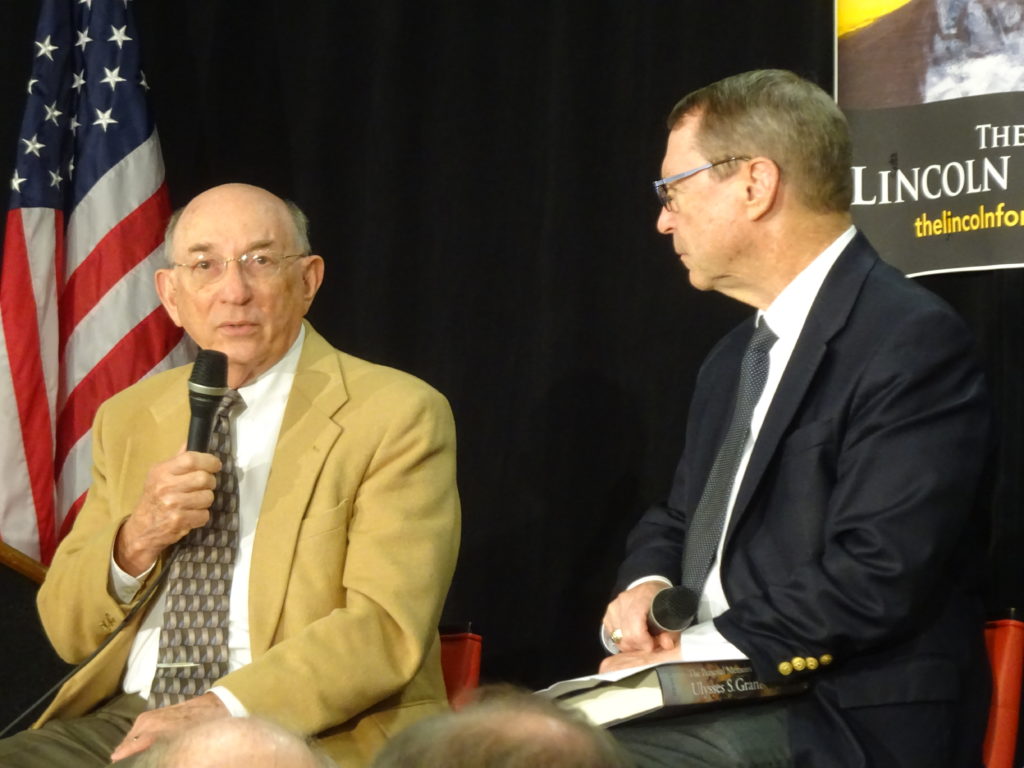
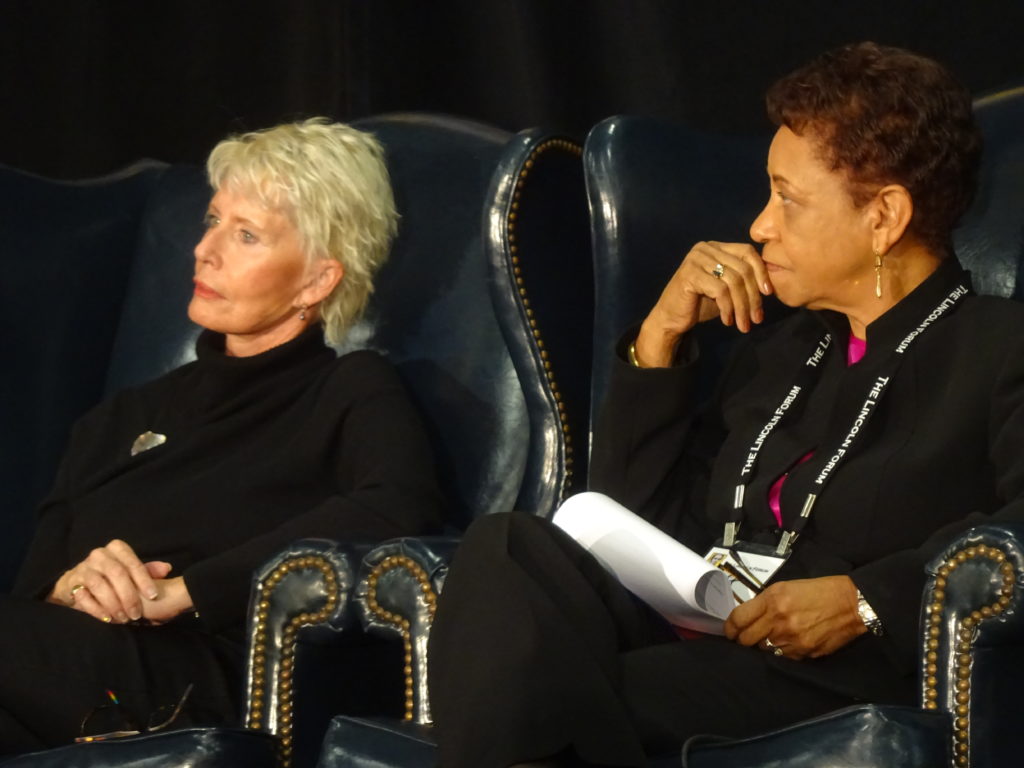
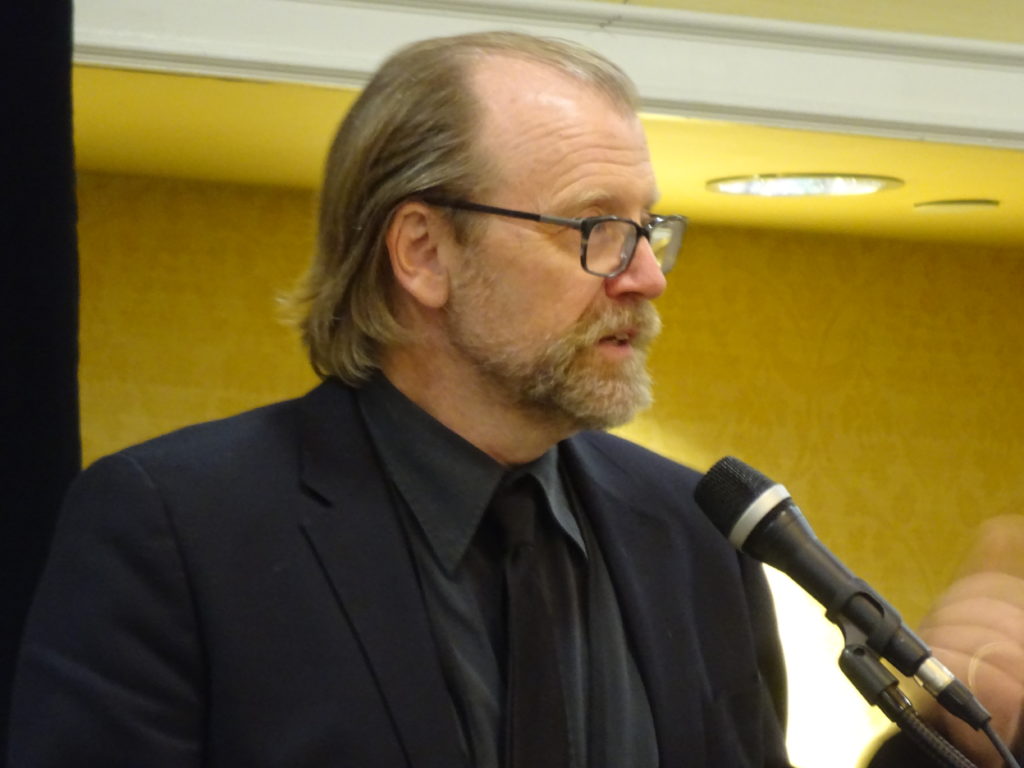
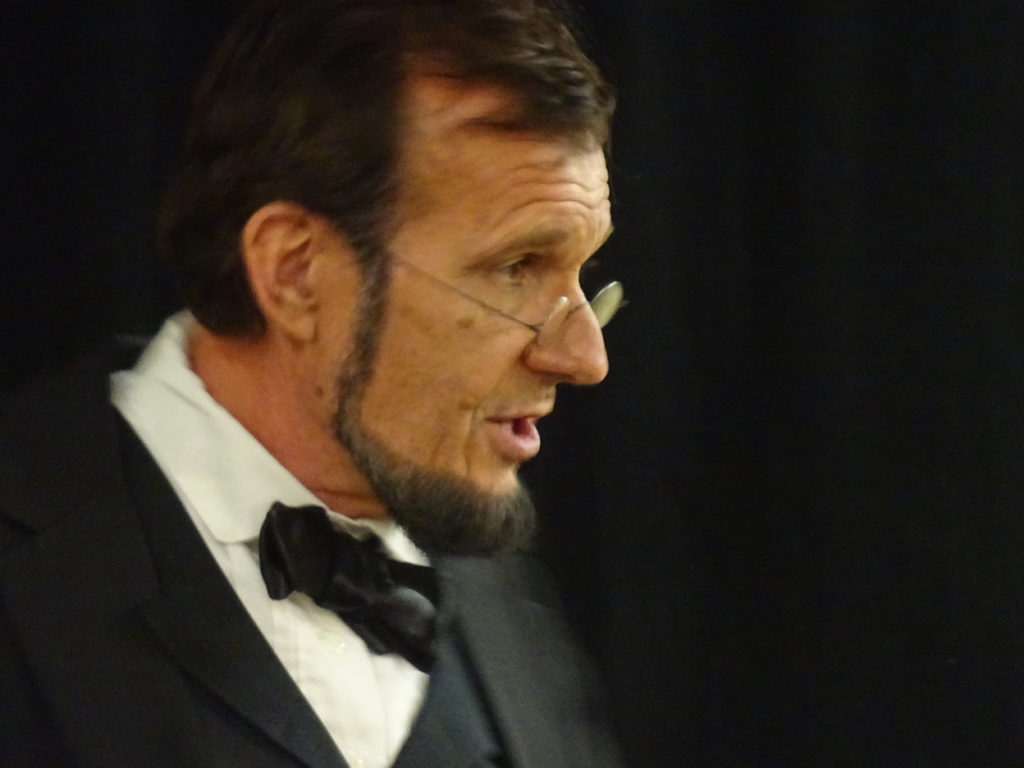
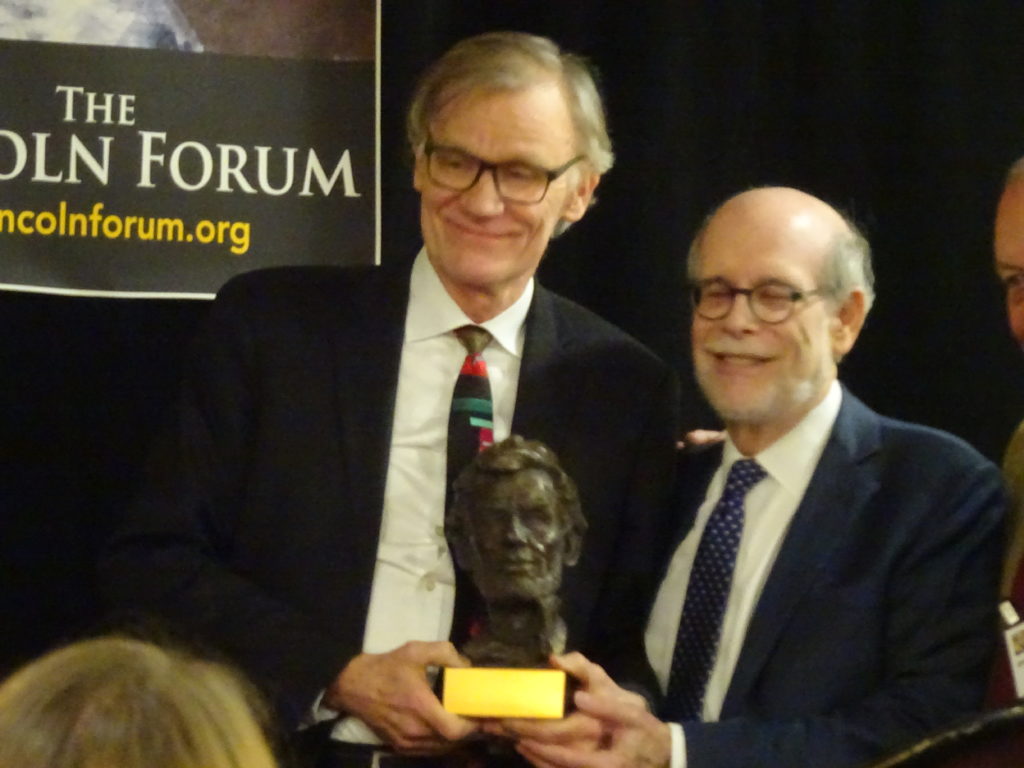
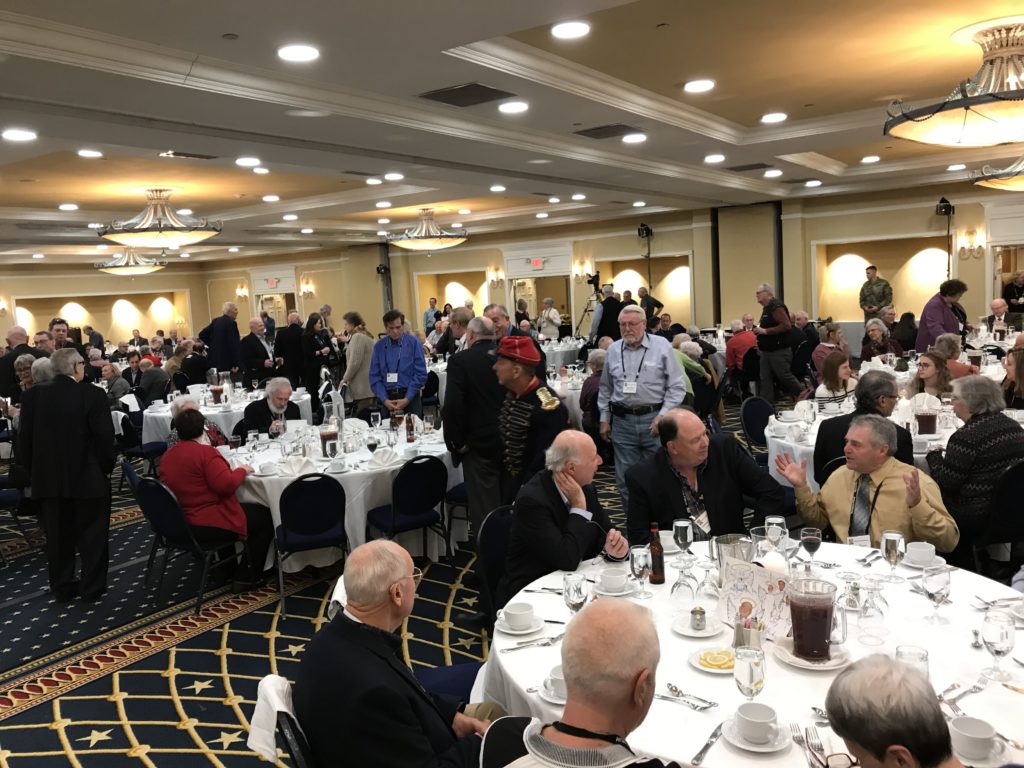
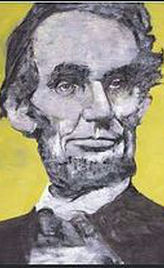 The annual Lincoln Forum in Gettysburg is in the books and we have a new General, get to keep the Chief, and took a few steps into the future. Oh, and we had some great speakers, a ton of Lincoln humor, and even a few spirits (the dead kind).
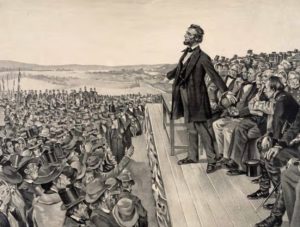 Union victories were coming more frequently in the late summer and fall of 1863, although not universally, as a loss at Chickamauga and the New York draft riots would attest. But now it was time for a more somber occasion.
 But wait, there’s more. This past year I made several “Chasing Abraham Lincoln” trips, including long road trips to Kentucky/Indiana and Illinois. Check out my
  Abraham Lincoln was the first “selfie” nut. His first photograph was in 1846, taken only about seven years after the daguerreotype process was introduced worldwide. Talk about your early adopters. That first photograph was basically a class picture as the newly elected young
 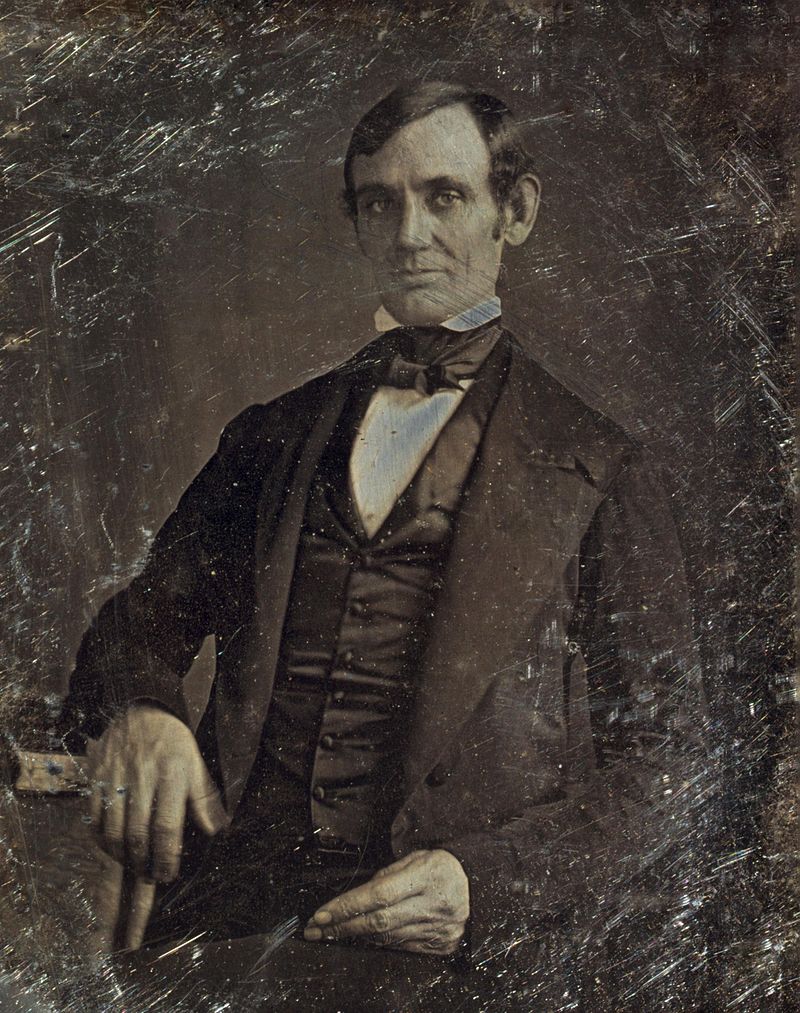 Lincoln went on to have at least 130 photographs taken during the remainder of his life, with the final solo photograph taken in early February of 1865. Two photographs were taken after this. One was a erratically focused crowd shot of him standing on the Capitol steps giving his second inaugural address on March 4, 1964. The other was an unauthorized photo of Lincoln laying in an open casket in New York City following his assassination.
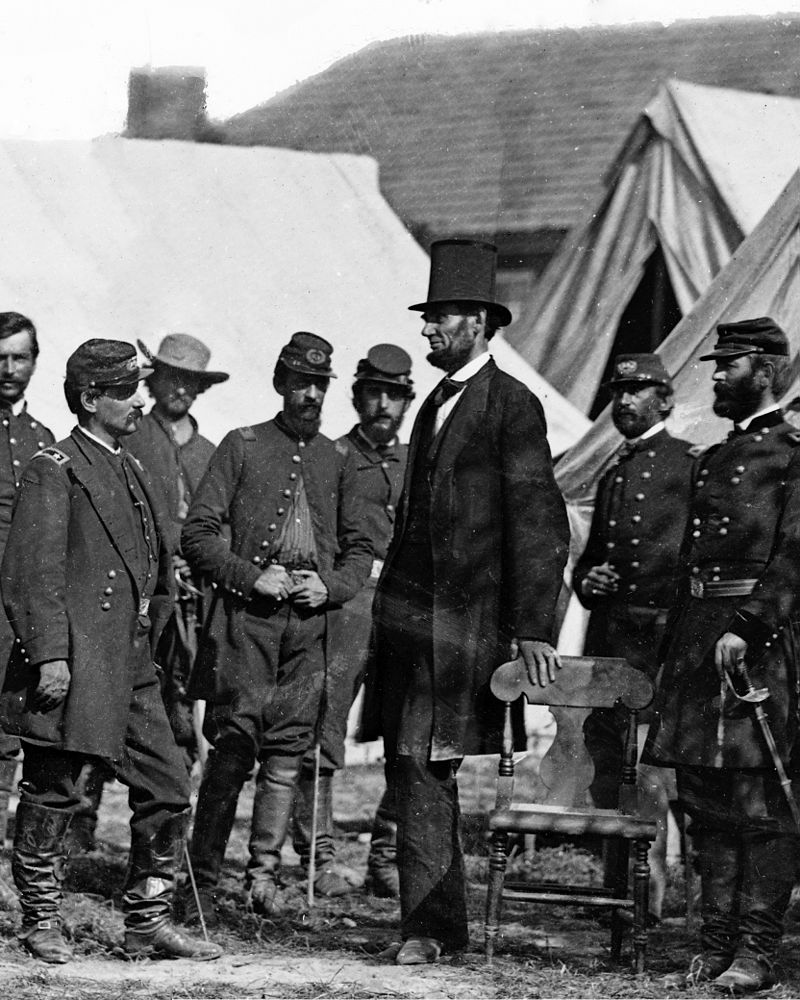
 In most of the photos Lincoln sits or stands alone. One has him sitting with his youngest son Tad standing beside him gazing down at the book open in Lincoln’s lap. Perhaps the most intriguing photos are the series taken by Alexander Gardner at Antietam during Lincoln’s post-battle visit to meet with General McClellan. In one, the lanky Lincoln and the diminutive McClellan stare down each other in a group photo with other generals.
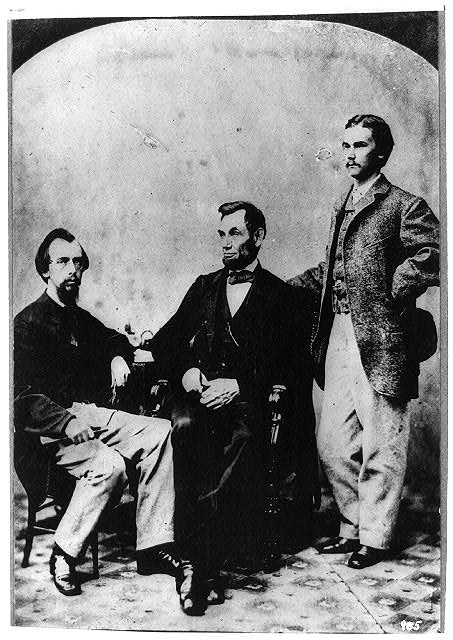
 I write about Lincoln and his photographs for a few reasons. It was November 8, 1863 that Lincoln sat for a photo with his two secretaries, John Nicolay and John Hay, standing to either side. I have also recently read two books that look at the photographers most often associated with Lincoln and the Civil War: Matthew Brady and Alexander Gardner. The other of one of the books, Nicholas J.C. Pistor, will be a speaker at the upcoming Lincoln Forum in Gettysburg. The author of the second book, Richard S. Lowry, was a Forum speaker a few years ago. Both books are wonderful reads. I’m also including a section on Lincoln and photography in my “work-in-progress,” so I have a particular interest in this area.