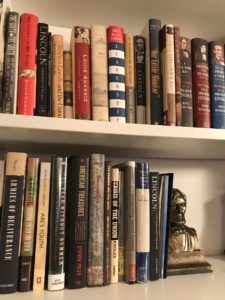
 The year is nearing an end, which means it is time to check in on my Abraham Lincoln book acquisitions for 2023. As with recent years, my goal has been to reduce the number of books I buy. I may have actually ended the year with less books than I started with despite acquiring 37 additional Lincoln (and Lincoln-ish) books. You can read about past years acquisitions by scrolling through this link.
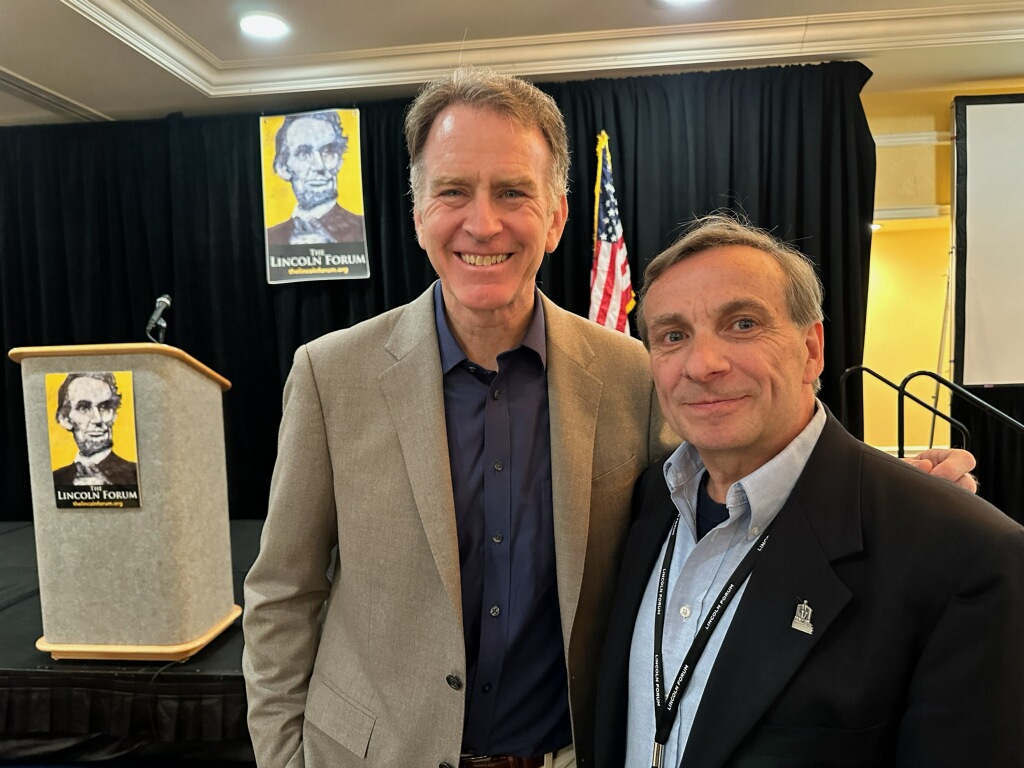
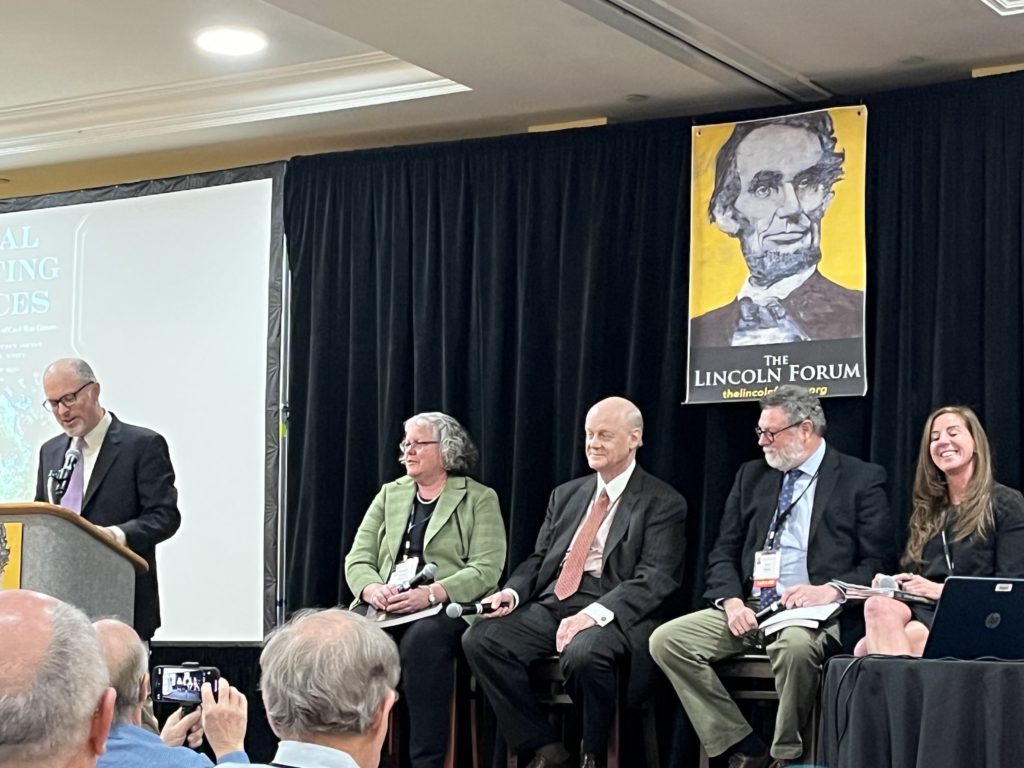
So, how might I have reduced the number of Lincoln books? Mostly because many of the books in the house belong to the Lincoln Group of DC. In addition to our Zoom-based meetings, we had four in-person meetings – three dinners and a luncheon – during the course of the year. At each we either held a raffle or gave away books to our members as a perk of membership. It’s a good chance to get Lincoln books in the hands of a bunch of Lincoln aficionados. We also donated books to the annual Lincoln Forum event in Gettysburg, which allows people to scavenge the donation table. In both cases, any proceeds collected go to our organizations’ support for scholarships. I don’t have a hard count on the number of books but likely it was around a hundred that found new homes. I’ll continue the process in 2024.
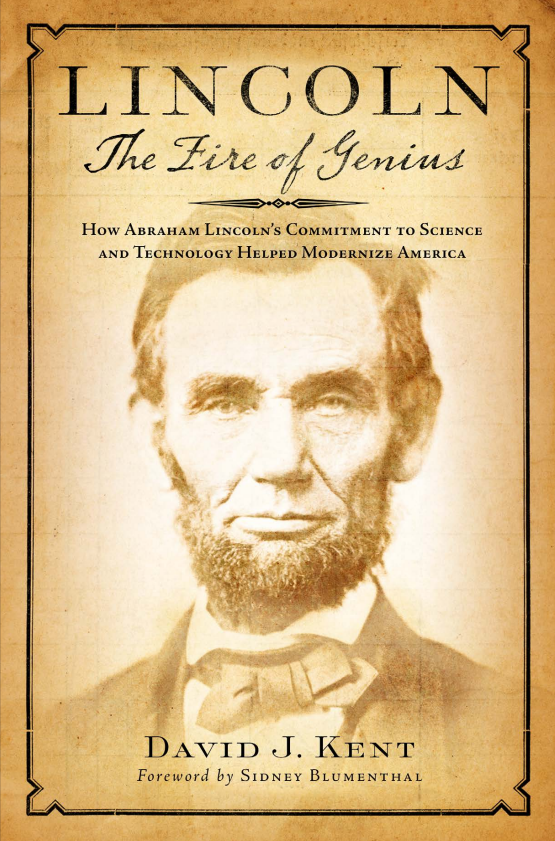
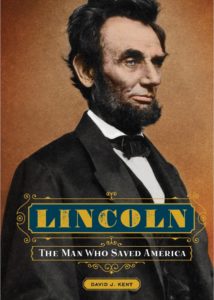
Of course, none of that does anything for reducing my personal book collection since I keep the Lincoln Group books separate and they are not listed on my spreadsheet of books owned (which currently has 1,724 rows, with some rows reflecting multiple volume books). I also only count my own books, Lincoln: The Fire of Genius and Lincoln: The Man Who Saved America, once even though I still have a box or three of each still available (Hint: I can sign books ordered directly from me).
In 2022 I acquired 34 books, so the 37 new ones in 2023 are in the same ballpark. Both are less than in the years before that. While I managed to purchase fewer books (22 of the 37), those were augmented by 15 books I received as gifts or in trade or from publishers wanting book reviews. The number of free books is smaller because I am no longer on the ALI book award review committee (although maybe I will be again in 2024).
Publication dates of the books acquired range from 1891 (Chittenden’s Recollections on President Lincoln and His Administration, a gift from my cousin; and yes, it is an actual book from 1891) to 2023. Most of the books are new, i.e., published in 2023, which isn’t surprising given that some are from publishers and there were a lot of good books out this year that I just had to own. There were also four each published in 2022 and 2021. Two of the books I acquired were from the Southern Illinois Press’s Concise Lincoln Library series. The series editor won a special Lincoln Forum book award in November for its collection of about 30 volumes on various topics. Even with these two new ones I still have only about half the series. Three new acquisitions are Lincoln-related novels. House of Lincoln delves into the household from a servant’s perspective. Henry and Clara follows the chaotic lives (and deaths) of the couple who accompanied Lincoln to the theater that fateful night. By far the most intriguing was One Must Tell the Bees by J. Lawrence Matthews, in which Sherlock Holmes (yes, that Sherlock Holmes) recounts his previously secret early life in the Civil War solving the riddle of who was stealing gunpowder and tracking down John Wilkes Booth. Blending that with his late in life resolution of yet another mysterious murder in England makes for a clever juxtaposition. Since I’ve always been a Sherlock Holmes fan in addition to Lincoln historian, I was delighted by this well-written and entertaining novel.
Given my science background it shouldn’t surprise anyone that some of the books this year had “science in the Civil War” themes. They include Sand, Science, and the Civil War by Scott Hippensteel, Soldiers, Spies, & Steam by Scott Mingus, and The Science of James Smithson by Steven Turner. There were also books about people who are important to Lincoln’s presidency and the Civil War. Among them are two books on Massachusetts Senator Henry Wilson, a book about James Shields (of almost-duel fame and much more), and Benjamin Butler (the Civil War general and much more). I also picked up a book called No Common Ground by Karen L. Cox about what to do with Confederate monuments. I finished the year with two books by Nancy Spannaus about Alexander Hamilton and the American System of economics. Hamilton Versus Wall Street acquired in February delves into the economic system of internal improvements that Lincoln favored (and I discuss in detail in my Fire of Genius book). Then her newest book in early December, Defeating Slavery, shows how Hamilton’s American System showed the way to ending slavery (and how the abandoning of it by Andrew Jackson and others delayed slavery’s demise and hurt the economy). Both are intensely researched and well written.
There were “big name” books also out in 2023. Long-time NPR host Steve Inskeep’s Differ We Must explores how Lincoln learned from, and dealt with, people with whom he disagreed. Some he convinced to see things his way; others agreed to disagree. Columnist Joshua Zeitz, whose previous book, Lincoln’s Boys, about John Hay and John Nicolay was highly regarded, tackled with less success Lincoln’s views on religion and morality in Lincoln’s God. One of my most recent acquisitions is Brian McGinty’s Lincoln in California, which as the title suggests digs into a topic rarely discussed. I haven’t read this one yet but it’s on the top of my list to start the new year. I also picked up books by Walter Stahr (Stanton), whose tomes on individual members of Lincoln’s cabinet have become iconic, and Sarah Vowell’s fun yet informative Assassination Vacation, an older book following her road trips to the sites surrounding assassinations of Lincoln, Garfield, and McKinley. BTW, for those not familiar with the name, you’ve probably heard Vowell’s voice as Violet in The Incredibles movies, as well as on radio and TV.
By far the most famous and sales-successful book in 2023 was Democracy Awakening by Heather Cox Richardson. HCR, as she is affectionately known by those in the know, is a professor at Boston College who became a household name thanks to her “Letters from an American” series. These daily letters, which appear on her Substack platform and Facebook, welcome millions of followers and have highlighted her exemplary career as an historian and ability to relate history to current events. Democracy Awakening continues her letters’ theme by delving into the attacks on American democracy throughout our history, up to and continuing in the current attempts to replace democracy with an authoritarian regime. The book is breathtaking in its capture of two Americas – one that sees the Constitution as applying to everyone versus one that sees America consisting of those who should lead and those who should just shut up and toil. Her second section on the existential crisis begun around 2016 is simply stunning. All of it impeccably documented. This is a must-read book.
As you can see in the list that follows my signature block below, I acquired many more notable books in 2023.
I will likely continue my attempt to reduce the number of books in 2024, although I’m sure to acquire a lot of new ones to offset the losses. I’m always doing research for possible new books I want to write, so some of the acquisitions may reflect that goal as well as my inability to stay away from the big new books of the year (one of which I know I’ll get is Harold Holzer’s latest, Brought Forth on This Continent, about Lincoln and American Immigration, due out in February). I have only a couple more weeks left in 2023 to find the shelf space. Wish me luck.
See the 2023 list showing author/title/publication date below my signature blurb below.
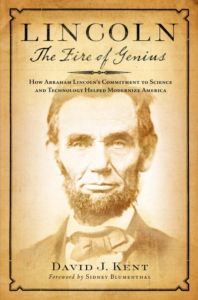
Lincoln: The Fire of Genius: How Abraham Lincoln’s Commitment to Science and Technology Helped Modernize America is available at booksellers nationwide.
Limited signed copies are available via this website. The book also listed on Goodreads, the database where I keep track of my reading. Click on the “Want to Read” button to put it on your reading list. Please leave a review on Goodreads and Amazon if you like the book.
You also follow my author page on Facebook.
David J. Kent is President of the Lincoln Group of DC and the author of Lincoln: The Fire of Genius: How Abraham Lincoln’s Commitment to Science and Technology Helped Modernize America and Lincoln: The Man Who Saved America.
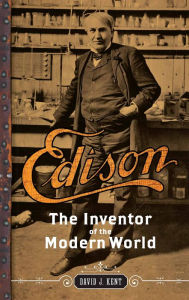
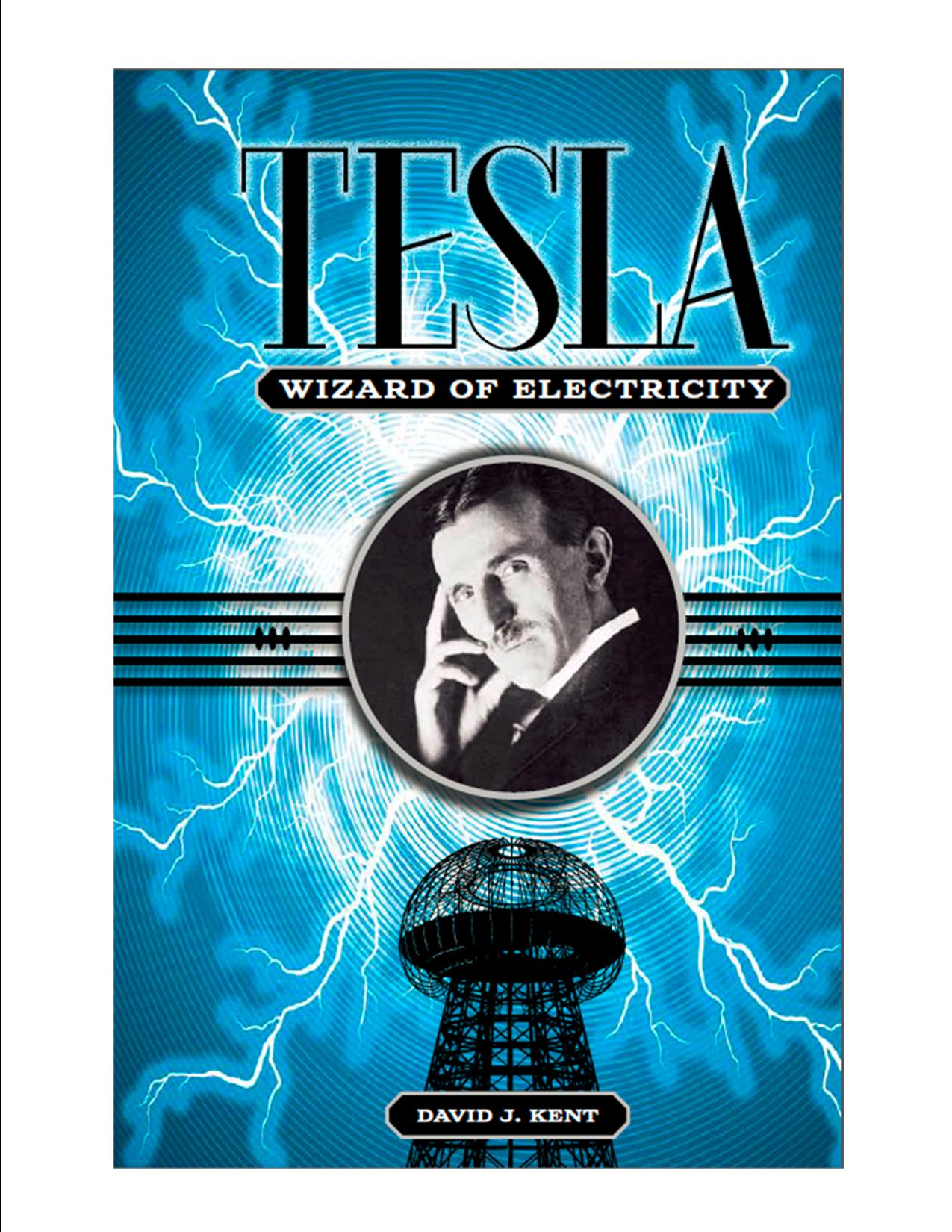
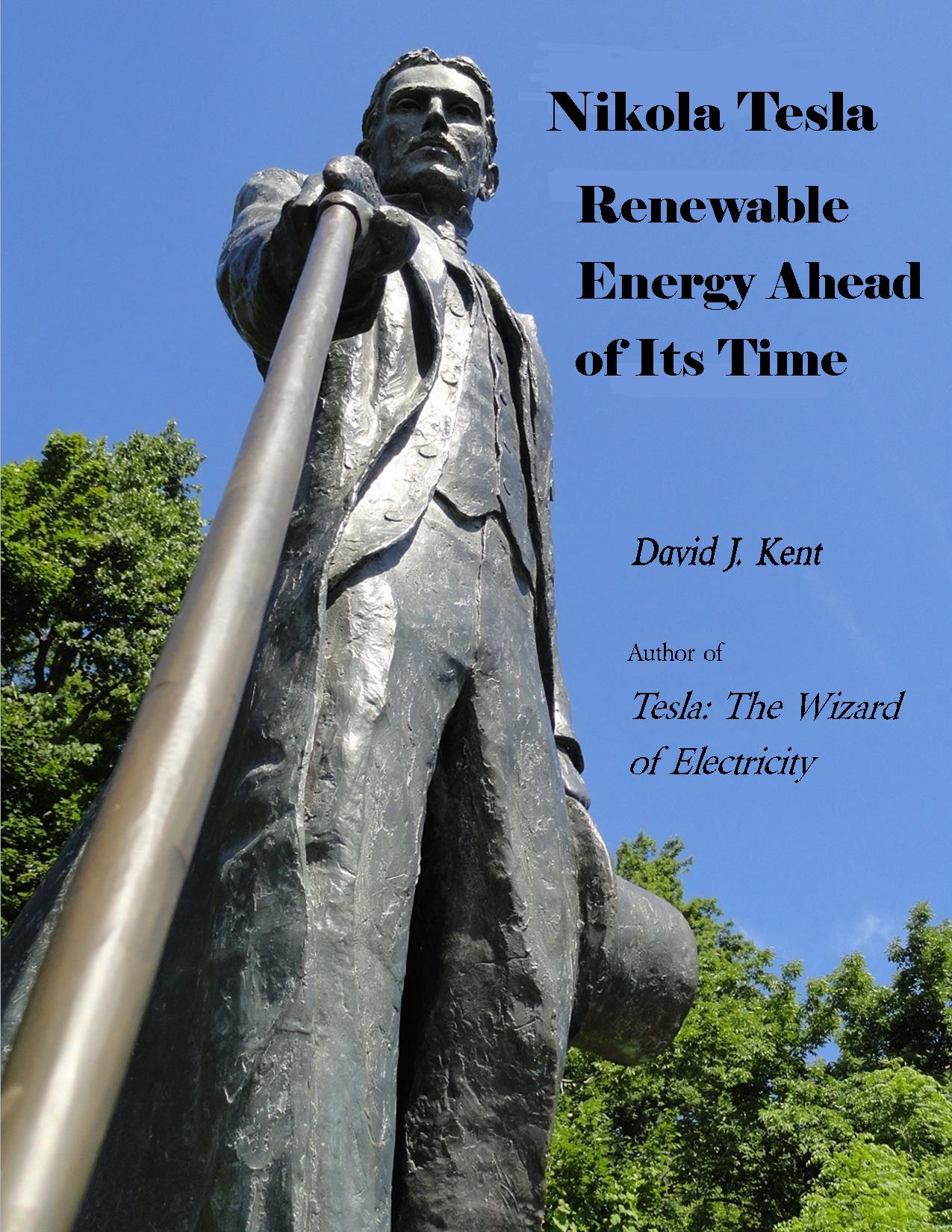
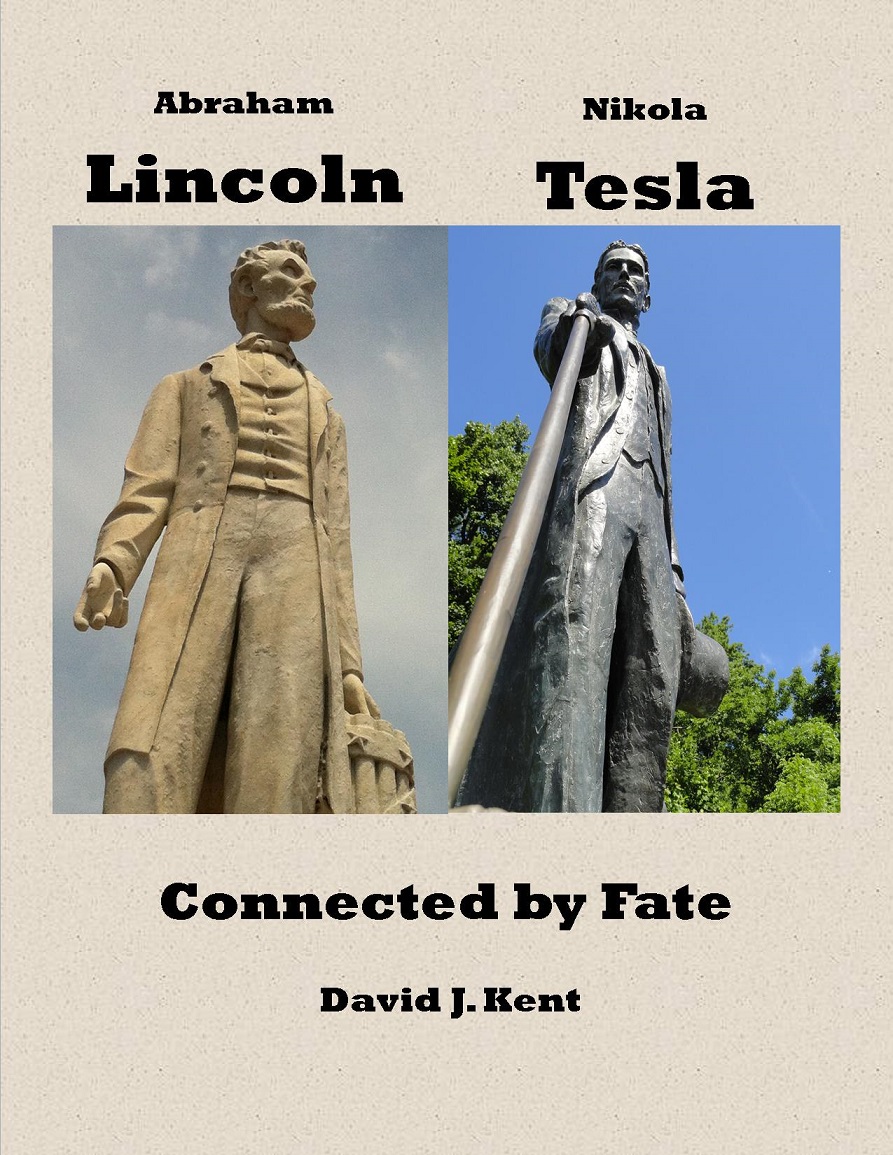
His previous books include Tesla: The Wizard of Electricity and Edison: The Inventor of the Modern World and two specialty e-books: Nikola Tesla: Renewable Energy Ahead of Its Time and Abraham Lincoln and Nikola Tesla: Connected by Fate.
Here is the 2023 list! [Author, Title, Date of Publication]
| Abbott, Richard H. |
Cobbler in Congress: The Life of Henry Wilson, 1812-1875 |
1972 |
| Callan, J.P. Sean |
Courage and Country: James Shields, More Than Irish Luck |
2004 |
| Chittenden, L.E. |
Recollections of President Lincoln and His Administration |
1891 |
| Cox, Karen L. |
No Common Ground: Confederate Monuments and the Ongoing Fight for Racial Justice |
2021 |
| Dirck, Brian |
Lincoln and the Constitution |
2012 |
| Farrow, Anne, Lang, Joel, and Frank, Jenifer |
Complicity: How the North Promoted, Prolonged, and Profited from Slavery |
2005 |
| Hippensteel, Scott |
Sand, Science, and the Civil War: Sedimentary Geology and Combat |
2023 |
| Horan, Nancy |
The House of Lincoln |
2023 |
| Hord, Fred Lee and Norman, Matthew D. |
Knowing Him By Heart: African Americans on Abraham Lincoln |
2023 |
| Inskeep, Steve |
Differ We Must: How Lincoln Succeeded in a Divided America |
2023 |
| Kaplan, Fred |
Lincoln and the Abolitionists: John Quincy Adams, Slavery, and the Civil War |
2017 |
| Lapisardi, Emily (Ed.) |
Rose Greenhow’s My Imprisonment |
2021 |
| Leonard, Elizabeth D. |
Benjamin Franklin Butler: A Noisy, Fearless Life |
2022 |
| Mallon, Thomas |
Henry and Clara: A Novel |
1994 |
| Matthews, J. Lawrence |
One Must Tell the Bees: Abraham Lincoln and the Final Education of Sherlock Holmes |
2021 |
| McCreary, Donna D. |
Mary Lincoln Demystified: Frequently Asked Questions about Abraham’s Wife |
2022 |
| McGinty, Brian |
Lincoln & Califonia: The President, the War, and the Golden State |
2023 |
| McKay, Ernest |
Henry Wilson: Practical Radical, A Portrait of a Politician |
1971 |
| Miller, Lillian et al |
The Lazzaroni: Science and Scientists in Mid-Nineteenth Century Ameica |
1972 |
| Mingus, Scott |
Soldiers, Spies & Steam: A History of the Northern Central Railway in the Civil War |
2016 |
| O’Connor, Thomas H. |
Lords of the Loom: The Cotton Whigs and the Coming of the Civil War |
1968 |
| Page, Elwin L., Introduced and updated by Pride, Mike |
Abraham Lincoln in New Hampshire |
2009 |
| Richardson, Heather Cox |
Democracy Awakening: Notes on the State of America |
2023 |
| Rodrique, John C. |
Lincoln and Reconstruction |
2013 |
| Sher, Julian |
The North Star: Canada and the Civil War Plots Against Lincoln |
2023 |
| Silver, David M. |
Lincoln’s Supreme Court |
1998 |
| Soini, Wayne |
Abraham Lincoln, American Prince: Ancestry, Ambition and the Anti-Slavery Cause |
2022 |
| Spannous, Nancy Bradeen |
Hamilton Versus Wall Street: The Core Principles of the American System of Economics |
2019 |
| Spannous, Nancy Bradeen |
Defeating Slavery: Hamilton’s American System Showed the Way |
2023 |
| Stahr, Walter |
Stanton: Lincoln’s War Secretary |
2017 |
| Steers, Edward Jr. |
The Lincoln Tree: 300 Years of Lincoln Ancestry, 1500 to 1837 |
2023 |
| Stewart, Whitney |
Hildene: The Lincoln Family Home, Values into Action |
2019 |
| Thomson, David K. |
Bonds of War: How Civil War Financial Agents Sold the World on the Union |
2022 |
| Turner, Steven |
The Science of James Smithson: Discoveries from the Smithsonian Founder |
2020 |
| Vowell, Sarah |
Assassination Vacation |
2005 |
| Wasik, John F. |
Lincolnomics: How President Lincoln Constructed the Great American Economy |
2021 |
| Zeitz, Joshua |
Lincoln’s God: How Faith Transformed a President and a Nation |
2023 |


 On February 1, 1848, Congressman Abraham Lincoln wrote his law partner, William Herndon, in response to a critical letter Herndon had written him. Herndon had complained that Lincoln’s “spot” resolutions of the previous December calling out President James K. Polk for starting an “illegal” war with Mexico as a pretense for taking massive amounts of land so that the United States could expand slavery. The resolutions called for Polk to explain the exact “spot” on which he claimed Mexico had “invaded” the United States. Polk and virtually everyone else ignored Lincoln and nothing happened with the bill. Herndon noted that there was a danger that Lincoln’s resolutions could paint him as not being supportive of the troops. Lincoln sought to set him straight – being against the war did not mean he didn’t support the troops, for whom he had repeatedly voted to provision.
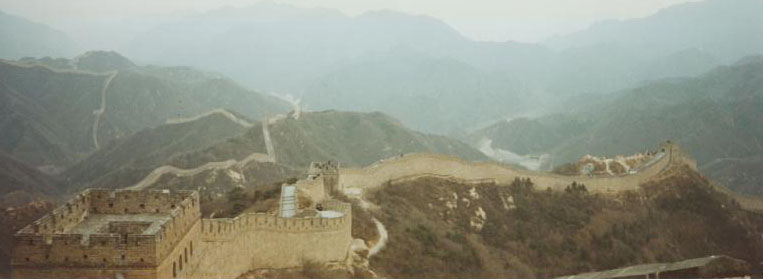 On January 23, 1864, Lincoln sent to the U.S. Senate papers relative to the modification of our treaty with China. China had been an important, but sometimes difficult, relationship during the Civil War. While he didn’t spend that much time on it, Lincoln did have several interactions and official duties. In this 1864 letter, he writes:
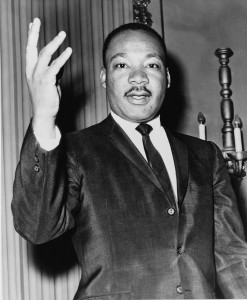 As we celebrate the birth of Dr. Martin Luther King, MLK, it’s impossible not to reminisce on the connection with Abraham Lincoln, ABE. The two men are linked forever because of Lincoln’s emancipation proclamation and King’s reference to it in his “I have a dream” speech.
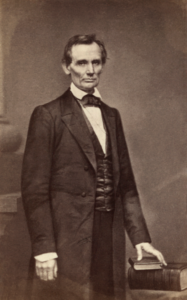 On January 5, 1858, Abraham Lincoln wrote to Robert A. Kinzie of Chicago regarding the case of Johnston v. Jones and Marsh, commonly called the Sand Bar Case. The case was revealing because, in an age where trial transcripts were almost never kept, journalist Robert Hitt was paid to sit through the entire trial and create a comprehensive 482-page trial transcript, although he omitted the closing arguments.
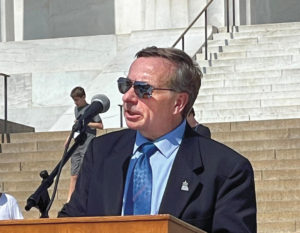 The year in a writer’s life was busy. Some of it actually went according to plan, while some of it was, well, off-plan. I continued to do events related to my book, Lincoln: The Fire of Genius, and continued to write for the Lincoln Group and other venues. On the other hand, some of my writing goals turned out to be unrealistic and have been punted to next year. That said, overall, 2023 was a successful writing year.
 Another
 On December 5, 1864, President Lincoln, with Mrs. Lincoln, Secretary of State Seward, and Secretaries Nicolay and Hay, attends Grover’s Theatre for a performance of Charles Gounod’s