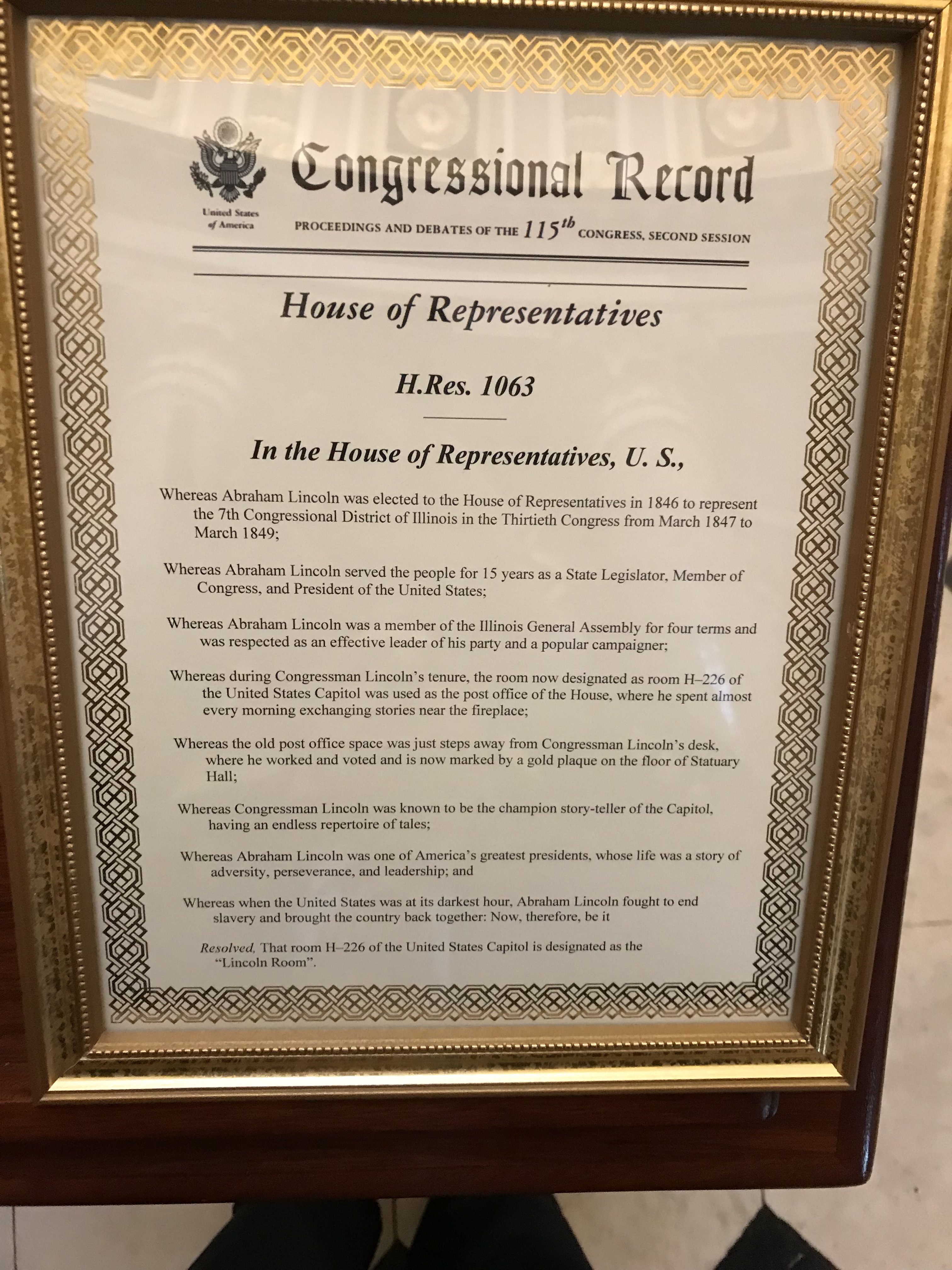
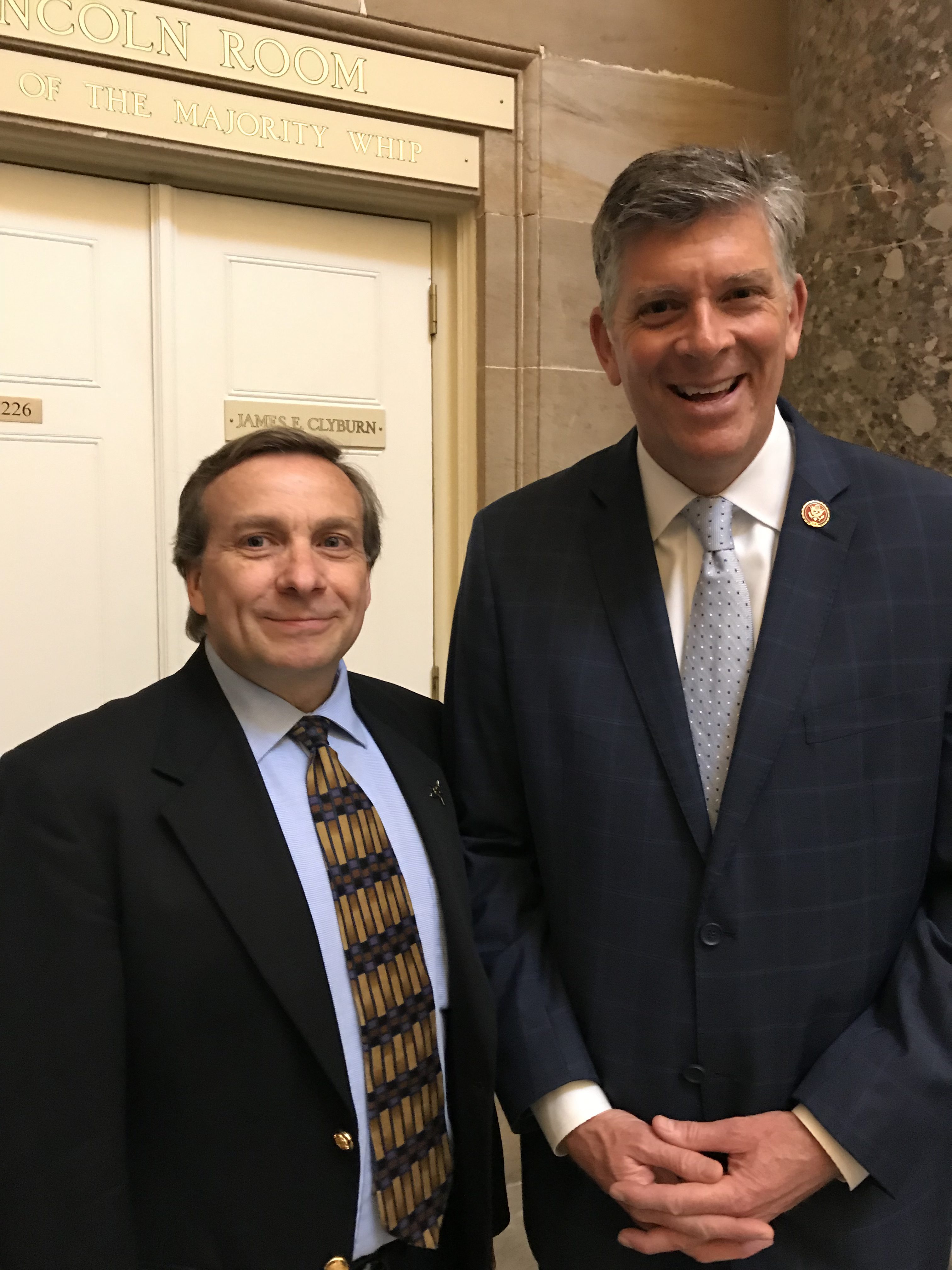
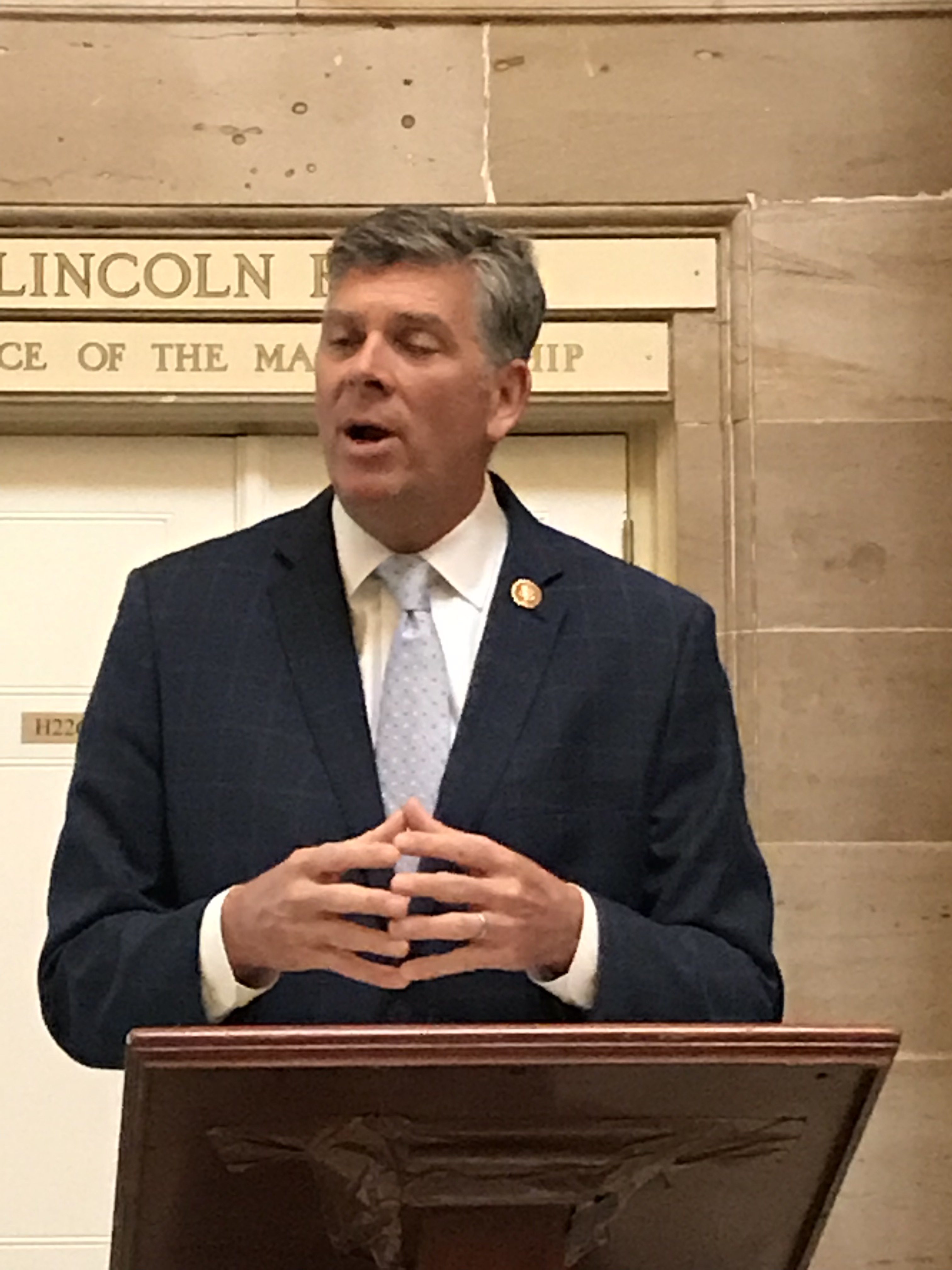
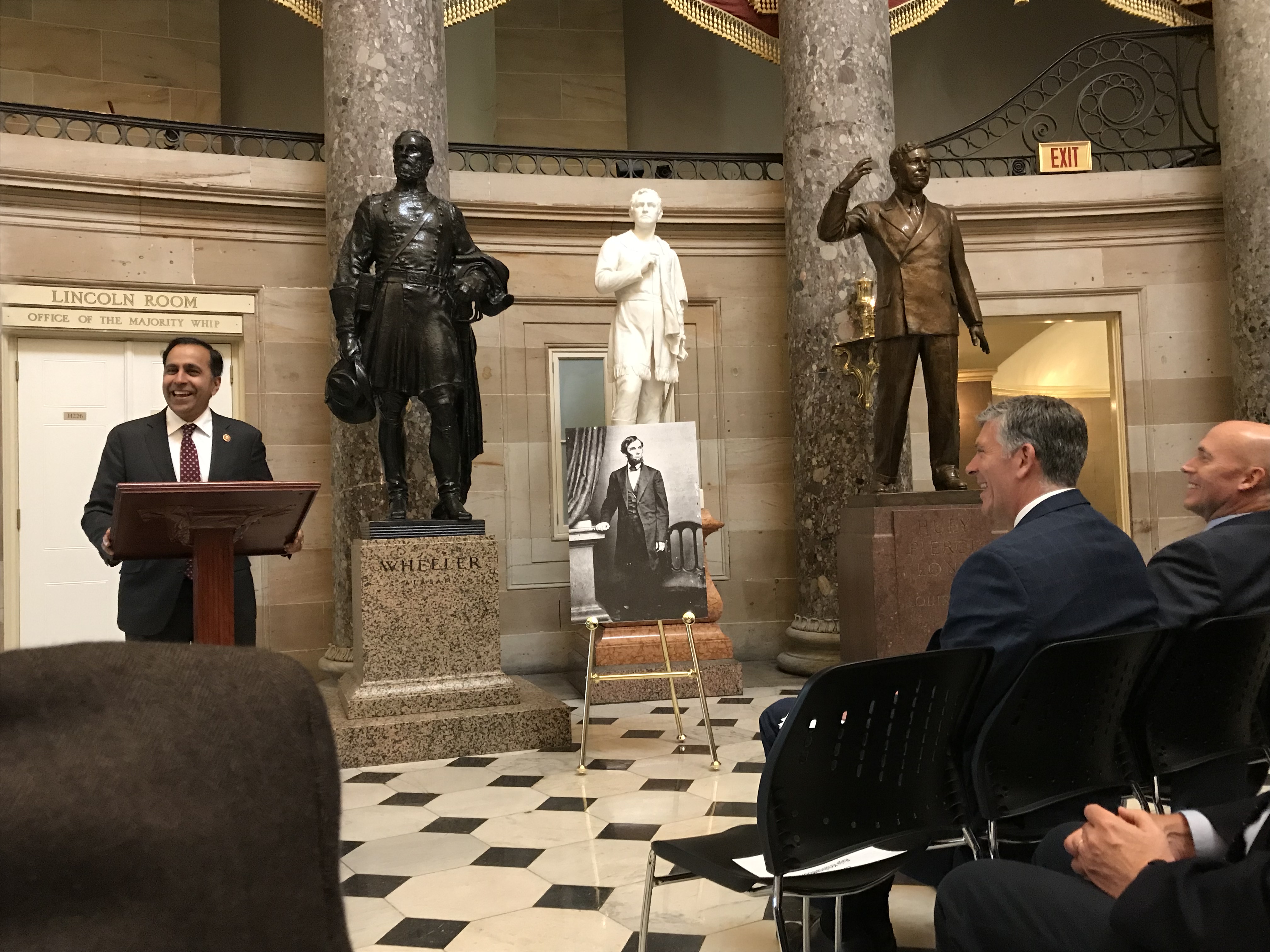
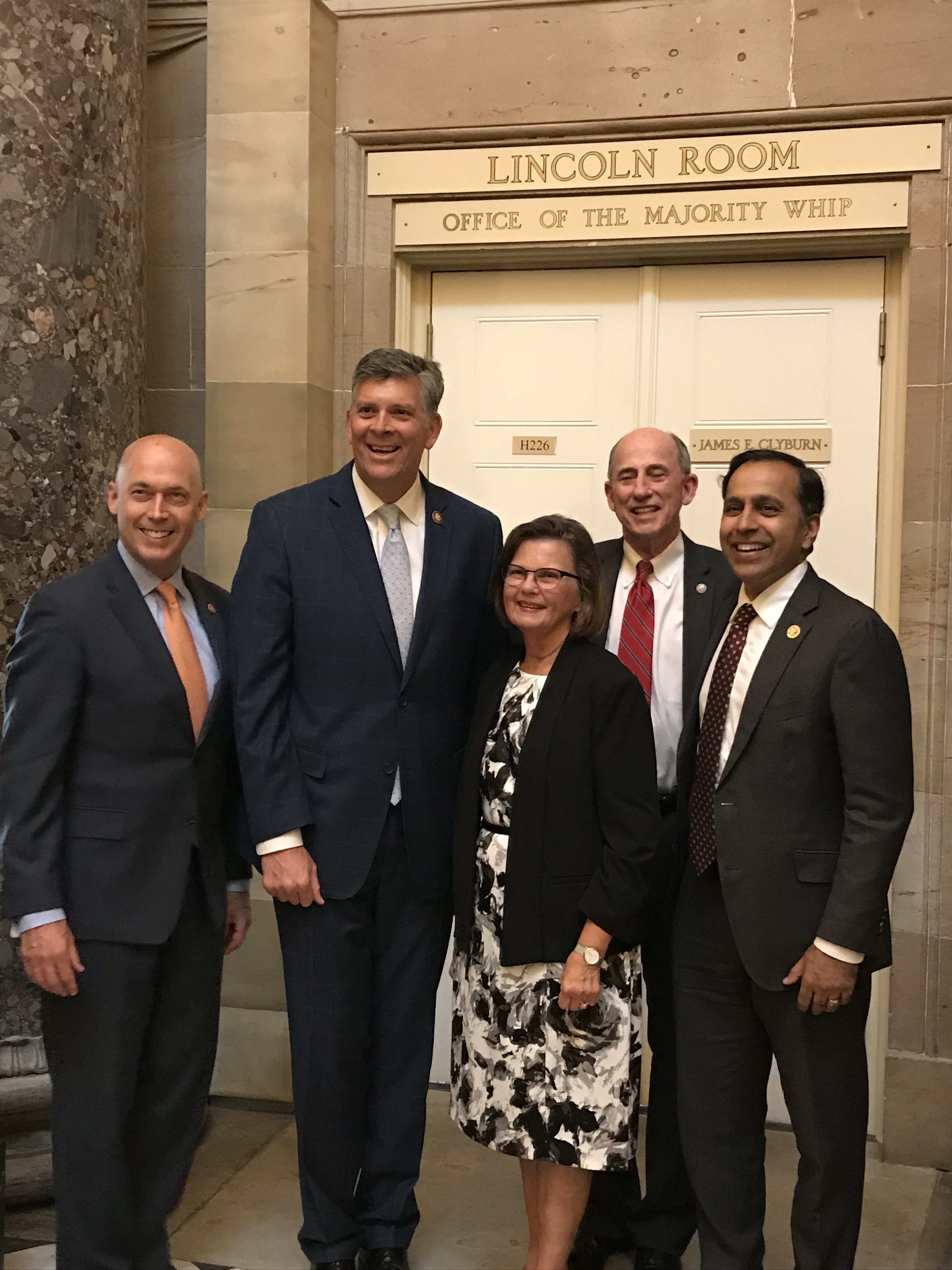
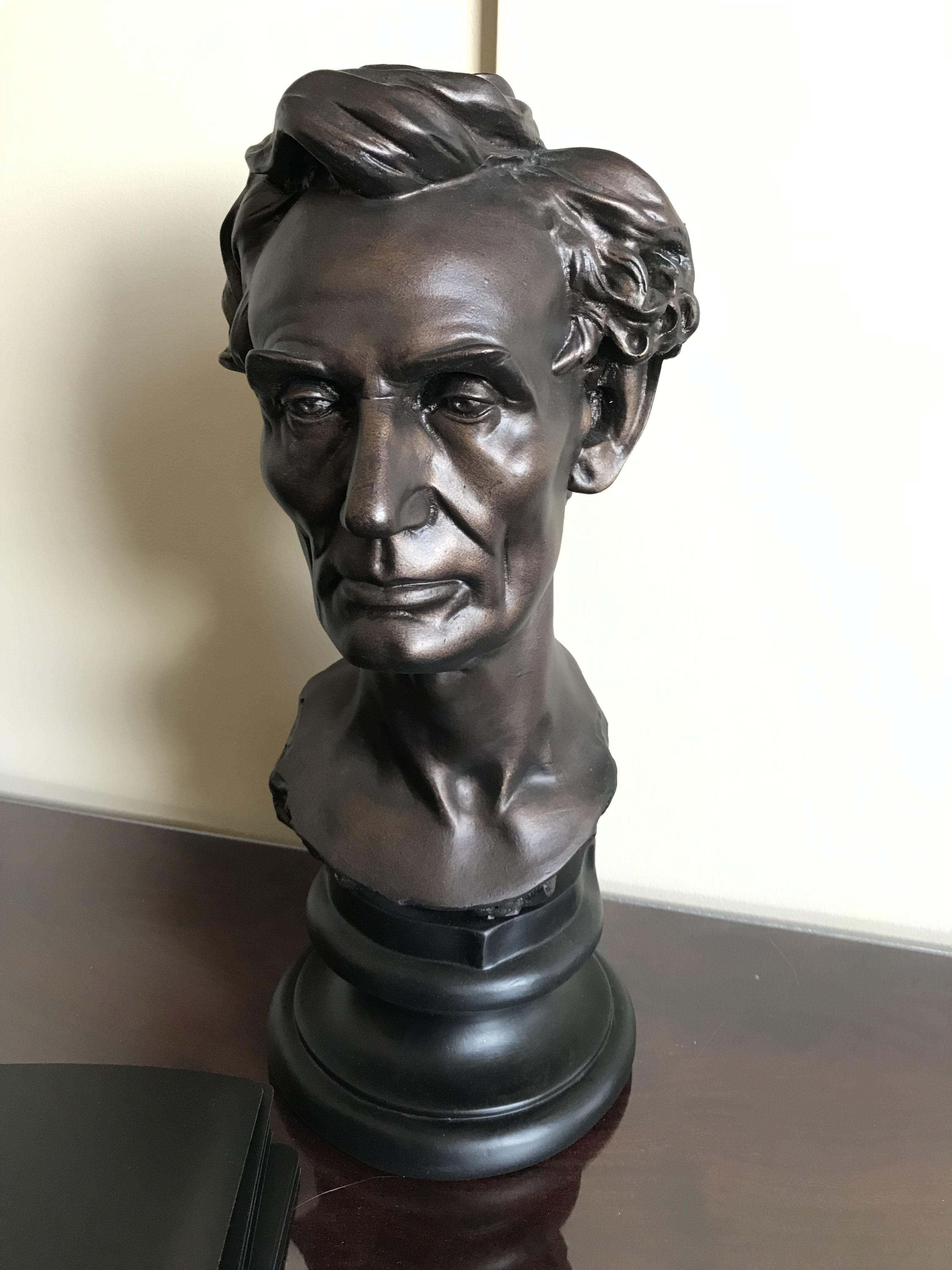
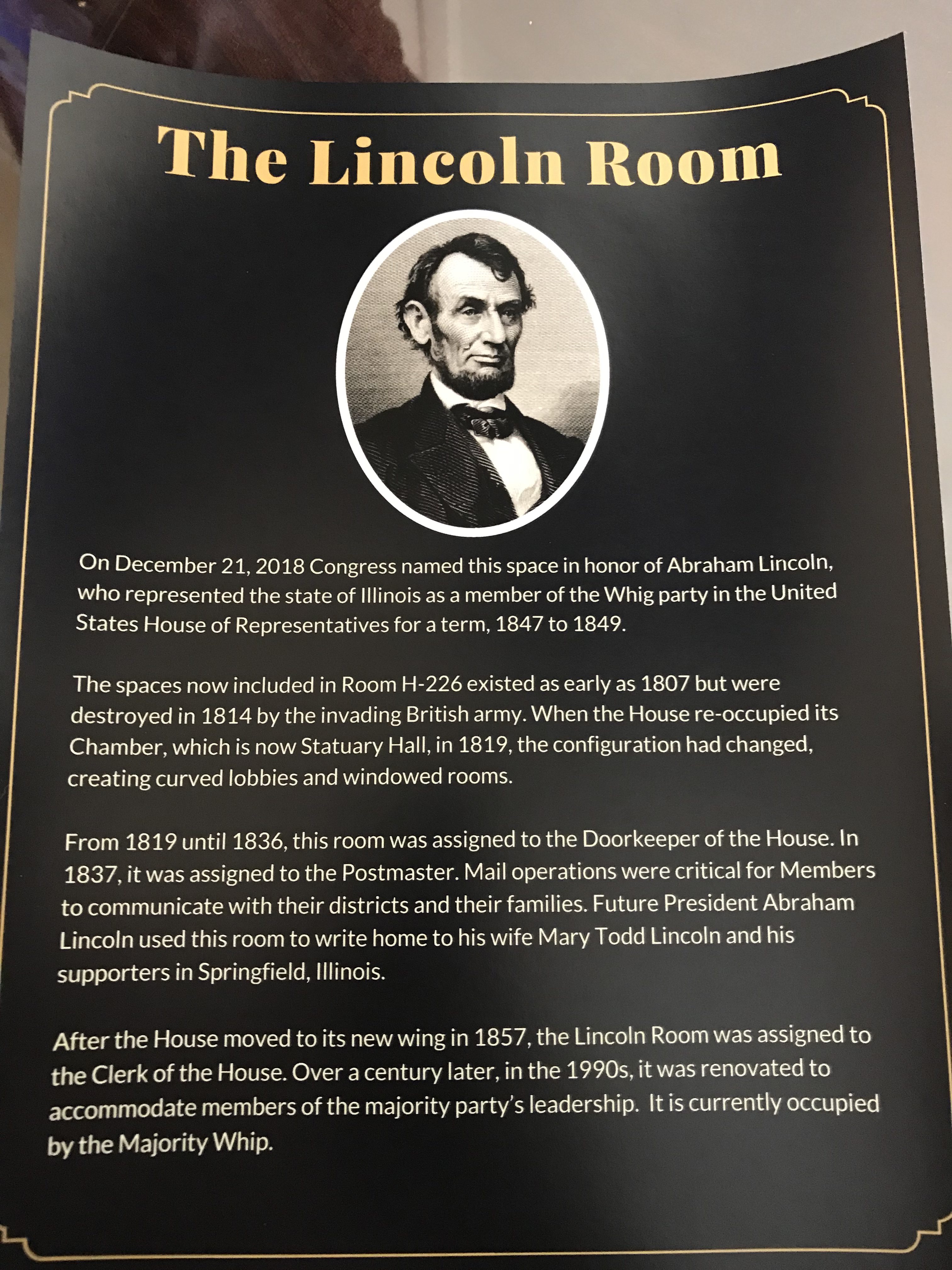
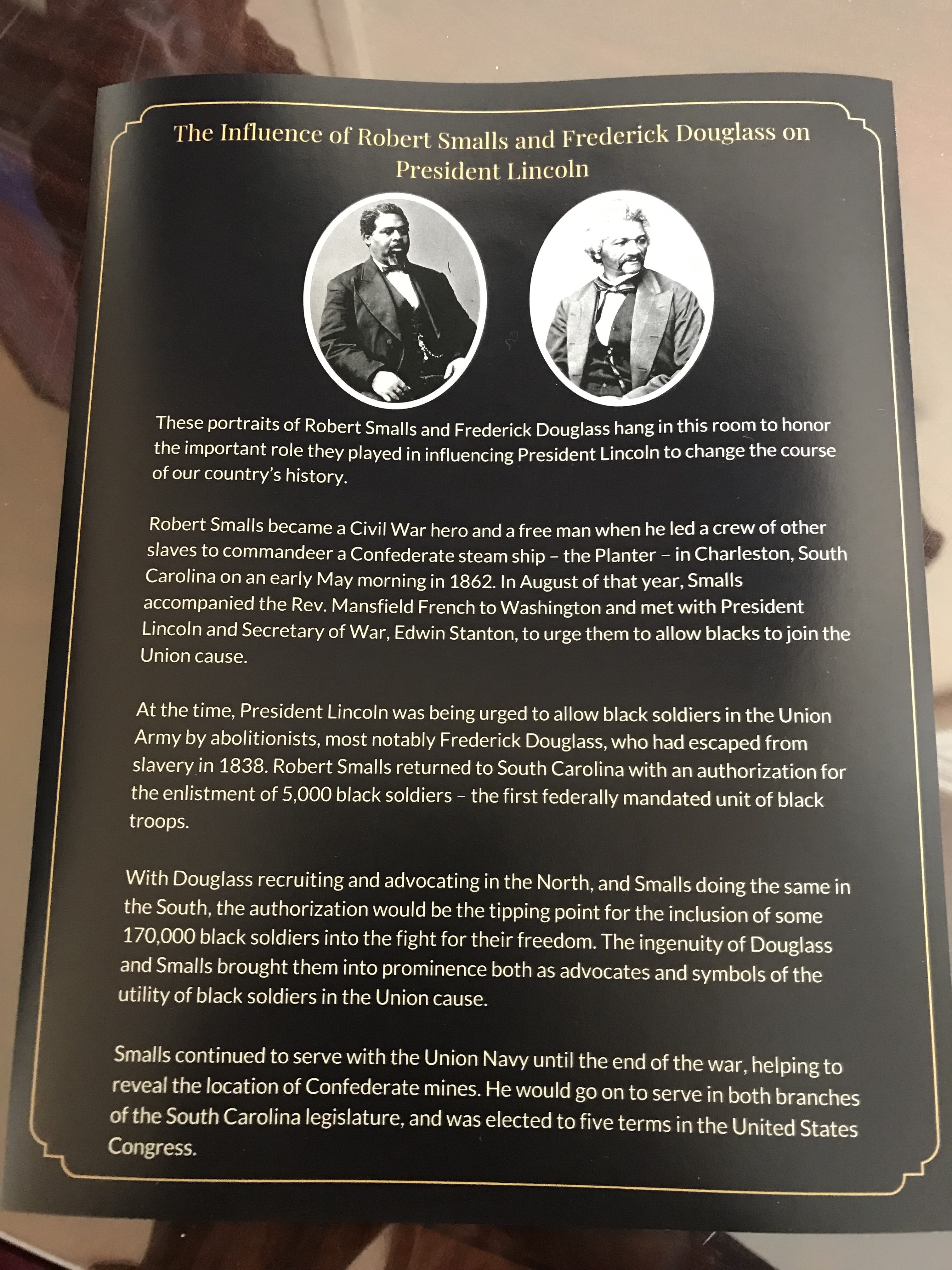
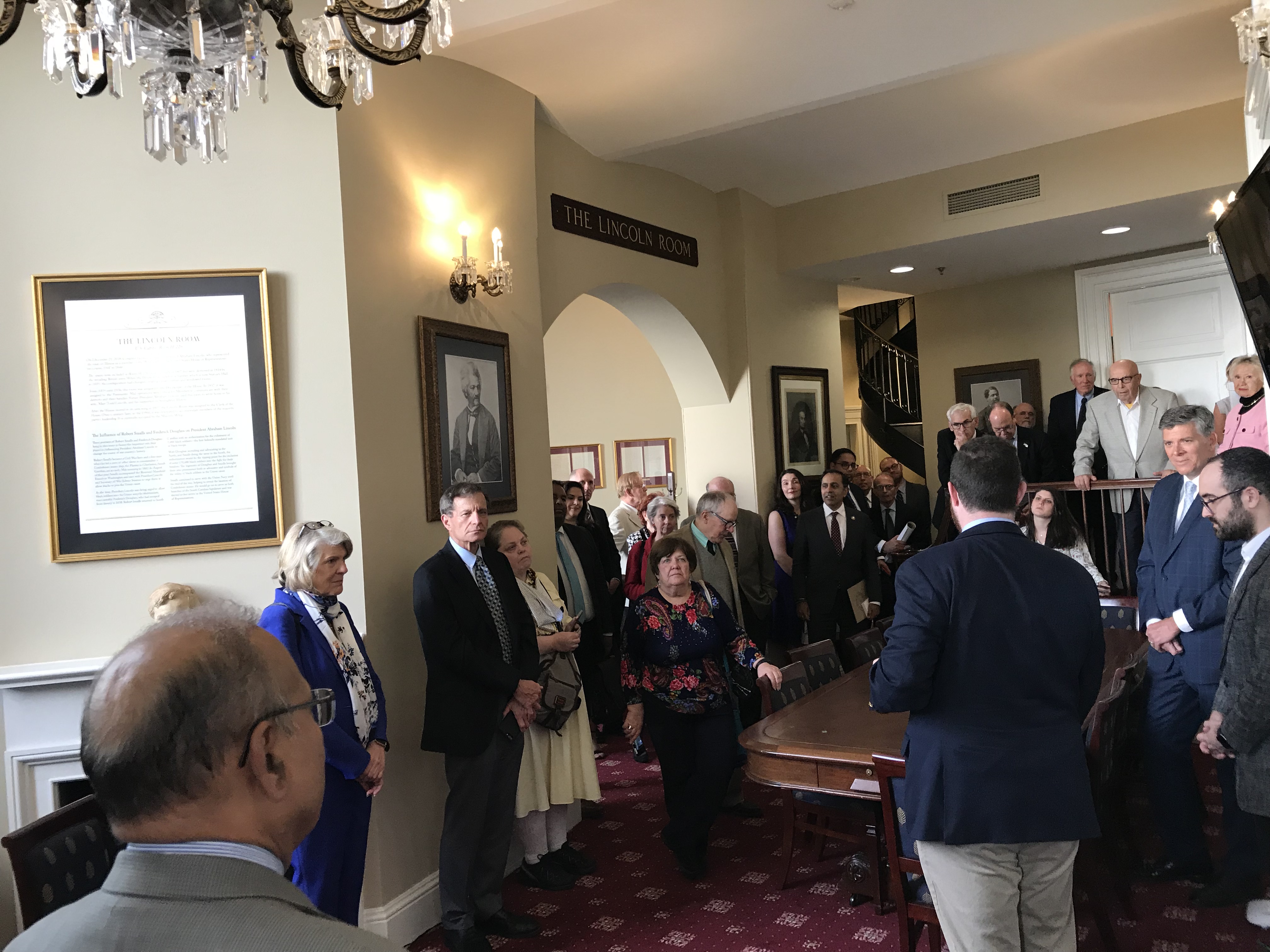
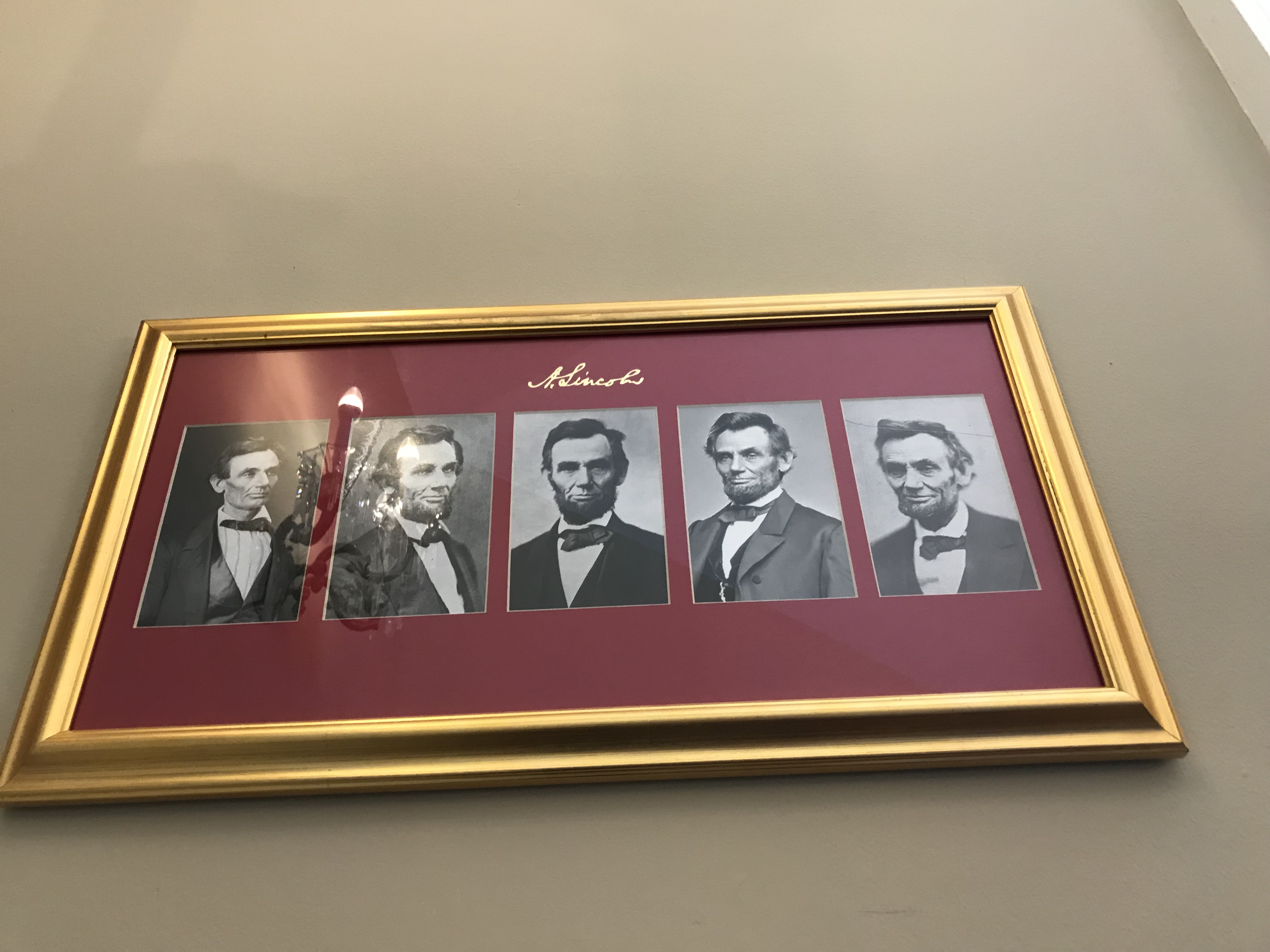
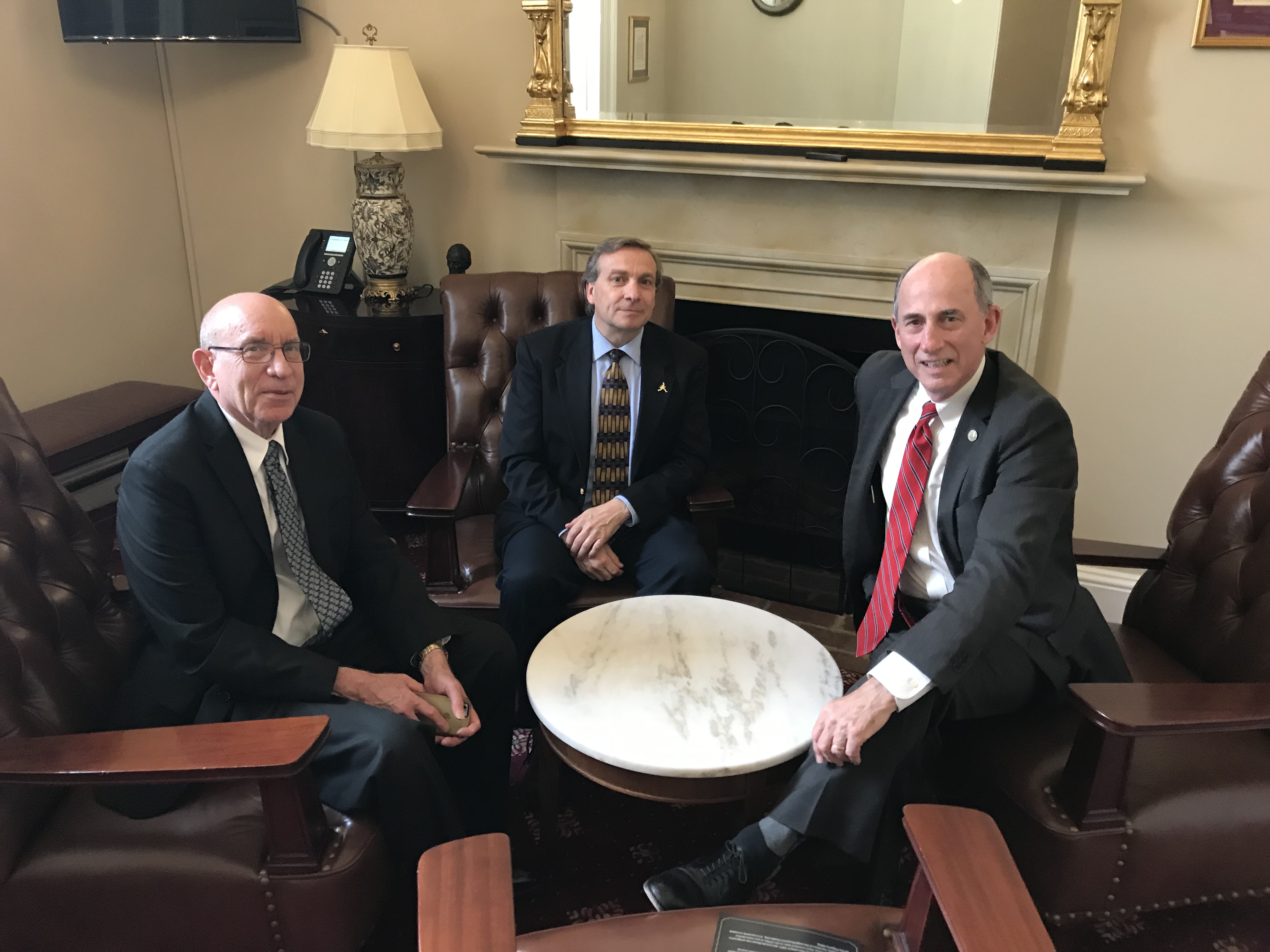
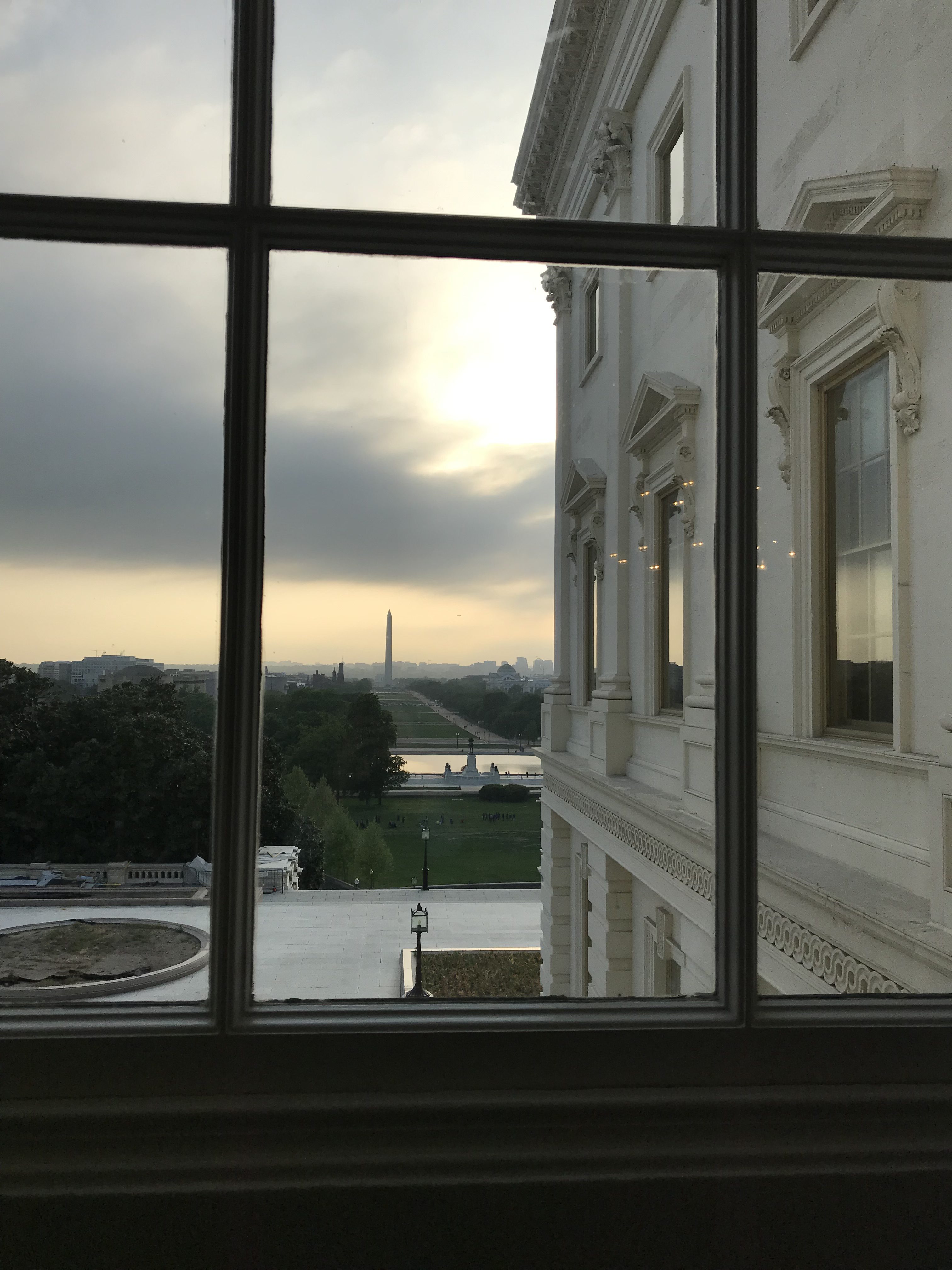
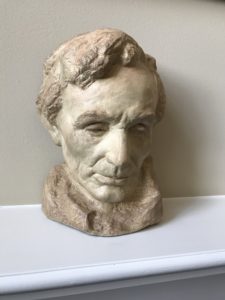
 It’s official. The room once used by Abraham Lincoln has been designated the Lincoln Room by House Resolution 1063. It’s a fitting tribute both to the 16th President of the United States and to Past-President of the Lincoln Group of DC, John Elliff. I was privileged to attend the dedication ceremony on May 1, 2019 in Statuary Hall of the U.S. Capitol Building in Washington, D.C.
The road to the dedication is a long one, from one former president to another. Currently Room H-226 in the U.S. Capitol, the space was the House post office during the time that Abraham Lincoln served his single term as a U.S. Congressman from Illinois. The House chambers then are now Statuary Hall, where visitors can see the statues from each of the 50 states (two for each state). A small metal plate in the floor designates where Lincoln’s desk was as a Congressman, way in the back of the hall. Behind it is a door that led to the post office. Today that room is in the rear of the suite designated for the House Majority Whip, currently Representative James Clyburn of South Carolina.
Lincoln would spend many hours between votes and debates in the post office. Representatives didn’t have offices or staffs then, so the post office was a good place to discuss issues of the day and trade stories and jokes.
Flash forward to the present. In 2014 I attended a special ceremony in Statuary Hall celebrating the 150th anniversary of Lincoln’s second inaugural. Congressman Rodney Davis, who serves in part of what had been Lincoln’s district, took me into the room then occupied by Steve Scalise, who had set aside the old post office room as an unofficial tribute to Abraham Lincoln.
John Elliff also was at that ceremony. As President of the Lincoln Group of DC he recognized that Rep. Scalise’s unofficial designation might not hold after the results of the 2016 election changed party leadership of the House (much like Lincoln pushing for the 13th Amendment to codify the gains made in the Emancipation Proclamation). After finishing his presidential term in spring 2018, John began working in earnest to convince Congress to officially designate the room as the Lincoln Room.
In August 2018, John Elliff suddenly and tragically passed away. By then he had received commitments from several members of Congress to pass a resolution. The Lincoln Group of DC, the Illinois State Society, and the Abraham Lincoln Association of Springfield, Illinois (and its president, former Lincoln Group of DC officer Bob Willard) all engaged with Congress to support the permanent designation of the Lincoln Room.
Near the end of the 115th Congress, Representatives Darin LaHood and Raja Krishnamoorthi co-sponsored a bipartisan resolution to officially designate the Lincoln Room. It passed and the room was formally dedicated this week. Representatives LaHood and Krishnamoorthi, Lincoln Group of DC President John O’Brien, Illinois State Society President Jerry Weller, and John Elliff’s wife Linda all spoke at the dedication. About 50 proud members of the three organizations attended the event in Statuary Hall and toured the Lincoln Room.
As Representative LaHood noted during the dedication, this resolution and designation would not have been possible without the tireless work of John Elliff and the support of these Lincoln and Illinois organizations.
For me personally this was a fitting tribute to the man who became my Lincoln mentor, John Elliff, as well as to Abraham Lincoln himself. As I wrote in my tribute post last August, John was, as fellow friend and Lincoln scholar Bob Willard noted, “Lincolnian in character – honest, smart, hard-working, empathetic, curious.” Everyone in the Lincoln Group of DC appreciated these characteristics. He was a true leader.
And now he will be forever linked with his own political mentor, Abraham Lincoln. Thank you John, Linda, Bob, Jerry, Representatives LaHood and Krishnamoorthi, and all the members of each of the organizations that made the Lincoln Room happen. See the slideshow below for some photos of the event.
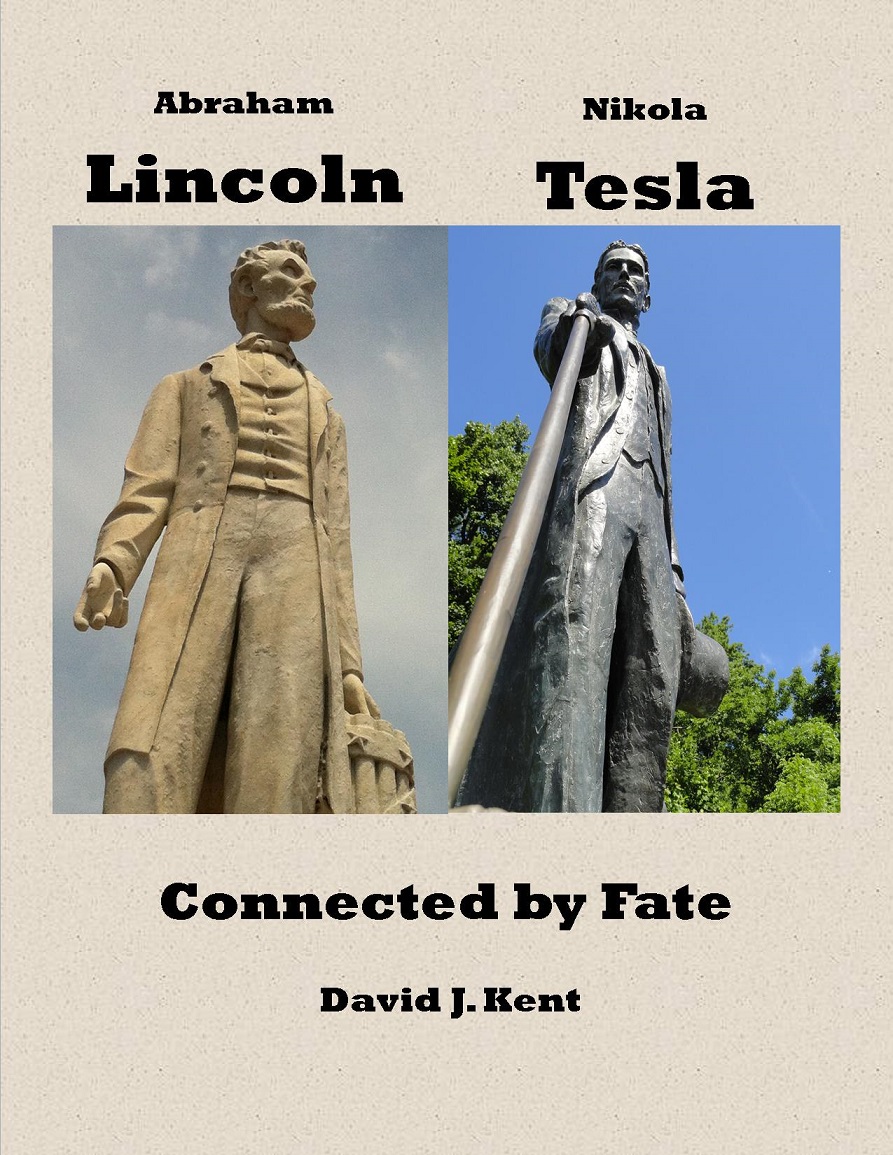
David J. Kent is an avid science traveler and the author of Lincoln: The Man Who Saved America, in Barnes and Noble stores now. His previous books include Tesla: The Wizard of Electricity (2013) and Edison: The Inventor of the Modern World (2016) and two e-books: Nikola Tesla: Renewable Energy Ahead of Its Time and Abraham Lincoln and Nikola Tesla: Connected by Fate.
Check out my Goodreads author page. While you’re at it, “Like” my Facebook author page for more updates!


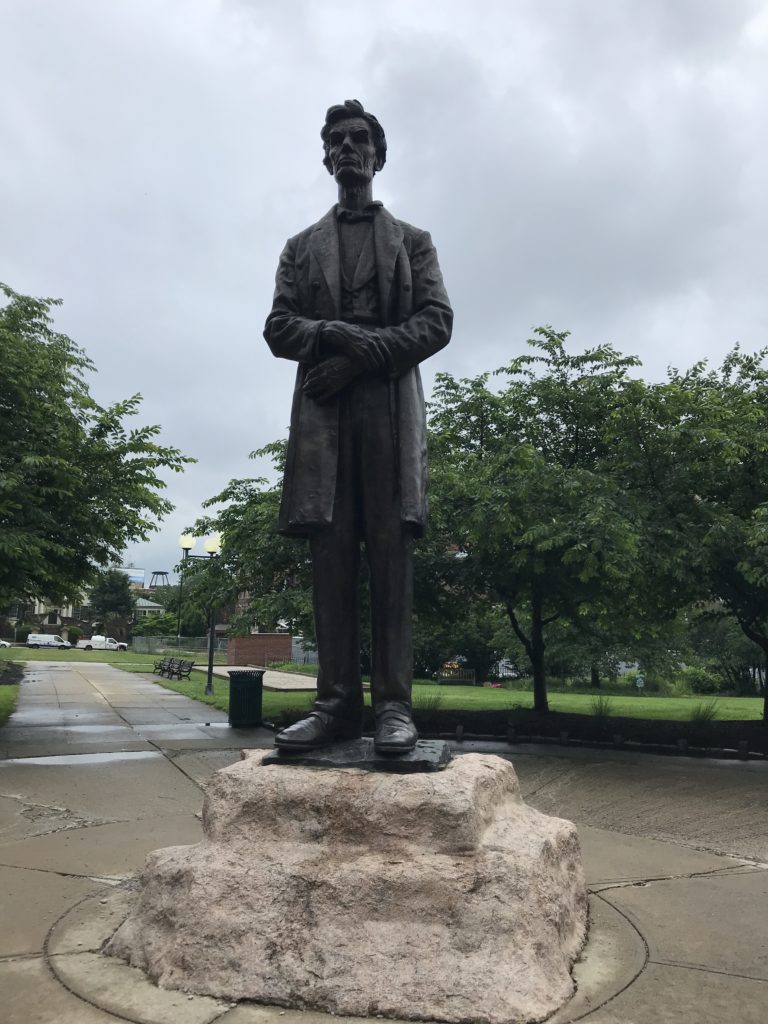 To be honest, it does look like Lincoln is feeling some distress (and not just because I was dodging rain drops to take the photo). The sculptor, George Grey Barnard, intended a frontier Lincoln, dressed his usual frumpy, with his arms clasped in front of him. At 11 feet tall, plus a pedestal, the statue is rather impressive.
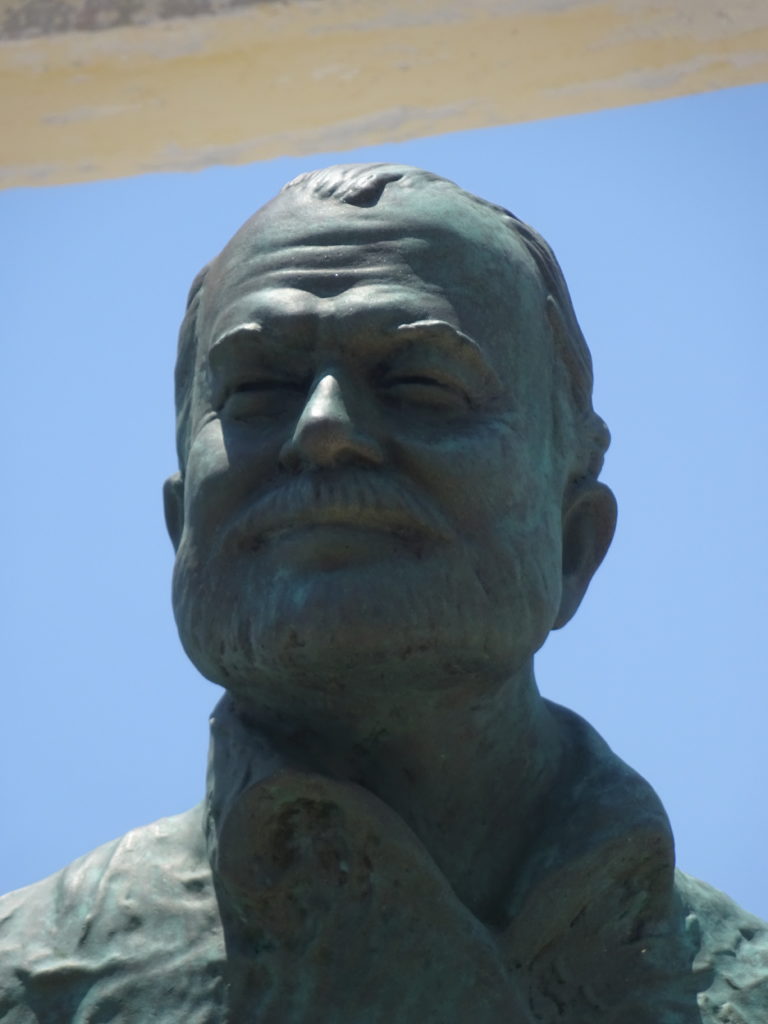
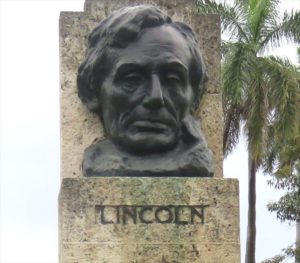 Abraham Lincoln is everywhere. I just saw his bust in a park in
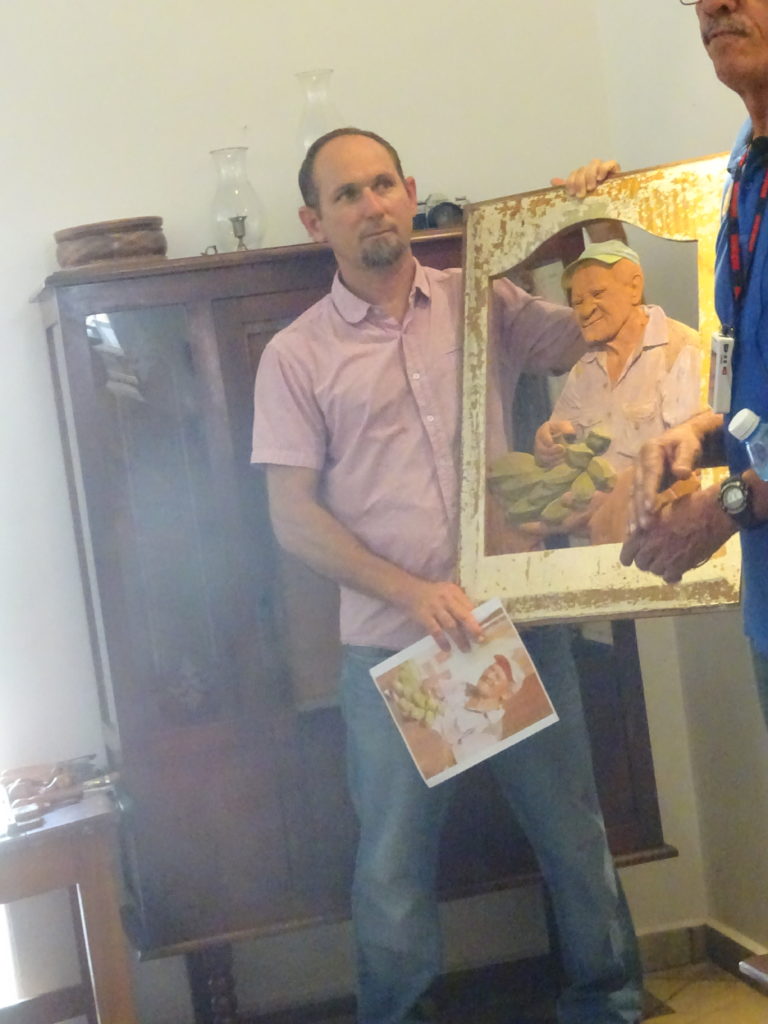
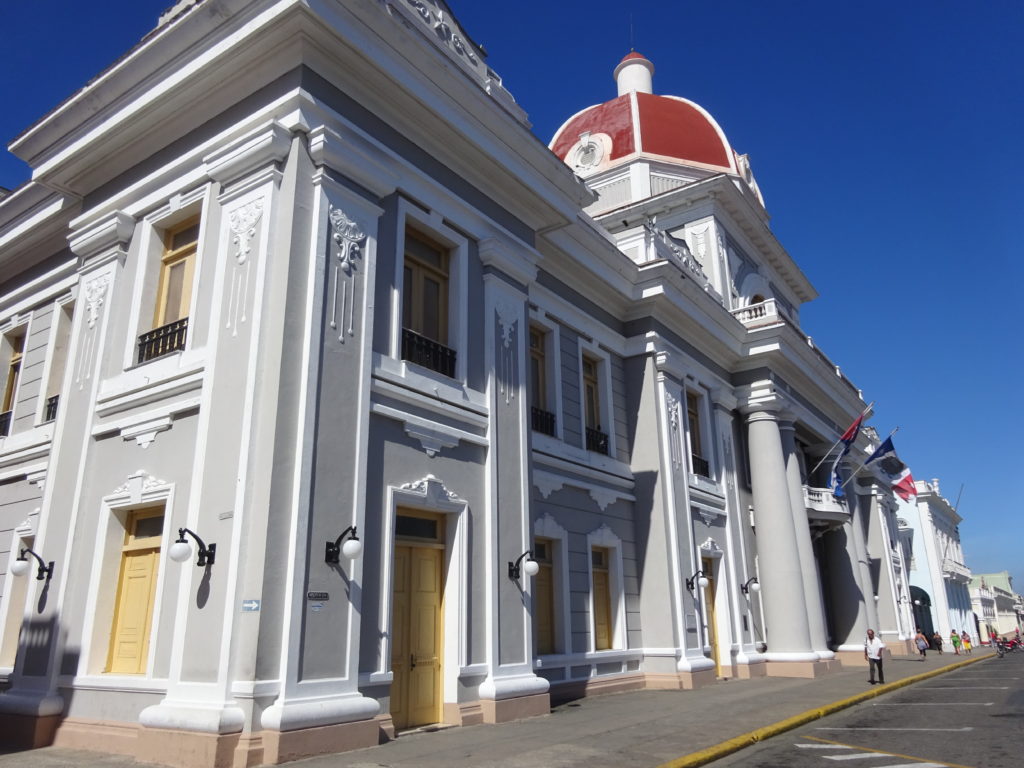
  Marianna spoke no English, and my ten words of Spanish were insufficient for a conversation. Through a translator we conversed about the modern dance she and her troupe had just performed. Marianna was one of many “people-to-people” interactions we had during my recent 10-day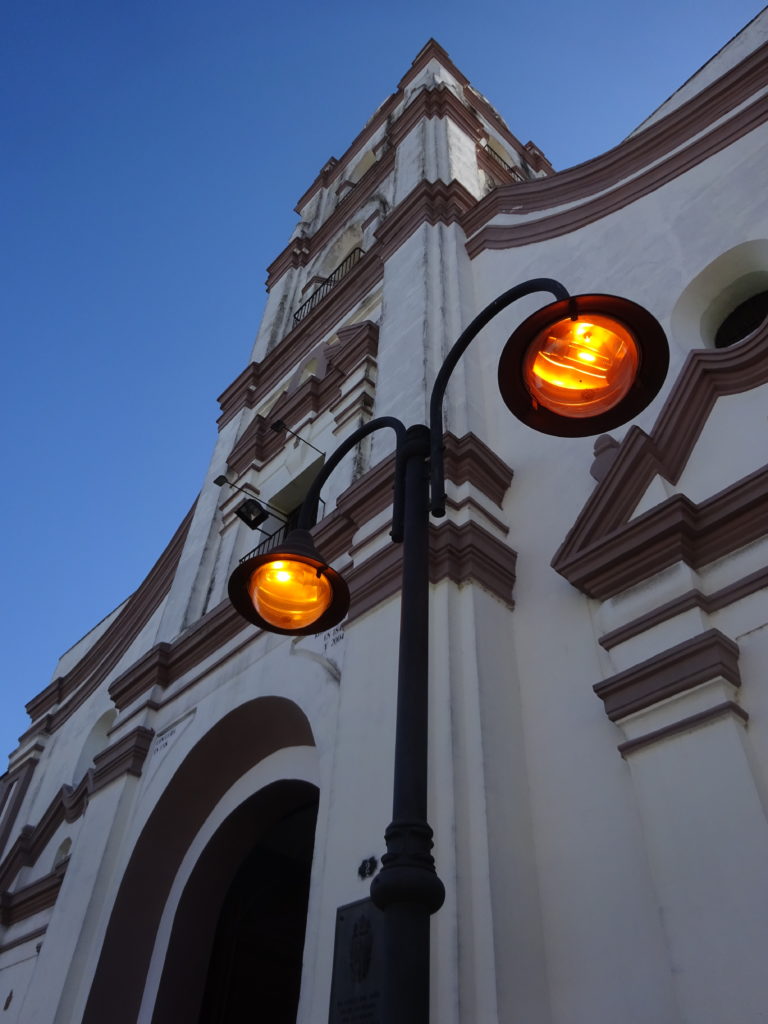
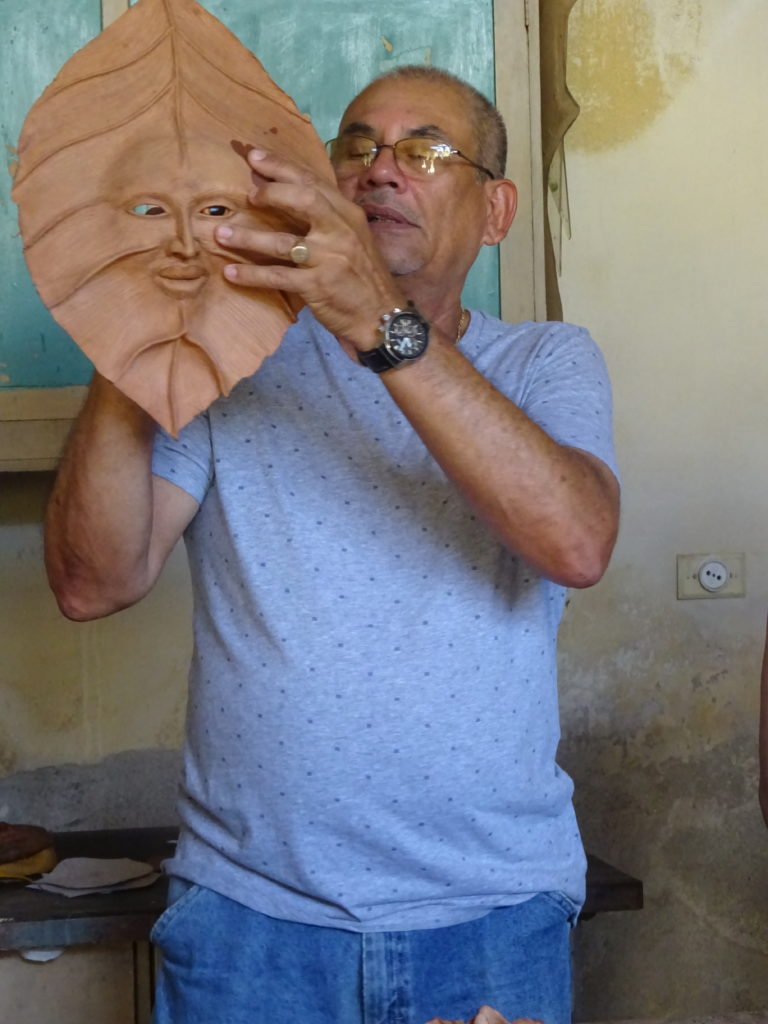

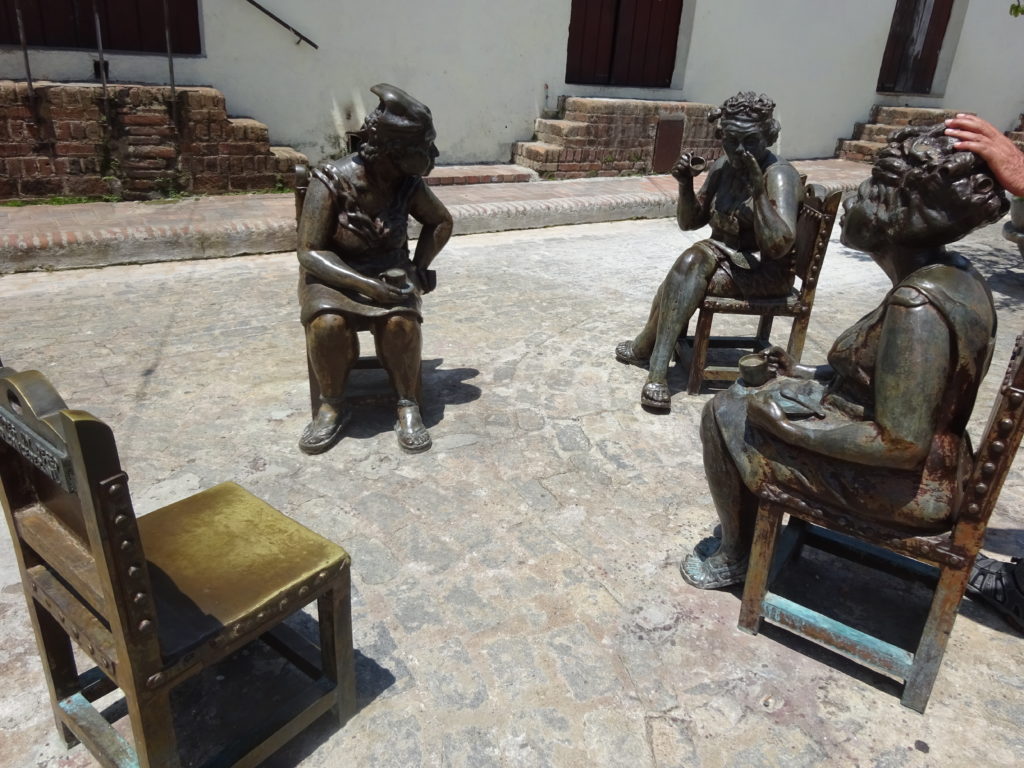


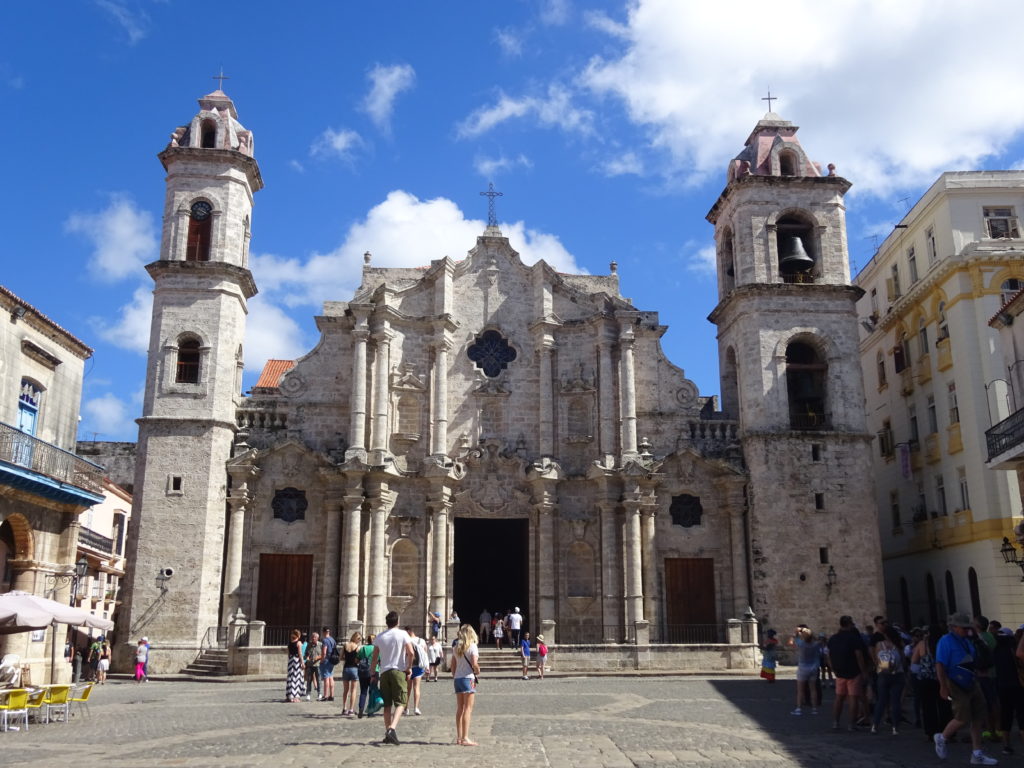
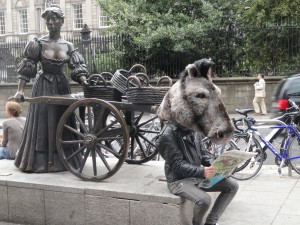 To say that my first real travel experience outside the United States (other than
  In June I’ll have the privilege of participating in the annual
  A while back I wrote a post called
 They say there are over 15,000 books and pamphlets published about Abraham Lincoln. The truth is, no one actually knows. As a way to find out, I’ve started the
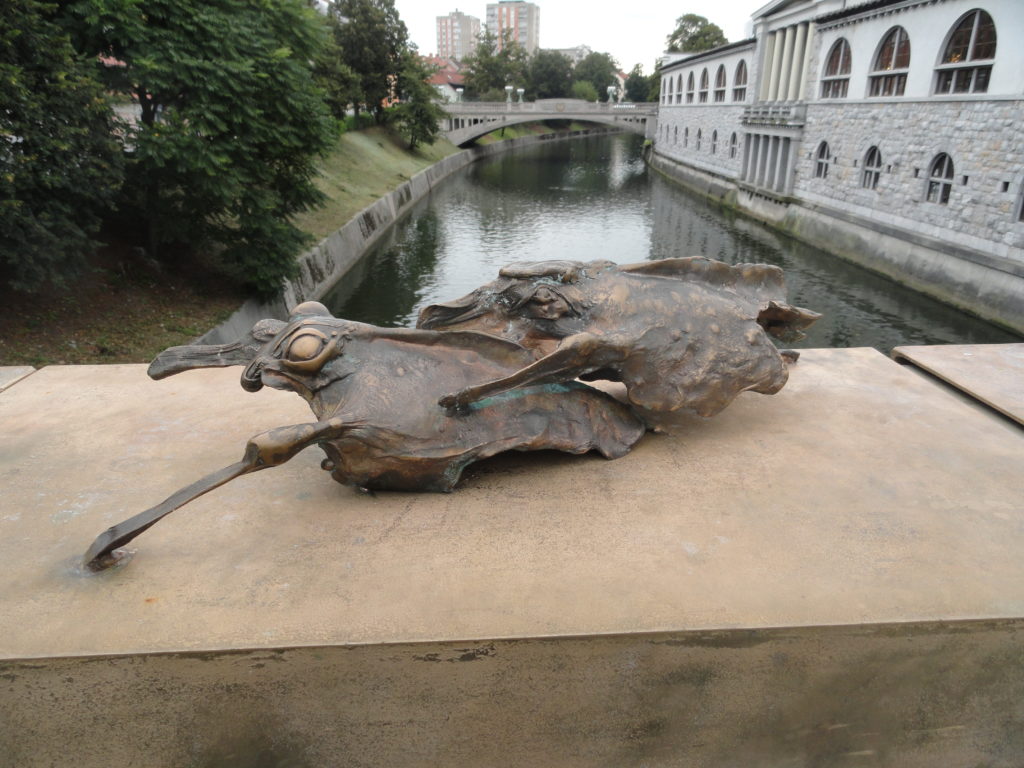
 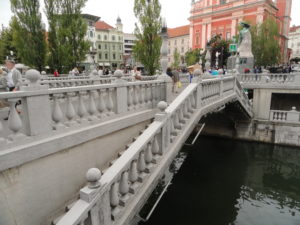 Several years ago I took a road trip through central Europe. Starting in Bratislava, the route took us through Vienna, Munich, Fussen (home of the famed Neuschwanstein Castle), Munich, Salzburg, and Budapest. Rather than backtrack through Vienna, we decided on a whim to drive south to the capital city of Slovenia, Ljubljana, home of the triple bridge.