 Rotating magnetic fields, alternating current motors and transformers, the Tesla coil, wireless transmission of radio communication, wireless lighting…Nikola Tesla had no shortage of inventions that he could call his own. But these were not the only inventions in which he dabbled. Besides his wireless radio communication and alternating current systems, and like other great inventors from da Vinci to Edison, Tesla was intrigued by a great many other issues. One such issue to which he gave a great deal of thought was the relationship between matter and energy. Late in life he even claimed to have developed a new dynamic theory of gravity, though the details of his theory were never presented. One thing was clear, however, Tesla did not think Albert Einstein had gotten it right when he introduced his theories of relativity: “Tesla continuously attacked the validity of Einstein’s work,” his first biographer John O’Neill would write, “he ridiculed the belief that energy could be obtained from matter.”
 Einstein, of course, received the Nobel Prize in Physics in 1921 “for his services to theoretical physics, and especially for his discovery of the law of the photoelectric effect.” While he is probably best known for his development of “the world’s most famous equation, E = mc2,” Einstein’s greatest contributions were in reconciling the laws of classical mechanics with the laws of electromagnetic fields. He believed that Newtonian mechanics did not adequately accomplish this reconciliation, which led to his special theory of relativity in 1905. Extending this concept to gravitational fields, Einstein published his general theory of relativity in 1916. The following year he applied the general theory to model the structure of the universe as a whole.
To vastly oversimplify, general relativity provides for a unified description of gravity as a geometric property of space and time. One key feature is that space-time is both curved and a function of the energy and momentum of matter and radiation. This is why light is bent around planets and other celestial bodies as it is influenced by their gravitational fields. It is also why time passes more slowly the closer the clock is to the source of gravitation (or conversely, why astronauts on a mission to points outside our solar system would return much younger than if they had remained on Earth).
Undeterred by the worldwide preeminence of such a man as Einstein, Tesla, at the ripe old age of eighty-two, wrote that he was fortunate enough to work out “two far reaching discoveries.” One was a dynamic theory of gravity, which he said “explains the causes of this force and the motions of heavenly bodies under its influence so satisfactorily that it will put an end to idle speculation and false conceptions, as that of curved space.” The “idle speculation” of curved space was, of course, one of the key features of Einstein’s general theory of relativity. Tesla argued that Einstein’s theories were nothing more than “magnificent mathematical garb which fascinates, dazzles and makes people blind to the underlying errors.”
Tesla’s other far-reaching discovery was a physical truth that he felt could best be expressed by the statement:
“There is no energy in matter other than that received from the environment.”
He argued that no theory could
“explain the workings of the universe without recognizing the existence of the ether and the indispensable function it plays in the phenomena.”
The presence of the ether—the unseen medium between all the bodies of the universe—had already been contested by many scientists, including Einstein. Instead of the ether, Einstein inserted his own space-time construct that allowed space to curve around gravitational bodies. Tesla disagreed with Einstein, saying:
I hold that space cannot be curved, for the simple reason that it can have no properties. It might as well be said that God has properties. He has not, but only attributes and these are of our own making. Of properties we can only speak when dealing with matter filling the space. To say that in the presence of large bodies space becomes curved is equivalent to stating that something can act upon nothing. I, for one, refuse to subscribe to such a view.
The question was not inconsequential—if the ether existed then the speed of light would not be constant, it would vary depending on the forces of the celestial bodies. Experiments carried out by Albert Michelson and William Morley in 1887 had already shown that the ether actually did not exist, notwithstanding Tesla’s insistence many decades after this to the contrary.
Still undeterred, Tesla believed that he had discovered what came to be known as “Tesla waves,” which would move faster than the speed of light. He argued that the propagation of currents from his magnifying transmitter—“a peculiar transformer specially adapted to excite the Earth”—would begin with “a theoretically infinite speed” and then later “proceeds [sic] with the speed of light.” But that would not be the end as “from there on it again increases in speed, slowly at first, and then more rapidly,” eventually passing through the Earth to a point diametrically opposed to it “with approximately infinite velocity.” Needless to say this was a direct contradiction to Einstein’s demonstration that the speed of light is a constant and that nothing can travel faster than the speed of light, at least in a vacuum.
Whether Tesla could have provided some additional insight to Einstein’s thinking on relativity if he had presented his views many years earlier, we will never know. In the end it was Einstein whose theories were written down, underwent scrutiny, and are generally accepted today.
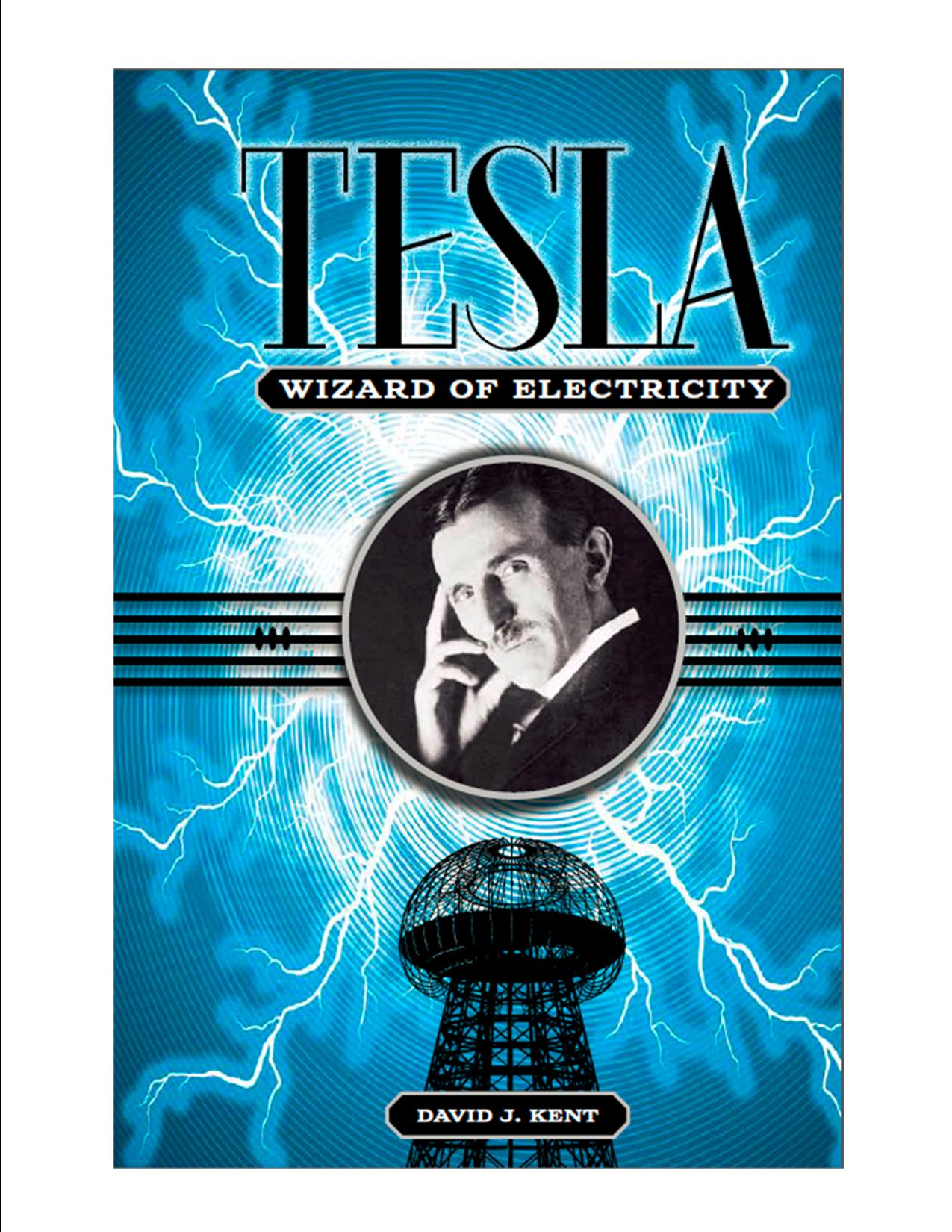
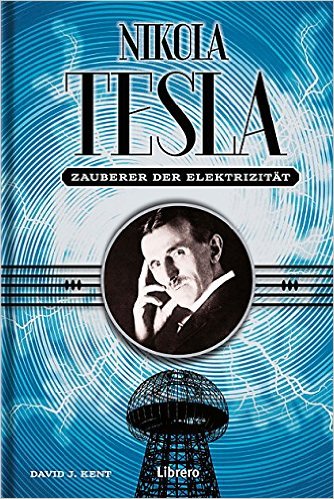
[The above is an adaptation from my book Tesla: The Wizard of Electricity.]
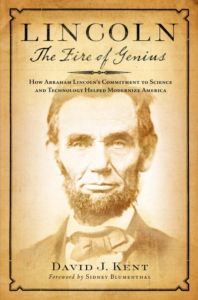
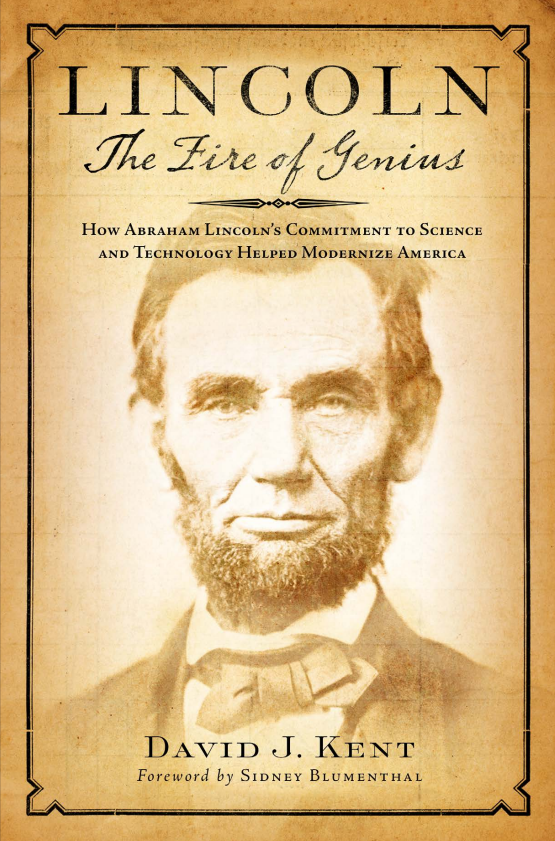
Lincoln: The Fire of Genius: How Abraham Lincoln’s Commitment to Science and Technology Helped Modernize America is available at booksellers nationwide.
Limited signed copies are available via this website. The book also listed on Goodreads, the database where I keep track of my reading. Click on the “Want to Read” button to put it on your reading list. Please leave a review on Goodreads and Amazon if you like the book.
You also follow my author page on Facebook.
David J. Kent is President of the Lincoln Group of DC and the author of Lincoln: The Fire of Genius: How Abraham Lincoln’s Commitment to Science and Technology Helped Modernize America and Lincoln: The Man Who Saved America.
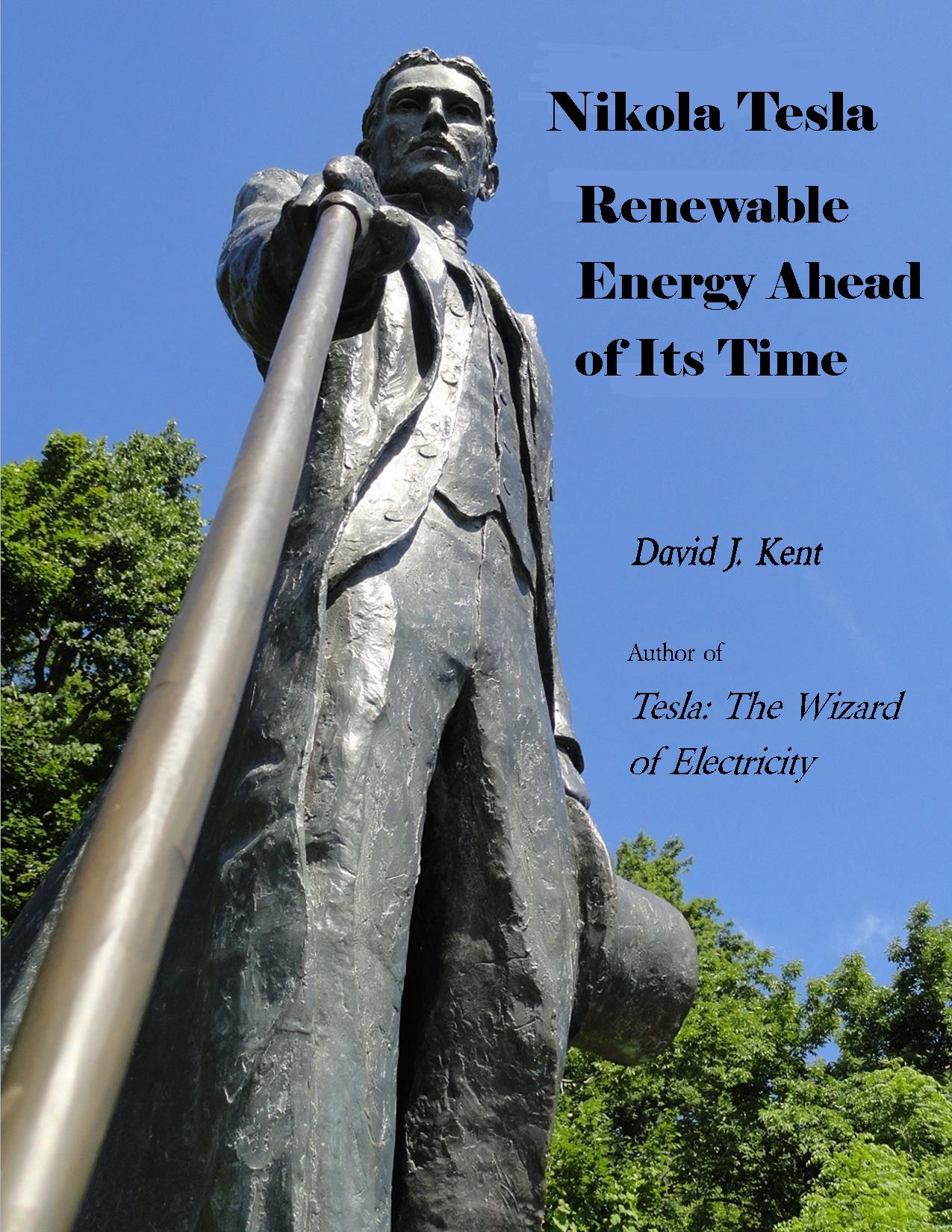
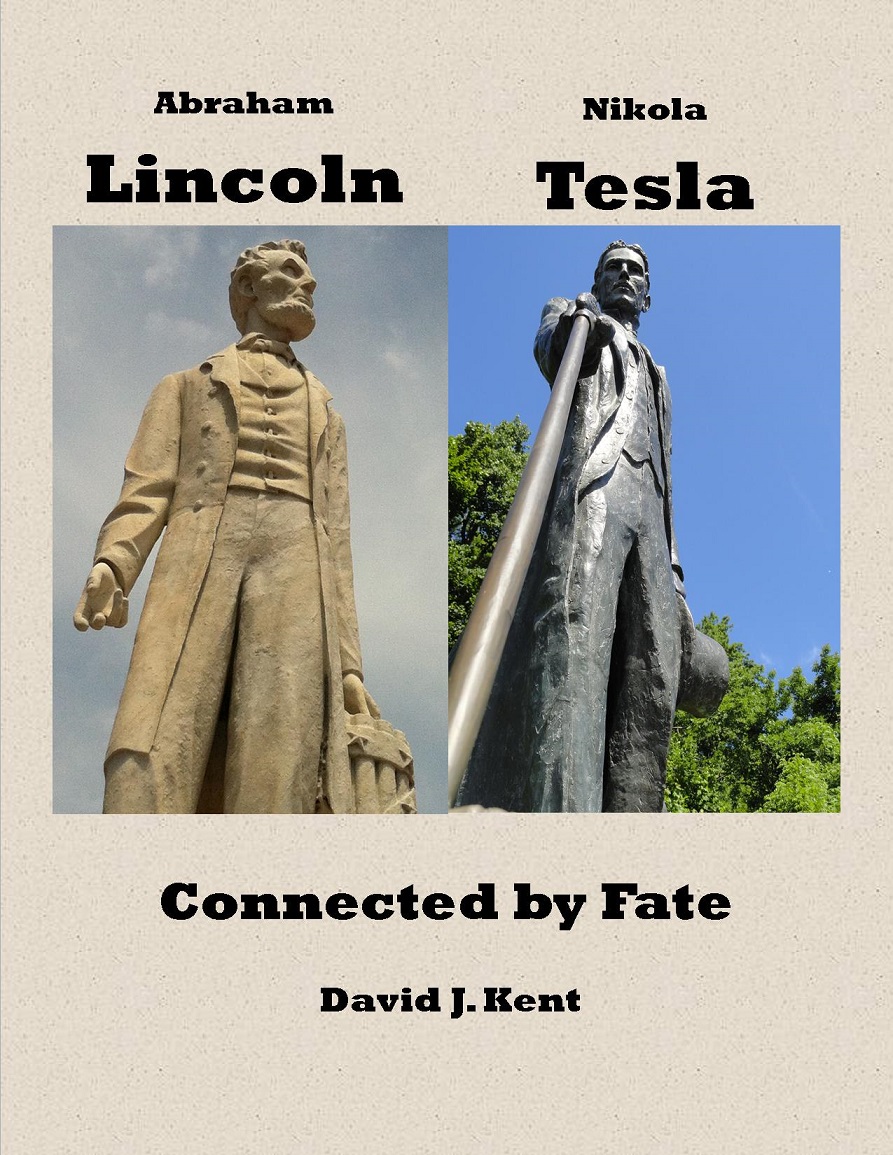
His previous books include Tesla: The Wizard of Electricity and Edison: The Inventor of the Modern World and two specialty e-books: Nikola Tesla: Renewable Energy Ahead of Its Time and Abraham Lincoln and Nikola Tesla: Connected by Fate.
 I’ve been writing periodic posts cataloguing my previous three-year secondment to Brussels.
  Now that Thanksgiving weekend has passed, it’s time to think about
  And don’t forget to go to my
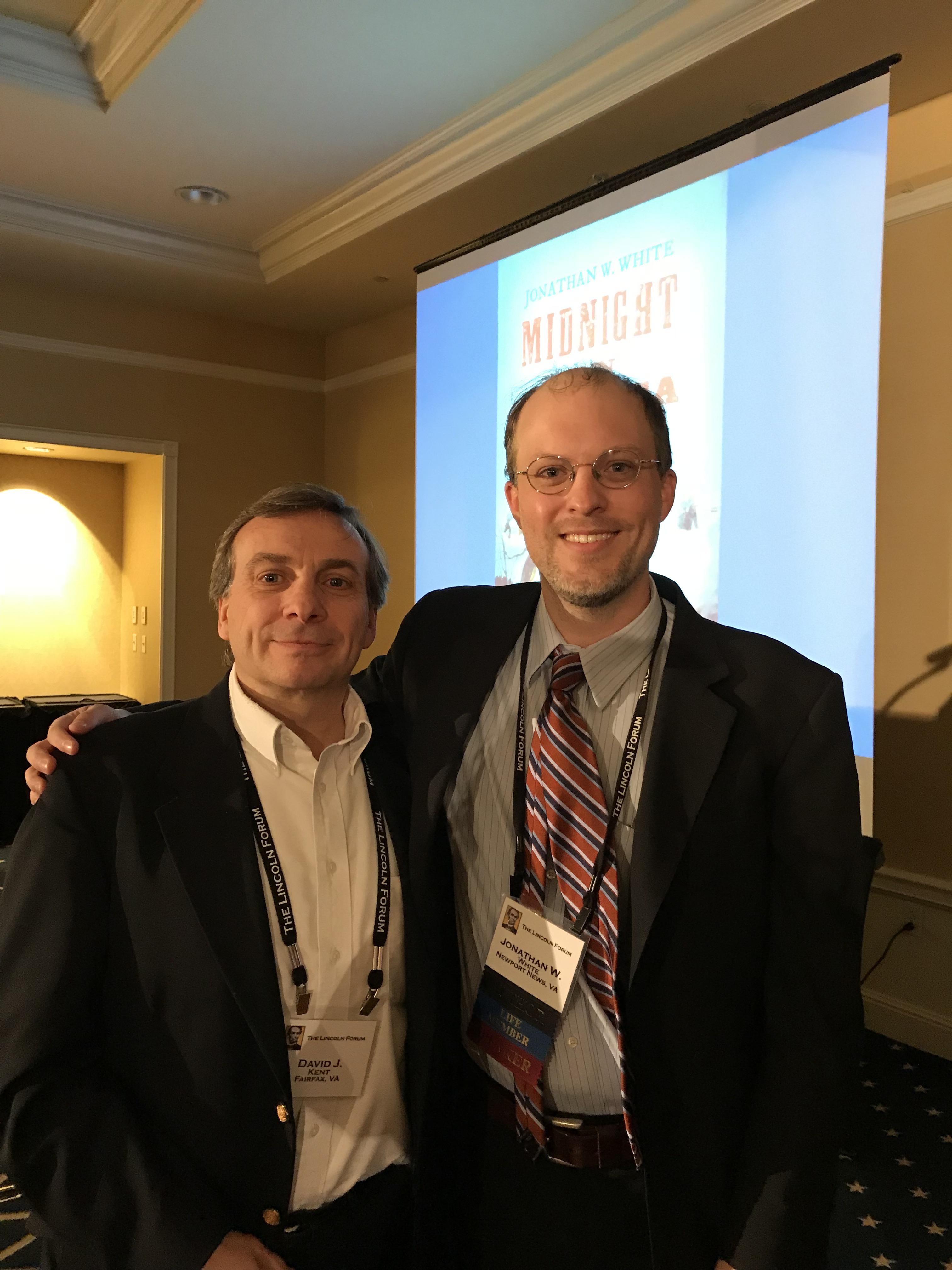
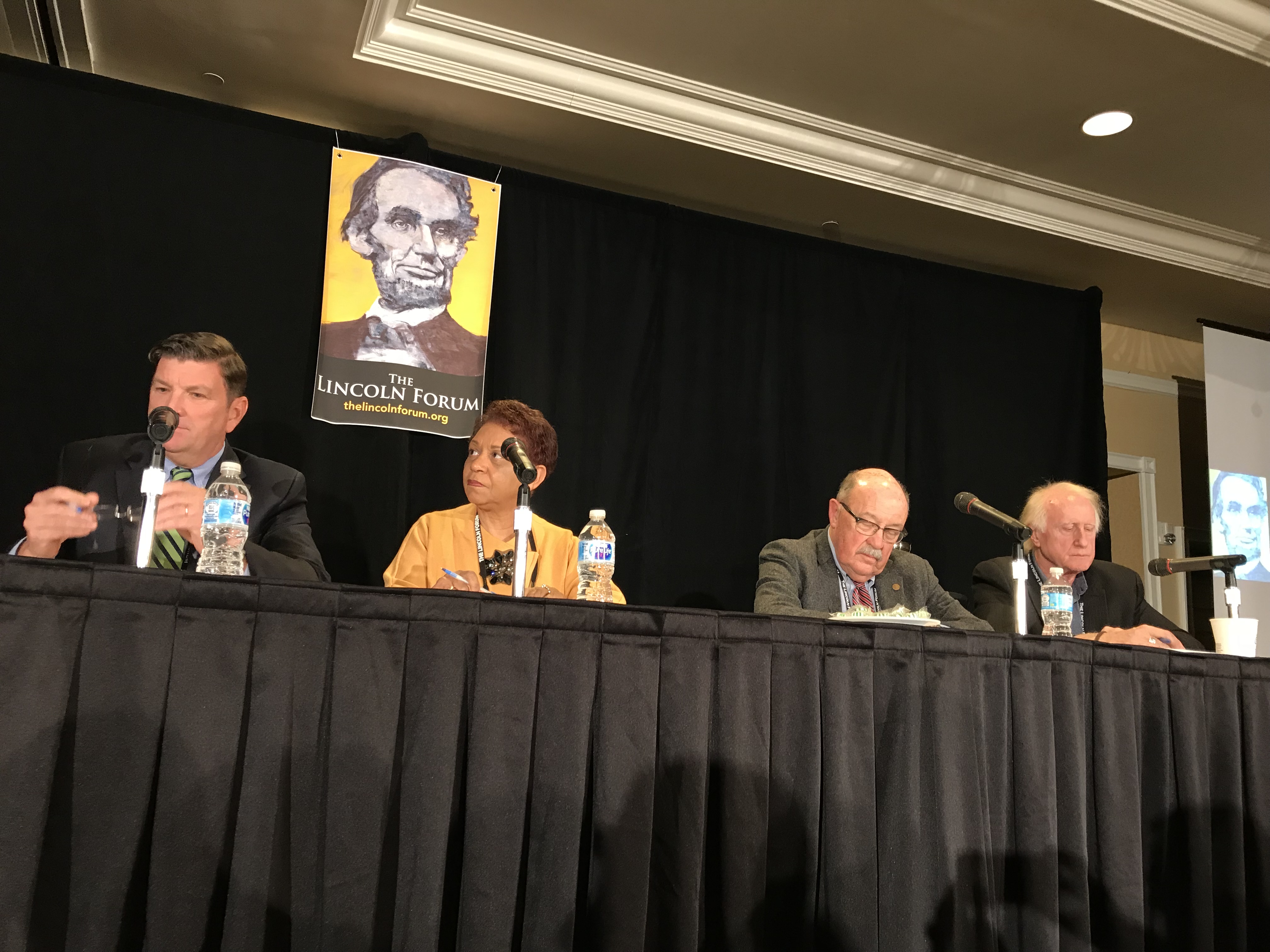
 November 19th is Dedication Day, the anniversary of Abraham Lincoln’s famous Gettysburg Address (admit it, you had to memorize it in middle school too). It’s also the week of the annual














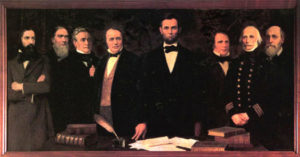 Joseph Henry was not initially impressed with Abraham Lincoln.