On my recent sailing cruise to the Caribbean I spent time on seven islands, six of which have volcanic origins and have mountainous geographies. Barbuda is the exception. The first feature that makes it stand out from the rest is that it is flat. So flat that the one tiny point on it that stands 125 feet above sea level is called the “highlands.”
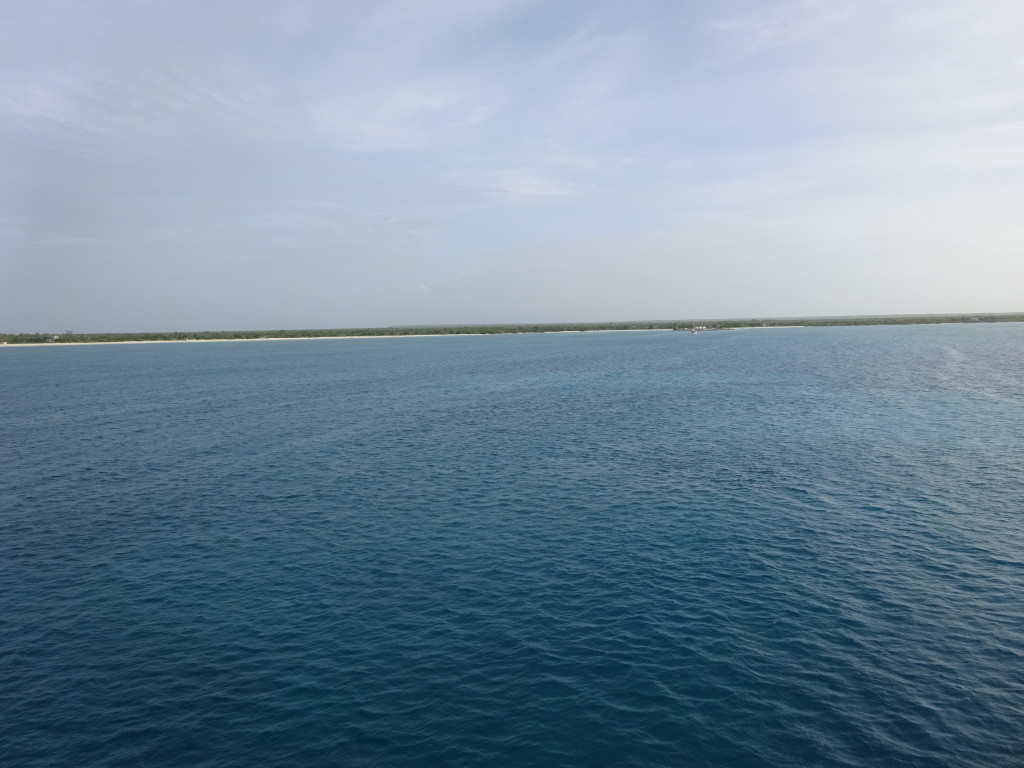
Part of the twin-island country of Antigua and Barbuda, there isn’t much to see beyond its flatness. Only about 1600 people live here, with at least two-thirds of those living in the main town of Codrington, named after the former slave owners who maintained a “slave nursery” in the 1700 (slavery was finally outlawed in 1834). Tourists who wander here in small ships can view the Martello Tower, all that remains of an old fort, and stroll on the miles of pink sand beach.
But we were here for the frigate birds.
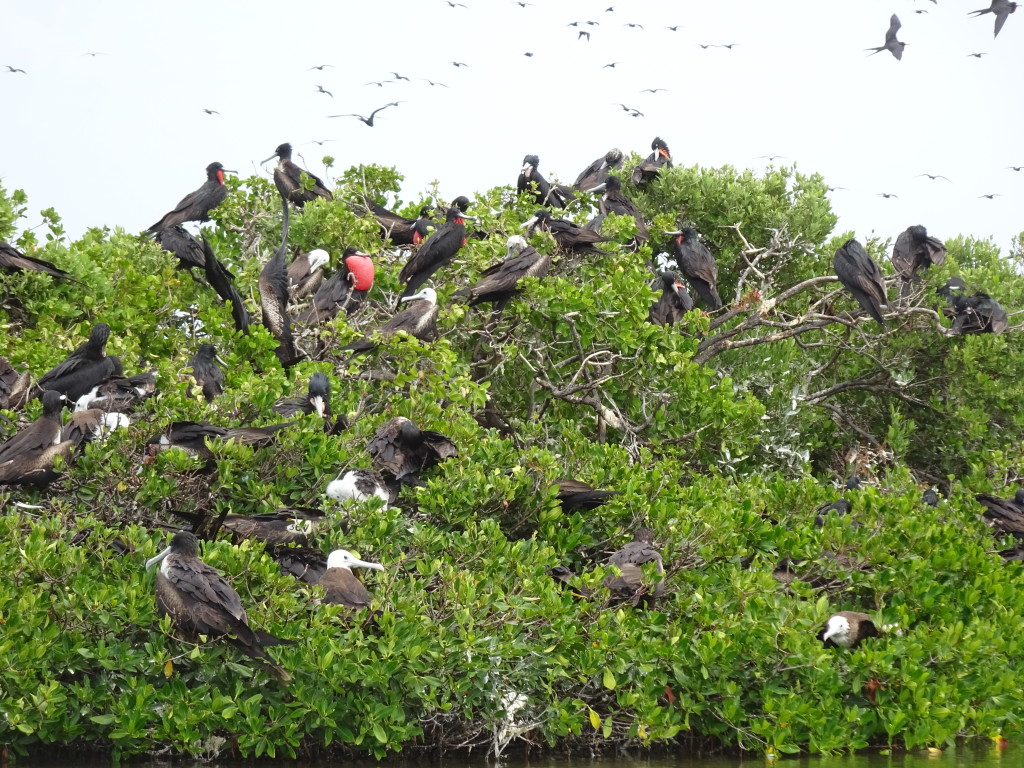
Barbuda hosts one of the most accessible frigate bird sanctuaries in the world. Speed boating across the flat lagoon from Codrington gets you to a low-lying area inhabited by over 5000 frigate birds. As you approach, hundreds of these huge birds – wingspans can reach up to 7 feet or more – fill the skies.
So many birds that they crowd the available branches.
Unlike most seabirds, frigates don’t ever land in the sea. With the largest wing-area-to-body-weight ratio of any bird, along with the characteristic “W” shape of their wingspread and long forked tails, they can remain aloft for hours. With only minimal oil produced to protect their feathers from getting waterlogged, they aren’t built for swimming. Even walking is problematic, which is why they flop down into the nearest low branches when they need to rest. The reduced webbing on their feet frees up the end of their toes, just enough to hang on to the branches.
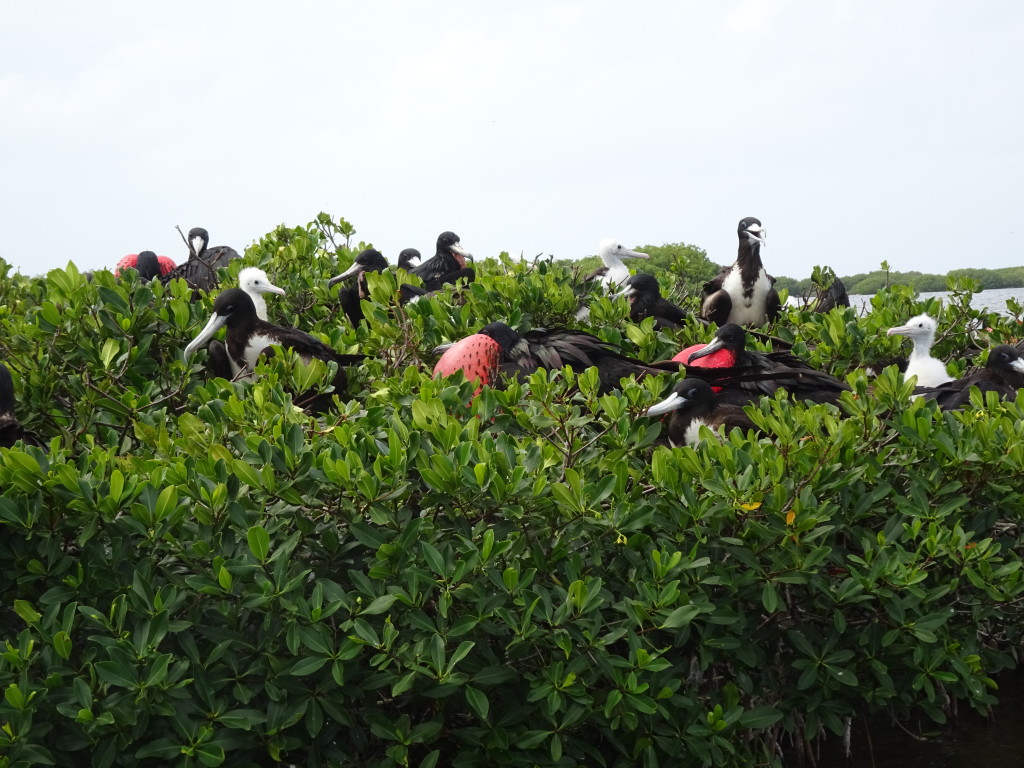
As the photos show, the females are larger than the males and have whiter underbellies. Juveniles remain all white for some time, taking up to eight to eleven years to reach sexual maturity. Males are all black but have the most distinct feature – a red gular pouch.
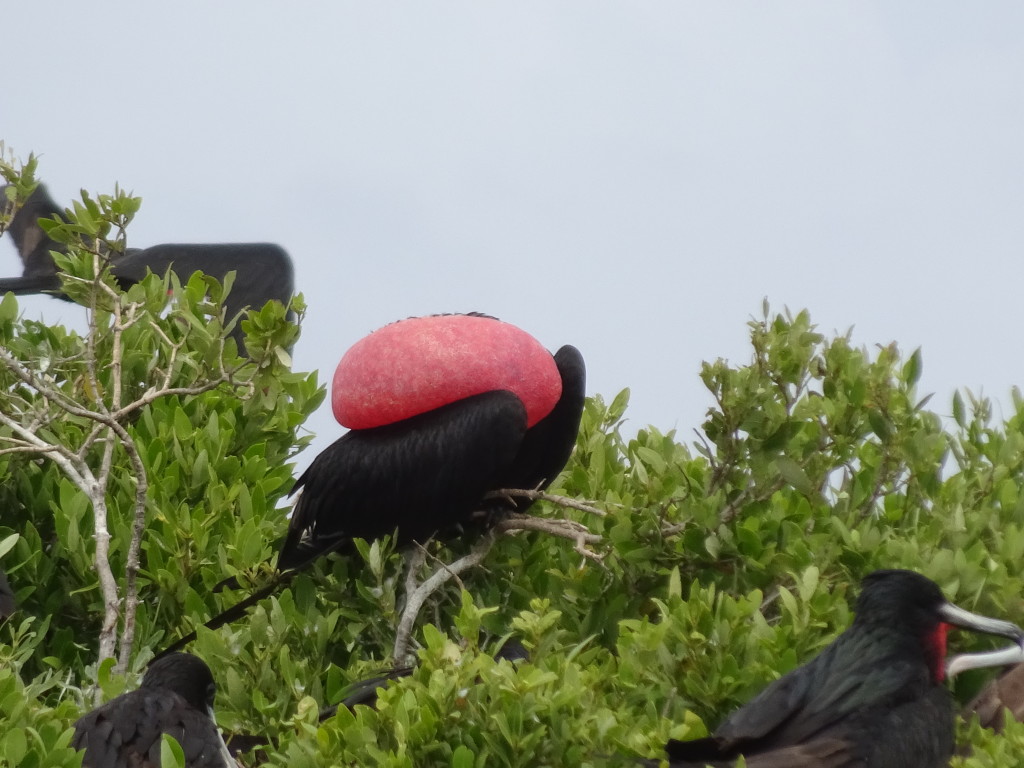
The brilliantly scarlet throat pouch can be inflated by the male to attract females during the mating season, which is pretty much all year long. Once inflated it takes a while to deflate, so you’ll see a lot of red pouches even when the male is finished his display. Most often the males sit in the branches, turn their beaks skyward, and vibrate their bills to make a drumming sound in an effort to lure the females flying overhead. If startled, the males may fly off with their pouches still inflated. Females do the choosing of mate, signifying her choice by engaging in mutual “head-snaking” and allowing the male to take her bill in his. Females lay only one egg at a time and both parents take turns incubating it for up to 55 days, after which they feed the young for many months (though the male usually becomes bored after about 3 months and wanders off). Because young frigates take so long to mature, females may breed only once every two years.
As I made my way back to the ship I couldn’t help wondering what impacts climate change would have on Barbuda in all its flatness. The Union of Concerned Scientists suggests that Barbuda is in grave danger from rising sea levels and ocean acidification. Estimate sea level increase of between 2.6 to 6.6 feet would swamp this tiny island, while changes in weather patterns could decrease the availability of fresh water and enhance the extremity of the periodic hurricanes that plague these islands. Clearly there is a dire need to take action.
Future impacts on the frigate bird sanctuary are unclear. The particular species seen on Barbuda is Fregata magnificens, the Magificent Frigatebird. It would be a shame to see such magnificence perish from the earth.
David J. Kent is an avid science traveler and the author of Lincoln: The Man Who Saved America, now available. His previous books include Tesla: The Wizard of Electricity and Edison: The Inventor of the Modern World (both Fall River Press). He has also written two e-books: Nikola Tesla: Renewable Energy Ahead of Its Time and Abraham Lincoln and Nikola Tesla: Connected by Fate.
Check out my Goodreads author page. While you’re at it, “Like” my Facebook author page for more updates!
Follow me by subscribing by email on the home page. Share with your friends using the buttons below.
 The Immortal Life of Henrietta Lacks, by Rebecca Skloot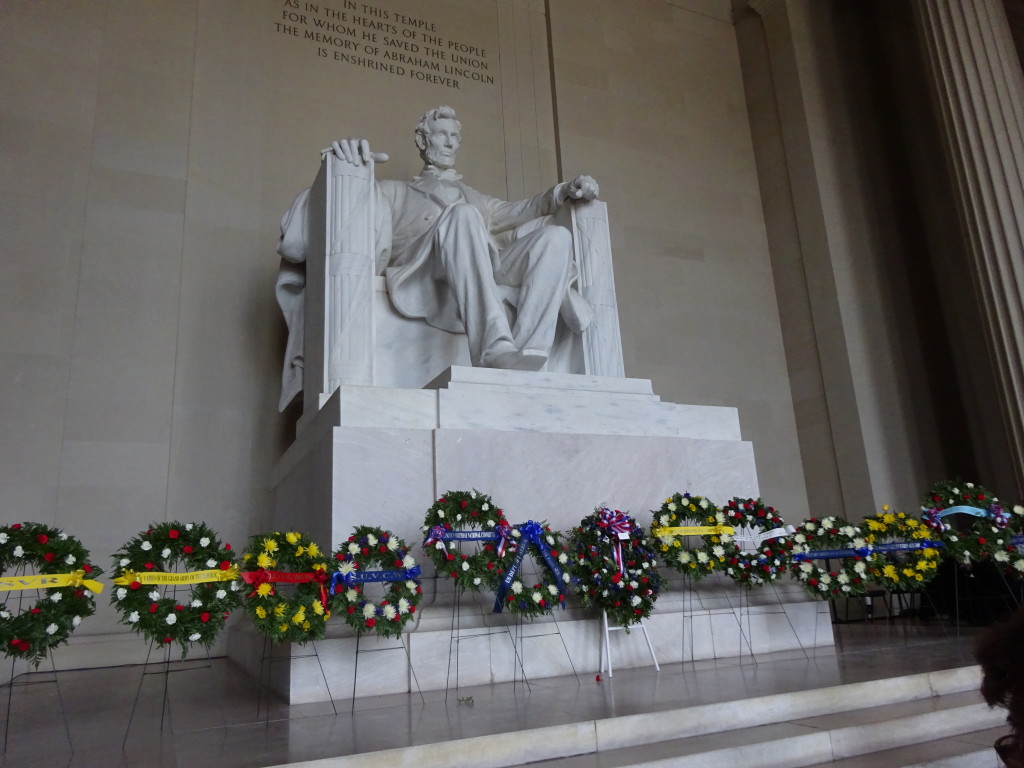
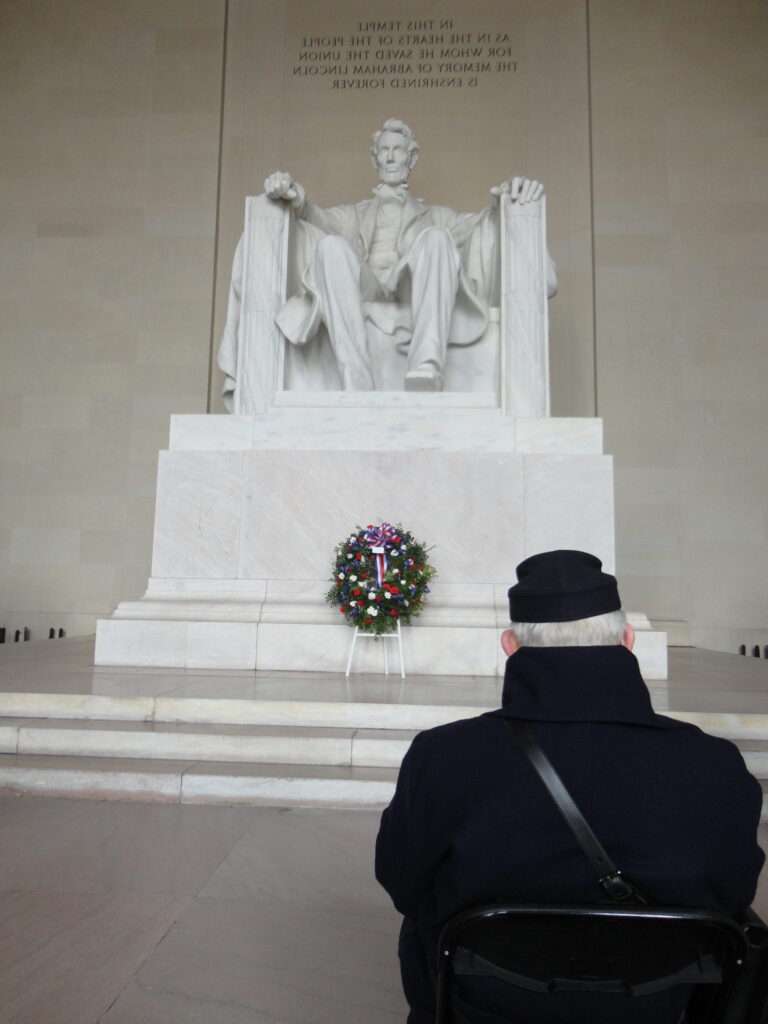
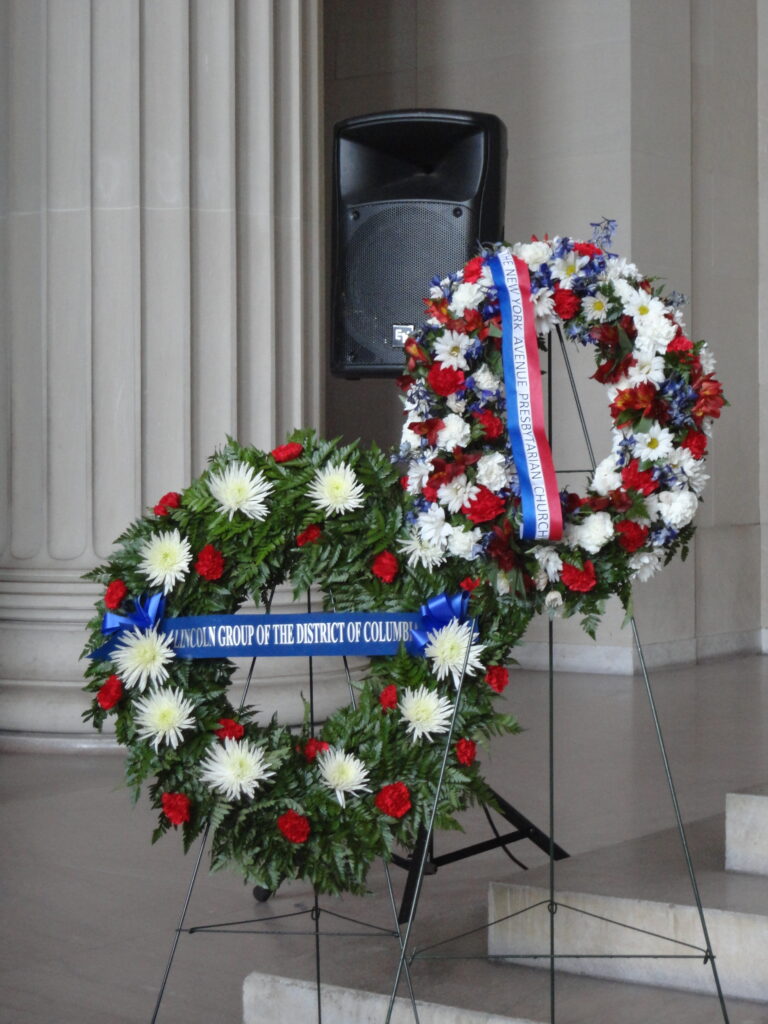


 Renowned author Simon Winchester has written a wonderful book about a scientist most people have not heard about, but should have. Joseph Needham was a biochemist, nudist, socialist-leaning British scientist at prestigious Cambridge University. He was devoted both to his wife and his mistress, the latter of whom was a visiting Chinese scientist who introduced him to the culture he would obsessively love and study the rest of his life.
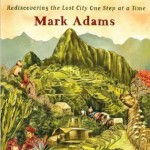 Mark Adams is an editor and writer for adventure magazines who had never done anything at all adventurous. That is, until he became obsessed with Hiram Bingham III, the Yale lecturer and explorer who discovered Machu Picchu. Adams decides to follow in the steps of Bingham, and so begins a modern trek over ancient lands.