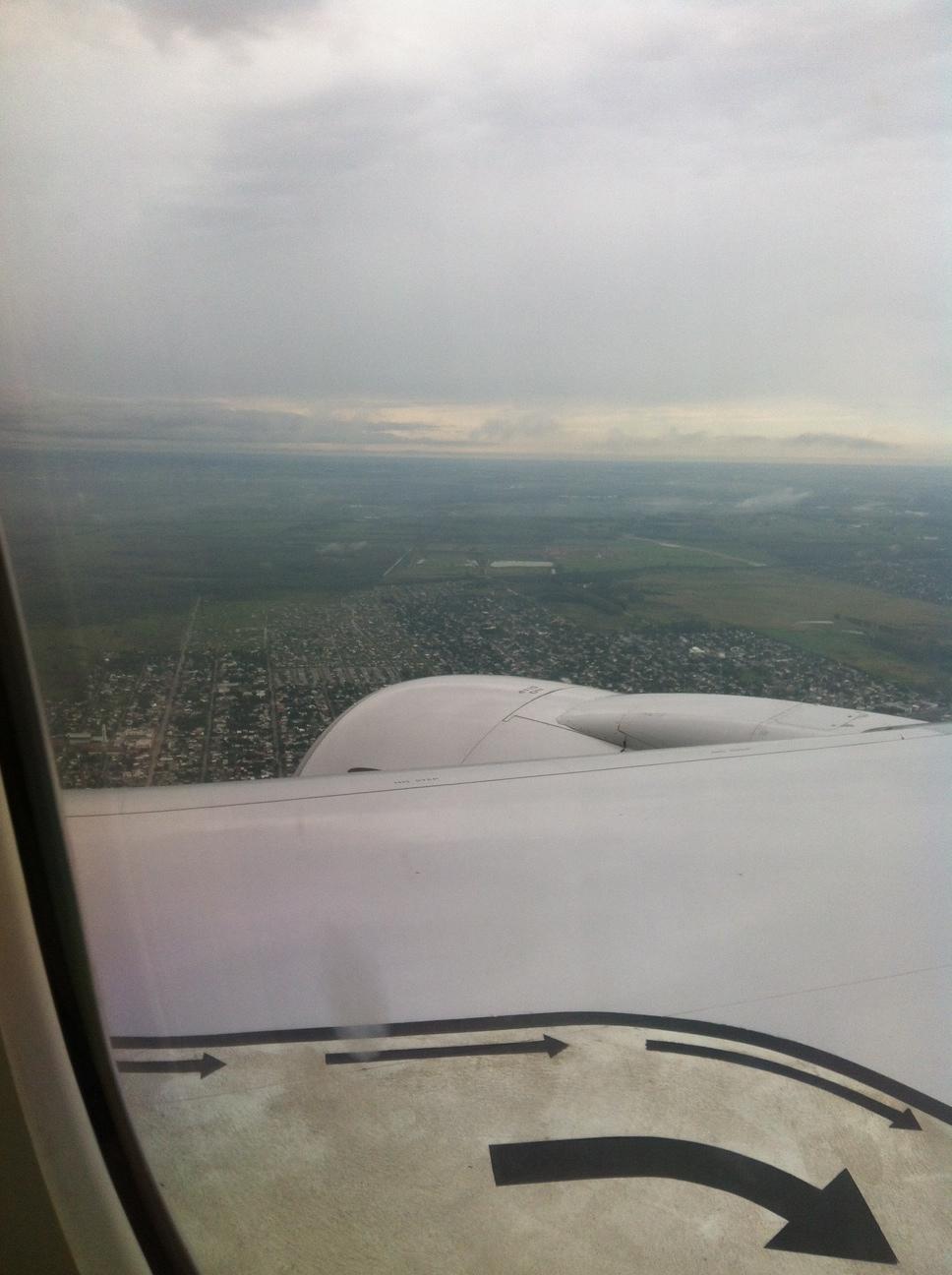
Well, I’ve arrived in Buenos Aires. Here is my first view coming in on the plane.
As you can see, the weather isn’t exactly cooperating. Overcast yesterday afternoon when I took this photos. Today is something out of Noah – flashes of lightning, huge crashes of thunder, and rain that fluctuates between steady light and demonstrable deluge.
From yesterday, a monument in Plaza de Mayo.
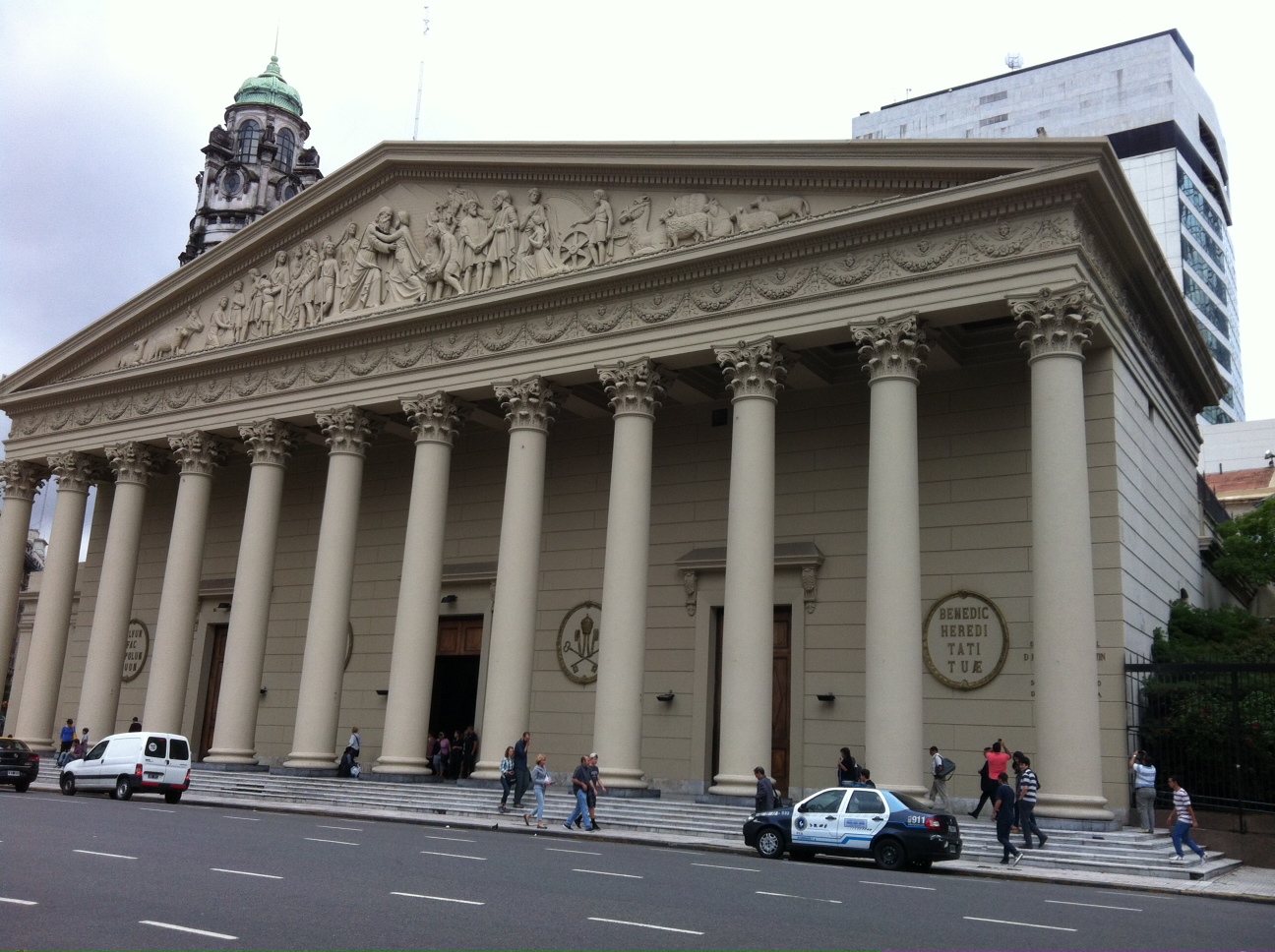
So far the city is more European than South American. First it seemed like Greece or Rome.
The Casa Rosada (Pink House) is where Evita made her famous song (or was that Madonna).
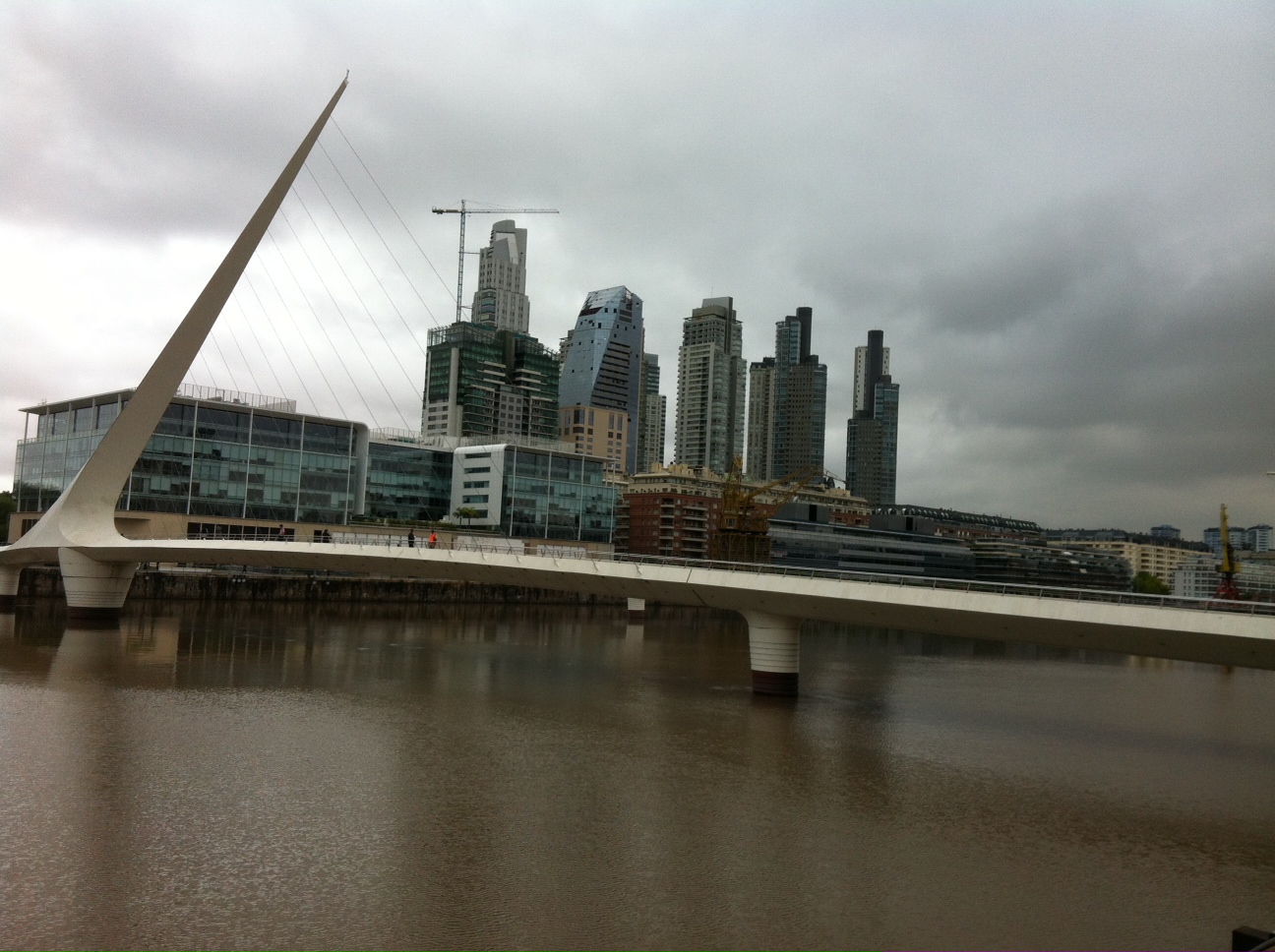
A cool bridge that is supposed to capture the sweeping arms and legs of tango dancers. You have to have a good imagination here.
Other locations had an obelisk that looked like the Washington monument in an intersection that looked like a mini Times Square. Then a pedestrian shopping street with people constantly hawking “cambrio,” which reminded me so much of Nanjing East Road in Shanghai I wanted to reply Bu Yao.
I call this site Science Traveler. And I’m currently out science traveling. So, what is science traveling? I’m glad you asked. Though the answer isn’t as clear cut as it might seem.
I’ve been a scientist for many years, and as a result have done a little bit of travel. Emphasis on “little” and “bit.” Besides the many wonderful days spent in luxurious locales such as oil refineries, sewage treatment plants, and mud bogs, I regularly attended scientific conferences in cities around the United States and Canada. A delightfully drenched week in Vancouver spent entirely inside a convention center epitomizes the excitement of that annual opportunity. For the last 15 years, however, travel has became a lot more interesting.
I’ve been lucky enough to live overseas on three different occasions, in St. George’s, Bermuda; Edinburgh, Scotland; and most recently, Brussels, Belgium. I’ve been to Asia several times, tootled around a good part of Europe, and currently am trekking through a couple of countries south of the equator. Now that I’m writing books and freelancing full time, my travels will become more frequent and more adventurous. They will also become story lines. And those story lines will usually contain some science angle.
Science traveler. Like asking whether Galileo actually did drop balls from the Leaning Tower of Pisa, and if he did, was someone at the bottom to catch them? Like, how is it that I could carry on a conversation with an elderly (and slightly inebriated) Japanese gentleman when neither one of us spoke the others language? Like, how many Argentinian students does it take to get a visiting scientist to wade into a stream alongside an electroshock fisherman?
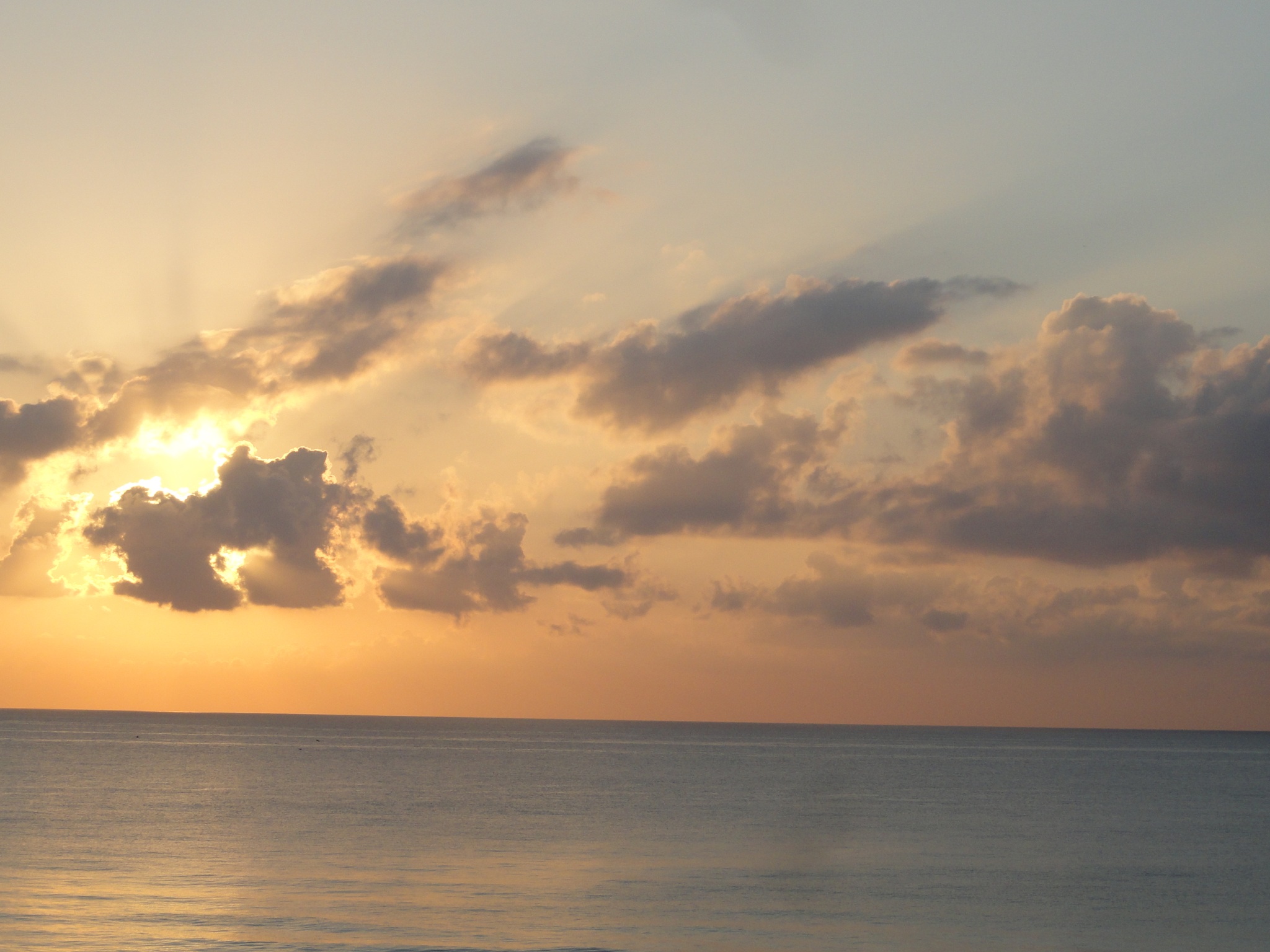
Of course, science traveling can also mean simply appreciating the ephemeral beauty of a sinking sunset over a Mexican beach, the astonishing talent of a renaissance artist in the Vatican, or the portentous river of water sluicing down a melting glacier in Chile. It might also include crawling through caves in Tennessee after overlooking one of the Civil War’s most infamous battle sites, admiring the orchids of Tenerife, or visiting the latest in a long list of aquariums.
Science traveling most definitely includes photographs. Thousands of photographs. And with each photo comes a story…or many stories. Science traveler will tell those stories.
So while I’m out science traveling I’ll post some photos, some stories, and hopefully some scientific insights that will bring the world closer to everyone.
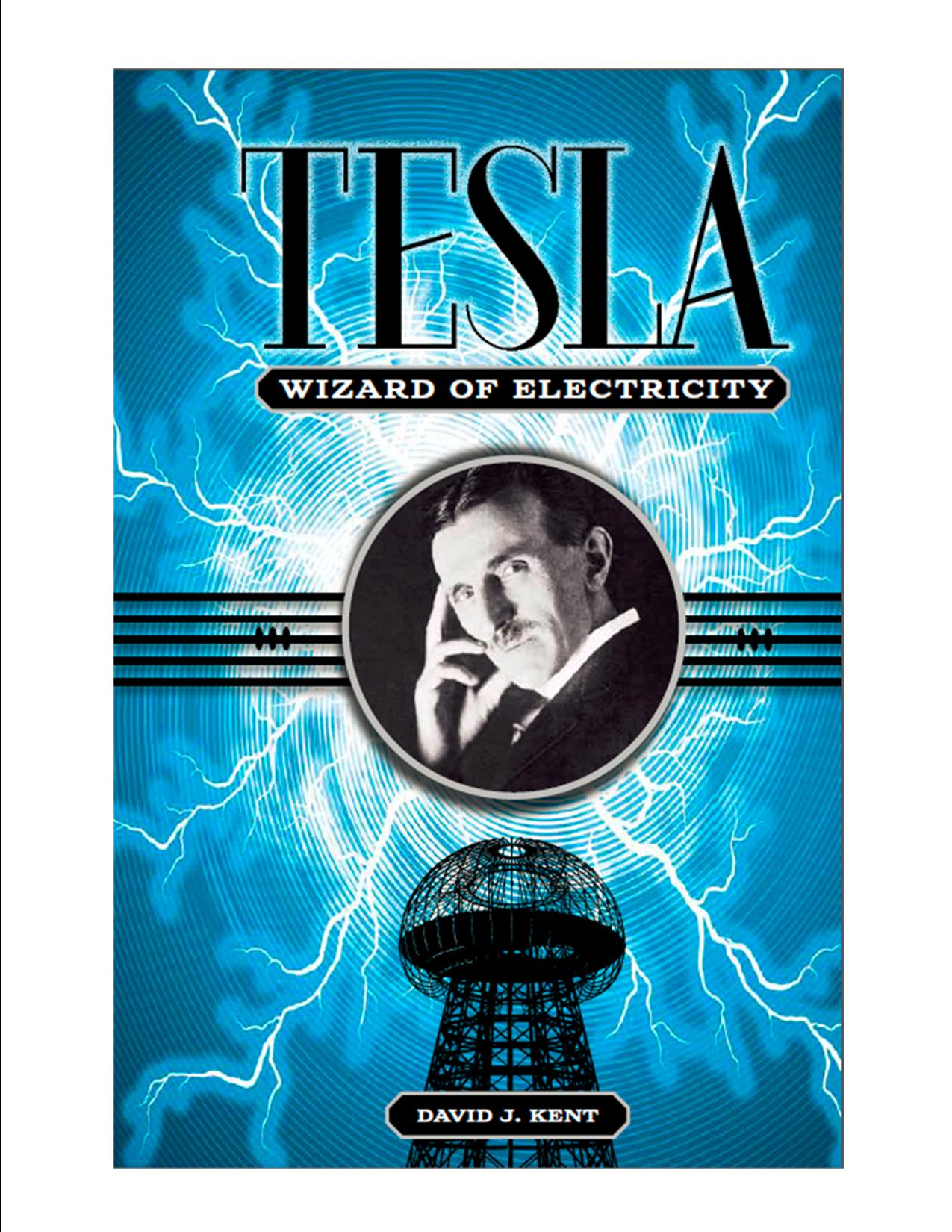
David J. Kent is an avid traveler and the author of Tesla: The Wizard of Electricity. You can order a signed copy directly from me, download the ebook at barnesandnoble.com, and find hard copies exclusively at Barnes and Noble bookstores.
Follow me by subscribing by email on the home page. And feel free to “Like” my Facebook author’s page and connect on LinkedIn. Share with your friends using the buttons below.
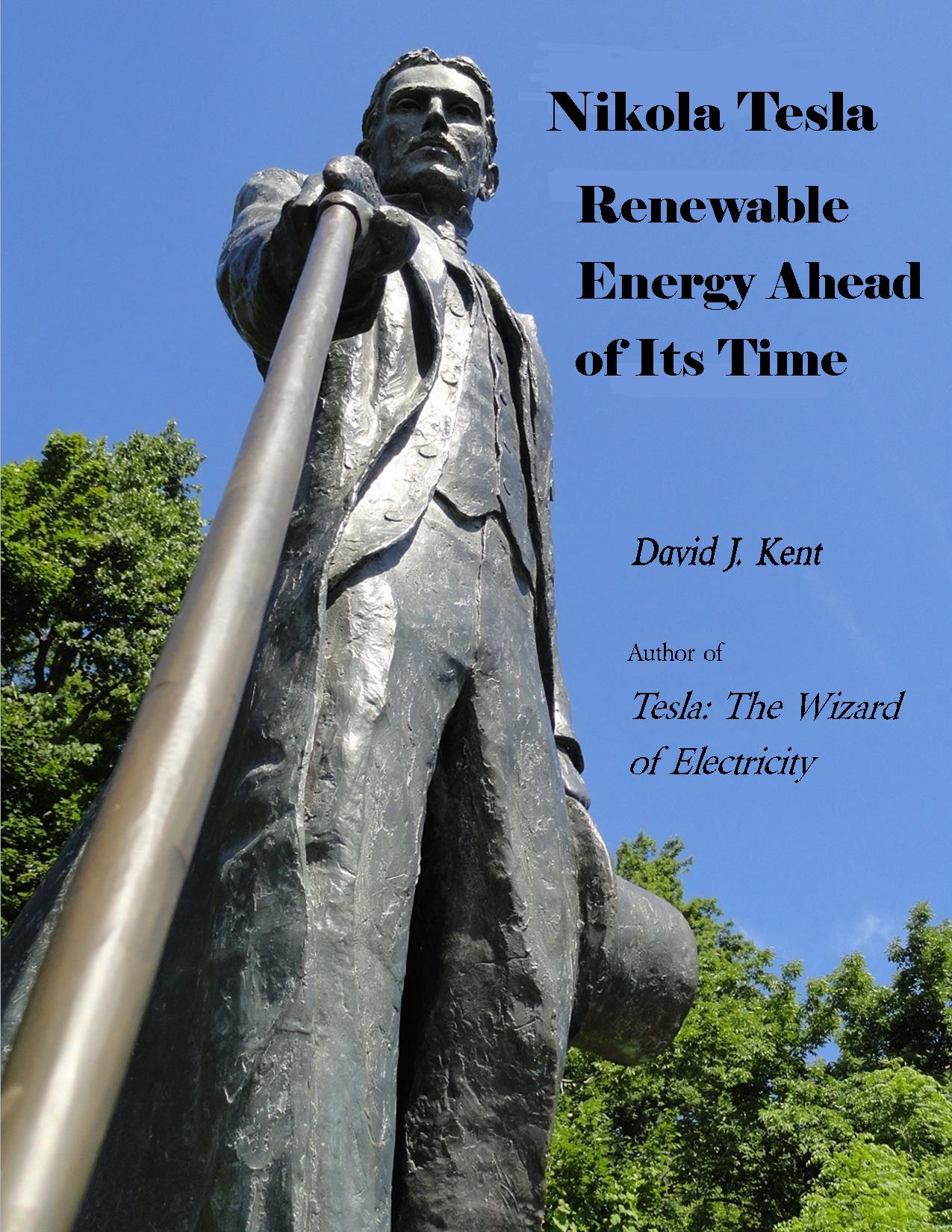
Nikola Tesla was for renewable energy before it was cool to be for renewable energy.
“It seems that I have always been ahead of my time.”
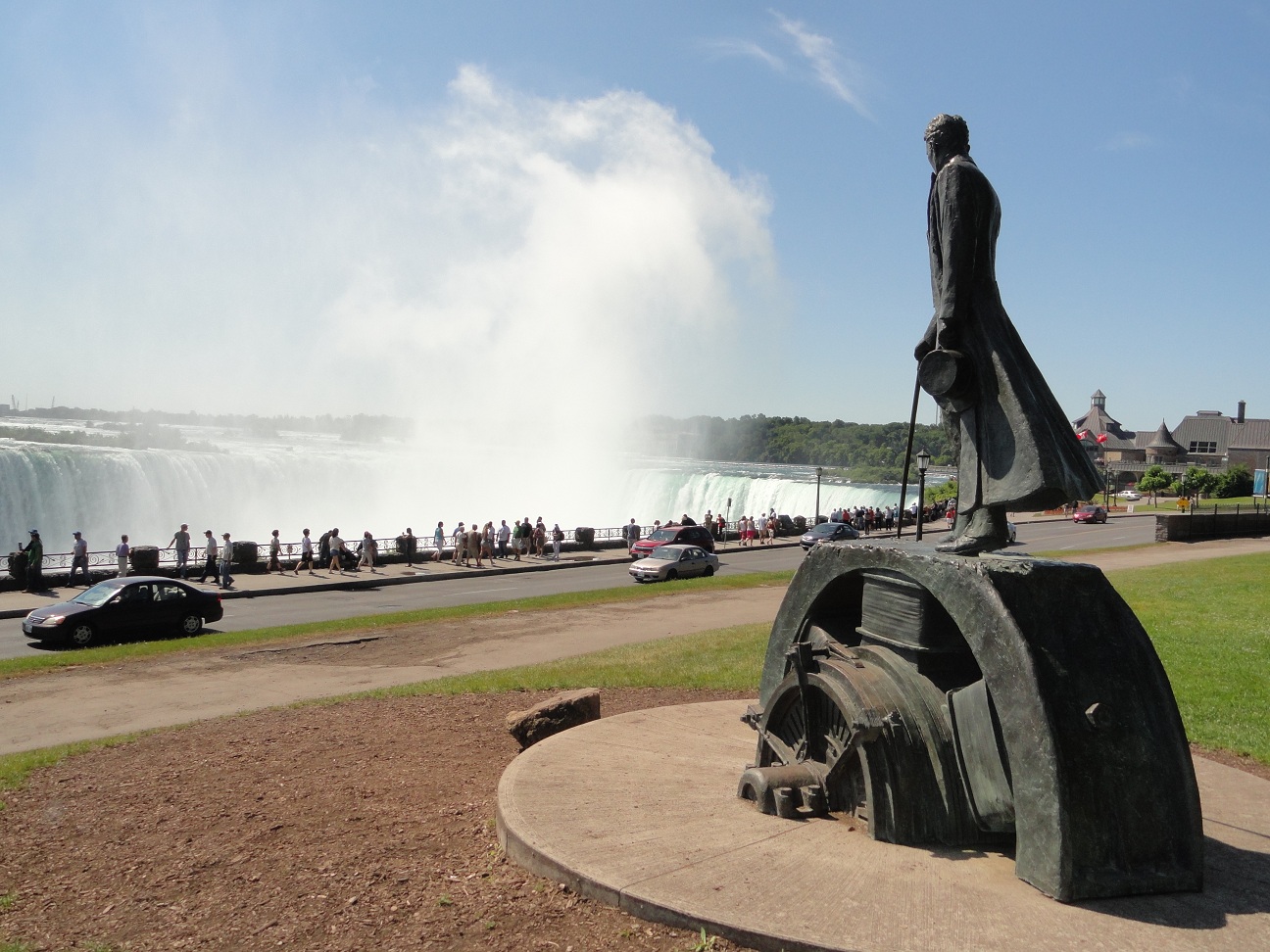
From a young age he sought to harness the power of nature. He used the natural energy of June bugs to power his stick windmill. As a child he designed his first water wheel, then as an adult he fulfilled his dream by harnessing the hydroelectric power of Niagara Falls with his alternating current motors and transformers. Today he stands overlooking one of his greatest achievements.
Nikola Tesla overlooking Horseshoe Falls, on the Canadian side. Photo by David J. Kent
Tesla often spoke of harnessing the energy of the sun, stating that fossil fuels were wasteful. As far back as 1891 he argued that “nature has stored up in the universe infinite energy.” To Tesla, “the eternal recipient and transmitter of this infinite energy is the ether.” That particular idea did not hold up to scrutiny, but he continued to look to nature.
One of the most thought-provoking documents of Tesla’s numerous writings was an article he wrote for TheCentury Illustrated Magazine, June 1900, which was edited by Robert Underwood Johnson. In a long and sometimes mystical treatise called “The Problem of Increasing Human Energy (with special references to the harnessing of the sun’s energy),” Tesla leaped ahead a hundred years by anticipating the need for renewable sources of energy to power our planet. He noted that “besides fuel, there is abundant material from which we might eventually derive power” and suggested that “an immense amount of energy is locked up in limestone, for instance, and machines can be driven by liberating the carbonic acid through sulfuric acid or otherwise.” He even claimed to have constructed such an engine and that “it operated satisfactorily.”
Tesla was so far ahead of his time that, while others at the turn of the twentieth century were busy exploiting coal, iron, aluminum, and drilling for oil, he was already recognizing the limits of those endeavors. He was into conservation. “Whatever our resources of primary energy may be in the future,” Tesla wrote, “we must, to be rational, obtain it without consumption of any material.” He believed that natural sources of energy could “eliminate the need of coal, oil, gas or any other of the common fuels.” One way was to harness the power of the wind.
“It is difficult to believe, but it is, nevertheless, a fact, that since time immemorial man has had at his disposal a fairly good machine which has enabled him to utilize the energy of the ambient medium. This machine is the windmill.“
[The above is adapted from Tesla: The Wizard of Electricity. I explored more of Tesla’s adventures in renewable energy in my 2014 e-book noted below.]
Follow me by subscribing by email on the home page. And feel free to “Like” my Facebook author’s page and connect on LinkedIn. Share with your friends using the buttons below.
Argentina has come a long way since the days of Eva Peron (aka, Evita), though in which direction is perhaps up for debate. The silverless country whose name is derived from the Latin word for silver is an enigma. And I’m headed there.
This trip is long overdue. In fact, an Argentinian friend from college has been inviting me to visit for the last, well, ahem, um, a long time. I was all set to go several years ago but then my (now former) company sent me to Brussels for three years. I know, it was a tough assignment, but someone had to do it. In any case, I’m finally going to Argentina.
I’ll have a lot more information after the trip, but the basic plan is to fly to Buenos Aires, then two days later fly to Bariloche. A small city of about 100,000, Bariloche sits comfortably between beautiful Nahuel Huapi Lake and the Andes mountains.
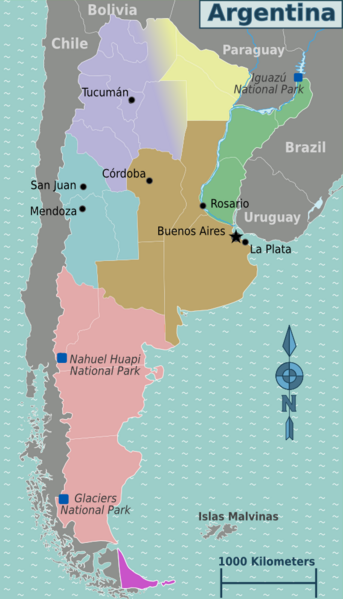
From there we’ll head south on the eastern side of the Andes, stopping in some of the most pristine and beautiful parts of Patagonia (the pinkish part in the map above). There will be plenty of stops for hiking, kayaking, and, depending on my friend’s patience, maybe I’ll even learn to fly fish. At this point it looks like the southern terminus will be just below Argentina’s Glaciers National Park, though there is still a slight chance of making it to Tierra del Fuego and Ushuaia. Then back to Bariloche where I will likely join in some field sampling fun (the hazards of having a host who is a fisheries biologist and university professor).
Not much chance of me learning how to tango. But, who knows.
It’s summer down there so I expect Buenos Aires to top out in the mid 90s F. Bariloche will be more like 60 F. I’m not even going to guess the temperature by the time we reach the glaciers (which is roughly the equivalent of southern Canada in reverse latitude). During the trip I’ll write as much as I can. There may even be another book in the works by the time I return.
I have another week before I leave, so don’t count me gone yet. Much more before that happens.
David J. Kent is an avid traveler and the author of Tesla: The Wizard of Electricity. You can order a signed copy directly from me, download the ebook at barnesandnoble.com, and find hard copies exclusively at Barnes and Noble bookstores.
Follow me by subscribing by email on the home page. And feel free to “Like” my Facebook author’s page and connect on LinkedIn. Share with your friends using the buttons below.
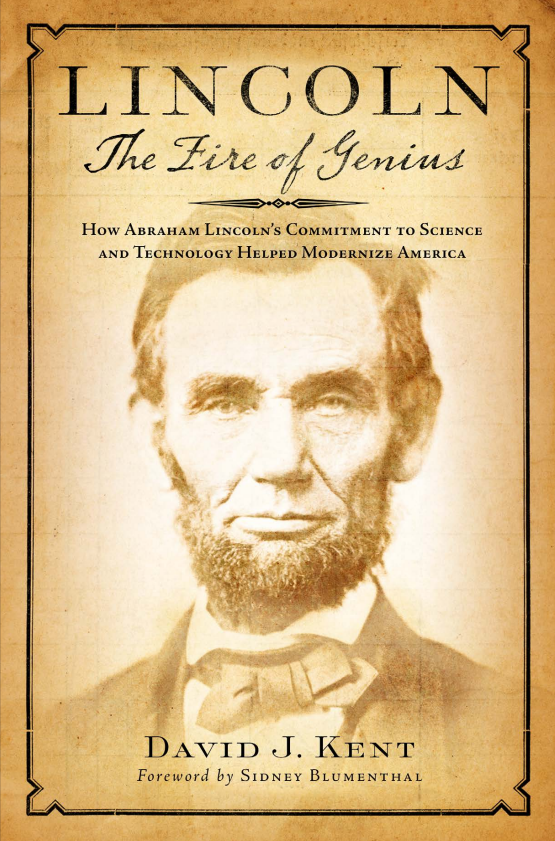
When most people think of Abraham Lincoln, they think of him toiling away in the White House, occasionally making his way to the adjoining War Department to check telegraph news from the front. Few know that Lincoln and his family actually spent much of the summers of 1862, 1863 and 1964 living at the “Soldier’s Home” and commuting daily to the White House.
Matthew Pinsker writes a charming book about the Soldiers’ Home, or what many refer to as the Lincoln Cottage. It was one of a few cottages next to what was originally known as the Military Asylum, a institution for disabled army veterans who could not support themselves. By commuting the 3 miles or so to and from the “cottage” Lincoln could get away from the hot, smelly swampland not far from the White House and reconnect with his family in a more pleasant atmosphere. The book goes beyond simply reiterating the major themes of most Lincoln biographies and puts those weighty events and decisions in the context of his surroundings. As with the White House, Lincoln was extremely accessible to the public, not uncommonly shuffling down the stairs in his slippers late at night to confer with members of his cabinet, Congressional leaders, or just friends of friends who wanted to meet him.
The book is well written and a pleasant change from the normal Lincoln biography. It provides stellar insights into Lincoln’s well being and thinking on some of the critical issues facing him during the long and difficult war. Proceeds from the sale of the book, which was published in 2003, go to the National Trust for Historic Preservation, the organization responsible for renovating and reopening the Lincoln Cottage in 2009.
David J. Kent is an avid Lincolnophile and the author of Tesla: The Wizard of Electricity. You can order a signed copy directly from me, download the ebook at barnesandnoble.com, and find hard copies exclusively at Barnes and Noble bookstores.
Follow me by subscribing by email on the home page. And feel free to “Like” my Facebook author’s page and connect on LinkedIn. Share with your friends using the buttons below.
For the second year in a row Science Traveler (i.e., this website) will be an Associate Sponsor of the Chesapeake Potomac Regional Chapter of the Society of Environmental Toxicology and Chemistry. I have been involved with SETAC for more than 25 years, the last 22 of which have been as a member of CPRC. In fact, I’ve just completed my second term as President of CPRC and will continue as immediate Past-President during 2014.
CPRC “provides a professional forum for individuals from private industry, academia, and government agencies who are engaged in the study and analysis and solutions for environmental problems, management and regulation of natural resources, and/or research and development.” It represents the area surrounding Washington DC, including all of Virginia, Maryland, West Virginia, the District, and parts of Pennsylvania, Delaware and beyond. SETAC is a renowned international scientific organization.
You can find their websites by clicking on the links above, or even better, clicking on the really cool logo at the top of the article.
The timing couldn’t be better. CPRC has two huge upcoming events that members are going to want to be a part of. [If you’re not a current member, it’s easy to become one right here, right now.]
The other major event is our annual spring meeting, which will be held at the Chesapeake Bay Environmental Center (CBEC) on April 27-28, 2014. You can read all about last year’s event at CBEC in this recap. The meeting will feature an optional Sunday guided bird hike, kayaking, and picnic on the grounds, followed by a full Monday of presentations and posters (and some of the best catering on the Eastern shore). The location is beautiful so be sure to watch for updates on the CPRC website.
As an Associate Sponsor, Science Traveler plays a key role in helping CPRC foster interaction among its members, sponsor scientific meetings and social events, produce a biannual newsletter, maintain a website, and, perhaps most importantly, sponsor student awards “that encourage and promote the research and professional development of our student members.”
David J. Kent is the author of Tesla: The Wizard of Electricity. You can order a signed copy directly from me, download the ebook at barnesandnoble.com, and find hard copies exclusively at Barnes and Noble bookstores.
Follow me by subscribing by email on the home page. And feel free to “Like” my Facebook author’s page and connect on LinkedIn. Share with your friends using the buttons below.
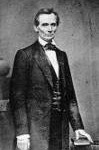
When Lincoln Died is a wonderful old book published in 1965 by Ralph Borreson, who had a lifelong fascination with Abraham Lincoln. Borreson has successfully pulled together old photographs and drawings from every facet of the time from Lincoln’s death until his burial. The subtitle of the book says it all “the assassination, the final funeral journey, the pursuit and trial of the conspirators, the complete story in pictures and in the words of his day.”
This last part is the most intriguing. The photographs in and of themselves are fascinating and instructive. But along with each one Borreson has arranged relevant extracts from Lincoln’s own letters and speeches, and the letters and speeches of those around him. For example, there are the words used to describe the wounds by Dr. Leale, the first doctor to reach the fallen President. Leale says:
“I placed my finger on the President’s right radial pulse, but could perceive no movement of the artery…I lifted his eyelids and saw evidence of a brain injury. I quickly passed the separated fingers of both hands through his blood-matted hair to examine his head, and then I discovered his mortal wound…I easily removed the obstructing clot of blood from the wound and this relieved the pressure on the brain. The history of surgery fails to record a recovery from such a fearful wound and I have never seen or heard of any other person with such a wound and injury to the sinus of the brain and to the brain itself who lived even for an hour.”
Lincoln lived for about 9 more hours without ever regaining consciousness.
The book intertwines these fabulous old photos with the insightful reactions of those closest to Lincoln as the death watch passed. Borreson does the same with the pursuit of John Wilkes Booth, the capture and trial of the conspirators, as well as their hangings and imprisonment, and then the long train ride home back to Springfield, Illinois for burial.
The book was published on the 100th anniversary of Lincoln’s death. It is a fine tribute indeed.
Bono* was there. I was there. Were you there? “There” is the New Yorker Hotel on January 11, 2014. And the occasion was the 2nd Annual Nikola Tesla Memorial Conference, sponsored by the Tesla Science Foundation. It was a day to remember.
Tesla lived in the New Yorker for the last decade of his long life, dying there in room 3327 on January 7, 1943. You can even stay in his room if you wish (last year I had 3326, the room next door, from which I could see a constant stream of people checking out the plaque on Tesla’s door).
The theme this year was to assess and begin development of a curriculum to get Tesla better represented in schools. While students in his home country of Serbia hear about Tesla at an early age, he barely gets mentioned in American schools, if at all. Edison, Marconi, and others who get credit for inventions originally developed by Tesla get prominent mention, but Tesla…well, not so much. The conference aimed to correct that slight and featured many speakers relating their experiences with Tesla-inspired education, interpretations of what would appropriate material to teach, and how to promote the idea.
I’ve been fortunate enough to contribute to that goal myself, both through publication of Tesla: The Wizard of Electricity and by being part of a team organized by author Howard Lipman (pen name Pan Orpheus) in a sort of traveling Tesla show. We’ve presented film, art, insights, and my book outreach to various public libraries over this past year and hope to do more in 2014. I’ll do a solo presentation to the public at the Ipswich Museum on July 7th. It will be one of a series of talks I’ll be giving when the second edition of Tesla: The Wizard of Electricity comes out in July 2014. More on that later.
During a very long day (the conference was sandwiched between two 4 hour drives to New York City and back), I enjoyed both the talks and signing books for attendees. One of the best rewards for writing Tesla: The Wizard of Electricity has been the chance to meet readers who get excited about the book and about Nikola Tesla. Ed’s enthusiasm as he buys a book for his daughter Bianca (and another for his local library), the anticipation that Christopher will be reading Tesla on the campus of the University of Michigan thanks to his Aunt’s gift, and Jeff’s passion for Tesla as he purchases four books for friends and family. And while the praise from Tesla experts like Jane Alcorn, Nikola Lonchar, Ljubo Vujovic and others is extremely gratifying, it’s the heartwarming exuberance of the general public that makes this all worthwhile.
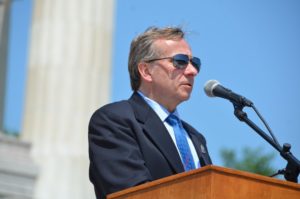
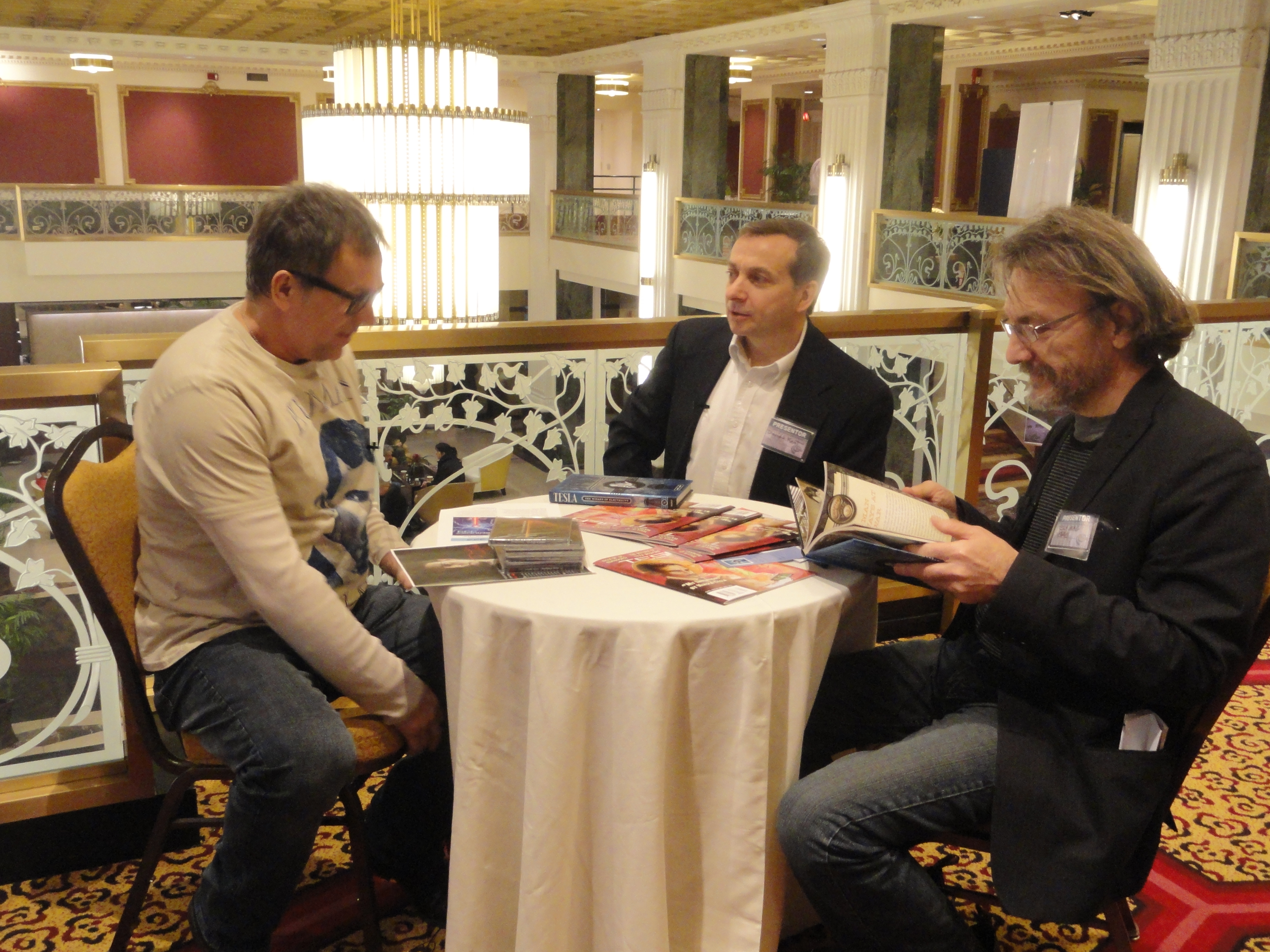
While there I was interviewed on camera by three different organizations, including Tesla Magazine (photo above). The video below is of one of the video-taping sessions. Not surprisingly (since it’s a video of a video interview), it’s hard to hear with all the background noise. The actual interviews will be posted on the organizations’ websites, so I’ll be sure to link to them when they are up. What is interesting about this video is that while I’m being interviewed there is some guy who goes by the name of Bono* wandering around in the background. In any case, Bono* was here supporting the Tesla conference and one of the guys who interviewed me.
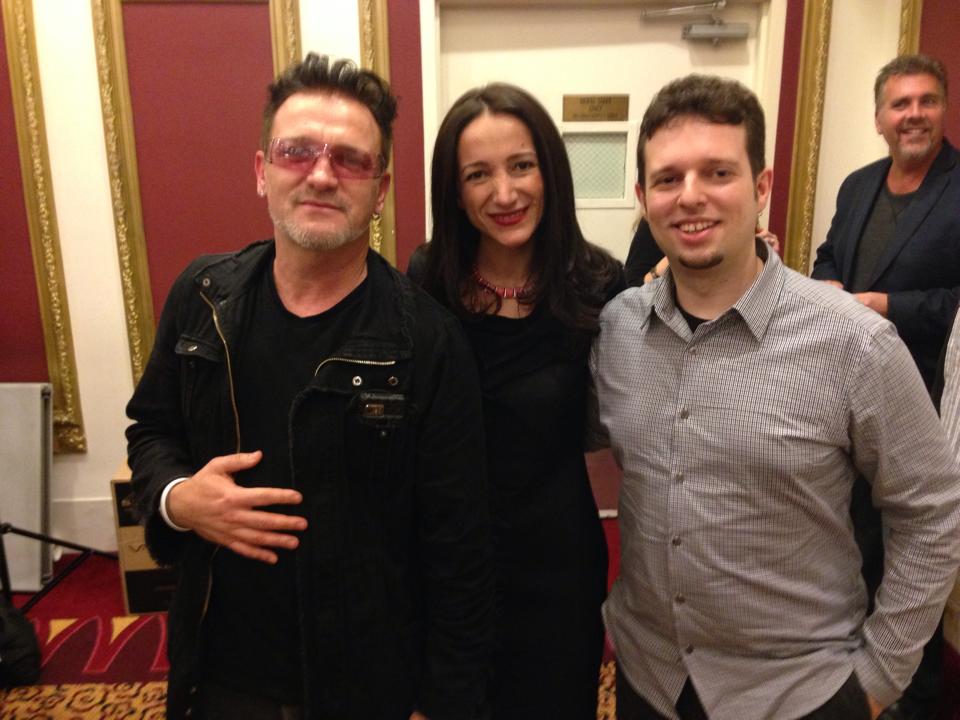
Despite the fact that he was a wonderfully down-to-earth guy, apparently I was still too star-struck to get my photo taken with him (duh!). But here’s a photo of Bono* with Danijela Milic and jazz pianist Dimitrije Vasiljevic. The latter presented his new composition for solo piano inspired by, and to honor, Nikola Tesla.
So even though I neglected to get my own photo with Bono*, I did enjoy very much chatting with other luminaries, including authors Bernard Carlson and Howard Lipman, Jane Alcorn of the Tesla Science Center at Wardenclyffe, Joe Sikorski and Vic Elefante from the movie Fragments from Olympus, Nenad Stankovic of Tesla Magazine, and many others who are bringing Tesla to the people. A day very well spent.
Hard copies of Tesla: The Wizard of Electricity are still available in Barnes and Noble stores, but the print run is almost sold out so get one fast. You can also get used copies from resellers on Amazon and BN. E-books are also available on barnesandnoble.com. A second printing will be released in July 2014 in time for Tesla’s birthday. Of course, you can also order a personally signed and inscribed copy directly from me.
Follow me by subscribing by email on the home page. And feel free to “Like” my Facebook author’s page and connect on LinkedIn. Share with your friends using the buttons below.
One of the most amazing things about Nikola Tesla was that he was a man far ahead of his time. He pushed for renewable energy as early as 1895 at Niagara Falls. In 1898 he was demonstrating a remote controlled boat in Madison Square Garden. He patented a vertical-takeoff-and-landing aircraft in 1928. He even predicted that in the future there would be “an inexpensive receiver, not bigger than a watch, [that] will enable [any telephone subscriber] to listen anywhere, on land or sea, to a speech delivered or music played in some other place, however distant.”
Now there is an app for that.
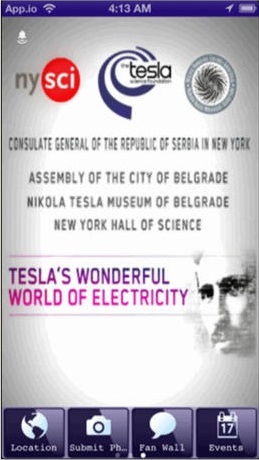
Today, Tesla’s “inexpensive receiver” is in virtually everyone’s pocket, whether it be an iPhone, an Android device, or one of the many other handheld mini-computers that allow us to listen to music, speeches, even to watch television programs. So befitting Tesla’s vision of the future, the Tesla Science Foundation has created an app that facilitates keeping up with the many Tesla-related activities.
The app is interactive. In fact, holders are asked to help populate the app with photographs taken at Tesla events, as well as other Tesla photos and memes. Download the app, upload your photos!
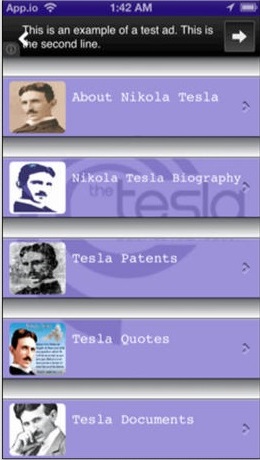
There are screens that contain, and will contain, information on Tesla’s life, his patents, even documents available.
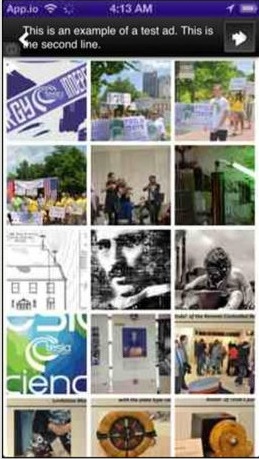
The main screen shows a rotation of the logo, the meetup group, event photos, and more. At the bottom of the screen there are a series of buttons (four are shown at a time, but swipe sideways to see the others appear). You can quickly tap into upcoming events, photos, background information, social media, and even submit your own photos and write on a fan wall.
The Tesla Science Foundation has done a great service to everyone with an interest in Nikola Tesla by creating this app. And you can help too. Some of the features are not yet fully functional, and there is room to add many great photos, so users should feel free to submit their pictures and offer suggestions for future updates. The app screenshots I provide above come from the iPhone version via iTunes, but the app also is available for Android devices so the screens may differ slightly. All in all this app is a great way to help spread the word of Nikola Tesla.
I’ll end with a reminder that there is another app under development by Brian Yetzer. I talked about his augmented reality app in a previous article.
David J. Kent is the author of Tesla: The Wizard of Electricity. You can order a signed copy directly from me, download the ebook at barnesandnoble.com, and find hard copies exclusively at Barnes and Noble bookstores.
Follow me by subscribing by email on the home page. And feel free to “Like” my Facebook author’s page and connect on LinkedIn. Share with your friends using the buttons below.




 When most people think of Abraham Lincoln, they think of him toiling away in the White House, occasionally making his way to the adjoining War Department to check telegraph news from the front. Few know that Lincoln and his family actually spent much of the summers of 1862, 1863 and 1964 living at the “Soldier’s Home” and commuting daily to the White House.
 When Lincoln Died is a wonderful old book published in 1965 by Ralph Borreson, who had a lifelong fascination with Abraham Lincoln. Borreson has successfully pulled together old photographs and drawings from every facet of the time from Lincoln’s death until his burial. The subtitle of the book says it all “the assassination, the final funeral journey, the pursuit and trial of the conspirators, the complete story in pictures and in the words of his day.”
 Bono* was there. I was there. Were you there? “There” is the New Yorker Hotel on January 11, 2014. And the occasion was the 2nd Annual Nikola Tesla Memorial Conference, sponsored by the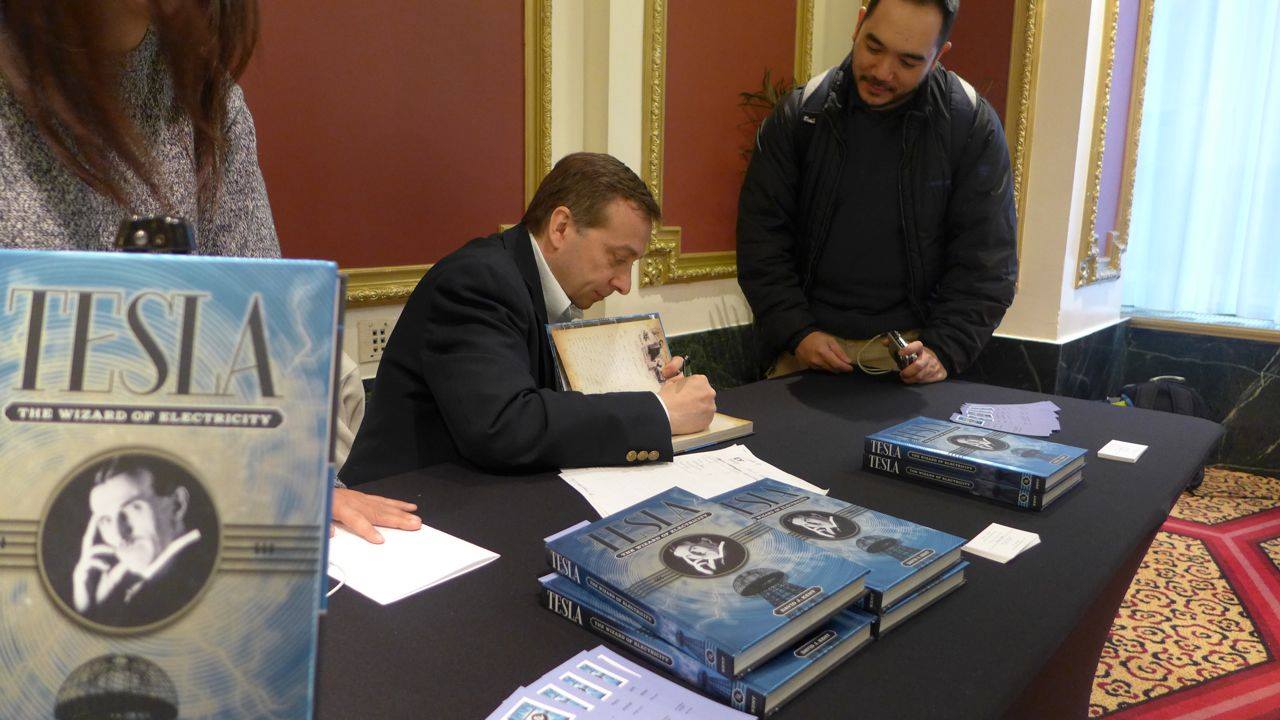
 One of the most amazing things about Nikola Tesla was that he was a man far ahead of his time. He pushed for renewable energy as early as 1895 at Niagara Falls. In 1898 he was demonstrating a remote controlled boat in Madison Square Garden. He patented a vertical-takeoff-and-landing aircraft in 1928. He even predicted that in the future there would be “an inexpensive receiver, not bigger than a watch, [that] will enable [any telephone subscriber] to listen anywhere, on land or sea, to a speech delivered or music played in some other place, however distant.”
 The main screen shows a rotation of the logo, the meetup group, event photos, and more. At the bottom of the screen there are a series of buttons (four are shown at a time, but swipe sideways to see the others appear). You can quickly tap into upcoming events, photos, background information, social media, and even submit your own photos and write on a fan wall.