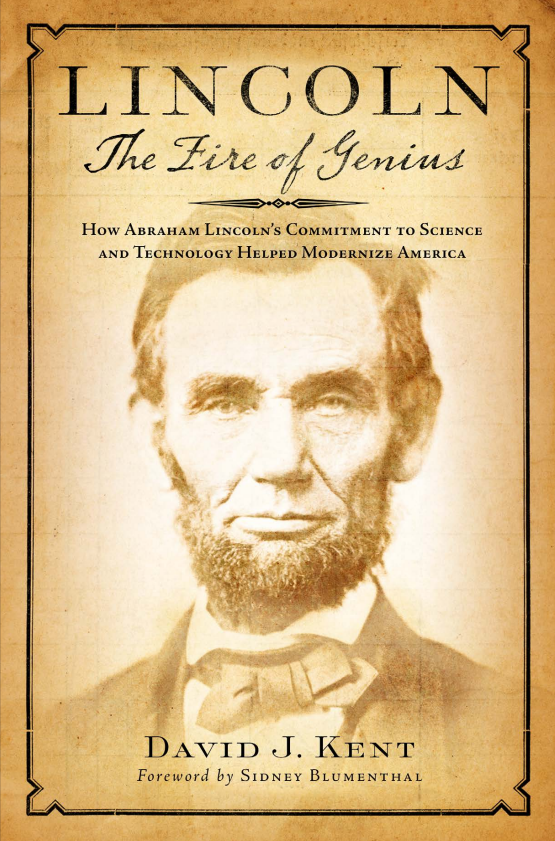
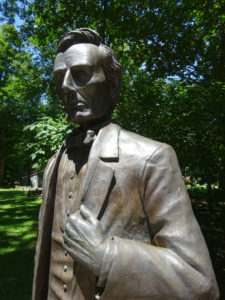
 El Nino is officially here, which usually means warmer temperatures across much of the United States and Canada. But did you know that changes in the climate in 1816 influenced Abraham Lincoln’s move from Kentucky to Indiana?
The Lincoln family was living on the Knob Creek farm in northern Kentucky in 1816. The farm contained only three small fields in a valley surrounded by high hills, thus subject to repeated flooding after heavy rain. Abe remembered a time that summer in which his father was planting corn while Abe dropped pumpkin seeds into nearby furrows. A week later: “there came a big rain in the hills, it did not rain a drop in the valley, but the water coming down through the gorges washed ground, corn, pumpkin seeds and all clear off the field.” This incident taught Abe a brutal lesson in farming: one poorly timed deluge could disrupt an entire summer’s crop. Of course, drought could have similarly devastating effects, as could insect infestation or poor soil quality. Rarely was there a year without calamity.
Not long after this, Thomas lost three-quarters of his land, “partly on account of slavery,” but mostly because of Kentucky’s inadequate surveying and land title system. Although only seven years old at the time, Lincoln could sense the importance of skilled surveyors, a lesson he carried into manhood. He likely also noticed another scientific factor influencing the Lincoln family’s decision to move to greener pastures—climatic extremes.
That summer of 1816 brought unusually severe cold to the Lincolns’ drafty log cabin. Deep freezes, each lasting a week in June, July, and August, stunted crops. The end of summer brought two killer frosts that killed off much of what was left of the year’s growth. Crop failures led to hoarding and hunger. Prices for agricultural commodities such as wheat, vegetables, meat, butter, milk, and flour soared. Animals, both wild and domesticated, scraped by on inadequate forage. It was a terrible year for farmers.
The “year without a summer” was so extensive that widespread cold and famine spread across the United States, Asia, and Europe, with history-changing effects. Farmers in New England gave up and moved west, beginning a process of westward migration that altered the course of the growing nation. Loss of crops in the Yunnan province of China led family farms to switch to the more durable and profitable opium crop, giving rise to the “Golden Triangle” of opium production. In Switzerland, the damp dreariness of Lake Geneva kept nineteen-year-old Mary Wollstonecraft inside a chalet with future husband Percy Shelley and prominent poet Lord Byron. Challenged to while away the bleakness by writing ghost stories, Mary Wollstonecraft Shelley brought to life a creation called Frankenstein: Or, The Modern Prometheus.
No one understood it at the time, but modern scientists now know the disruption was caused by a geological phenomenon half a world away. Mount Tambora, a massive volcano on the Indonesian island of Sumbawa, erupted in early April 1815, reducing the volcanic peak’s height from over 14,000 feet to less than 10,000 in seconds. The colossal eruption destroyed local villages, killing over 10,000 people, while spewing 100 cubic kilometers of molten rock, ash, and pumice over 800 miles away. Ten times the explosive power of the 1883 eruption of Krakatoa (made more famous by the invention of the telegraph), Tambora sent toxic clouds into the atmosphere that affected global climate patterns for several years. By the spring and summer of 1816, a persistent sulfate aerosol veil often described as a “dry fog” settled in over the eastern United States.
Tambora’s climate-altering effect on top of the recent crop losses solidified Thomas’s tentative deliberations, and the Lincolns moved to Indiana in December. After the rough year, November and December proved mercifully warmer than normal, again a lingering effect of the Mount Tambora eruption.
[Adapted from Lincoln: The Fire of Genius]
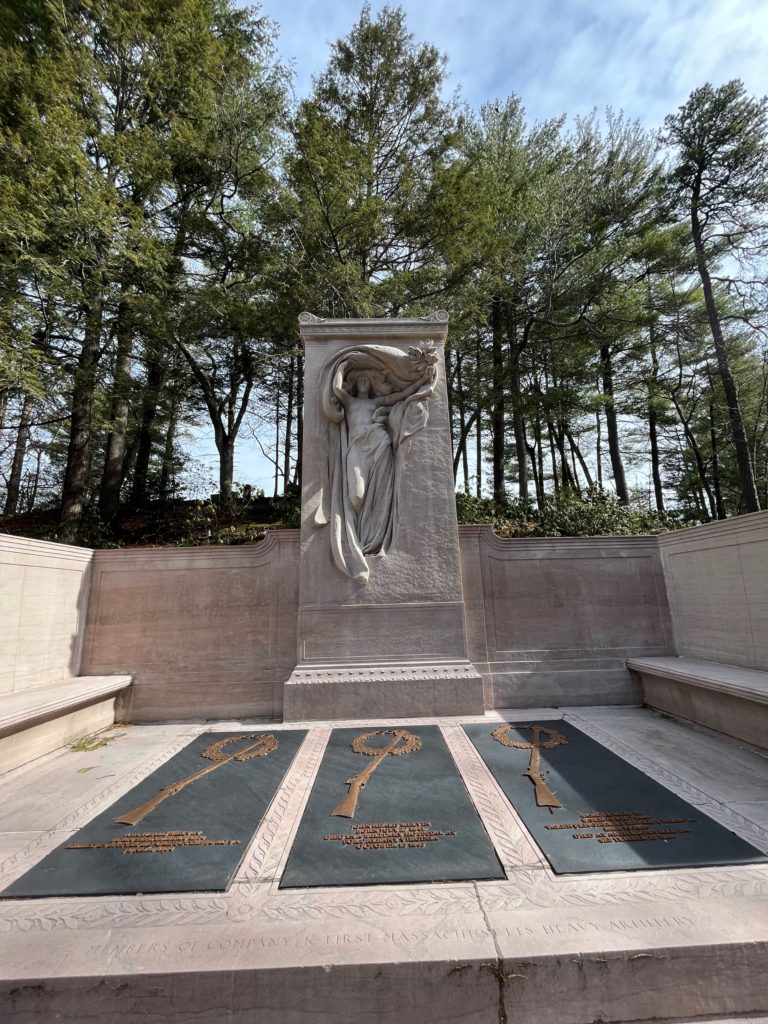
[Photo by David J. Kent, Jonesboro, IL]
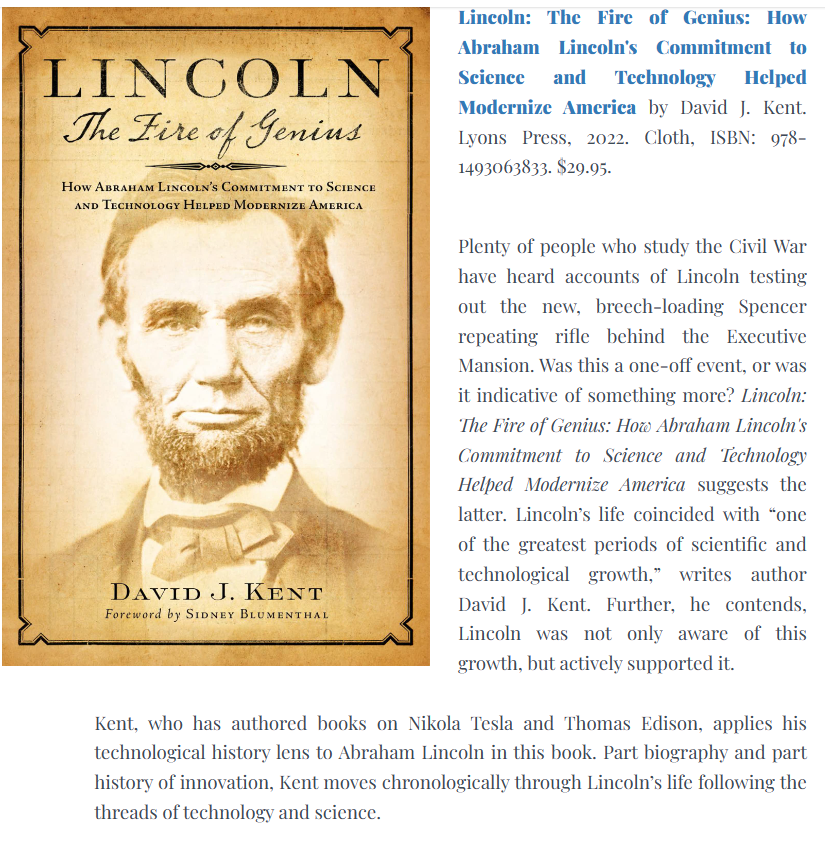
Lincoln: The Fire of Genius: How Abraham Lincoln’s Commitment to Science and Technology Helped Modernize America is available at booksellers nationwide.
Limited signed copies are available via this website. The book also listed on Goodreads, the database where I keep track of my reading. Click on the “Want to Read” button to put it on your reading list. Please leave a review on Goodreads and Amazon if you like the book.
You also follow my author page on Facebook.
David J. Kent is President of the Lincoln Group of DC and the author of Lincoln: The Fire of Genius: How Abraham Lincoln’s Commitment to Science and Technology Helped Modernize America and Lincoln: The Man Who Saved America.
His previous books include Tesla: The Wizard of Electricity and Edison: The Inventor of the Modern World and two specialty e-books: Nikola Tesla: Renewable Energy Ahead of Its Time and Abraham Lincoln and Nikola Tesla: Connected by Fate.
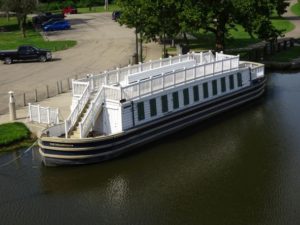 On June 20, 1848, Congressman Abraham Lincoln so strongly believed in the long-term economic benefit of improvements that he used some of the limited time allotted to freshmen congressmen to argue for internal improvements on the floor of the House. He began by rebutting the recent Democratic platform written for the 1848 nomination of Lewis Cass, which concluded the Constitution did not confer upon the federal government the power to carry on a system of internal improvements. Lincoln disagreed and systematically dismantled each of the positions offered to support that conclusion.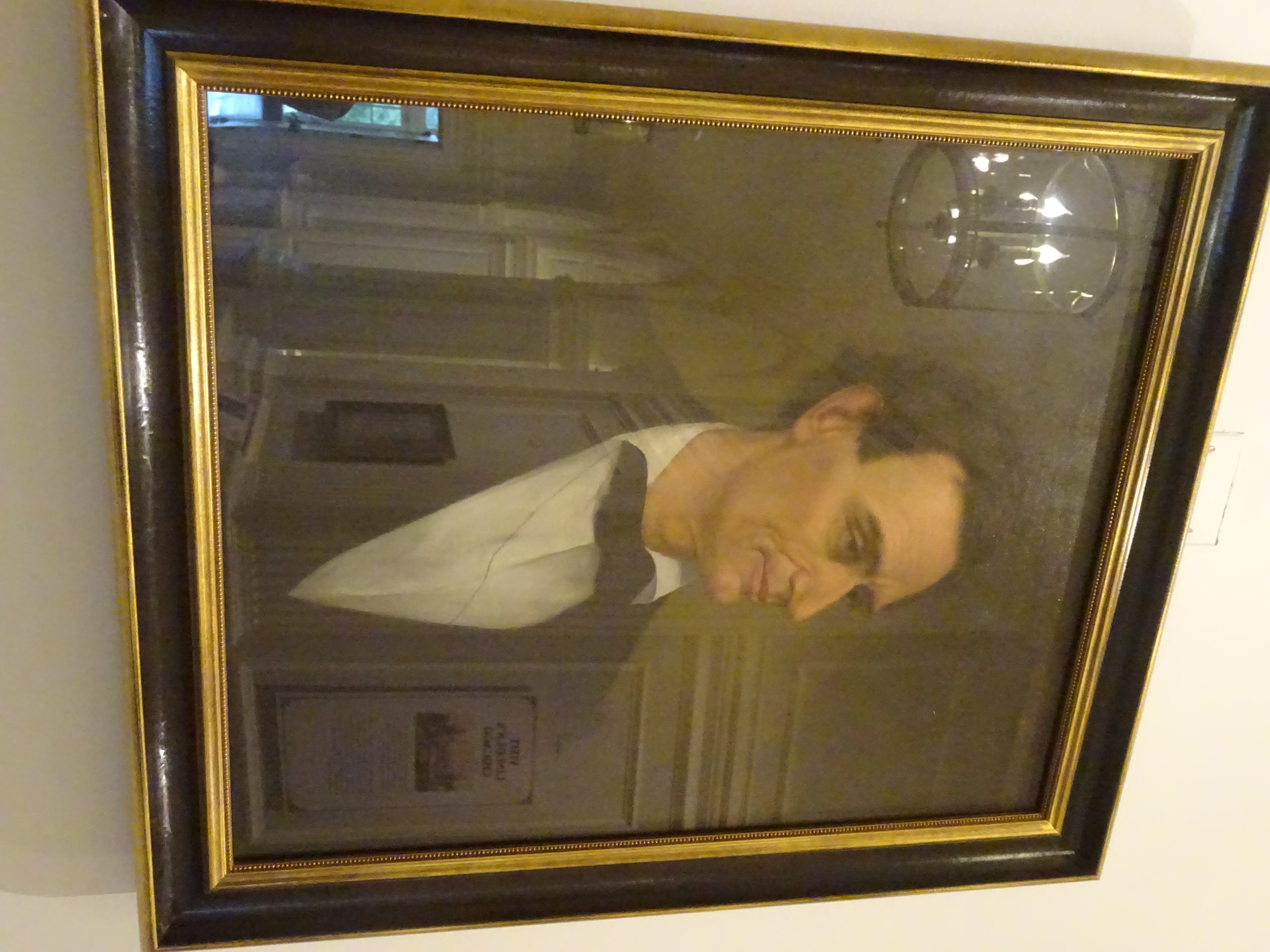
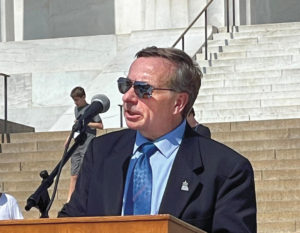 One year ago today I was the master of ceremonies for the centennial anniversary of the dedication of the Lincoln Memorial. What an experience it was.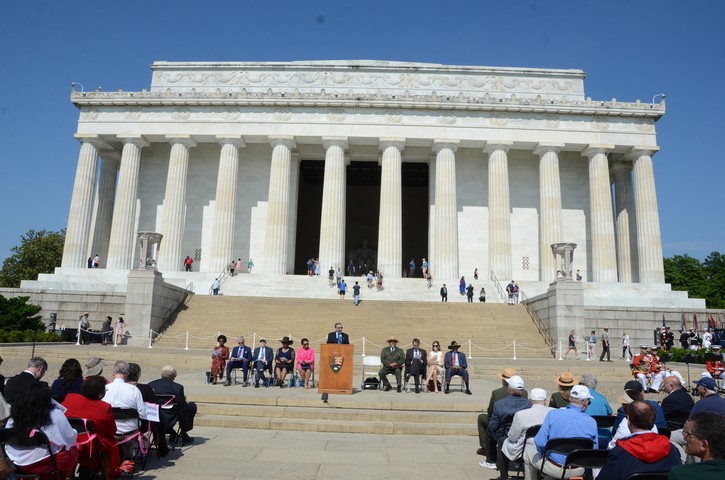
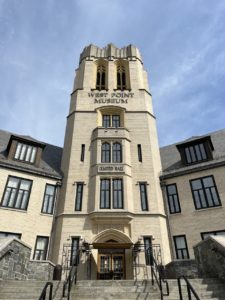 Abraham Lincoln made a secret trip to West Point in 1862. My recent trip to West Point was not so secret, and I also picked up and award in Lincoln’s legacy. I have the Lincoln Society of Peekskill to thank for both.

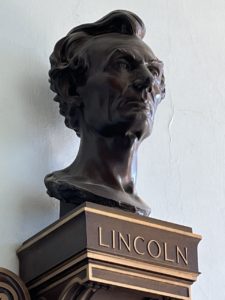 Abraham Lincoln famously had less than one year of formal schooling, but you can find him now at both Harvard and Yale.


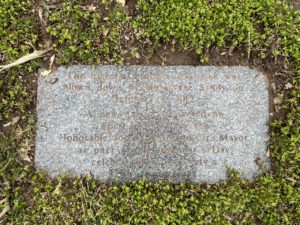 Several days before my visit to Harvard I was on the Yale campus. Lincoln had given a speech in 1860 in Union Hall. The hall no longer stands (the High School in a Community is now in its place) but there is a memory of Lincoln on the green at Yale. There, at least up until recently, stood a majestic Oak deemed the “Lincoln Memorial Oak” that had stood for ages. In late 2012 the stately old tree was toppled by Superstorm Sandy,
 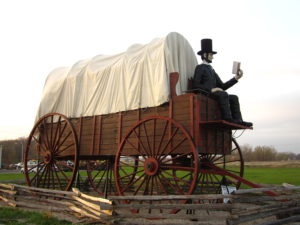 Abraham Lincoln made two trips to New England in his lifetime, and I will soon embark on a road trip of my own to follow in his footsteps. This isn’t my first such trip. Pre-COVID I made several road trips – long solo drives tracing Lincoln’s roots through Kentucky, Indiana, and Illinois, with side trips into Lincoln-related sites in Tennessee, Michigan, Wisconsin, and elsewhere. You can