I’m excited to report that I will be presenting at the York (Pennsylvania) Civil War Round Table on Wednesday, May 15, 2024. This will be an in-person meeting at the York Historical Society Museum, 250 East Market Street, York, PA 17403. It will also be broadcast via Zoom. Both in-person and Zoom attendance is open to the public and free from 7:00 to 8:30 pm.
Please register for this free program in advance for head-count purposes:
In Person registration: Click Here
For Zoom link: Click Here
More information below per the York CWRT website:
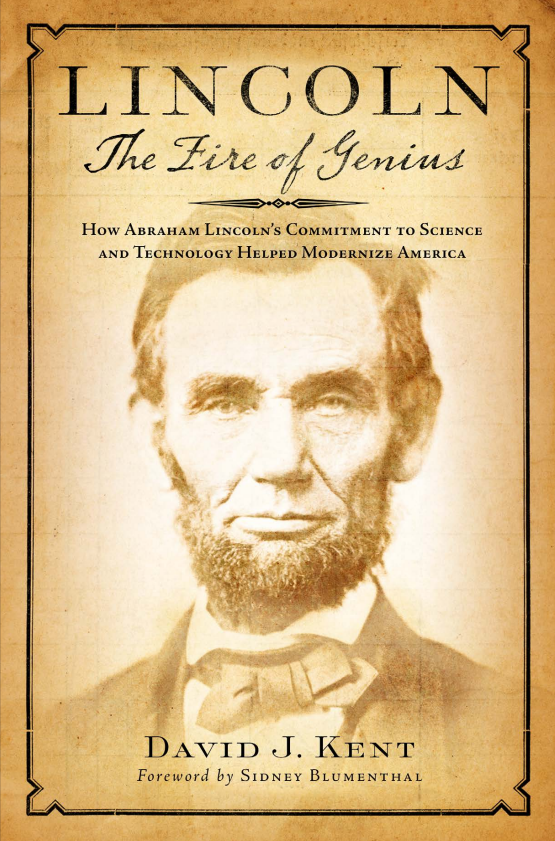
David J. Kent will speak on the topic of “Lincoln’s Influence on Science and Technology in the Civil War.” Abraham Lincoln had a lifelong fascination with science and technology, a fascination that would help institutionalize science, win the Civil War, and propel the nation into the modern age. Kent will discuss how science and technology gradually infiltrated Lincoln’s remarkable life and influenced his growing desire to improve the condition of all men. The presentation will show where Lincoln gained his scientific knowledge, and how that background led him to encourage its further development and use during the war.
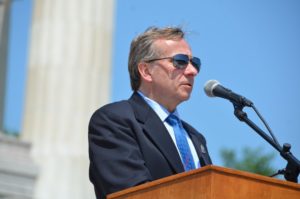
David J. Kent is an Abraham Lincoln historian, a former scientist, and the current President of the Lincoln Group of the District of Columbia. He is also on the Executive Committee and Board of Directors of the Abraham Lincoln Institute and the Board of Advisors of the Lincoln Forum. He is a frequent speaker on Abraham Lincoln topics and served as Master of Ceremonies for the Lincoln Memorial Centennial program in 2022. David has won numerous awards both for his scientific work and as an Abraham Lincoln historian. He has written several books, including his most recent, Lincoln: The Fire of Genius: How Abraham Lincoln’s Commitment to Science and Technology Helped Modernize America and his previous Lincoln book for young people, Lincoln: The Man Who Saved America. He has also written books on Nikola Tesla and Thomas Edison. He is currently working on a book about Lincoln’s two visits to New England.
The York Civil War Round Table is a non-profit organization that seeks to promote, interpret, preserve, and protect the Civil War heritage of York County, Pennsylvania, through the education and exchange of information with its members and the general public. Membership is free and open to anyone interested in learning more about the American Civil War.
Founded as the White Rose Civil War Round Table, the York CWRT holds monthly meetings the third Wednesday of every month except December at 7:00 p.m. in the Meeting Hall of the York County History Center’s Historical Society Museum at 250 East Market Street in York, Pennsylvania. Each meeting features a guest speaker talking about a Civil War topic of local or national interest. Meetings are FREE and open to the public. For upcoming programs, please visit the Cannonball webpage http://www.yorkblog.com/cannonball/york-cwrt/.
I look forward to seeing everyone there soon. Signed books can be purchased at the in-person event, or order via this website or Amazon or Barnes and Noble or your favorite independent bookstore.
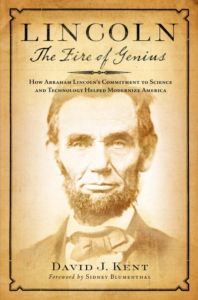
Lincoln: The Fire of Genius: How Abraham Lincoln’s Commitment to Science and Technology Helped Modernize America is available at booksellers nationwide.
Limited signed copies are available via this website. The book also listed on Goodreads, the database where I keep track of my reading. Click on the “Want to Read” button to put it on your reading list. Please leave a review on Goodreads and Amazon if you like the book.
You also follow my author page on Facebook.
David J. Kent is President of the Lincoln Group of DC and the author of Lincoln: The Fire of Genius: How Abraham Lincoln’s Commitment to Science and Technology Helped Modernize America and Lincoln: The Man Who Saved America.
His previous books include Tesla: The Wizard of Electricity and Edison: The Inventor of the Modern World and two specialty e-books: Nikola Tesla: Renewable Energy Ahead of Its Time and Abraham Lincoln and Nikola Tesla: Connected by Fate.
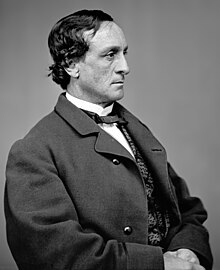 We all know John Wilkes Booth, the assassin of President Abraham Lincoln. And then there was Edwin Booth, the great Shakespearean actor known for his performances of Hamlet. But there was another Booth brother in the acting business, and you won’t believe where he showed up in this edition of Unexpected Lincoln.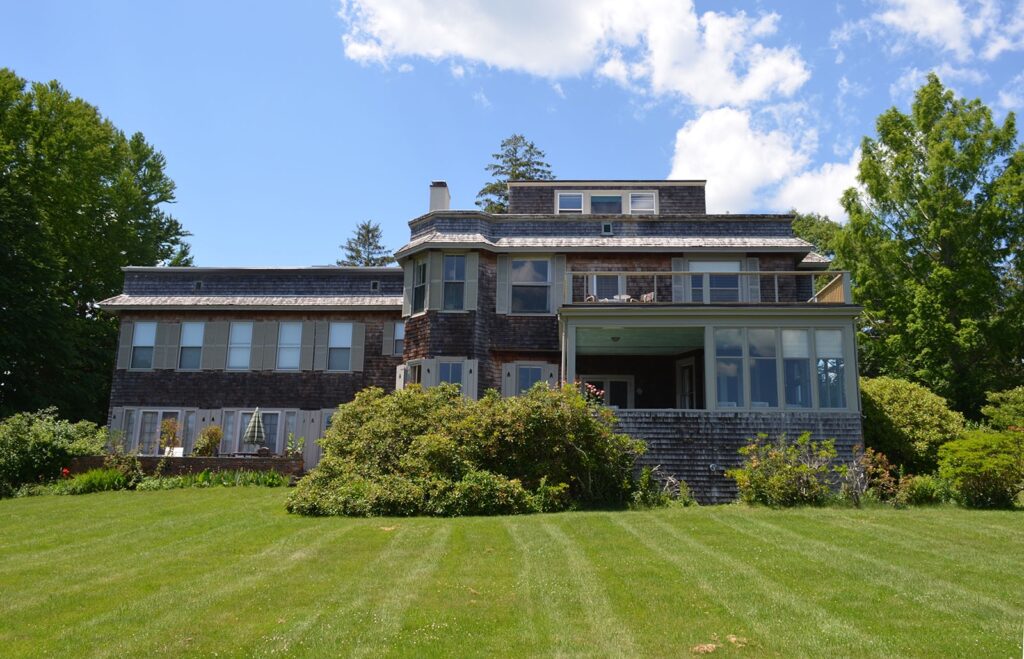


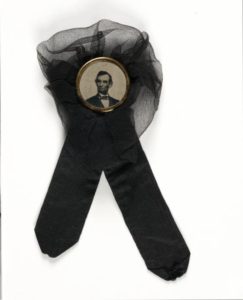 April 14, 1865, had been a busy day for Abraham Lincoln. The previous week he had walked through Richmond, arriving back in Washington to a telegram saying the South’s main army would fight no more. On this Good Friday, Lincoln felt rejuvenated, relieved that the war would soon end and he could focus his second term on reconstructing the Union. The day started with a welcome visit. Captain Robert Lincoln, the president’s son, returned to the city in time to join Lincoln for breakfast. Robert brought firsthand witness to the recent surrender of Confederate General Robert E. Lee to Union General Ulysses S. Grant at Appomattox Courthouse. Many formal interviews later (including with former New Hampshire senator John P. Hale, whose daughter Lucy was later discovered to be secretly engaged to John Wilkes Booth), Lincoln held a cabinet meeting in which he related a recurring dream of a ship “moving with great rapidity toward a dark and indefinite shore.”
 Abraham Lincoln had a busy day, this April 11, 1865. There were meetings, then more meetings, and proclamations (and more proclamations), a pass for his friend, and a request to General Grant. That evening he would give
 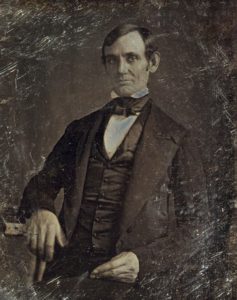 On April 4, 1860, a mere six weeks before he would be nominated as the Republican candidate for president, Abraham Lincoln wins a case formally known as
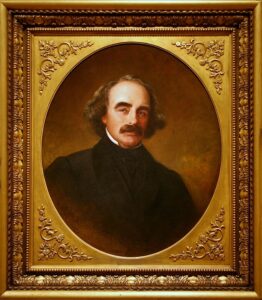 On March 13, 1862, Nathaniel Hawthorne, the great novelist, met Abraham Lincoln in the White House. He was not impressed.
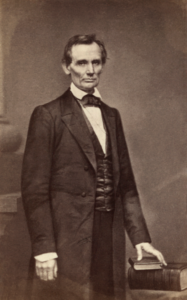 With Leap Year Day, February graced the nation with an extra twenty-four hours on February 29, 1860. Abraham Lincoln was already feeling weary by the time he clambered onto the 10:40 am train from Providence, Rhode Island, to Exeter, New Hampshire. It was nearly two in the morning the day before by the time he finished his grand lecture at Cooper Union in New York City, joined the organizers for dinner, and spent several hours after midnight proofreading the text of the speech to be printed that day in the New York Tribune. A brief forty winks of sleep, then up again and on a train to Providence to give yet another long lecture that night. Having that speech gone well, and another late dinner, now he was on another train to finally see his son, Robert, in Exeter, the original rationale for this excursion into New England after New York.
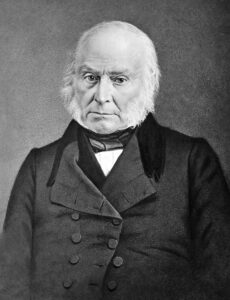 On February 21, 1848, Abraham Lincoln was attending proceedings in the House of Representatives, when suddenly, the Speaker of the House, Robert Charles Winthrop, was interrupted “by several gentlemen, who sprang from their seats to the assistance of the venerable John Quincy Adams, who was observed to be sinking from his seat in what appeared to be the agonies of death.” Adams was carried to the rotunda, and from there to the speaker’s room, where he remained until his last breath two days later. Lincoln would serve on the official House funeral arrangements committee for Adams, the former president and his House colleague during Lincoln’s sole term in Congress.