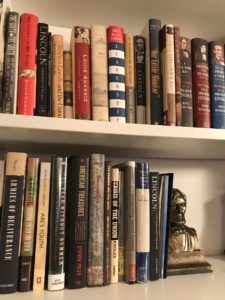
 How time flies. The year 2024 is almost over and I think I’ve finished accumulated new books for the year, to it’s time for my annual Abraham Lincoln book acquisitions post. As you’ll quickly see, my goal to reduce the number of books I buy has been relatively successful-the total number of books acquired is definitely fewer-coming in at 25 new acquisitions. Reducing the total number of books? Not so successful. You can read about past years acquisitions by scrolling through this link.
I did manage to acquire fewer Lincoln books this year despite some great new books hitting the shelves. The 25 “new” books in 2024 compares to 37 in 2023 and 34 in 22, so that’s a plus. I also received fewer books as gifts or from publishers. My grand total is split pretty evenly between 11 new hardcover books and 12 new softcover books, plus there are 2 books as PDF files only. Both PDFs, which are the two older books acquired, were downloaded because they provide source material for my current work in progress (which I’ll discuss soon in my “Year in a Writer’s Life” post). The hardcover versus softcover split is interesting. I definitely prefer hardcover books, but it seems publishers are shifting to producing more softcover books. This seems especially true for some academic publishers, who either don’t produce a hardcover version of the book or price it at some astronomically ridiculous price point in order to push the softcover version. As just one example, one book that is expected to come out in June is listed on Amazon as $90 for the hardcover and $25 for the softcover. Another book I recently bought was $65 for the hardcover and $28 for the softcover. At a recent conference, the on-site bookstore didn’t even bother trying to sell the hardcover, stocking only the softcover even for a receptive audience. Like the 18/20/22% tip suggestions they now put on restaurant bills, this is clearly a case of what Dan Ariely called “predictably irrational.”
Meanwhile, about half the books I acquired were actually published in 2024 (another is to be published in January 2025, but I received an ARC; more on that in a moment). That’s a shift from my previous habits where I focused more on collectible books from the early 20th and even 19th centuries. This year, the two oldest books by publication date are the two PDFs (publication dates of 1909 and 1910). The oldest physical book is 1963, but then they jump up to 1996 and again to 2001 before settling most into the last decade. I’m a bit surprised by this, but not completely given that I’ve made an attempt to collect less. I even read more Lincoln books I borrow from the local library since my bookshelves are already full, but somehow a dozen books published this year found their way into my home.
The most recognizable author from this year is almost certainly Erik Larson, whose Demon of Unrest dives into the period between Lincoln’s election and the bombardment of Fort Sumter in Charleston, South Carolina, the event usually pegged as the beginning of the Civil War. Larson is a guaranteed bestseller since his Devil in the White City and other books hit the shelves, although I was less impressed with this particular volume. Maybe I knew too much to read it as simply a good story and found myself either bored or critiquing details too much. Beyond Larson, the rest are either relatively obscure or are considered exceptional scholars in the Lincoln studies world but not so much to the general publish. Looking at my list, I realize that I know several of them fairly well, including Allen Guelzo, Harold Holzer, Jonathan W. White, Walter Stahr, and Jeffrey Boutwell, and then this year met Jon Grinspan, Mark Neels, and others because of the topic of their books.
I also had a back-cover blurb published on one book that come out this year. In January I received a request from Southern Illinois University Press to review a PDF manuscript by Leonne Hudson, and when that book, Black Americans in Mourning, came out this fall, my blurb praising the book was there along with those from Civil War experts James M. McPherson and Hilary N. Green. This is actually the second blurb I’ve had published on books, the first was on Nancy Bradeen Spannous’s Defeating Slavery from 2023. Perhaps it’s a trend.
I have to admit that I haven’t yet read all of the books I acquired this year despite reading over 100 books in 2024. I’m currently reading Boutwell, a book about George Boutwell, Lincoln’s first commissioner of internal revenue and later Grant’s secretary of the treasury. The book is written by Jeffrey Boutwell, a distant descendant. The publisher sent me the book to review. Other books I liked this year included Harold Holzer’s Brought Forth on this Continent, about immigration in Lincoln’s time; Allen Guelzo’s Our Ancient Faith, about democracy; Robert W. Merry’s Decade of Disunion, about the volatile 1850s; and I especially liked Jon Grinspan’s Wide Awake: The Forgotten Force that Elected Lincoln and Spurred the Civil War.
The year 2025 will continue my plan to acquire fewer books and, perhaps more importantly, try to offload some of the books to make room. My proximal reading list includes Nigel Hamilton’s Lincoln vs. Davis, about the two presidents serving during the Civil War; Manisha Sinha’s The Rise and Fall of the Second American Revolution, which is quickly becoming the definitive treatise on reconstruction; and Doug MacDougall’s The Agitator and the Politician, about the difficult relationship between abolitionist William Lloyd Garrison and Abraham Lincoln. I’m sure there will be more great books coming out in 2025 that I’ll also find myself reading, and perhaps also acquiring.
See the 2024 list showing author/title/publication date below my signature blurb below.
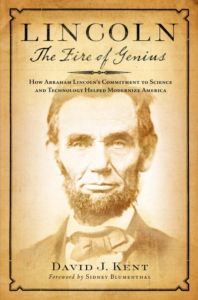
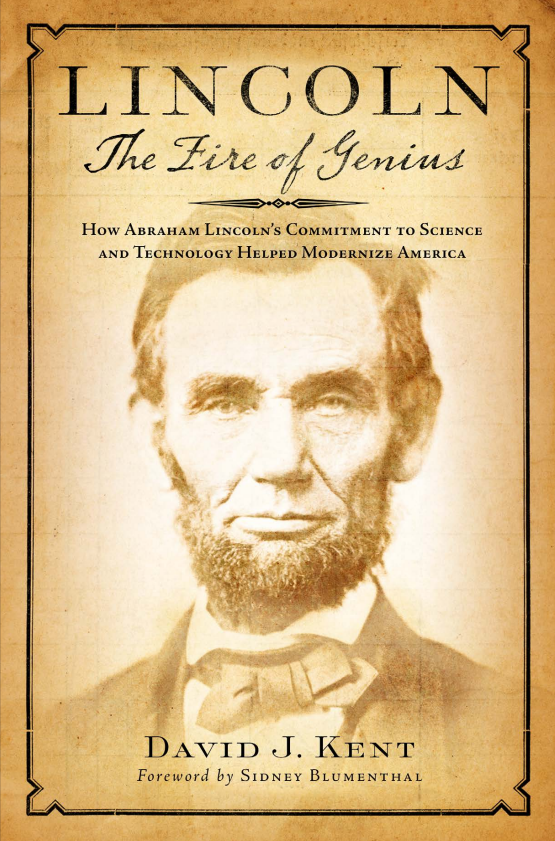
Lincoln: The Fire of Genius: How Abraham Lincoln’s Commitment to Science and Technology Helped Modernize America is available at booksellers nationwide.
Limited signed copies are available via this website. The book also listed on Goodreads, the database where I keep track of my reading. Click on the “Want to Read” button to put it on your reading list. Please leave a review on Goodreads and Amazon if you like the book.
You also follow my author page on Facebook.
David J. Kent is President of the Lincoln Group of DC and the author of Lincoln: The Fire of Genius: How Abraham Lincoln’s Commitment to Science and Technology Helped Modernize America and Lincoln: The Man Who Saved America.
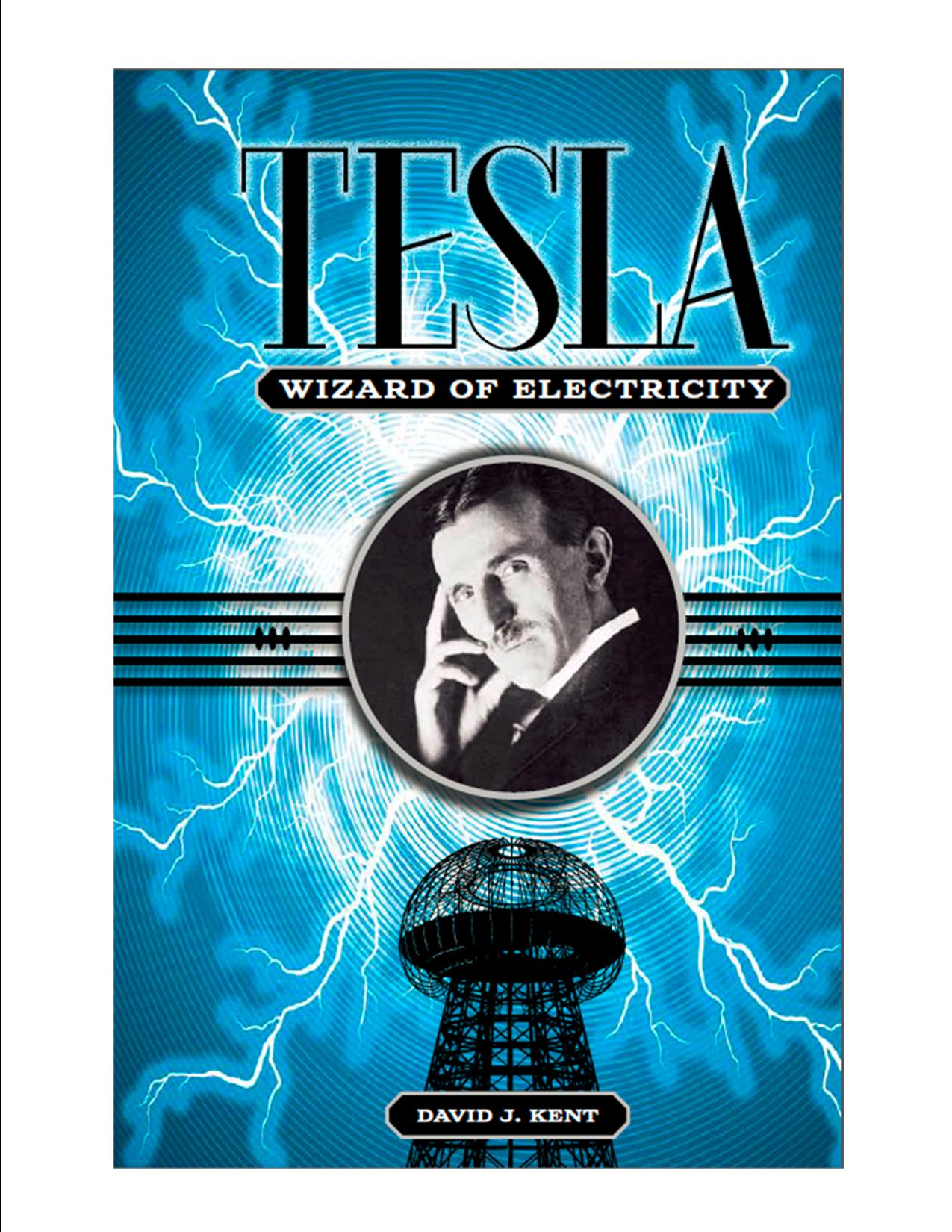
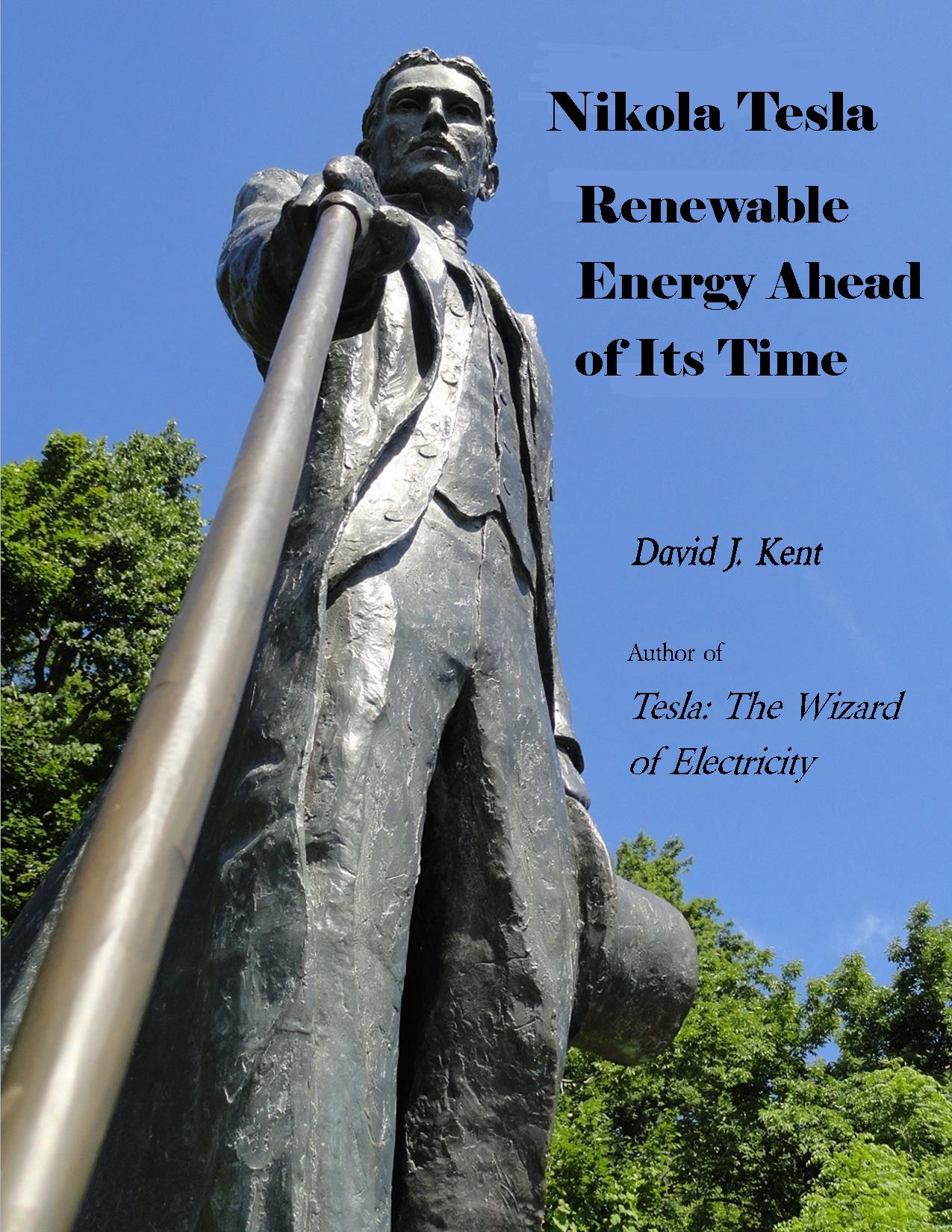
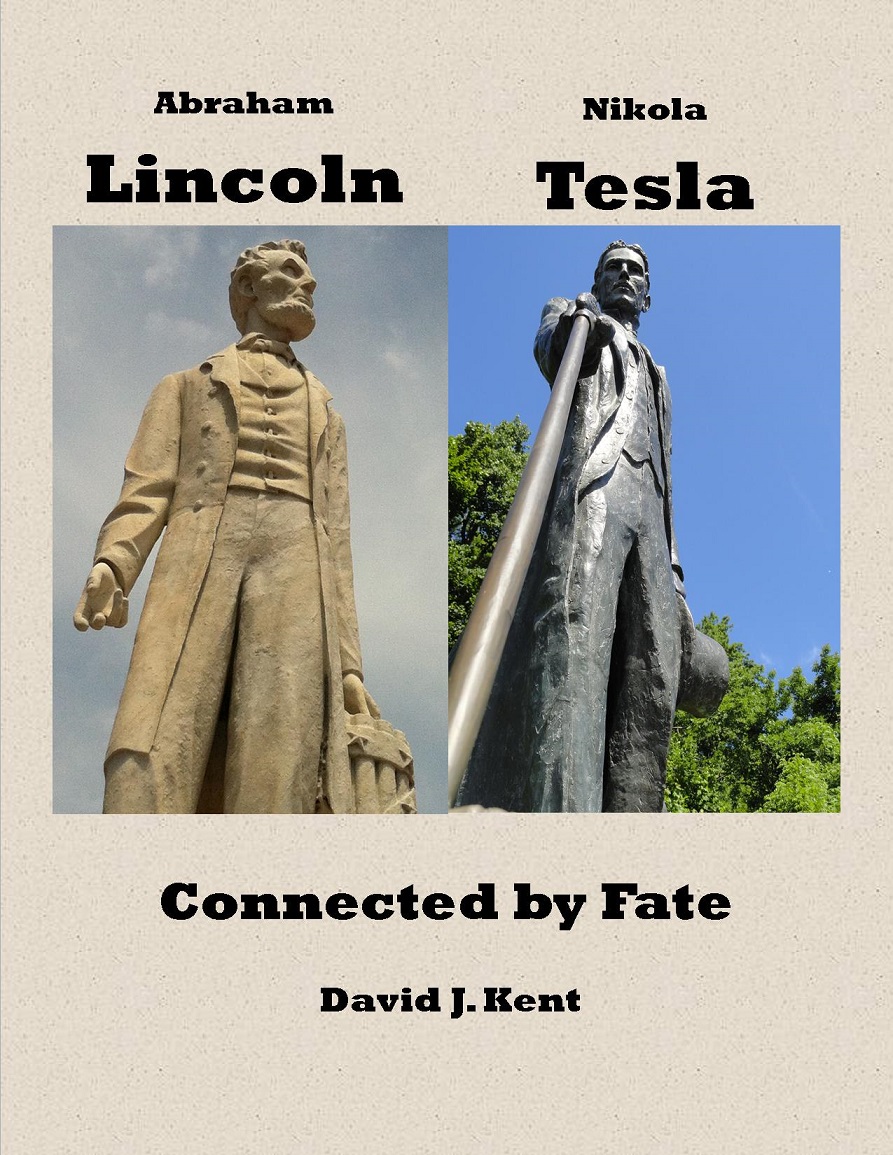
His previous books include Tesla: The Wizard of Electricity and Edison: The Inventor of the Modern World and two specialty e-books: Nikola Tesla: Renewable Energy Ahead of Its Time and Abraham Lincoln and Nikola Tesla: Connected by Fate.
Here is the 2024 list! [Author, Title, Date of Publication]
| Achorn, Edward |
The Lincoln Miracle: Inside the Republican Convention that Changed History |
2023 |
| Ayers, Carol Dark |
Lincoln and Kansas: A Partnership for Freedom |
2001 |
| Boutwell, Jeffrey |
Boutwell: Radical Republican and Champion of Democracy |
2025 |
| Current, Richard N. |
Lincoln and the First Shot |
1963 |
| Derber, Jesse |
Abraham Lincoln: Statesman Historian |
2024 |
| Grinspan, Jon |
Wide Awake: The Forgotten Force That Elected Lincoln and Spurred the Civil War |
2024 |
| Guelzo, Allen C. |
Our Ancient Faith: Lincoln, Democracy, and The American Experiment |
2024 |
| Hamilton, Nigel |
Lincoln vs. Davis: The War of the Presidents |
2024 |
| Hanna, William F. |
Abraham Among the Yankees: Abraham Lincoln’s 1848 Visit to Massachusetts |
2020 |
| Holzer, Harold |
Brought Forth on This Continent: Abraham Lincoln and American Immigration |
2024 |
| Hudson, Leonne M. |
Black Americans in Mourning: Reactions to the Assassination of Abraham Lincoln |
2024 |
| Jansen, Axel |
Alexander Dallas Bache: Building the American Nation Through Science and Education in the Nineteenth Century |
2011 |
| Larson, Erik |
The Demon of Unrest: A Saga of Hubris, Heartbreak, and Heroism at the Dawn of the Civil War |
2024 |
| Learned, Marion Dexter |
Abraham Lincoln: An American Migration |
1909 |
| MacDougall, Doug |
The Agitator and the Politician: William Lloyd Garrison, Abraham Lincoln, and the Emcipation of the Slaves |
2020 |
| Masur, Kate and Clarke, Liz |
Freedom Was in Sight!: A Graphic History of Reconstruction in the Washington, DC, Region |
2024 |
| Merry, Robert W. |
Decade of Disunion: How Massachusetts and South Carolina Led the Way to Civil War, 1849-1861 |
2024 |
| Neels, Mark A. |
Lincoln’s Conservative Advisor: Attorney General Edward Bates |
2024 |
| Newton, Joseph Fort |
Lincoln and Herndon |
1910 |
| Pearsall, Alan |
American Town: The History of Ipswich, Massachusetts |
2009 |
| Schwalm, Leslie A. |
Medicine, Science & Making Race in Civil War America |
2023 |
| Sinha, Manisha |
The Rise and Fall of the Second American Revolution: Reconstruction, 1860-1920 |
2024 |
| Stahr, Walter |
Salmon P. Chase: Lincoln’s Vital Rival |
2022 |
| White, Jonathan W. and Griffing, William J. (Eds) |
A Great and Good Man: Rare, First-Hand Accounts and Observations of Abraham Lincoln |
2024 |
| Williams, Frank J. and Pederson, William D., eds. |
Abraham Lincoln: Contemporary |
1996 |


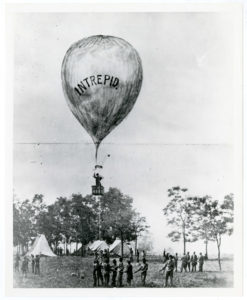 Abraham Lincoln was always interested in technology, so when the Civil War arrived as soon as he was inaugurated, he worked hard to convince the usually conservative military to employ the latest technological advances. One such advance caused him to look to the skies to give every advantage to Union troops. That was the use of balloons in war.
 As 2024 comes to an end, it’s time to recap how it all went in the writer’s life. At least for this one writer. Once again, it was a busy year, with some residual events related to Lincoln: The Fire of Genius, some new obligations, and some really big news (really!). You can check out my other year-end posts by reading about
 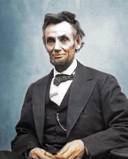 On this date, December 11, 1862, Abraham Lincoln transmitted to the U.S. Senate his response to their request that he “furnish the Senate with all information in his possession touching the late Indian barbarities in the State of Minnesota, and also the evidence in his possession upon which some of the principal actors and head men were tried and condemned to death.”
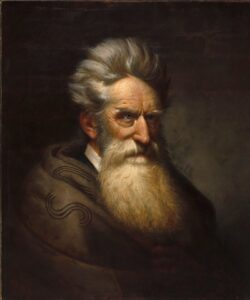 Back in the days when inciting an insurrection against the government was considered disqualifying, on December 2, 1859, abolitionist John Brown was hanged.
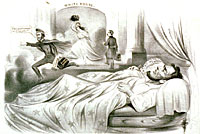 Abraham Lincoln’s “few appropriate remarks” at Gettysburg on November 19, 1863, which we now know as the Gettysburg Address (i.e., “Four score and seven years ago today…”) is a major milestone in Lincoln’s historical legacy. Less remembered is that Lincoln was weak and dizzy as he rose to speak, with the symptoms intensifying on the train back to Washington. Back pains developed, and by the fourth day of being bedridden he experienced a scarlet rash, which soon became vesicular. Lincoln had virus-induced smallpox, or at least a less virulent form called variola or varioloid. Over the next three weeks, lesions appeared and worsened, finally drying and peeling. He remained in bed recovering for weeks.
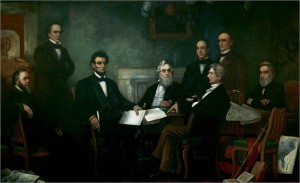 No doubt everyone in the Lincoln world has heard repeatedly about the document we’ve all come to know as the “blind memorandum.” But what about the “reveal party” when Lincoln showed his cabinet what he had written? That event happened on November 11, 1864.
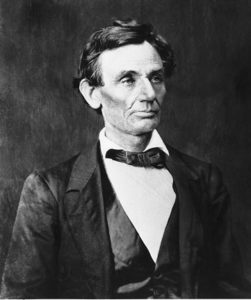 “I am not an accomplished lawyer,” Lincoln wrote in 1850 notes for a law lecture. Continuing in this unpretentious vein, he noted, “I find quite as much material for a lecture in those points wherein I have failed, as in those wherein I have been moderately successful.”
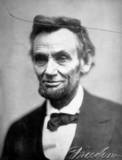 During the U.S. Civil War, there were some who advised Abraham Lincoln to postpone the 1864 election. He refused to do so, saying:
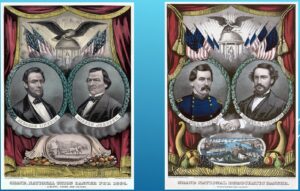 Abraham Lincoln won reelection in 1864. Or so we remember. But the results may not be what they seem, and some of the states had questionable legitimacy. I’ll be discussing this topic in a new presentation scheduled for Tuesday, October 29, 2024.