Lincoln Forum Comes to Hildene, Robert Lincoln’s Vermont Home

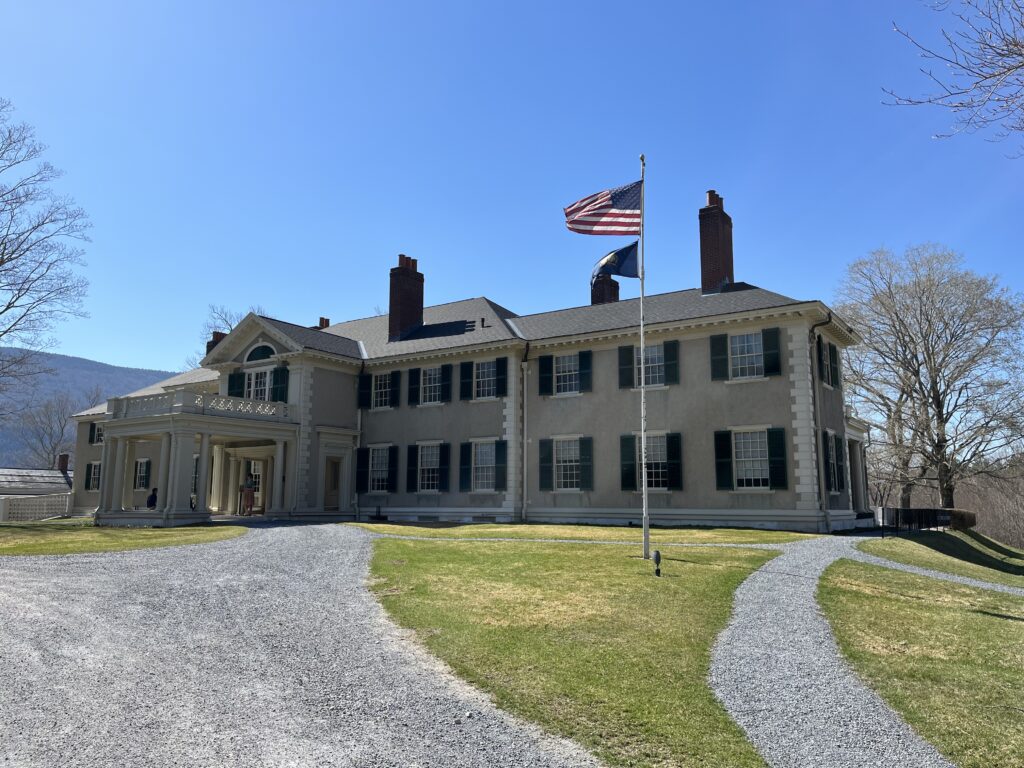
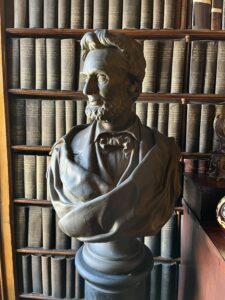
Hildene, Manchester, VermontThe Lincoln Forum meets annually in November in Gettysburg, PA. But in 2025 the Forum started a new tradition – a spring symposium at Robert Lincoln’s home in Manchester, Vermont he called Hildene. I attended the first meeting and I’m officially on the program as a speaker for the 2026 program running from May 1 to 3, 2026.

Here is the link for more information and to register for the Lincoln Forum Spring Symposium at Hildene: https://www.thelincolnforum.org/

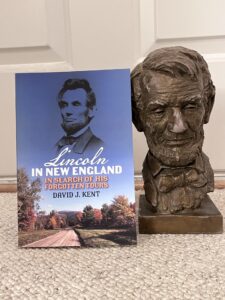
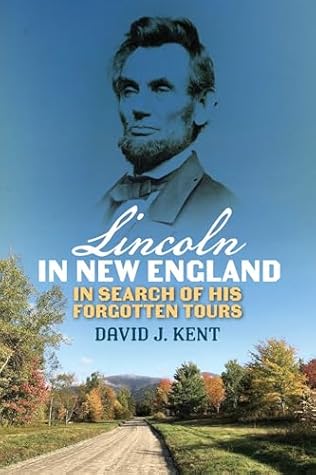
Definitely get your registration in now and get a room in the historic Equinox Hotel, where Mary Lincoln and Robert stayed during the Civil War. The full program schedule will be coming soon on the Forum website, but confirmed speakers include Lois Romano and Jason Emerson discussing Mary Lincoln and Craig Symonds talking about Black emigrants. I will be discussing my new ride-along book, Lincoln in New England: In Search of His Forgotten Tours. There will also be a special panel of presidential descendants, including those of Ulysses S. Grant, Grover Cleveland, and Theodore Roosevelt.

I’ve written a bit about Hildene before. Check out Mary and Robert Go to Manchester, Vermont and Robert Lincoln’s Observatory at Hildene.

The Hildene event will also offer something very special – a behind the scenes look at the Lincoln archives! This is not to be missed, so register now.

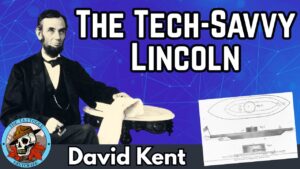
I have other events coming up as well, including an interview today that will go online in a few weeks. I’ll also be livestreaming with The Tattooed Historian about “The Tech Savvy Lincoln” on March 17. Check out my Media page for upcoming events.

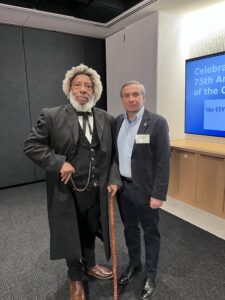
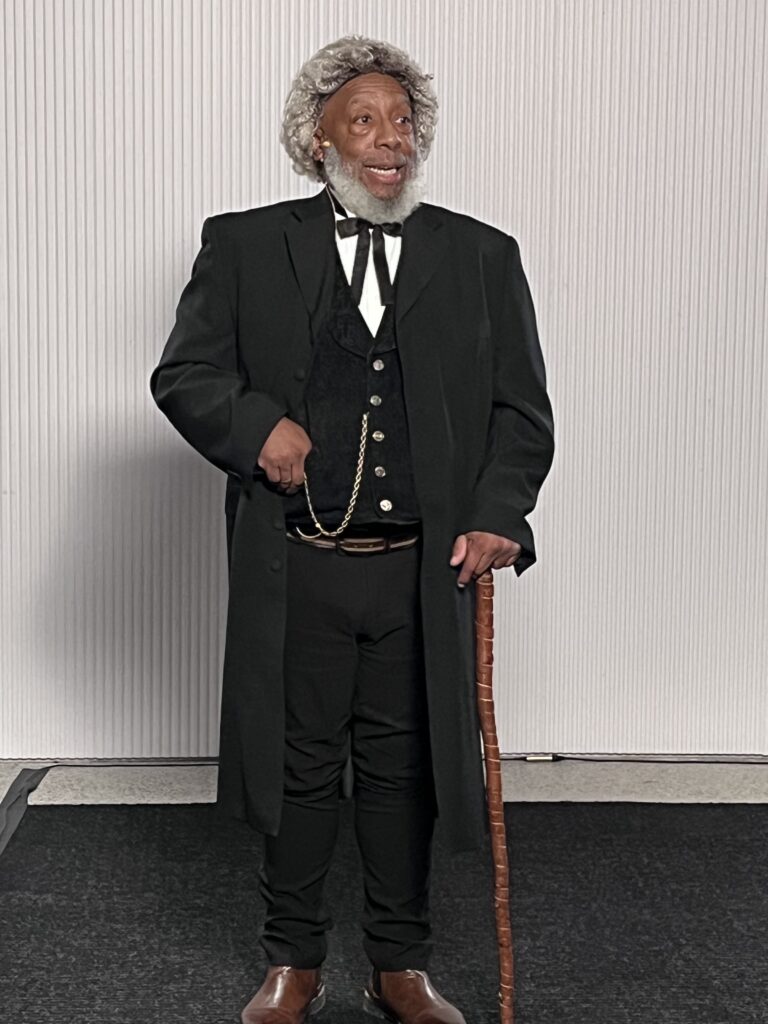
And don’t forget to register for the Lincoln Group of DC’s February Lincoln birthday celebration featuring Frederick Douglass (brought to you by Nathan Richardson). That event will be held February 10 in downtown DC at International Square. Check here to register.

While you’re at it, register for my own presentation on Lincoln in New England for the Lincoln Group of DC. This one is Zoom Only, so you can participate from anywhere in the country (and indeed, the world)!

Much more news coming soon.

[Photo of Hildene by David J. Kent, 2023]

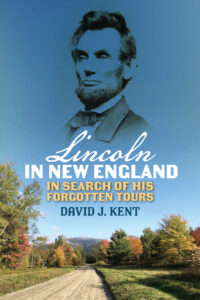
Lincoln in New England book cover

Coming in March 2026: Lincoln in New England: In Search of His Forgotten Tours

Also see – Lincoln: The Fire of Genius: How Abraham Lincoln’s Commitment to Science and Technology Helped Modernize America.

Join me on Goodreads, the database where I keep track of my reading. Please leave a review on Goodreads and Amazon if you like the book.

You also follow my author page on Facebook and on Instagram.

David J. Kent is Immediate Past President of the Lincoln Group of DC and the author of Lincoln: The Fire of Genius: How Abraham Lincoln’s Commitment to Science and Technology Helped Modernize America and Lincoln: The Man Who Saved America.

His previous books include Tesla: The Wizard of Electricity and Edison: The Inventor of the Modern World and two specialty e-books: Nikola Tesla: Renewable Energy Ahead of Its Time and Abraham Lincoln and Nikola Tesla: Connected by Fate.

The Year in a Writer’s Life – 2025

Me with Lincoln and Douglass statues, Congressional Cemetery 2025The year 2025 was an incredibly busy writing year for me, so it’s time to recap my Year in a Writer’s Life. You can check out my other year-end posts by reading about my year of traveling, my 2025 Lincoln book acquisitions, and my year in reading.

The big writing project for the year was completing the manuscript for Lincoln in New England: In Search of His Forgotten Tours. I had signed a contract with Globe Pequot Publishers in late 2024 and submitted the manuscript to them on May 30, 2025. The working title was originally “Unable to Escape This Toil,” but along the way we decided to change it to a more direct “Lincoln in New England.” The “Unable” line comes from a letter Lincoln wrote to his wife from Exeter, New Hampshire in early March 1860, where he had gone to visit his son Robert after giving his now famous Cooper Union speech in New York City. What was planned to be a relaxing visit turned into 11 unplanned speeches across three New England states. In complaining to Mary that he was overburdened, Lincoln showed the growing strain, but also his growing influence. [Note: I explained the “Unable” letter here] Submission of the manuscript isn’t the end of the publishing process, of course, some of which I’ve documented on these pages and also on Hot White Snow, my blog about the personal side of the writing life. Bottom line – Lincoln in New England will be released into the wild on March 3, 2026 [And you can pre-order now!]

I did a lot of other writing on topics related to the book as well. Among them were articles for the Lincoln Forum Bulletin entitled “Revisiting Lincoln’s ‘Unable to Escape This Toil’ letter” and one entitled “Zachary Taylor – A Whig?” for ALA’s For The People. I have another article in review for the spring Bulletin. Then there was a series of articles related to Lincoln’s two New England tours for the Lincoln Group of DC’s Lincolnian, two of which have already been published, one in press for January release, and a fourth that I’ll write for the spring issue. I also wrote two long articles that will be published in the Winter and Spring issues of the Lincoln Herald and a long research article in review for the Journal of the Abraham Lincoln Association. I also have two papers in preparation for Lincoln Lore and Surgeon’s Call. During the year, I was quoted in several articles in the media, mostly about Lincoln but one regarding a piece I wrote about a famous quote often attributed to Mark Twain: “History doesn’t repeat itself, but it often rhymes.”

As usual, a good part of my writing life is contributing to various blogs and newsletters. For the quarterly Lincolnian newsletter, I again wrote eight book reviews and the articles noted above. I also had a book review published in the Lincoln Herald journal. I continued to write for the Lincolnian.org website, but even with a slower pace than in the past (because of my other writing), I now have over 242 articles to my credit. Add in the dozens of articles each for this David J. Kent website and my Hot White Snow blog, plus the book reviews on the Abraham Lincoln Bibliography Project website, and I’ve done a lot of writing this year. But wait, there’s more! I also started writing for the new blog, Lincoln250.org, which is a collaboration between the Lincoln Group of DC and the Abraham Lincoln Association and focused on covering Abraham Lincoln’s connections to the Declaration of Independence and the American founding in time for the 250th anniversary in 2026. I’ll contribute to another blog starting in January as well, this one for the new website of the Abraham Lincoln Institute, where I sit on the Board of Directors and Executive Committee.

I continue to do presentations on various topics during the year, including a series recounting important aspects of the history of the Lincoln Group of DC during its 90th anniversary year. And I continue to support the work of other writers. For example, in March I hosted the White House Historical Association’s History Happy Hour program with Michael Vorenberg discussing his book, Lincoln’s Peace. That same month I introduced Jon Grinspan at the annual ALI Symposium at Ford’s Theatre, where he discussed his book, Wide Awake. During the summer and early fall I was approached by two different publishers to ask me to review book proposals from other authors. I provided my feedback on both, as well as reviewed three other books in preparation from authors who reached out to me for input. I was also on hand for the dedication of a new Lincoln statue at the African American Civil War Museum in DC, plus attended the first spring symposium of the Lincoln Forum held at Hildene, Robert Lincoln’s home in southern Vermont. Finally, I was interviewed by a documentary writer and producer for a film in progress on Civil War medicine.

What’s up for 2026?

Spring 2025 was focused on writing Lincoln in New England, so spring 2026 will be focused on promoting Lincoln in New England. The book comes out on March 3, 2026, and is already open for pre-orders (which help start the buzz for the book, so is much appreciated). I have a growing list of presentations I’ll be giving on the book, with a lot more on the way, including in-person, virtual, and podcast spots. You can find a convenient location throughout New England and the Mid-Atlantic (and beyond) on my Media page. One of the presentations will be at the 2nd annual spring Lincoln Forum held at Hildene in Manchester, Vermont. I attended the first spring forum this past April and in 2026 I’ll be on the program.

I have several articles in the pipeline as noted above and will continue as editor of the Lincolniana column in the quarterly Lincoln Herald. I’ll also continue writing on the various blogs, and if I completely lose my mind, my finally start the Substack I’ve been toying with for a while. I’ll also be involved in several events for 250th anniversary of the nation’s founding, so check back periodically on my Media page.

And finally, I’m already starting research on my next book topic. It will be a tangent off of Lincoln but not about Lincoln. More details later in the year. And if that isn’t enough, I have a topic in mind for the book after that too, which is definitely not about Lincoln. I also have several books I’m editing that I hope to see the light of day sooner rather than later. No shortage of ideas; the issue is shortage of time given that I also will continue extensive world travel and whatever else keeps me interested. Check out the links at the top for my travel, reading, and book acquisition posts.

[Photo of me with Lincoln and Douglass in Congressional Cemetery, Ru Sun, 2025]


Lincoln in New England book cover

Coming in March 2026: Lincoln in New England: In Search of His Forgotten Tours

Also see – Lincoln: The Fire of Genius: How Abraham Lincoln’s Commitment to Science and Technology Helped Modernize America.

Join me on Goodreads, the database where I keep track of my reading. Please leave a review on Goodreads and Amazon if you like the book.

You also follow my author page on Facebook and on Instagram.

David J. Kent is Immediate Past President of the Lincoln Group of DC and the author of Lincoln: The Fire of Genius: How Abraham Lincoln’s Commitment to Science and Technology Helped Modernize America and Lincoln: The Man Who Saved America.

His previous books include Tesla: The Wizard of Electricity and Edison: The Inventor of the Modern World and two specialty e-books: Nikola Tesla: Renewable Energy Ahead of Its Time and Abraham Lincoln and Nikola Tesla: Connected by Fate.

Unable to Escape This Toil – Lincoln in New England Article

The process for rolling out my new book, Lincoln in New England: In Search of His Forgotten Tours continues. I previously shared an article that was published in the For the People newsletter of the Abraham Lincoln Association based in Springfield, Illinois. Today I’m sharing my article published in the Lincoln Forum Bulletin, which comes out twice a year. This one revisited a letter Lincoln wrote to his wife from New Hampshire in 1860, in which he complained about how he had been “unable to escape this toil” of giving a dozen speeches over two weeks in New England. Here is the article as published (continues on the bottom of the second page):

Lincoln Forum Bulletin article p1

Lincoln Forum Bulletin article p2

This is one of several articles I have written that have already or will soon appear in various media outlets. I continue to write for other venues that will appear at some point in 2026. Meanwhile, I continue to schedule presentations and interviews for around the time the book comes out in March 2026, so feel free to contact me if you would like me to speak to your organization, either in person or via Zoom.

Lincoln in New England book cover

Coming in March 2026: Lincoln in New England: In Search of His Forgotten Tours

Also see – Lincoln: The Fire of Genius: How Abraham Lincoln’s Commitment to Science and Technology Helped Modernize America.

Join me on Goodreads, the database where I keep track of my reading. Please leave a review on Goodreads and Amazon if you like the book.

You also follow my author page on Facebook and on Instagram.

David J. Kent is Immediate Past President of the Lincoln Group of DC and the author of Lincoln: The Fire of Genius: How Abraham Lincoln’s Commitment to Science and Technology Helped Modernize America and Lincoln: The Man Who Saved America.

His previous books include Tesla: The Wizard of Electricity and Edison: The Inventor of the Modern World and two specialty e-books: Nikola Tesla: Renewable Energy Ahead of Its Time and Abraham Lincoln and Nikola Tesla: Connected by Fate.

Update on Lincoln in New England

Lincoln in New England book coverAs I prepare to spend a few days with fellow Lincolnites at the Lincoln Forum in Gettysburg, this is a good time to provide a few updates on Lincoln in New England: In Search of His Forgotten Tours.  A lot has been happening.

Way back in September I did a big reveal of the cover design for the book. Beyond the judicially and literarily required picture of Lincoln, the cover is a bright graded blue with a New England country road at the bottom. It is, after all, a ride-along style book that follows my own personal journeys to Lincoln’s speech sites, augmented by insights from other historians and locals I spoke to and a ton of history examining the issues that droves Lincoln’s two forgotten journeys.

Around that time, I was also working through final copyedits and proofs, finalizing the selection of 52 photos that highlight the pages of the book, and requesting back cover blurbs from a range of Abraham Lincoln and New England experts. I documented the slow rollout process in a previous post. Now there is even more big news, beginning with:

The book has gone to the printer!

That means we’re getting to the final stages of the publication process. From here on out the book will be solidified in ink with no way to do further editing unless it goes on to multiple printings, foreign language translations, and special editions (which has happened for my previous books).

Release date is set for March 3, 2026!

I also now have the full cover design, which is not only the front cover but the spine and the back cover. The back cover design includes several shortened versions of the blurbs that I received from several Lincoln experts touting the book. Their full statements – including two others that didn’t fit on the cover – will go onto the various bookseller websites (see Globe Pequot’s publisher site and choose your favorite bookseller). I’ll also post them here and elsewhere as we get closer to the publication date. Here’s the back cover:

Lincoln in New England back cover and spine


Meanwhile, I’ve been busy writing articles for various venues, a few of which have already shown up in print and others popping up over the next six months or more.

I’m also scheduling book talks throughout New England, the Washington, DC area, and later, the Land of Lincoln (aka, Illinois). Combined with additional in-person and virtual presentations, interviews, book signings, and podcasts, I should be busy promoting the book in the spring. Since it’s only November, there is still plenty of space to fill in beginning around March 3, 2026, when the book is officially released. Send me an email to get us started!

See my growing schedule (updated periodically) on my Media page, including how to reach me to schedule an event.

Much more to come. Stay tuned! And follow me on Facebook, Instagram, Goodreads, and LinkedIn.

Lincoln in New England book cover


Coming in March 2026: Lincoln in New England: In Search of His Forgotten Tours

Also see – Lincoln: The Fire of Genius: How Abraham Lincoln’s Commitment to Science and Technology Helped Modernize America.

Join me on Goodreads, the database where I keep track of my reading. Please leave a review on Goodreads and Amazon if you like the book.

You also follow my author page on Facebook and on Instagram.

David J. Kent is Immediate Past President of the Lincoln Group of DC and the author of Lincoln: The Fire of Genius: How Abraham Lincoln’s Commitment to Science and Technology Helped Modernize America and Lincoln: The Man Who Saved America.

His previous books include Tesla: The Wizard of Electricity and Edison: The Inventor of the Modern World and two specialty e-books: Nikola Tesla: Renewable Energy Ahead of Its Time and Abraham Lincoln and Nikola Tesla: Connected by Fate.

The Lincolns and Parker House, Boston

Parker House Boston displayAbraham Lincoln became nationally famous in large part because of the Lincoln-Douglas Debates, the series of joint political debates between himself and incumbent Senator Stephen A. Douglas in 1858. Lincoln lost that senate race to Douglas, but it positioned him as a potential presidential candidate. The following spring, Lincoln was invited along with other likely presidential contenders to attend an April 1859 dinner in Boston celebrating Thomas Jefferson’s birthday. That may have been a recognition of his minor celebrity status following the debates, but later that year, business magnate and influencer Jesse Fell coaxed Lincoln into providing an autobiographical sketch that was expanded and widely distributed across the country. In addition to enough viability to garner an invitation to give the Cooper Union speech, several of his New England hosts introduced him as presidential or vice-presidential material.

Lincoln’s schedule kept him away from Boston for the 1859 Jefferson birthday event, but he wrote a comprehensive letter to the organizing committee, which was read at the event held in the Parker House in Boston along with similar (but less comprehensive) letters from other prominent Republican politicians unable to attend, including Senator William H. Seward of New York, Governor Salmon P. Chase of Ohio, and Representative Francis P Blair, Jr. of Missouri. Lincoln’s thoughtful letter impressed the attendees.

While Lincoln wasn’t at the Parker House on that occasion, he would have seen it during his 1848 trip to Boston. Campaigning for the Whig presidential nominee of that year, Zachary Taylor, Lincoln stayed at the Tremont House hotel across the street from Parker House, which stands immediately next door to the Tremont Temple Baptist Church where Lincoln and Seward each gave speeches on Lincoln’s last stop of his 1848 campaign swing.

But Abraham wasn’t the only Lincoln to have come across the Parker House. On the morning of November 7, 1861, the first year of Lincoln’s presidency and of the Civil War, Mary Lincoln left New York City where she had been staying and traveled to Boston to visit their son Robert, now at Harvard College. Arriving the same day, Mary took rooms at the Parker House and stayed for several days. Lincoln addressed a telegram to her on November 9 and a band serenaded Mary n November 10, which she acknowledged with a wave of her handkerchief from her balcony room.

The only other time Lincoln himself went to Boston was during his 1860 tour of New England. He didn’t speak in Boston or Massachusetts on that trip but did change trains in Boston on his way from Providence, Rhode Island to Exeter, New Hampshire to see Robert, who at that time was still at Phillips Exeter Academy studying to retake the Harvard entrance exams he had failed the previous year. Needless to say, he passed the second time around, thus his presence in Boston (technically, Cambridge, across the river) to greet his mother in 1861.

The Parker House remains to this day, now a part of the Omni hotel company. Today there is a display commemorating the Jefferson birthday dinner. It includes the invitation letter sent to Lincoln, a program, the bill of fare for the dinner, and a photo of Lincoln. It’s definitely worth a visit when you’re in Boston. Omni Parker House is conveniently located, a short walk to the Boston Common and the Massachusetts State House.

[Photo compliments of Jeffrey Boutwell]

[Adapted from Lincoln in New England: In Search of His Forgotten Tours]

Lincoln in New England book cover

Coming in March 2026: Lincoln in New England: In Search of His Forgotten Tours

Also see – Lincoln: The Fire of Genius: How Abraham Lincoln’s Commitment to Science and Technology Helped Modernize America.

Join me on Goodreads, the database where I keep track of my reading. Please leave a review on Goodreads and Amazon if you like the book.

You also follow my author page on Facebook and on Instagram.

David J. Kent is Immediate Past President of the Lincoln Group of DC and the author of Lincoln: The Fire of Genius: How Abraham Lincoln’s Commitment to Science and Technology Helped Modernize America and Lincoln: The Man Who Saved America.

His previous books include Tesla: The Wizard of Electricity and Edison: The Inventor of the Modern World and two specialty e-books: Nikola Tesla: Renewable Energy Ahead of Its Time and Abraham Lincoln and Nikola Tesla: Connected by Fate.

Zachary Taylor – A Whig? Lincoln in New England Article

As the process for rolling out my new book, Lincoln in New England: In Search of His Forgotten Tours, continues, I’ve been busy writing shorter articles for various venues. One of them is the For the People newsletter of the Abraham Lincoln Association based in Springfield, Illinois. I wrote about why the selection of Zachary Taylor as the Whig nominee for president in 1848 was, let’s say, problematic. Here is the article as published (continues on the bottom of the second page):

ALA For the People article p1


ALA For the People article p2

I have also written articles that will appear in forthcoming issues of the Lincoln Forum Bulletin, the Lincoln Herald, the Lincolnian, and other venues. Plus, I have commitments for several more to appear in 2026.

Meanwhile, I’m scheduling presentations and interviews for around the time the book comes out in March 2026, so feel free to contact me if you would like me to speak to your organization, either in person or via Zoom.

Lincoln in New England book cover

Coming in March 2026: Lincoln in New England: In Search of His Forgotten Tours

Also see – Lincoln: The Fire of Genius: How Abraham Lincoln’s Commitment to Science and Technology Helped Modernize America.

Join me on Goodreads, the database where I keep track of my reading. Please leave a review on Goodreads and Amazon if you like the book.

You also follow my author page on Facebook and on Instagram.

David J. Kent is Immediate Past President of the Lincoln Group of DC and the author of Lincoln: The Fire of Genius: How Abraham Lincoln’s Commitment to Science and Technology Helped Modernize America and Lincoln: The Man Who Saved America.

His previous books include Tesla: The Wizard of Electricity and Edison: The Inventor of the Modern World and two specialty e-books: Nikola Tesla: Renewable Energy Ahead of Its Time and Abraham Lincoln and Nikola Tesla: Connected by Fate.

When Lincoln Spoke at Tremont Temple in Boston

Tremont Temple Baptist Church, Boston. Kenneth C. Zirkel Wikimedia Commons

Tremont Temple Baptist Church, Boston, Massachusetts

Congressman Abraham Lincoln traveled to Massachusetts in 1848 to campaign for Zachary Taylor. The last stop on his two-week itinerary was Tremont Temple in Boston. There he would meet the man who became his most important political collaborator – and rival – William Seward. I thought of the Tremont Temple recently after seeing an article about it undergoing major renovations with the help of some former inmates.

Notwithstanding its name and the building’s facade, the Temple is actually a Baptist Church. In retrospect, the Tremont Temple was a perfect location to boost Lincoln’s awareness of the growing importance of slavery to our national survival. Formed a decade before as the Free Baptist Church, it was the first integrated church in America. I visited the current building during my travels for Lincoln in New England. which was an enlarged rebuild following a series of fires in the years since Lincoln’s visit. The façade reminds me more of a Jewish Temple, but it remains the Tremont Temple Baptist Church. It was one of the first churches in America to be racially integrated. Back in 1838, an abolitionist and deacon named Timothy Gilbert, angry that his church, Charles Street Baptist, barred African Americans from sitting in the main sanctuary. forced the issue by bringing a black friend along to his pew. After the inevitable fight with church leaders, Gilbert left and started a new congregation. It grew quickly as antislavery sentiment grew in Boston, soon hosting speeches by abolitionists like William Lloyd Garrison and Frederick Douglass.

For the Whig event in 1848, the Boston Atlas listed the speakers as William Seward (the keynote), “Abram Lincoln” (despite inviting him as a sitting congressman, the papers still could not get the spelling of his name right), textile industrialist Abbott Lawrence, and Richard Fletcher (former congressman and first president of the American Statistical Association formed in Boston).

The event almost didn’t happen. Lincoln had been in Massachusetts trying to coax a runaway Whig faction called the Free Soilers to stay within the party. The Free Soil people, knowing that the Whigs were planning a huge political meeting, had rented out all the available meeting spaces. That forced the Whigs to schedule their rally for outside in Court Square between the old city hall and the courthouse. Then a deluge hit, with heavy rain making it impossible to hold a rally outside. Luckily, a Dr. Cotton released his hold on the Tremont Temple, a half block across the street from where Lincoln was staying.

Lincoln, who spoke after Seward, by now had become accustomed to his standard talking points attempting to explain why Zachary Taylor, “a man who owns…two hundred men, women, and children,” (as the Democratic-leaning Boston Post put it), was the best person to fight the “slaveocracy.” This was his last speech on the Massachusetts trip, and he was less about trying out new material than absorbing new insights for the future. Nathaniel Hawthorne later described Lincoln as having “an unmistakably Yankee look” that James Schouler thought made him seem “kinsman” to eastern men unfamiliar with Lincoln’s “fifey and shrill” voice. But at this point in his political life, Lincoln was largely unknown in the East and was treated more as a “prime example of a Sucker Whig,” that is, an entertaining hick from the west who told funny stories.

William Henry Seward, on the other hand, was already an accomplished lawyer, a former state legislator, a former New York governor, and about to be elected U.S. Senator. He was an established Whig leader and a vocal opponent of slavery, which was why he was the headliner for the evening. The comparison of the ungainly westerner with his odd southern-western drawl and unmanageable hair against Seward’s erudite eastern formality and stiffness must have been profoundly amusing to the largely learned Boston elite. Whereas Lincoln was forced to argue the inconsistency of Taylor’s Whig credentials, Seward spoke in loftier terms of “providence” and not “bow[ing] before the aristocracy of the South,” which a splinter vote for the Free Soil third party would assure. Seward argued that “all Whigs agree – that Slavery shall not be extended into any territory now free – and they are doubtless willing to go one step further – that it shall be abolished where it now exists under the immediate protection of the General Government.” He “believed in the force of moral power” and that “the time would come…when the free people would free the slaves in this country. That night in the Tremont Temple climaxed with the admittedly partisan crowd giving three hearty cheers for “Old Zach,” three more for Governor Seward, and three more for Mr. Lincoln, according to the Atlas.

While the Atlas lauded Lincoln’s speech as “powerful and convincing…which was cheered to the echo, Seward seemed less impressed. Two decades later, after the Civil War and Lincoln’s life had ended, Francis Carpenter reported Seward’s recollection of that night. In Seward’s memory, Lincoln gave a “rambling, story-telling speech, putting the audience in good humor, but avoiding any extended discussion of the slavery question.” Then there was the story that Lincoln told Seward the day after his 1848 remarks: “I have been thinking about what you said in your speech. I reckon you are right. We have got to deal with this slavery question and got to give much more attention to it hereafter than we have been doing.” Whether that conversation ever happened is debatable, but the visit did give Lincoln a lot to think about.

Now in 2025, Tremont Temple Baptist Church is getting a much-needed makeover, readying the current building for the attention it will receive next year when the nation celebrates its 250th anniversary and the Declaration of Independence. Lincoln was a huge proponent of the Declaration as an aspirational lodestar for the country. In fact, one of the places I write is for Lincoln250.org, a source for information about Lincoln’s admiration for the Declaration of Independence. Check it out.

[Adapted from Lincoln in New England: In Search of His Forgotten Tours, due for release on March 3, 2026]

[Photo of front of Tremont Temple in 2024, Kenneth C. Zirkel, Wikimedia Commons Public Domain]

Lincoln in New England book cover

Coming in March 2026: Lincoln in New England: In Search of His Forgotten Tours

Also see – Lincoln: The Fire of Genius: How Abraham Lincoln’s Commitment to Science and Technology Helped Modernize America.

Join me on Goodreads, the database where I keep track of my reading. Please leave a review on Goodreads and Amazon if you like the book.

You also follow my author page on Facebook. Also follow me on Instagram.

David J. Kent is Immediate Past President of the Lincoln Group of DC and the author of Lincoln: The Fire of Genius: How Abraham Lincoln’s Commitment to Science and Technology Helped Modernize America and Lincoln: The Man Who Saved America.

His previous books include Tesla: The Wizard of Electricity and Edison: The Inventor of the Modern World and two specialty e-books: Nikola Tesla: Renewable Energy Ahead of Its Time and Abraham Lincoln and Nikola Tesla: Connected by Fate.

The Big Reveal – Cover Art for Lincoln in New England

In my last post I teased “the big reveal,” the cover for my new book, Lincoln in New England: In Search of His Forgotten Tours. The time has come for that reveal.

As I mentioned, the cover is brilliantly colored. And it has a picture of Lincoln on it! Okay, that’s no big surprise. It’s basically a commandment written on stone tablets that any book on Abraham Lincoln must have a picture of Lincoln on the cover. I’ll explain more about the book below the photo, but without further ado, here’s the cover (trust me, you can hear the drum roll in your head right now):

Lincoln in New England book cover

The book is in an entertaining “ride-along” style. That means you get to come along with me as I visit the places Lincoln visited on his two tours through New England. The road through the New England landscape on the cover gives a sense of the thousands of miles I drove on Lincoln’s trail while I talked with dozens of experts and locals about Lincoln’s legacy. I wrote a post describing the book that has the details (see here), but here are the highlights:

Lincoln’s first trip was in 1848. He was an awkward-looking, ungainly, westerner little known to the sophisticated East other than he supposedly told funny stories. He was serving what was his only term as a U.S. congressman but was charged with going up to Massachusetts to campaign on behalf of Zachary Taylor, the Whig nominee for president. Taylor was a strange choice for the Whigs because of his role in the Mexican War (which Whigs “very generally opposed”) and as a southern slaveholder (Whigs, at least in the North, were against expansion of slavery into the newly gained western territories). Picking Taylor caused one faction of the Whigs to split off and form their own Free Soil Party, which threatened to sink the Whig chances. While speaking in nine locations over nearly two weeks, Lincoln was exposed to even more splits in the Whig Party, Conscience vs. Cotton Whigs, and a growing abolitionist movement. He was also influenced by the great Transcendentalist writers like Henry David Thoreau, Ralph Waldo Emerson, Louisa May Alcott, and Nathaniel Hawthorne. While mostly he attracted crowds for his entertainment value, Lincoln came away with a more mature view of himself, his party, and the struggles that the nation faced because of slavery.

During a tumultuous decade where slavery grew to be the defining issue leading to civil war, Lincoln was out of political office. He struggled to get back into politics, losing two senate races. The second loss, however, in which he engaged in seven highly publicized debates with Stephen A. Douglas, made him a household name. That led to an invitation to his February 1860 speech at Cooper Union, an address many call “the speech that made Lincoln president.”

But the speech was just the first of what became another two-week jaunt into New England in early 1860, this time through Rhode Island, New Hampshire, and Connecticut. No longer an unknown and occurring two months before the new Republican Party held its convention to pick a nominee, Lincoln was campaigning both for the party’s position on slavery and his own chances of gaining that nomination. He spoke in Providence and Woonsocket, RI, in four cities around Exeter, NH, where his son Robert was attending preparatory school to get into Harvard, and five stops in Connecticut, including Hartford and New Haven, where he encountered the Wide Awakes, a new grassroots organization that would help Republicans across the North. He tackled the issues of the day, most notably slavery, and was taken much more seriously than his 1848 visit, which was largely forgotten.

I had a lot of fun writing this book and traveling around my home state of Massachusetts and the other New England states where Lincoln visited. I also visited Maine and Vermont; places Lincoln never got to but became incredibly important to his nomination and his legacy. I spoke with tons of people, both experts and locals, to get a sense of how Lincoln was remembered (if at all). The book is an enjoyable ride, blending past and present, and even a bit of crystal-balling of the future. I hope you’ll join me.

Lincoln in New England: In Search of His Forgotten Tours is being published by Globe Pequot and is scheduled for release on March 3, 2026. The book is already available for pre-order, with price guarantees (if the price goes down, you’ll get the lower price). Check out the Globe Pequot page for links to Amazon, Barnes and Noble, Books-a-Million, and Bookshop, and of course, please check in with your local independent bookstore and encourage them to order the book.

I’ll be doing a grand promotion tour in the spring, so check here for my ongoing schedule. And feel free to contact me to speak at your organization.


[Lincoln in New England book cover created by Globe Pequot]

Lincoln in New England book cover

Coming in March 2026: Lincoln in New England: In Search of His Forgotten Tours

Also see – Lincoln: The Fire of Genius: How Abraham Lincoln’s Commitment to Science and Technology Helped Modernize America.

Join me on Goodreads, the database where I keep track of my reading. Please leave a review on Goodreads and Amazon if you like the book.

You also follow my author page on Facebook. Also follow me on Instagram.

David J. Kent is Immediate Past President of the Lincoln Group of DC and the author of Lincoln: The Fire of Genius: How Abraham Lincoln’s Commitment to Science and Technology Helped Modernize America and Lincoln: The Man Who Saved America.

His previous books include Tesla: The Wizard of Electricity and Edison: The Inventor of the Modern World and two specialty e-books: Nikola Tesla: Renewable Energy Ahead of Its Time and Abraham Lincoln and Nikola Tesla: Connected by Fate.

Of Abraham Lincoln Statues and Lincoln in New England Cover Reveals

Lincoln statue under wrapsHow time flies! The list of Lincoln statues grows, I get interviewed for a documentary, more tasks accumulate, and the big Lincoln in New England cover reveal nears. And that’s just in the last week.

Let’s start with the new Abraham Lincoln statue. Yesterday, September 22, on the anniversary of Lincoln issuing the Preliminary Emancipation Proclamation, a new statue was unveiled on the steps of the African American Civil War Museum in Washington. The Lincoln Group of DC (of which I am immediate past president) was the principal organizer of the dedication event, and current LGDC president Ed Epstein deserves a huge pat on the back for his efforts to create this wonderful event. I’ve already written a piece for the Lincolnian.org blog and won’t regurgitate it here, so please take a quick hop over to this post to read all about. [But hop right back, because there’s more]

My last post on this site (the one where you’re reading this, assuming you hopped back) gave a quick overview of my recent trip to Machu Picchu and the Galapagos. I’ll have more on that trip soon. I did write about the infamous sea-faring lost shoes on my Hot White Snow blog (the personal side of the writing life), so you can catch up on that here.

Last week I was interviewed for a Civil War medicine documentary project. Before that I reviewed the final proof pages of the manuscript for my new book, Lincoln in New England, which is due out March 3, 2026, from Globe Pequot. I also reviewed the back cover text and have started reaching out to prominent historians for back cover blurbs. More on that soon.

The big news is that all the moving parts are starting to mesh and that I will be revealing the cover graphics for Lincoln in New England: In Search of His Forgotten Tours shortly.

I’ll give you a preview, of sorts, and tell you that the cover is brilliantly colored. And it has – no surprise here – a picture of Lincoln on it!

Check back soon for the big reveal!

[Photo by David J. Kent of the new Lincoln statue under wraps (or maybe it’s the Lincoln in New England book cover?)]

Lincoln in New England cover coming soon

Coming in March 2026: Lincoln in New England: In Search of His Forgotten Tours

Also see – Lincoln: The Fire of Genius: How Abraham Lincoln’s Commitment to Science and Technology Helped Modernize America.

Join me on Goodreads, the database where I keep track of my reading. Please leave a review on Goodreads and Amazon if you like the book.

You also follow my author page on Facebook. Also follow me on Instagram.

David J. Kent is Immediate Past President of the Lincoln Group of DC and the author of Lincoln: The Fire of Genius: How Abraham Lincoln’s Commitment to Science and Technology Helped Modernize America and Lincoln: The Man Who Saved America.

His previous books include Tesla: The Wizard of Electricity and Edison: The Inventor of the Modern World and two specialty e-books: Nikola Tesla: Renewable Energy Ahead of Its Time and Abraham Lincoln and Nikola Tesla: Connected by Fate.

Lincoln in New England – The Two Forgotten Tours

Abraham Lincoln made two tours of New England. The first trip changed him. The second trip changed the country and sent us into Civil War.

1848 Lincoln in New England map

In 1848, Lincoln was a first-term US congressman. He had been a Whig Party leader in Illinois, but he was largely unknown in the influential East – and would largely remain so. As the first session ended, Lincoln was asked to spend the end of his summer stumping for the Whig nominee for president, Zachary Taylor. It wasn’t an easy assignment. Taylor was the hero of the Mexican War, which the Whigs had “very generally opposed.” Taylor was also Southern plantation owner, enslaving up to 200 Americans of African heritage. Lincoln’s job was to go to Massachusetts to try to keep a wayward Whig faction calling themselves the Free Soil Party in the Whig fold. He also found himself exposed to another internal Whig split between Conscience and Cotton Whigs, and a raging abolitionist network. Arriving “with a hayseed in his hair,” Lincoln came away vastly educated in the realities of the world.

And then he was out of political office for a dozen years.

By the time he returned to New England again in 1860, both Lincoln and the nation had been drastically altered. Lincoln was now a leader in the new Republican Party, now famous after the 1858 Lincoln-Douglas debates. Following an earth-shattering address in New York City’s Cooper Union, Lincoln was off to visit his son Robert in Exeter, New Hampshire. He gave a speech in Providence, Rhode Island on the way there, then four more in New Hampshire, to be followed by another five in Connecticut and one more in Rhode Island. While Taylor had already been selected before his 1848 trip, the Republican convention was still three months away in 1860. Which means he was stumping for both the party and, perhaps more surreptitiously, for himself. Now he was setting the agenda that would make him president.


1860 Lincoln in New England map

Lincoln in New England: In Search of His Forgotten Tours is a journey in which the reader “rides-along” with me as I explore the places he visited – and some he didn’t – in order to get a sense of what Lincoln saw as he learned about the states that would play a major role in his nomination and his presidency. Along the way we’ll meet with local authorities, Lincoln experts, and how New England commemorates each of these largely forgotten tours.

Above all, we’ll answer the questions: Why was Lincoln here, and what did he accomplish?

The book is being published by Globe Pequot and was released on March 3, 2026. You can order it here from your favorite bookseller.

I’ll have more information over the next few months. Come back here shortly for the big cover reveal.

And feel free to reach out to me to schedule talks and interviews.

[Maps courtesy of Globe Pequot]

Lincoln in New England with Lincoln

Now Available: Lincoln in New England: In Search of His Forgotten Tours

Also see – Lincoln: The Fire of Genius: How Abraham Lincoln’s Commitment to Science and Technology Helped Modernize America.

Join me on Goodreads, the database where I keep track of my reading. Please leave a review on Goodreads and Amazon if you like the book.

You also follow my author page on Facebook. Also follow me on Instagram.

David J. Kent is Immediate Past President of the Lincoln Group of DC and the author of Lincoln: The Fire of Genius: How Abraham Lincoln’s Commitment to Science and Technology Helped Modernize America and Lincoln: The Man Who Saved America.

His previous books include Tesla: The Wizard of Electricity and Edison: The Inventor of the Modern World and two specialty e-books: Nikola Tesla: Renewable Energy Ahead of Its Time and Abraham Lincoln and Nikola Tesla: Connected by Fate.