Sometimes you find Abraham Lincoln in unexpected places. Take Hartford, Connecticut for example. Lincoln came to Hartford in early March of 1860, somewhat less than fresh off his successful speech at Cooper Union. His intent was to stretch out his trip east to visit his son Robert in Exeter, New Hampshire. Robert had spectacularly failed his Harvard College entrance exams and was doing remedial work at Phillips Exeter Academy in hopes of passing on the next go-around. The visit turned into an unexpected tour of three New England states. Local Republican operatives enlisted Lincoln to speak on behalf of each state’s governor and congressional races in the upcoming election. As a side benefit, it raised Lincoln’s profile just in time for the critical Republican National Convention happening in Chicago in May.
His Hartford version of the Cooper Union speech included some added features involving wens (aka, tumors), snakes in bed with children (an allegory for slavery), and opinions on a recent shoemakers strike in Massachusetts. And then there were the Wide Awakes.
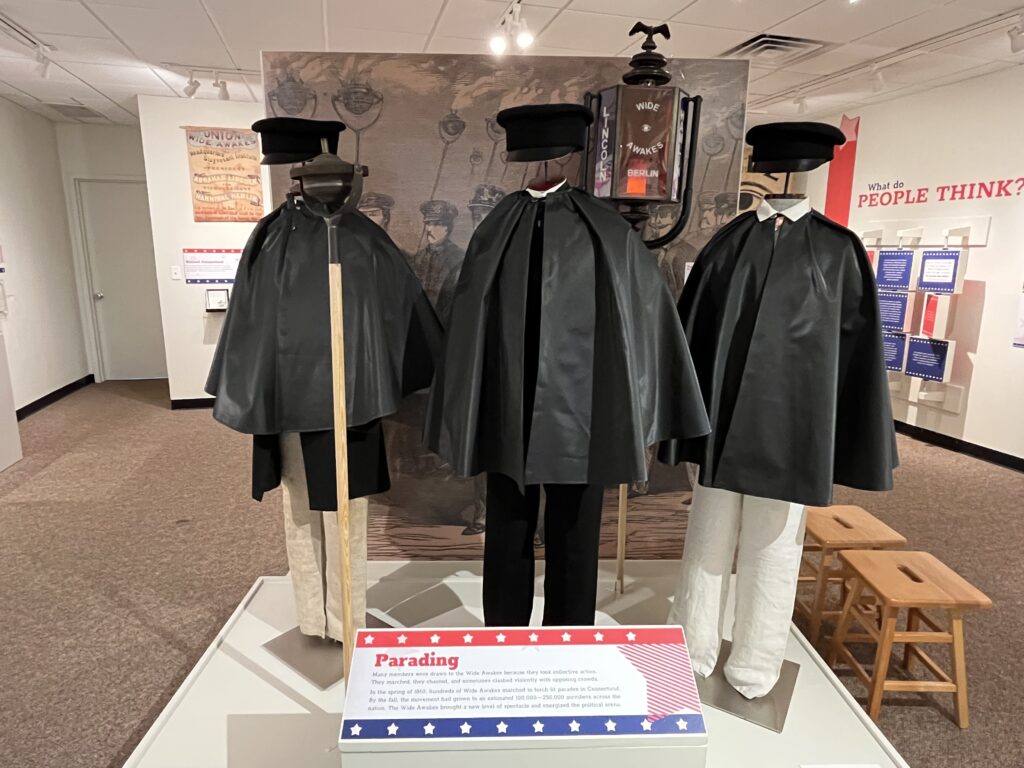
On my most recent New England road trip I stopped at the Wide Awake exhibit at the Connecticut Museum of Culture and History in Hartford. The exhibit had only opened a few days before, but I had heard about it from Jon Grinspan, the author of a book by that name. I was able to join an “exhibit talk” tour by Christina Rewinski, the lead museum educator, so I was able to learn first-hand even more than what I already knew from reading the book and speaking directly with Jon. In a nutshell, the Wide Awakes started as a group of five young men (ages 17-25) who decided to support the reelection campaign of incumbent Republican gubernatorial candidate, William Buckingham, and the Republican party in general. Donning oilcloth capes and carrying torches, these five men surreptitiously escorted a surprised Cassius Clay, a well-known abolitionist who had spoken that night for Buckingham. Gaining momentum, the five quickly became twenty so they officially formed as an advocacy group under the Wide Awake banner. The very next night they again found a politician to escort: Abraham Lincoln. Lincoln was in town as one of eleven stops on his New England tour and found his carriage surrounded by a growing group of uniform-ish clad marchers as he wended his way back to his hotel for the night.
Viewing the unannounced group with a mix of confusion and amusement, Lincoln would watch the Wide Awake movement grow to several hundred thousand young men across the northern states, actively supporting the candidacy and election of Lincoln as the first Republican president. Lincoln would hold them at arm’s length – the exhibit examines how their militaristic style was seen by some, especially in the South, as a prelude to war – but appreciated the enthusiasm for his campaign they generated. The exhibit gives a history of the “Hartford Originals” and how the Wide Awakes grew exponentially over the next few months, only to effectively dissolve soon after the election (although many members enlisted to fight for the Union in the Civil War). The exhibit is well worth the visit if your travels take you nearby. It runs through March 16, 2025.
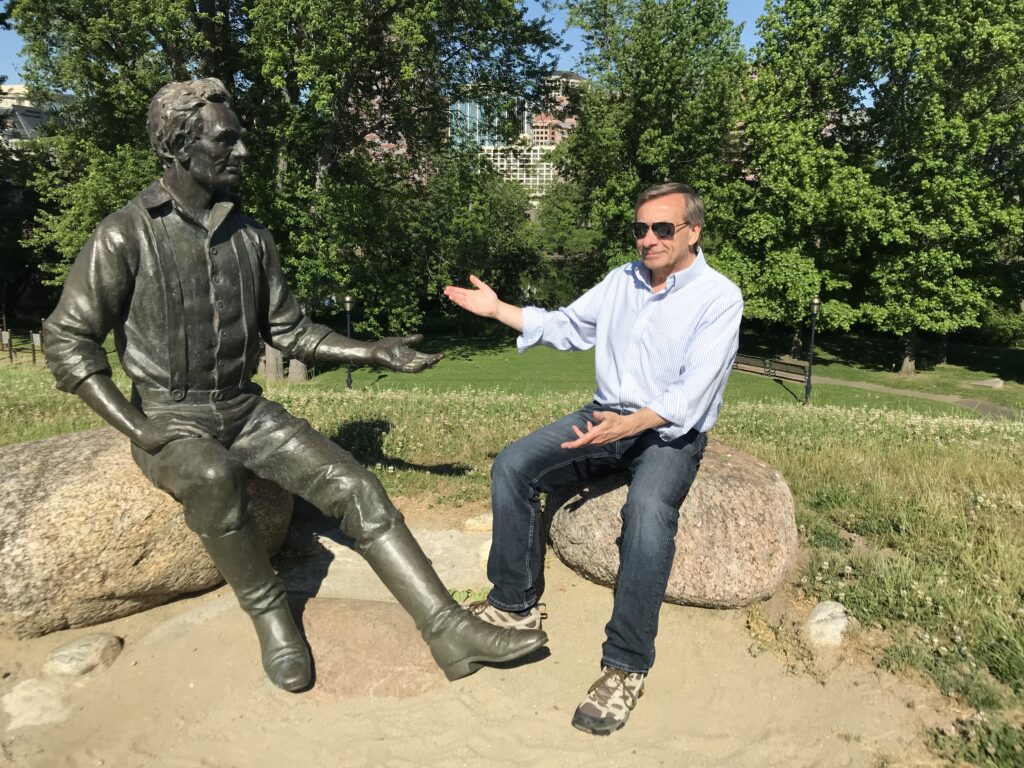
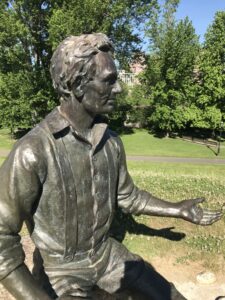
But Wide Awakes aren’t the only Lincoln connections in Hartford. Funded by a generous grant from the Lincoln Financial Group, the city created a Lincoln Sculpture Walk along River Front Park. When I visited there were fourteen sculptures by various artists lining both sides of the river. Some are obviously Lincoln scenes while others are more abstract or relate to some history associated with Lincoln. “Perseverance,” for example, by Darrell Petit, are two massive stones pushed against each other, signifying Lincoln’s perseverance despite the many setbacks in his life, including political defeats, financial failure, death of loved ones, and public humiliation. Similarly, “Right to Rise” by Don Gummer is a vertical sculpture that symbolizes Lincoln’s belief that each resident, regardless of origin, can rise up the economic ladder and better themselves through hard work and diligence. My favorite sculpture along the walk is “A Welcome Conversation” by Dan Sottile. A twenty-something Lincoln sits on a large rock, apparently in New Salem, his arm outstretched toward another empty rock as if inviting the viewer to join him in conversation. I did exactly that.
More on Lincoln in New England coming soon.
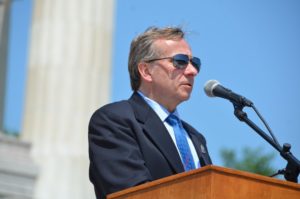
[Photos of Wide Awake exhibit at CT Museum (top) by David J. Kent and Hartford Sculpture Walk (bottom) by Ru Sun.]
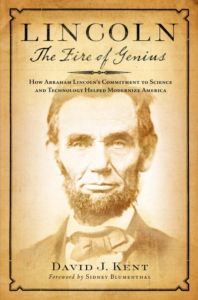
Lincoln: The Fire of Genius: How Abraham Lincoln’s Commitment to Science and Technology Helped Modernize America is available at booksellers nationwide.
Limited signed copies are available via this website. The book also listed on Goodreads, the database where I keep track of my reading. Click on the “Want to Read” button to put it on your reading list. Please leave a review on Goodreads and Amazon if you like the book.
You also follow my author page on Facebook.
David J. Kent is Immediate Past President of the Lincoln Group of DC and the author of Lincoln: The Fire of Genius: How Abraham Lincoln’s Commitment to Science and Technology Helped Modernize America and Lincoln: The Man Who Saved America.
His previous books include Tesla: The Wizard of Electricity andEdison: The Inventor of the Modern World and two specialty e-books: Nikola Tesla: Renewable Energy Ahead of Its Time and Abraham Lincoln and Nikola Tesla: Connected by Fate.
 On March 5, 1860, Lincoln gave a speech in Hartford, Connecticut during his tour of New England after his Cooper Union address. One of the issues that Lincoln tackled was the role of labor and the ongoing Lynn shoemakers’ strike. Lincoln pointed used the strike to point out the difference between the free labor of the North (i.e., the paid labor in which laborers are free to find better paying employers) versus the slave labor of the South (i.e., chattel slavery for the life of the person, their children, their children’s children, ad infinitum). The conservative party at the time complained that the Lynn strike was the result of antislavery agitation and sectional controversy. Lincoln noted:
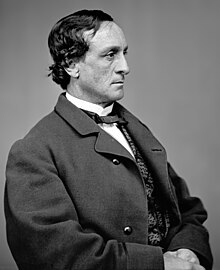 We all know John Wilkes Booth, the assassin of President Abraham Lincoln. And then there was Edwin Booth, the great Shakespearean actor known for his performances of Hamlet. But there was another Booth brother in the acting business, and you won’t believe where he showed up in this edition of Unexpected Lincoln.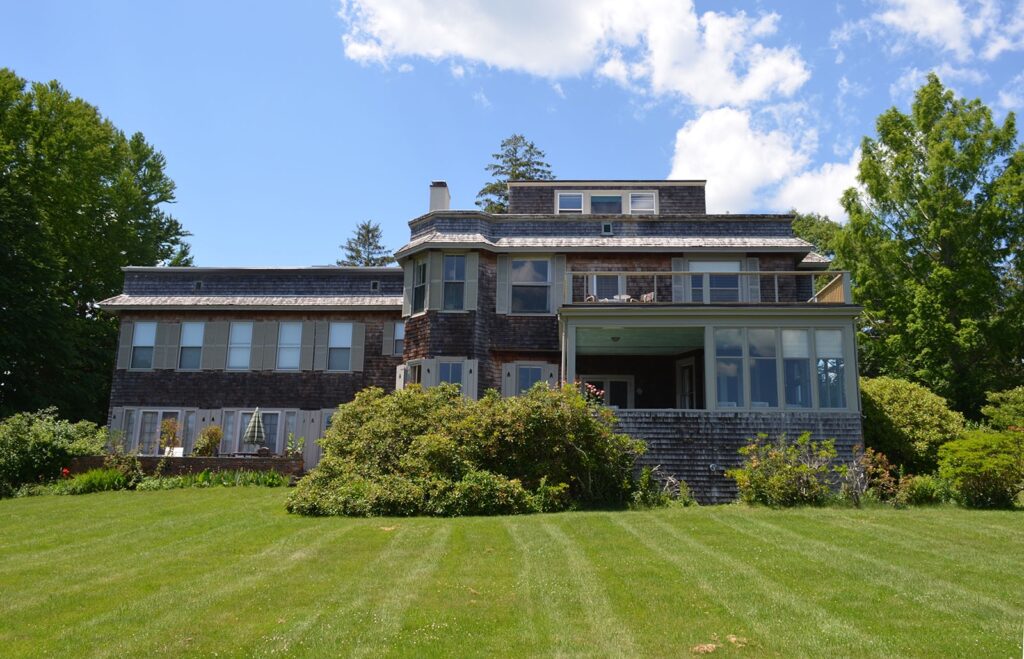


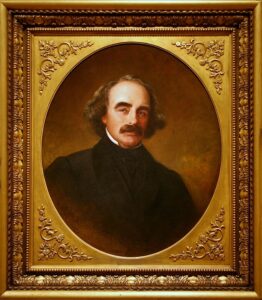 On March 13, 1862, Nathaniel Hawthorne, the great novelist, met Abraham Lincoln in the White House. He was not impressed.
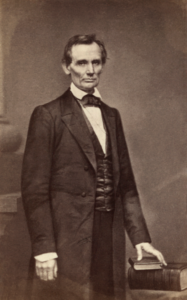 With Leap Year Day, February graced the nation with an extra twenty-four hours on February 29, 1860. Abraham Lincoln was already feeling weary by the time he clambered onto the 10:40 am train from Providence, Rhode Island, to Exeter, New Hampshire. It was nearly two in the morning the day before by the time he finished his grand lecture at Cooper Union in New York City, joined the organizers for dinner, and spent several hours after midnight proofreading the text of the speech to be printed that day in the New York Tribune. A brief forty winks of sleep, then up again and on a train to Providence to give yet another long lecture that night. Having that speech gone well, and another late dinner, now he was on another train to finally see his son, Robert, in Exeter, the original rationale for this excursion into New England after New York.
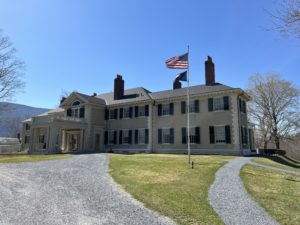 Mary Lincoln hated Washington, especially during the pestilent humidity of the capital city during the heat of summer. It’s the reason President Lincoln moved to the soldier’s home (now President Lincoln’s Cottage) each summer, beginning with 1862 after Willie’s death earlier that year. Mary would take Tad northward, often to New York and into New England, usually to be joined by Robert during his summer break from his studies at Harvard College. In 1863 they traveled to the White Mountains of New Hampshire, then in August of 1864 Robert met his mother and brother in the Green Mountains of Vermont. He intended to return with the president in the summer of 1865, but the assassination kept that from happening. Notwithstanding, the 1864 trip would capture Robert’s fancy enough to return decades later to build his own summer cottage known as Hildene.
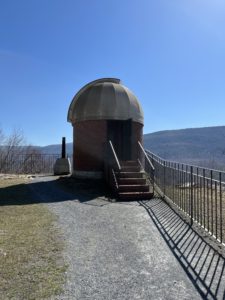 Robert Lincoln got his initial interest in astronomy from his father. Abraham Lincoln was fascinated by astronomy, as I discuss in my book,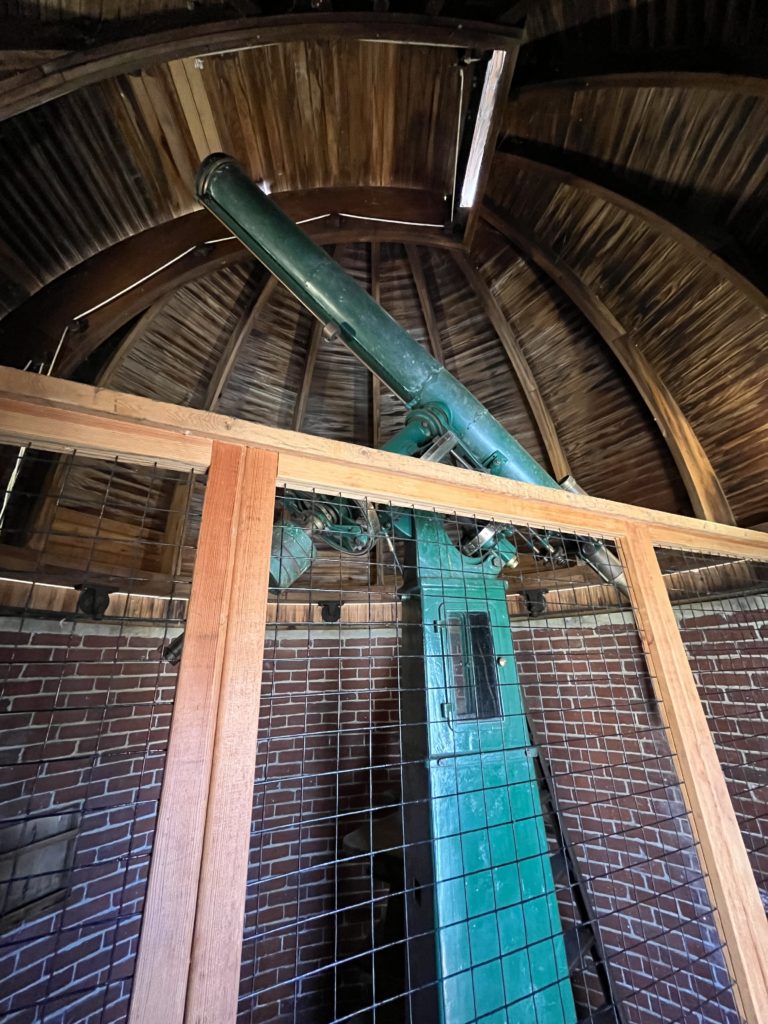
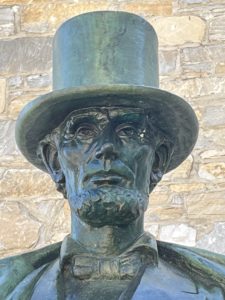 Abraham Lincoln is the most memorialized president in American history, in terms of the number of monuments and statues in all fifty states and the U.S. territories. According to the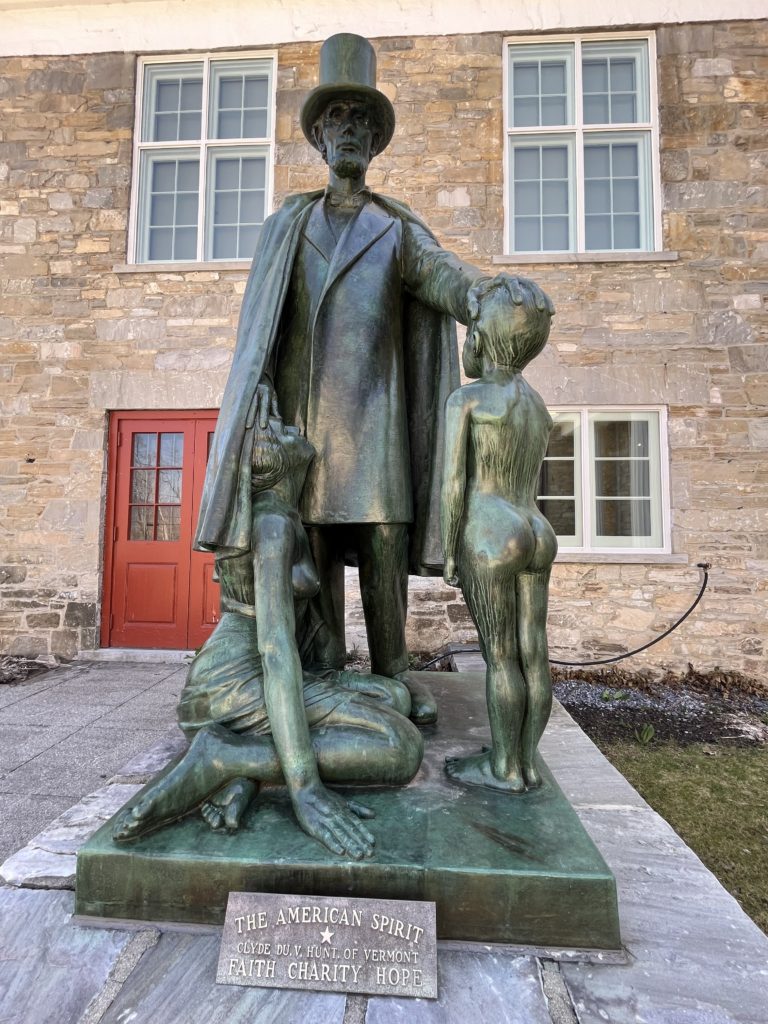
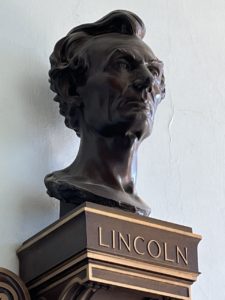 Abraham Lincoln famously had less than one year of formal schooling, but you can find him now at both Harvard and Yale.


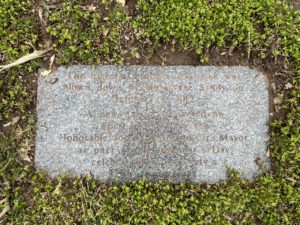 Several days before my visit to Harvard I was on the Yale campus. Lincoln had given a speech in 1860 in Union Hall. The hall no longer stands (the High School in a Community is now in its place) but there is a memory of Lincoln on the green at Yale. There, at least up until recently, stood a majestic Oak deemed the “Lincoln Memorial Oak” that had stood for ages. In late 2012 the stately old tree was toppled by Superstorm Sandy,