Lincoln’s Influence in Taipei

The sight is familiar. I climb the many steps up to the temple-like Memorial, the number of steps steeped in relevant history. The large main hall at the top is visually dominated by the seated statue of the nation’s most revered former leader. He sits stoically in his throne-like chair, his face strong and arms stretched forward revealing his strategically placed hands. He gazes out into the vast space of the capital in front of him. It’s hard not to be awed by the view. It’s a sight anyone interested in Abraham Lincoln would likely find familiar. I speak of course of the Memorial to…

…Chiang Kai-shek.

I’m in Taipei, where the Memorial to Taiwan’s revered leader creates an eerily similar feeling as Americans get climbing the steps into the Lincoln Memorial in Washington DC. That’s not an accident.

The history of the nationalist Chinese and origins of the Republic of China (ROC) government now found in Taiwan are way too complicated for this post, but there is an Abraham Lincoln connection. Sun Yat-sen is considered as the founder of the ROC and has a memorial hall himself in Taipei. He found inspiration in America’s 16th president, often quoting Lincoln in conversation and speeches and developing what he called “principles of the people” roughly capturing Lincoln’s “government by the people” and “government for the people.” Over time, the US and Taiwan worked to establish ideological connections as deterrent against common adversaries. *

Sun died in 1927 and his successor, Chiang Kai-shek (who married a sister of Sun’s widow), led the nation in wars against the Japanese, World War II, and the communist uprising led by Mao Zedong. Following his loss to the latter, Chiang’s led the nationalist retreat to Taiwan.

Any modern assessment would question Chiang Kai-shek’s interpretation of Lincoln’s words (as I said, it’s complicated), but the Taiwanese government under his 25-year reign continued to be inspired by Lincoln’s “government of…by…for the people” philosophy. As the post-Chiang Taiwan developed into a US ally, they took inspiration from Lincoln’s rise from humble beginnings and the idea that society should reward those who work hard to better their condition (and the condition of society).

In any case, when it came time to build a memorial for Chiang following his death in 1975, the nationalist Chinese in Taiwan wanted to emulate the emotional impact of Lincoln’s Memorial. The long walk up the steps into a temple highlighted by the huge, seated figure was meant to create the same effect. The stoic statue. The intentionally placed hands. The gaze into a long view of the capital ahead of him. On the wall above Chiang’s head are excerpts from his political writing focused on the “scientific progress, democracy, and reason” under his reign. All were designed with the Lincoln Memorial in mind.

One can argue that the Chinese leader had views that Lincoln would not have admired. But the nationalism and pride instilled in the populace by the respective memorials are similar. That’s on purpose.

As we’ve seen in other international travels and extensive reading, Lincoln has inspired many governments around the world. Given our current domestic ideological conflicts, looking to Lincoln can provide inspiration for our own rebirth of freedom here in the United States.

*Adversaries such as the People’s Republic of China (aka, Communist China or “the mainland”). To further complicate how Lincoln is used as inspiration, China has also used Lincoln to support (at least in their minds) their regime, arguing that Lincoln’s strong opposition to secession and reunification of the states justifies China’s strong central government and attempt to “reunify” Taiwan with the mainland.

[Photo Credits: David J. Kent, September 2026]

[A version of this was originally posted on the Lincolnian website]
Lincoln in New England book cover


Now Available: Lincoln in New England: In Search of His Forgotten Tours. Or Order directly at:

Amazon          Barnes & Noble          Books-a-Million          Bookshop

Join me on Goodreads, the database where I keep track of my reading. Please leave a review on Goodreads and Amazon if you like the book.

You also follow my author page on Facebook and on Instagram.

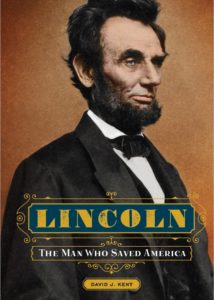
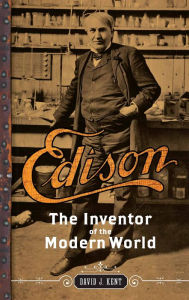
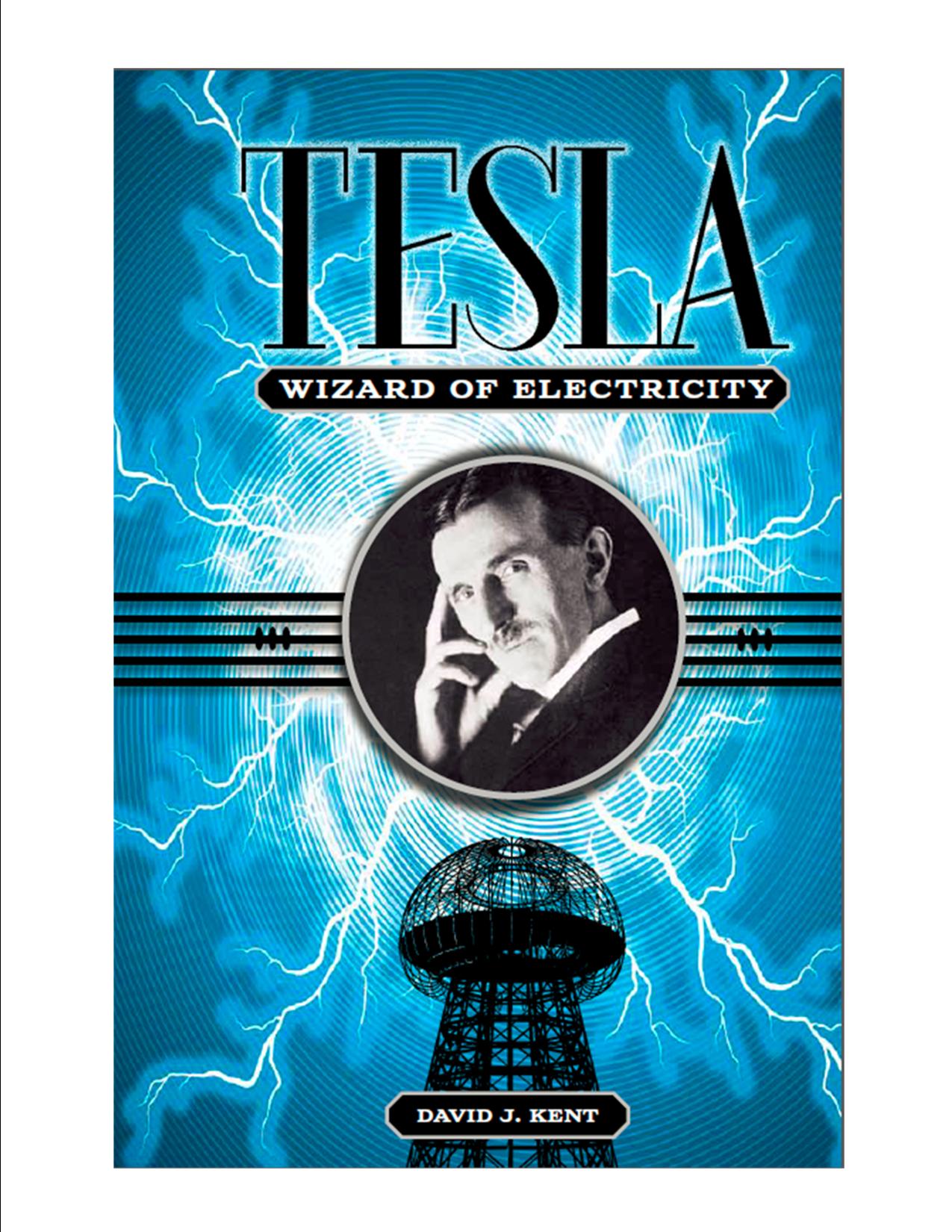
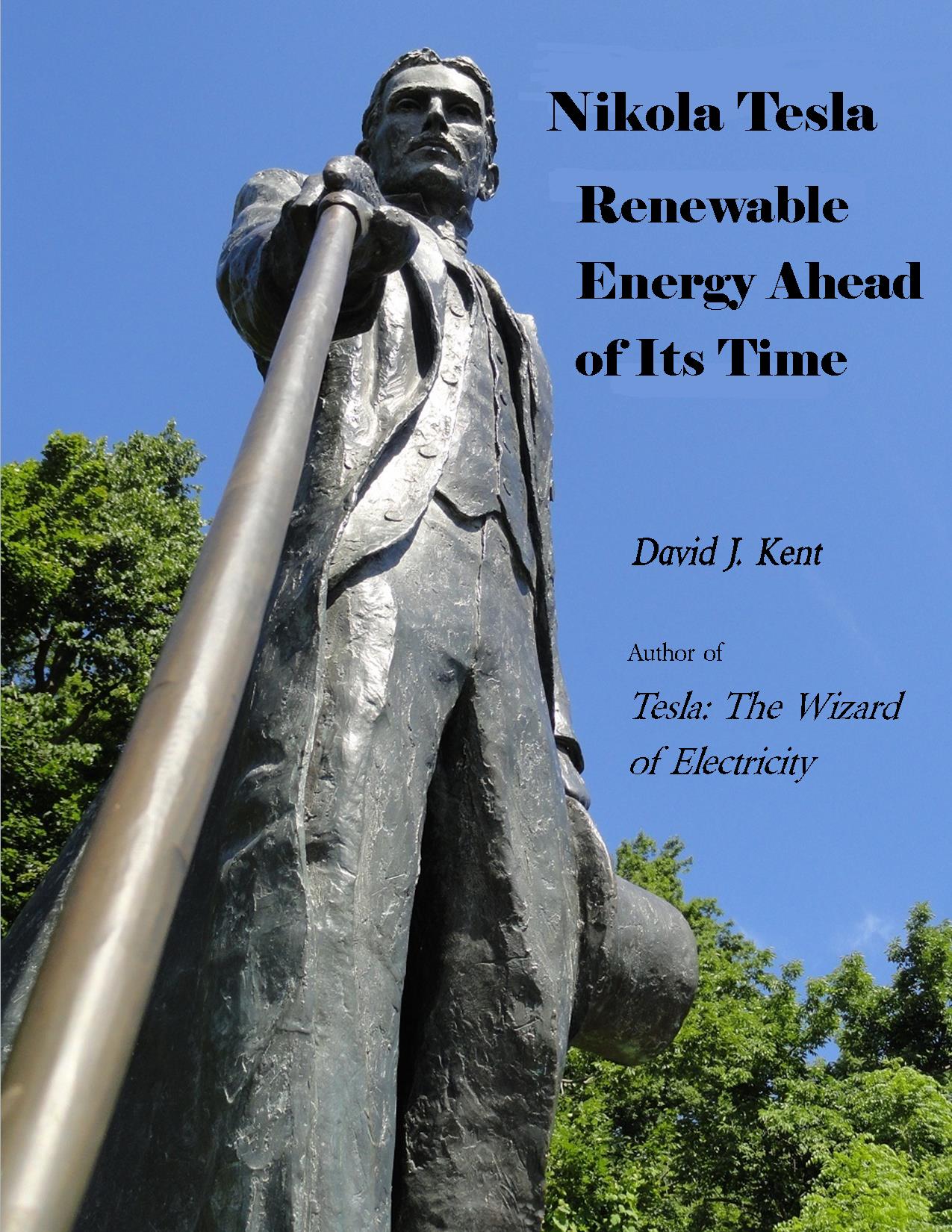
David J. Kent is Immediate Past President of the Lincoln Group of DC and the author of many books on Abraham Lincoln, Nikola Tesla, and Thomas Edison.
8 Countries in 5 Weeks

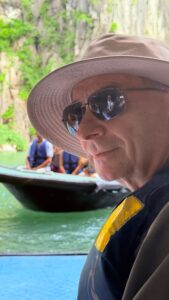
Kent by SusanIt’s been a whirlwind last five weeks as I was traveling through certain parts of Asia, hence the lack of posts for a while. In all, I traversed eight countries (7 and a half if you want to be picky) and saw some amazing places. I’ll write longer on some of the stops soon, either here or in a new “Two Perspectives Travel” site I expect to start up. But here are some highlights.

It seems not long ago I was running around the Balkans, hitting five countries in about ten days. That was followed by a short trip to New England. Then on September 3, I boarded a Turkish Airlines plane that passed through Istanbul on the way to my first destination and country of this version of Asia – Mongolia. I couldn’t even imagine while growing up that I would find my way to the land of Genghis Khan (or Chinggis Khan, as he is better known in his homeland). If I had to take one lesson away from Mongolia, it’s that the country has little infrastructure for handling tourist excursions (although the plane was completely full flying in). There is actually a lot to see, but it’s far between each place bumping along dirt “roads” (really just tire tracks) meandering across the steppe and the Gobi Desert. Ah, but there were camels, and yaks, and huge sand dunes rivaling the better-known ones in Namibia.

After roughly ten days, it was time to leave Mongolia and take an interim week split between Okinawa, Japan and Taipei, Taiwan (plus an overnight stay in the airport hotel in Seoul, Korea, hence the “half”). Okinawa was entirely about seeing the Churaumi Aquarium, one of the few that holds whale sharks (technically, one whale shark). Taipei also held an aquarium stop, number two of the four aquariums I visited on this trip. There was also the Taipei 101 skyscraper and the hike up Elephant Mountain, along with tons of amazing food.

From there it was on to Bangkok, Thailand to start a three-week Southeast Asia tour led by Road Scholar. The first week was split between Bangkok in the south and Chiang Mai in the north. I had been in Bangkok in 2003 and rode an elephant at that time. In Chiang Mai we visited an elephant sanctuary instead, feeding them and even bathing them. And more great food.

The route from Chiang Mai to Luang Prabang, Laos actually took us first back to Bangkok. The high fuel prices caused by the ongoing US war with Iran, combined with the off-season, forced the only Laos airline to go bankrupt, so there were no direct flights. We also flew back through Bangkok from Laos to Cambodia for the same reason. Laos was filled with Buddhist temples (as was Thailand). In contrast, Siem Reap, Cambodia was filled with ancient Hindu temples like Angkor Wat and Angkor Thom, that eventually became dual purpose Hindu/Buddhist sites to keep everyone happy.

Our final week was in Vietnam, split between Ho Chi Minh City (formerly Saigon) and the Mekong Delta in the south and Hanoi and Halong Bay in the north. Both cities provided a bit of historical tension due to the American involvement in what we call the Vietnam War, and they call the American War.  Outside Ho Chi Ming City we visited the Cu Chi Tunnels, which were the underground hiding (and it turns out, living) spaces used by the Viet Cong to fight American and allied forces. Up in Hanoi, we visited the Hoa Lo Prison, aka, the “Hanoi Hilton” that held John McCain in captivity for five years, as well as many other American downed airmen. Now a museum, most of the displays focused on its decades of use by the French to hold (and torture) Vietnamese political prisoners. Near the end there were several rooms examining the Americans held there during the Vietnam War. It was both fascinating and more than a little emotional to see the place I had heard so much about from an American perspective. In Hanoi, we also saw the changing of the guard in front of “Uncle Ho’s” mausoleum, which was closed for its annual renovation (as it was when I was there 26 years ago).

One of the highlights of the trip was cruising and spending a night on a boat on Halong Bay, which probably everyone has seen iconic photos of. The Bay and rock outcrops, one of which I hiked to the top of, was much more extensive than I had known. Definitely something that had been on my bucket list and missed during my first visit to Hanoi twenty-six years ago.

We experienced excessive heat the entire trip, mostly in the 90s with heat indexes well into the 100s. We were constantly drenched in our own sweat and struggled to remain hydrated. Even Mongolia had highs around 80, which made the down parka I brought with me particularly useless.

I’ll write more on the trip soon. After catching up on five weeks of backlog, relaxing, and getting my physiology and sleep cycle back into my own time zone, we’ll start planning for 2027 travel.

And be sure to check out the book links below to get your copy of Lincoln in New England:

Lincoln in New England book cover


Now Available: Lincoln in New England: In Search of His Forgotten Tours. Or Order directly at:

Amazon          Barnes & Noble          Books-a-Million          Bookshop

Join me on Goodreads, the database where I keep track of my reading. Please leave a review on Goodreads and Amazon if you like the book.

You also follow my author page on Facebook and on Instagram.

David J. Kent is Immediate Past President of the Lincoln Group of DC and the author of many books on Abraham Lincoln, Nikola Tesla, and Thomas Edison.