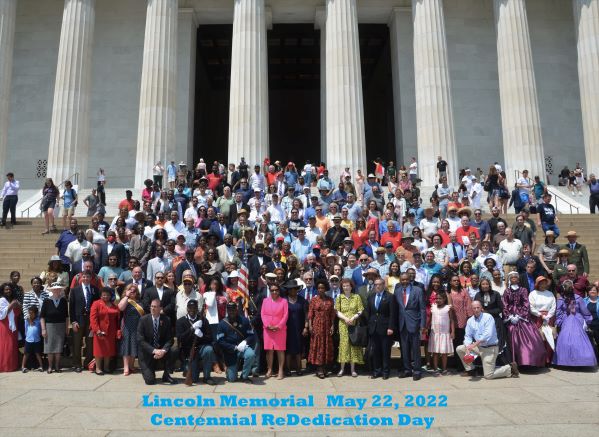
 The Lincoln Memorial reaches its centennial this month and this past week was the culmination of a year’s worth of work to celebrate the iconic structure’s 100th birthday. Around this time last year, the Lincoln Group of DC, of which I am the current president, decided that we must have a magnificent event on the Memorial steps. We had done something similar in 2015 for the sesquicentennial of Abraham Lincoln’s second inaugural speech so we followed the basic format. There were differences of course. We couldn’t really have a Lincoln reenactor for a memorial to his life and death, especially since it wasn’t dedicated until 57 years after his assassination. We also couldn’t just recapture the Civil War theme, nor did we want to exactly recapture the segregationist Jim Crow-era time of 1922. Plus, we would be working with the National Park Service, which would prefer not to be overly controversial. Still, there were issues from that 1922 dedication we wanted to address and there has been 100 years of history we wanted to show.
You can read background on the dedication ceremony on the Lincoln Group of DC website here, and here, and here. Click on the events tab on that website for more information about the speakers and the follow ups. In short, Chief Justice (and former president) William Howard Taft gave a speech and officially handed over the Memorial to then-current President Warren G. Harding. Lincoln’s son Robert was also there but did not speak. The only other speaker was Dr. Robert R. Moton, director of the Tuskegee Institute, a predominantly Black university in Alabama. Dr. Moton was not allowed to sit with the other dignitaries. He was forced to walk to the speaker stand, give his speech – which was censored to remove suggestions that Jim Crow laws were counter to the nation’s unfinished business – and then returned to the segregated section of the audience.
We also understood that much has changed over the 100-year history of the Memorial. While the original focus was on unity – the reconciliation between (whites in) the North and South – the meaning has grown and broadened into a symbol of civil rights and hope for all Americans. Famed contralto singer Marian Anderson sang on its steps in 1939 after having been refused a concert at the “whites only” Constitution Hall. Martin Luther King gave his “I Have a Dream” speech on the steps in 1963, the 100th anniversary of Abraham Lincoln’s Emancipation Proclamation. Most modern presidents incorporate the Memorial in their inauguration programs, including that of Barack Obama, our nation’s first African American president. We wanted to capture this evolution as well as the design and art of the building and its iconic seated Lincoln statue. To cover the art and architecture we brought in Lincoln and Daniel Chester French expert Harold Holzer. Edna Greene Medford traced the evolution in meaning over the last century. Frank Smith discussed the U.S. Colored Troops role in the fight for freedom. Our keynote speaker was Charlotte Morris, the current president of Tuskegee University, the institution run by Robert Moton 100 years ago when he spoke at the dedication. Morris contrasted that time, and unlike Moton’s censored speech, was forthright in both the greatness of Lincoln and the dangers to his vision expressed by today’s society. She received a standing ovation. We had representatives from the Military Order of the Loyal Legion of the U.S. to cover their involvement in the memory of Lincoln. The first Native American director of the National Park Service, Chuck Sams, offered some history of the Memorial. Sarah Johnson of the New York Avenue Presbyterian Church (“Lincoln’s Church”) gave a Lincoln-inspired invocation. We also had music. The national anthem and two songs from Marian Anderson’s 1939 concert were sung by the amazing Felicia Curry while the United States Marine Band “The President’s Own” Brass Quintet provided pre-, inter-, and postludes. The words of poet Edwin Markham and Lincoln’s own words etched in the walls of the Memorial were powerfully performed by stage and screen actor Stephen Lang. We were also able to bring in four descendants of Robert Moton to be present at the event.
The program was broadcast on C-SPAN, CBS, and ABC. Not only was I the main organizer of the event, I was also the Master of Ceremonies.
That was Sunday morning on May 22nd. But that was only one of the series of events the Lincoln Group organized to celebrate the centennial of the Lincoln Memorial.
On Tuesday (5/10), we sponsored and I moderated a virtual presentation by the authors of a book on the Lincoln Memorial, a sort of prelude to the festivities.
On Thursday (5/19), I attended a special Library of Congress one-night-only exhibit of Lincoln’s reading copy of the Gettysburg Address and many other documents related to the Memorial.
Also, on Thursday (5/19), I attended a program at the Arts Club of Washington that the Lincoln Group supported featuring Harold Holzer.
On Saturday morning (5/21), I joined the Lincoln in Washington walking tour led by the Lincoln Group’s immediate past president John O’Brien.
Saturday afternoon (5/21), I attended a special showing of “Mr. Smith Goes to Washington” at the AFI Silver Theatre, which the Lincoln Group co-sponsored and Ed Epstein of our group introduced.
Sunday morning (5/22), the program described above, which I emceed.
Sunday afternoon (5/22), we hosted the speakers and members of the Board for a luncheon at Clyde’s in downtown Washington, DC
Monday evening (5/23), I spoke a few words to open a special dramatic reading of a new play called “Freedom’s Temple” by Bryce Stenzel. The Lincoln Group co-sponsored this event with the DC Civil War Roundtable. The event was produced by the Lincoln Group’s Debbie Jackson.
Tuesday (5/24), I attended virtually a program developed by the U.S. Capitol Historical Society and which the Lincoln Group supported.
In between, there were plenty of emails flying back and forth on other issues.
So, if you’ve noticed I hadn’t written much in the last week, that was why. Things won’t necessarily be getting less busy in the weeks to come, although the emphasis will shift. Most immediately is paying the bills for all of the above. One of the flying emails was to add an event in September that I’ll write more about later. We also have an in-person dinner event scheduled for June 14th that will require some significant organization. There’s a Lincoln Group board meeting scheduled for June 25th that I will chair. I have two travel trips coming up soon. Two other Lincoln Group members and I will be repeating a four-session course (two of which are mine) in October for Encore Learning. The Lincoln Forum is in November, which should have events both for me personally and the Lincoln Group. I’m hoping for another big trip in December.
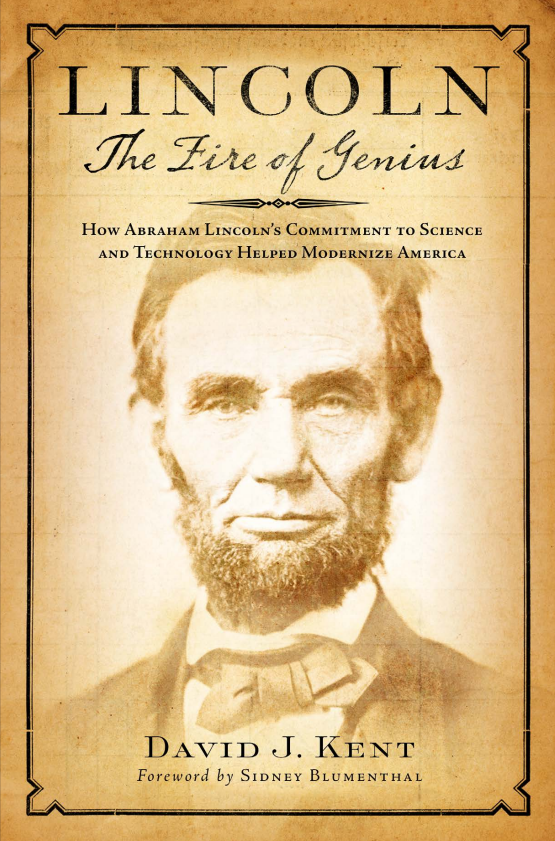
And, of course, my new book, Lincoln: The Fire of Genius, will be released on September 1st. I have a book launch and several presentations scheduled for September (with likely several more to come), and at some point soon I need to prepare them for delivery.
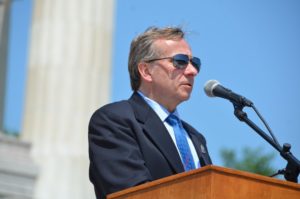
I’ll have more photos from the Lincoln Memorial Centennial up on this website and on Facebook soon, as well as on the Lincoln Group of DC website: Lincolnian.org. The photo of me at the Lincoln Memorial above is courtesy of Bruce Guthrie.
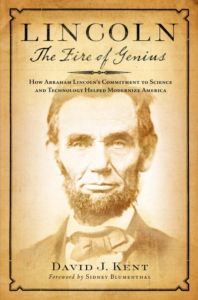 The book is available for pre-order on the Rowman & Littlefield website (Lyons Press is a trade imprint of Rowman). You can also pre-order it on Amazon and Barnes and Noble (click on the respective links to pre-order). Release date is scheduled for September 1, 2022.
The book is also listed on Goodreads, the database where I keep track of my reading. Click on the “Want to Read” button to put it on your reading list. That will also ensure you get informed of the release date AND will let you try for one of ten free hardcover copies of the book that I’ll be giving away this summer. I’ll also be giving away as many as a hundred e-books. [The book will also be put out on audio]
You also follow my author page on Facebook.
I’ll have much more about the book over the next few months, so join my mailing list here to keep informed.
David J. Kent is President of the Lincoln Group of DC and the author of Lincoln: The Man Who Saved America. His previous books include Tesla: The Wizard of Electricity and Edison: The Inventor of the Modern World and two specialty e-books: Nikola Tesla: Renewable Energy Ahead of Its Time and Abraham Lincoln and Nikola Tesla: Connected by Fate.
Check out my Goodreads author page. While you’re at it, “Like” my Facebook author page for more updates!


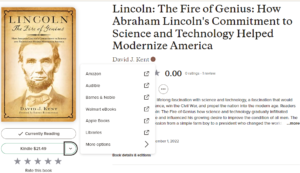 We’re in the final stretch. But hurry – there are only two days left (and counting down) to enter to win a hard copy of Lincoln: The Fire of Genius on Goodreads. For those who don’t know, Goodreads is a social cataloging website that allows people to track their reading, search its vast database of books, and, you guessed it, win free books. Now you can win one of ten free hardcover copies of my newest book.
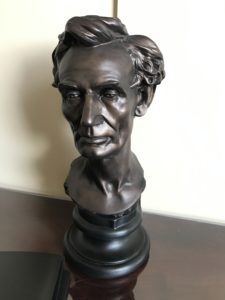 Abraham Lincoln understood the value of science to ordinary Americans.
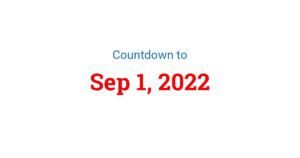 As the countdown begins for the September 1st release of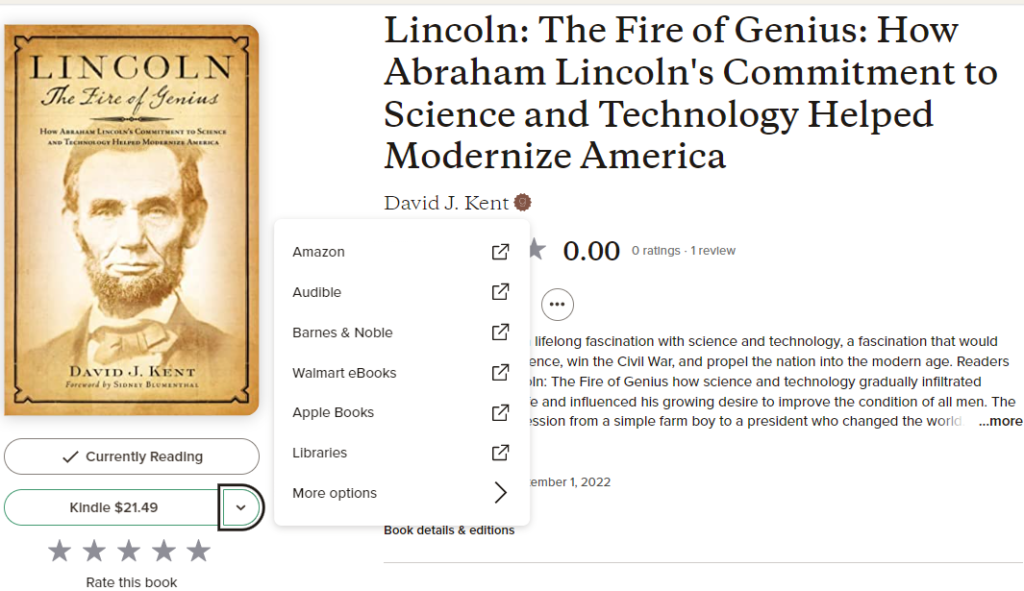
 As I mentioned a few weeks ago, I had the privilege of being the
 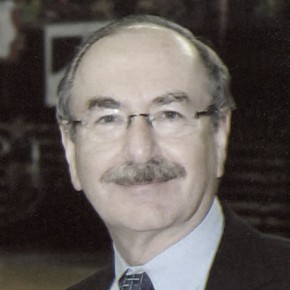 One chapter of my new book, Lincoln: The Fire of Genius, is called Institutionalizing Science. Much of the focus is on the Smithsonian Institution’s first Secretary, Joseph Henry, and his relationship with Abraham Lincoln. I am very happy that Marc Rothenberg, the former Editor of The Papers of Joseph Henry, as well as past Historian at the National Academy of Sciences, has provided the following praise for the book:
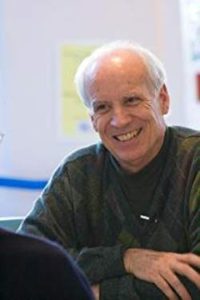 Part of the process of putting together a book is asking prominent experts to read an advance copy and provide back cover “blurbs.” A few weeks ago, I reported that