 Abraham Lincoln accused Russia of being a place “where despotism can be taken pure,” openly dedicated to the exercise of absolute power and cruelly oppressive.
Long before the Russian Revolution in 1917 and the Soviet era, the Russia of Lincoln’s time had been ruled over by Tsar Nicholas I for three decades, succeeded by his son Nicholas II in 1855 (with whom Lincoln formed a sort of alliance). Analysts of the current Putin era suggest he wants to return to the Tsarist era more than the Soviet. Of course, the current crisis also has to do with protecting oil and gas pipelines that are the basis of the Russian economy and Putin’s kleptocracy. Much of this isn’t especially surprising.
In 1852, Lincoln helped organize a meeting of local leaders in Springfield, Illinois with Lajos Kossuth, the former Governor-President of Hungary. Hungary had undergone a political upheaval that I won’t go into here, but Kossuth had made his way in exile to the United States where he met, among many others, President Millard Fillmore. Kossuth sought to appeal to European immigrants in the Midwest, hence the meeting Lincoln arranged. Following the meeting, Lincoln and the other attendees issued a set of resolutions “on behalf of Hungarian freedom.” Among them was a resolution stating, “That the late inference of Russian in the Hungarian struggle was, in our opinion, such illegal and unwarrantable interference.” Resolution No. 7 said:
That we recognize in Governor Kossuth of Hungary the most worthy and distinguished representative of the cause of civil and religious liberty on the continent of Europe. A cause for which he and his nation struggled until they were overwhelmed by the armed intervention of a foreign despot, in violation of the more sacred principles of the laws of nature and of nations—principles held dear by the friends of freedom everywhere, and more especially by the people of these United States.
Which gets us to his accusation. In August 1855, Lincoln wrote a letter to his close friend and confidant Joshua Speed. The issue was the falling apart of the Whig Party that had defined Lincoln through most of his political career, and whether he should join the Republican Party that was arising out of its ashes. The alternative was the “Know-Nothing” Party, officially the American Party but defined by its secrecy of membership.
I am not a Know-Nothing. That is certain. How could I be? How can anyone who abhors the oppression of negroes, be in favor of degrading classes of white people? Our progress in degeneracy appears to me to be pretty rapid. As a nation, we began by declaring that “all men are created equal.” We now practically read it “all men are created equal, except negroes.” When the Know-Nothings get control, it will read “all men are created equal, except negroes, and foreigners, and Catholics.” When it comes to this, I should prefer emigrating to some country where they make no pretense of loving liberty—to Russia, for instance, where despotism can be taken pure, and without the base alloy of hypocrisy.
Russia would become a sort of dumping ground for politicians President Lincoln wanted to get rid of for a time, including Simon Cameron after his failure as Secretary of War.
There was one interesting interaction with Russia late in Lincoln’s presidency, which involved “a continuous line of telegraph through that empire from our Pacific coast.” I’ll have more on that in a following post.
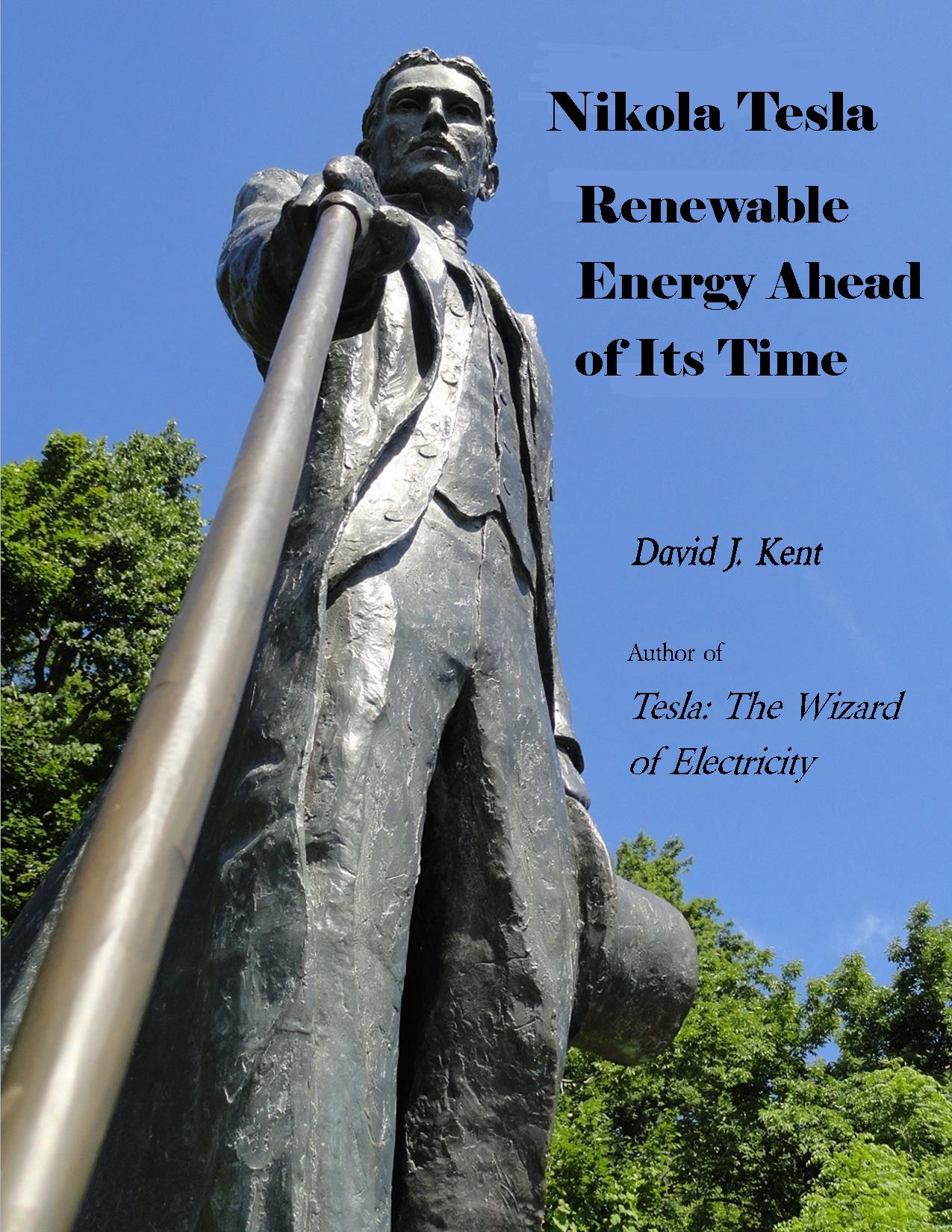
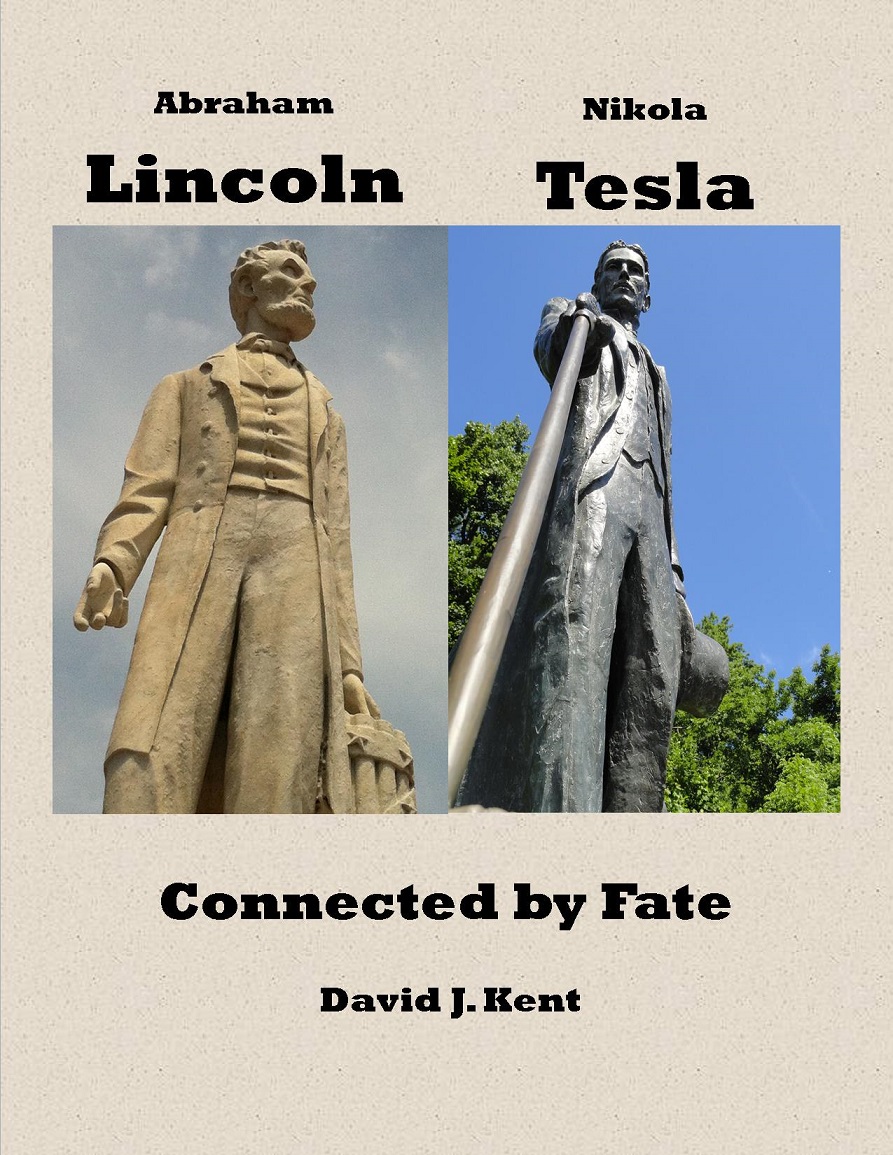
David J. Kent is President of the Lincoln Group of DC and the author of Lincoln: The Fire of Genius, now available for pre-order on Amazon and Barnes and Noble (click on the respective links to pre-order). His previous books include Lincoln: The Man Who Saved America, Tesla: The Wizard of Electricity, Edison: The Inventor of the Modern World, and two specialty e-books: Nikola Tesla: Renewable Energy Ahead of Its Time and Abraham Lincoln and Nikola Tesla: Connected by Fate.
Check out my Goodreads author page. While you’re at it, “Like” my Facebook author page for more updates!
 On February 15, 1853, Abraham Lincoln wrote to
 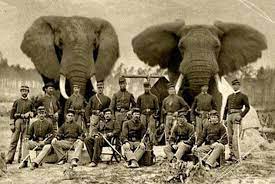 Abraham Lincoln rejects gift of elephants from Siam by pointing out the advantages of steam power. Lincoln would promote many scientific and technological improvements in his lifetime and his presidency.
 As mentioned last time, Lincoln: The Fire of Genius is now open for pre-order on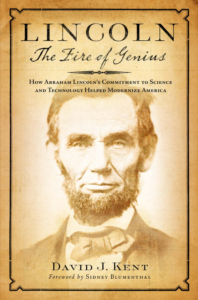
 The year in a writer’s life actually went much more to plan than
  Last year I started off my
 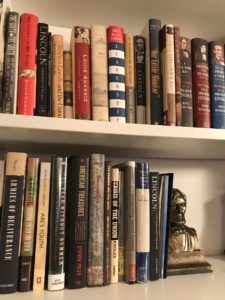 The biggest feature of my Abraham Lincoln book acquisitions for 2021 is that most of the books I acquired aren’t even mine. As usual, I begin my annual “Year in the Life” posts with my Lincoln book collection. You can
 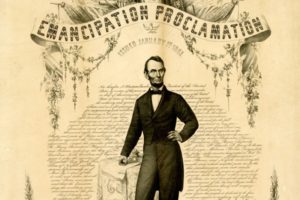 Few people know that Abraham Lincoln was also a philanthropist. We remember him for saving the union and the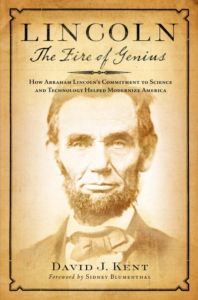
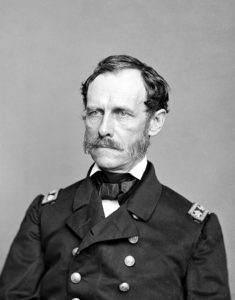 Lincoln liked John A. Dahlgren, his weapons guy, of sorts. On December 8, 1862, Lincoln sent a telegram to the Washington Navy Yard with the succinct request: “Will Capt. Dahlgren please call and see me at once?”