 I see you printed that long letter I sent you a spell ago—I’m quite encouraged by it, and can’t keep from writing again.
So begins the second letter of a series that has come to be known as the Lost Townships or the “Rebecca” letters since they were signed off on by that name. Lincoln wrote the second “Rebecca” letter, published in the Sangamo Journal on September 2, 1842. Eventually these letters would lead Lincoln into a duel with James Shields. But did he really write them?
He clearly wrote this second letter. He effectively admitted it as such during the ensuing imbroglio. But the first of the “Rebecca” letters was published in the Journal on August 19, 1842. Despite Lincoln’s letter taking credit for it, he almost certainly didn’t write the first letter. Most likely it was written by the same person who wrote an earlier series of letters from “Lost Townships,” which were printed in the Journal on February 10, May 5, May 26, and September 15, 1838, a full four years previously. There is no reliable evidence that Lincoln had anything to do with the earlier series of letters. Lincoln claims only to have written the second letter quoted above.
The letters didn’t stop there, however, and this is where it gets dicey. A week after Lincoln’s letter, on September 9, 1842, two more letters signed by “Rebecca” appeared in the Journal. The first, dated August 29, was fairly mild, but the second, dated September 8, was a more offensive personal attack on James Shields, the Illinois State Auditor, who was caught up in a controversy over acceptance of the State Bank bills for tax payments. This latter letter was written by Mary Todd and her friend Julia Jayne.
Keep in mind that Lincoln and Mary Todd had previously been engaged, only to have their engagement suddenly end in January 1841 when, presumably, Lincoln got cold feet. They had secretly begun courting again some time in 1842 and would suddenly be married on November 4th, shortly after the letters appeared in print.
This last letter, along with a piece of doggerel signed “Cathleen,” which was printed in the Journal on September 16th, likely was the catalyst for James Shields’ fury. He rushed to the Journal‘s editor, Simeon Francis, and demanded to know who wrote the letters. In an act of chivalry, or something, Lincoln allowed Francis to tell Shields it was Lincoln, even though Lincoln had only written one of them, and certainly not the most offensive one.
The letters had caused quite an uproar in Springfield, whose populace in the still-small town capital relied on any spicy news for entertainment. Feeling ridiculed, with his vanity assailed, Shields challenged Lincoln to a duel. Dueling was illegal in Illinois, so it eventually was scheduled to be held on Bloody Island, a sort of no-mans-land in the middle of the Mississippi River.
Needless to say, both Lincoln and Shields survived the incident. Shields went on to serve as Senator for three different states (the only person to do so), and Lincoln went on to save the Union and end slavery.
But that’s only half the story. For the rest, you’ll have to wait just a little longer.
David J. Kent is an avid science traveler and the author of Lincoln: The Man Who Saved America, in Barnes and Noble stores now. His previous books include Tesla: The Wizard of Electricity and Edison: The Inventor of the Modern World and two specialty e-books: Nikola Tesla: Renewable Energy Ahead of Its Time and Abraham Lincoln and Nikola Tesla: Connected by Fate.
Check out my Goodreads author page. While you’re at it, “Like” my Facebook author page for more updates!
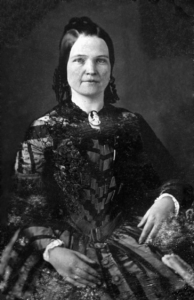 On this auspicious date in 1844, Mrs. Lincoln bought material to make corsets. Six yards of “gimp,” which was a strong twisted silk, wool, or cotton (not to be confused with the plastic form of gimp I used in Boy Scouts), along with ample amounts of lace. Presumably she already had whalebone or simply used over-starched fabric for stiffness. As critical as this was for containing the spreading remnants of Robert’s birth the previous year, this was only one of many important events happening on
 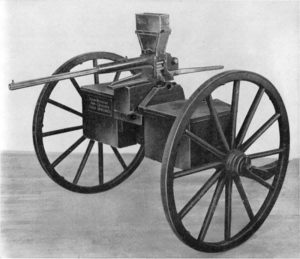 On August 17, 1861, Abraham Lincoln witnessed an exhibition of what Lincoln dubbed the “coffee mill gun.” Lincoln was always pushing for modernized weaponry beyond the standard muskets, which were inaccurate and slow to reload. He pushed Ordinance Chief James Ripley to put into service various breechloaders, rifles, carbines, and repeaters.
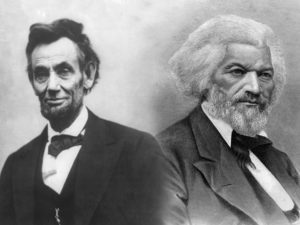 On August 10, 1863, Abraham Lincoln met with Frederick Douglass in the White House. Douglass had arrived unannounced, accompanied by Kansas Senator Samuel Pomeroy. They found the waiting room filled with people seeking an audience with the president, so Douglass, dressed in a dark suit on this sweltering August morning, assumed he would have a long wait. Instead, Lincoln’s secretary John Hay came quickly out to greet him and usher him into the inner sanctum.
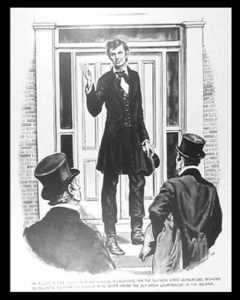 On August 4, 1834, at the age of 25, Abraham Lincoln was elected to the Illinois State Legislature. This was two years after he ran the first time – and lost.
 On July 27, 1864, Abraham Lincoln called on Edwin Stanton to increase the pay of women working in the cause of the Civil War. He wrote:
 Famously, Abraham Lincoln wrote that he the “aggregate of all his schooling did not amount to one year.” He added that he “was never in a college or Academy as a student; and never inside of a college or academy building til since he had a law-license.” And yet, Lincoln is a college guy, of sorts.
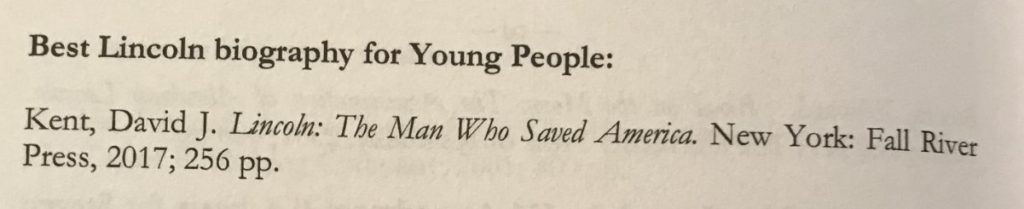
 I often check
 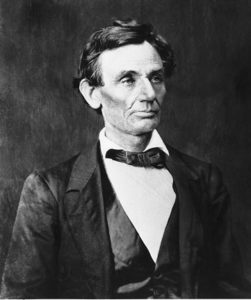 On June 23, 1857, Abraham Lincoln sued the Illinois Central Railroad. The Railroad had hired him on many occasions to defend their interests, but on this occasion they balked at the unusually high fee Lincoln charged – $5000. Lincoln had served the railroad well over many years, often taking limited fees, for example he had drawn only $150 for a year’s worth of work encompassing “at least fifteen cases (I believe one or two more) and I have concluded to lump them off at ten dollars a case.” This time, the McLean County Tax Case, he wanted to get paid the value of the work.