 The year 2025 was an incredibly busy writing year for me, so it’s time to recap my Year in a Writer’s Life. You can check out my other year-end posts by reading about my year of traveling, my 2025 Lincoln book acquisitions, and my year in reading.
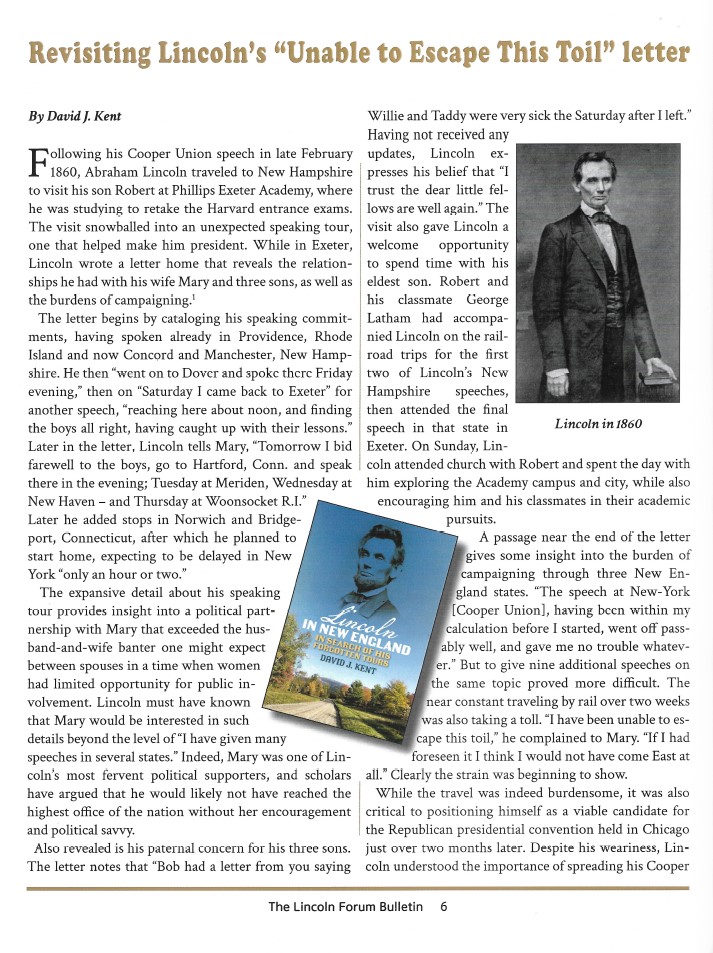
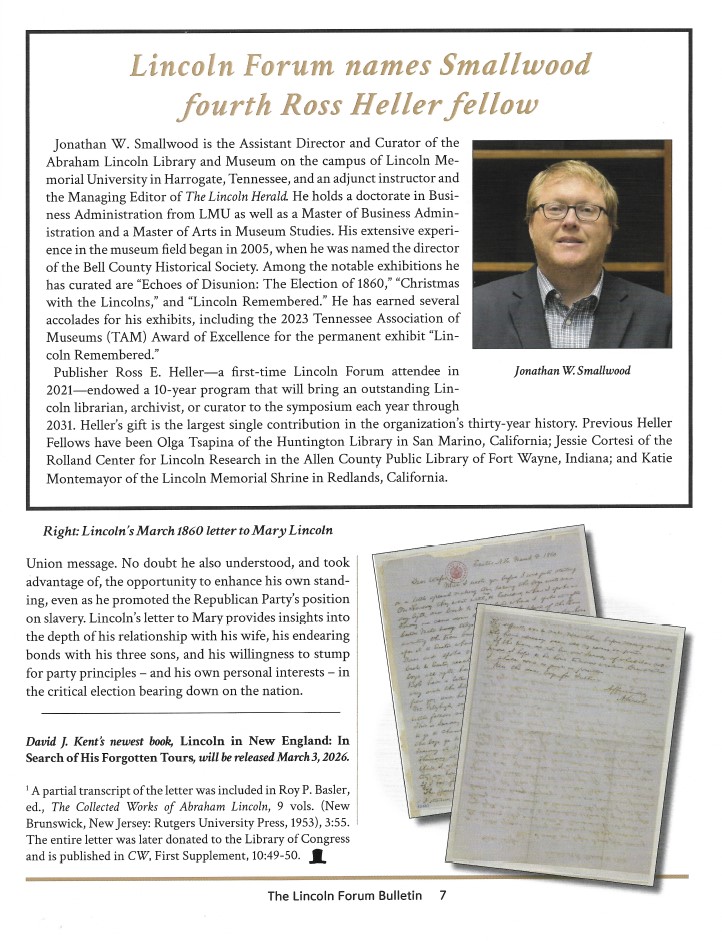
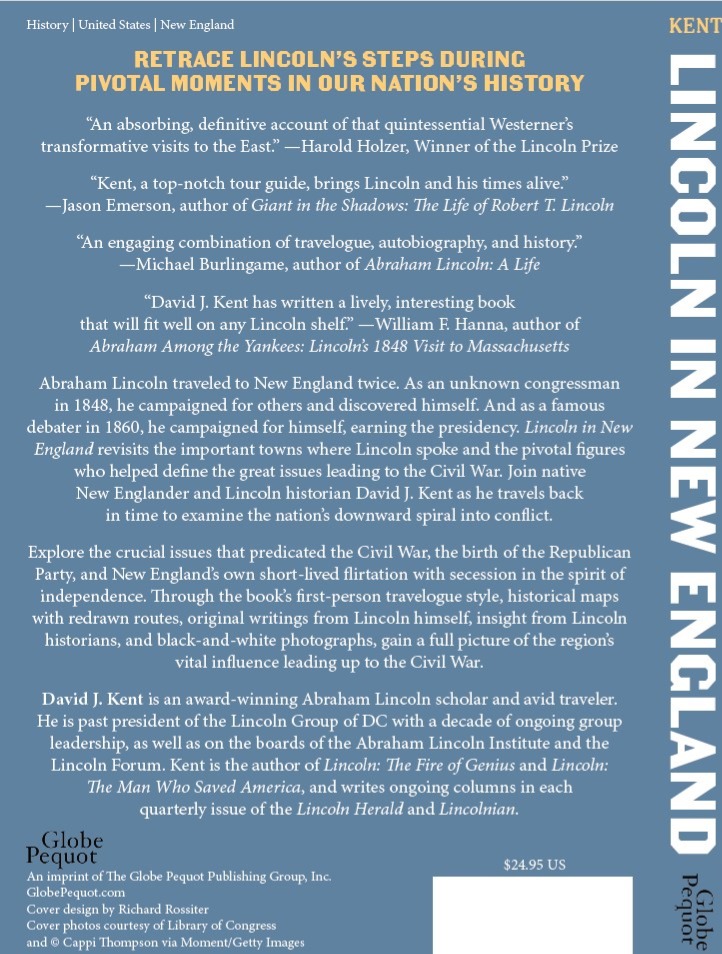
The big writing project for the year was completing the manuscript for Lincoln in New England: In Search of His Forgotten Tours. I had signed a contract with Globe Pequot Publishers in late 2024 and submitted the manuscript to them on May 30, 2025. The working title was originally “Unable to Escape This Toil,” but along the way we decided to change it to a more direct “Lincoln in New England.” The “Unable” line comes from a letter Lincoln wrote to his wife from Exeter, New Hampshire in early March 1860, where he had gone to visit his son Robert after giving his now famous Cooper Union speech in New York City. What was planned to be a relaxing visit turned into 11 unplanned speeches across three New England states. In complaining to Mary that he was overburdened, Lincoln showed the growing strain, but also his growing influence. [Note: I explained the “Unable” letter here] Submission of the manuscript isn’t the end of the publishing process, of course, some of which I’ve documented on these pages and also on Hot White Snow, my blog about the personal side of the writing life. Bottom line – Lincoln in New England will be released into the wild on March 3, 2026 [And you can pre-order now!]
I did a lot of other writing on topics related to the book as well. Among them were articles for the Lincoln Forum Bulletin entitled “Revisiting Lincoln’s ‘Unable to Escape This Toil’ letter” and one entitled “Zachary Taylor – A Whig?” for ALA’s For The People. I have another article in review for the spring Bulletin. Then there was a series of articles related to Lincoln’s two New England tours for the Lincoln Group of DC’s Lincolnian, two of which have already been published, one in press for January release, and a fourth that I’ll write for the spring issue. I also wrote two long articles that will be published in the Winter and Spring issues of the Lincoln Herald and a long research article in review for the Journal of the Abraham Lincoln Association. I also have two papers in preparation for Lincoln Lore and Surgeon’s Call. During the year, I was quoted in several articles in the media, mostly about Lincoln but one regarding a piece I wrote about a famous quote often attributed to Mark Twain: “History doesn’t repeat itself, but it often rhymes.”
As usual, a good part of my writing life is contributing to various blogs and newsletters. For the quarterly Lincolnian newsletter, I again wrote eight book reviews and the articles noted above. I also had a book review published in the Lincoln Herald journal. I continued to write for the Lincolnian.org website, but even with a slower pace than in the past (because of my other writing), I now have over 242 articles to my credit. Add in the dozens of articles each for this David J. Kent website and my Hot White Snow blog, plus the book reviews on the Abraham Lincoln Bibliography Project website, and I’ve done a lot of writing this year. But wait, there’s more! I also started writing for the new blog, Lincoln250.org, which is a collaboration between the Lincoln Group of DC and the Abraham Lincoln Association and focused on covering Abraham Lincoln’s connections to the Declaration of Independence and the American founding in time for the 250th anniversary in 2026. I’ll contribute to another blog starting in January as well, this one for the new website of the Abraham Lincoln Institute, where I sit on the Board of Directors and Executive Committee.
I continue to do presentations on various topics during the year, including a series recounting important aspects of the history of the Lincoln Group of DC during its 90th anniversary year. And I continue to support the work of other writers. For example, in March I hosted the White House Historical Association’s History Happy Hour program with Michael Vorenberg discussing his book, Lincoln’s Peace. That same month I introduced Jon Grinspan at the annual ALI Symposium at Ford’s Theatre, where he discussed his book, Wide Awake. During the summer and early fall I was approached by two different publishers to ask me to review book proposals from other authors. I provided my feedback on both, as well as reviewed three other books in preparation from authors who reached out to me for input. I was also on hand for the dedication of a new Lincoln statue at the African American Civil War Museum in DC, plus attended the first spring symposium of the Lincoln Forum held at Hildene, Robert Lincoln’s home in southern Vermont. Finally, I was interviewed by a documentary writer and producer for a film in progress on Civil War medicine.
What’s up for 2026?
Spring 2025 was focused on writing Lincoln in New England, so spring 2026 will be focused on promoting Lincoln in New England. The book comes out on March 3, 2026, and is already open for pre-orders (which help start the buzz for the book, so is much appreciated). I have a growing list of presentations I’ll be giving on the book, with a lot more on the way, including in-person, virtual, and podcast spots. You can find a convenient location throughout New England and the Mid-Atlantic (and beyond) on my Media page. One of the presentations will be at the 2nd annual spring Lincoln Forum held at Hildene in Manchester, Vermont. I attended the first spring forum this past April and in 2026 I’ll be on the program.
I have several articles in the pipeline as noted above and will continue as editor of the Lincolniana column in the quarterly Lincoln Herald. I’ll also continue writing on the various blogs, and if I completely lose my mind, my finally start the Substack I’ve been toying with for a while. I’ll also be involved in several events for 250th anniversary of the nation’s founding, so check back periodically on my Media page.
And finally, I’m already starting research on my next book topic. It will be a tangent off of Lincoln but not about Lincoln. More details later in the year. And if that isn’t enough, I have a topic in mind for the book after that too, which is definitely not about Lincoln. I also have several books I’m editing that I hope to see the light of day sooner rather than later. No shortage of ideas; the issue is shortage of time given that I also will continue extensive world travel and whatever else keeps me interested. Check out the links at the top for my travel, reading, and book acquisition posts.
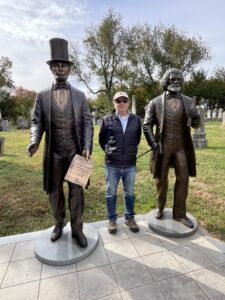
[Photo of me with Lincoln and Douglass in Congressional Cemetery, Ru Sun, 2025]
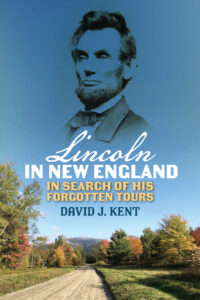
Coming in March 2026: Lincoln in New England: In Search of His Forgotten Tours
Join me on Goodreads, the database where I keep track of my reading. Please leave a review on Goodreads and Amazon if you like the book.
You also follow my author page on Facebook and on Instagram.
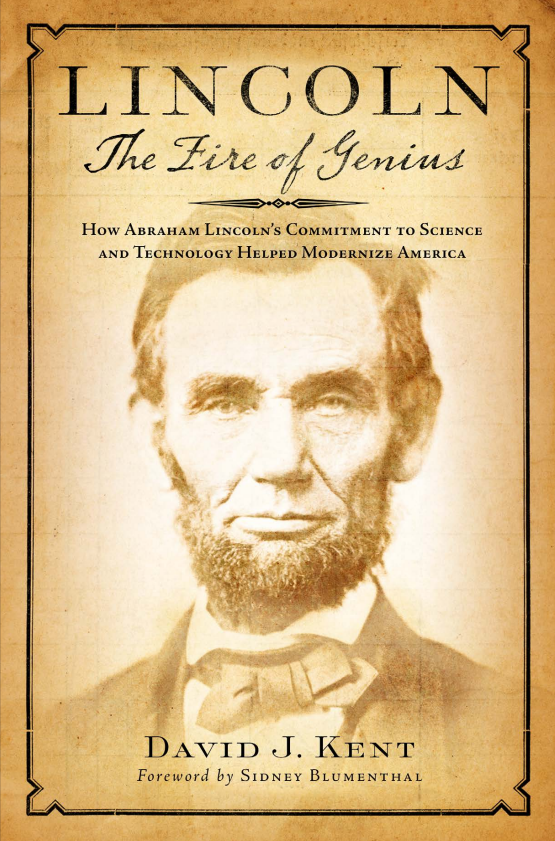
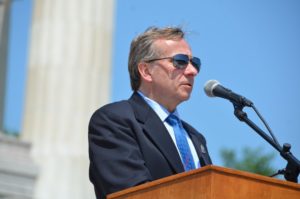
David J. Kent is Immediate Past President of the Lincoln Group of DC and the author of Lincoln: The Fire of Genius: How Abraham Lincoln’s Commitment to Science and Technology Helped Modernize America and Lincoln: The Man Who Saved America.
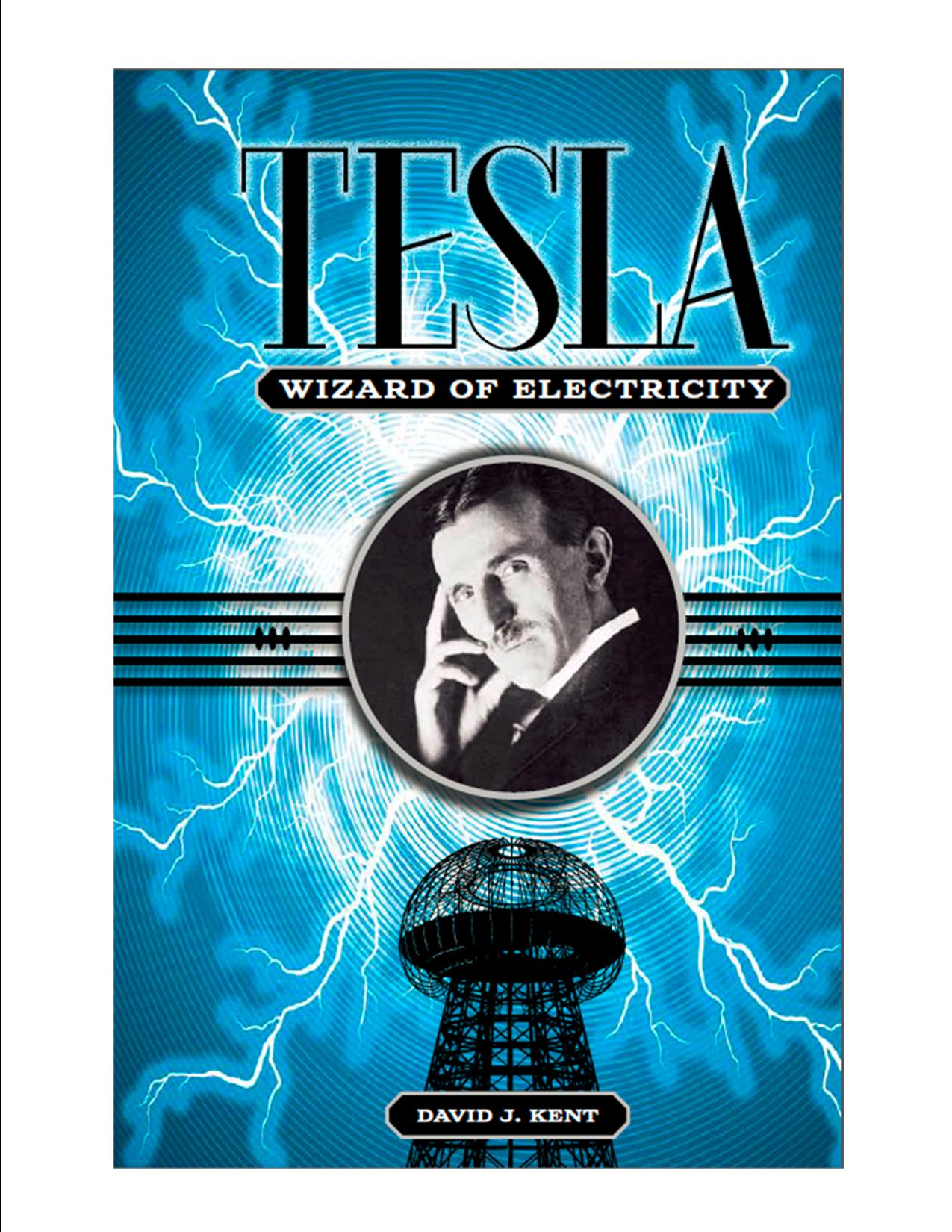
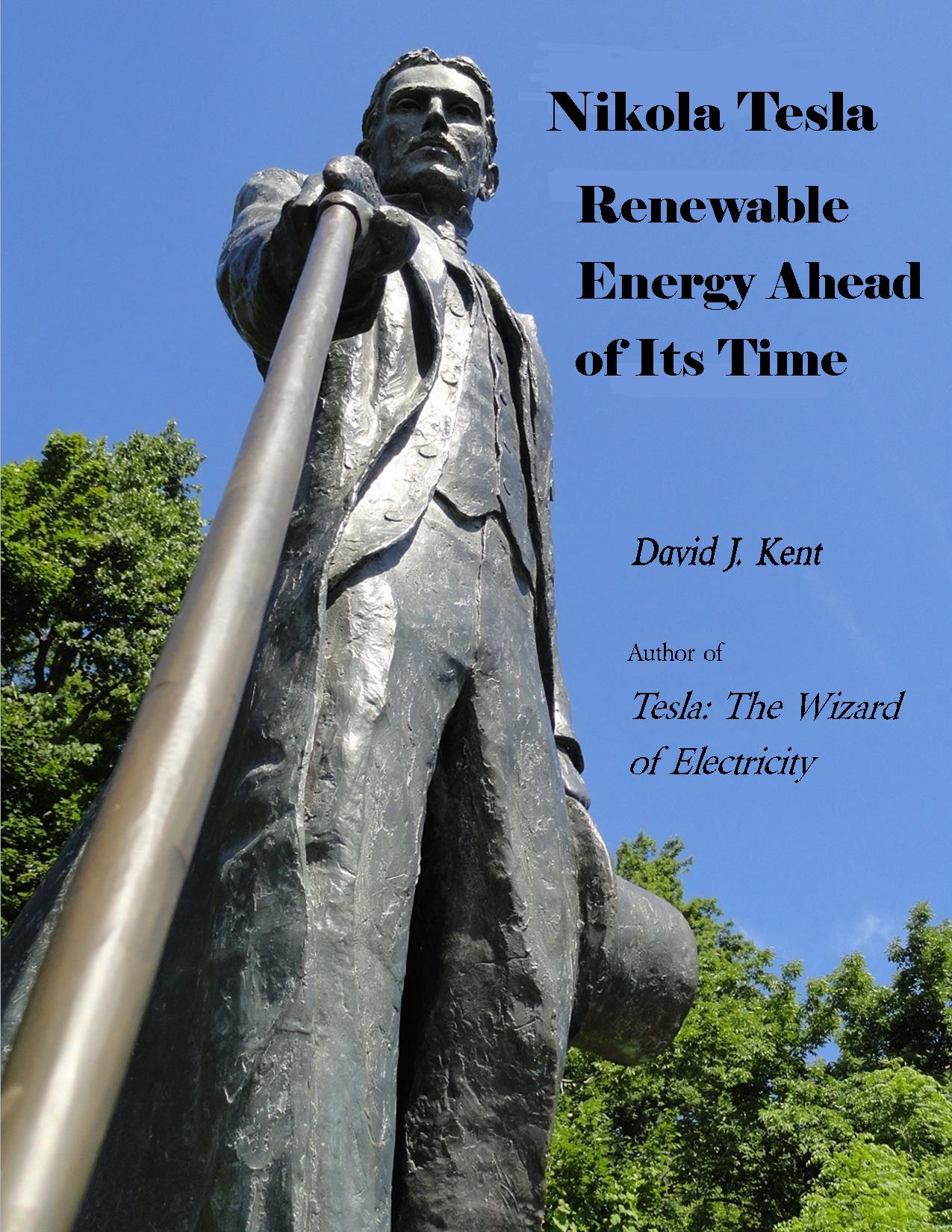
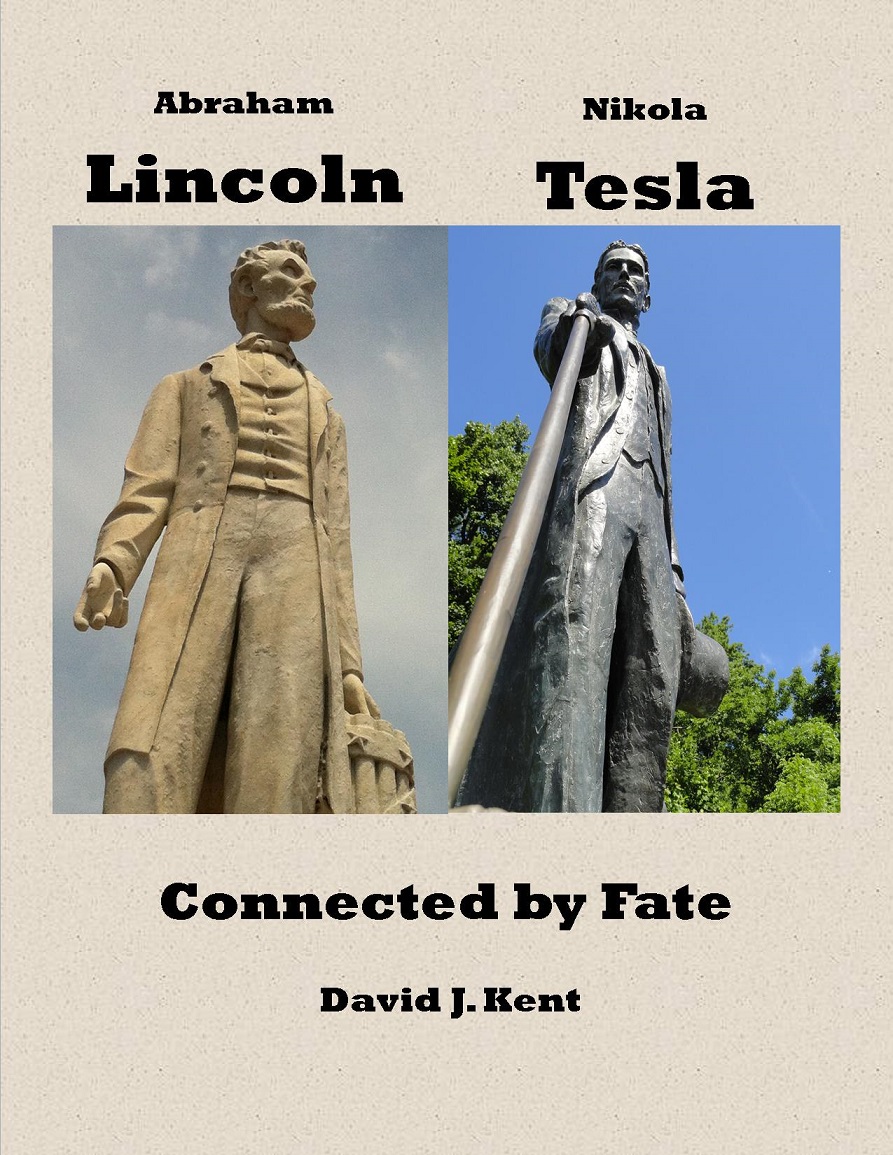
His previous books include Tesla: The Wizard of Electricity and Edison: The Inventor of the Modern World and two specialty e-books: Nikola Tesla: Renewable Energy Ahead of Its Time and Abraham Lincoln and Nikola Tesla: Connected by Fate.
 It’s time for my annual Year in a Traveler’s Life even though I’m not quite done traveling for the year. You can read about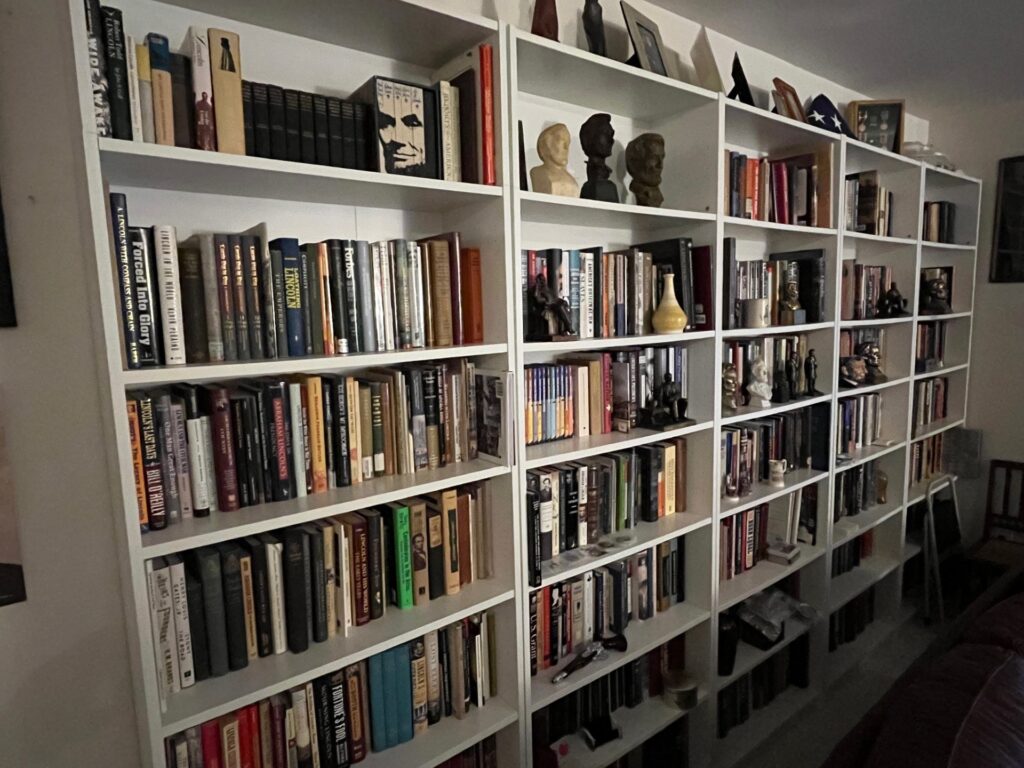
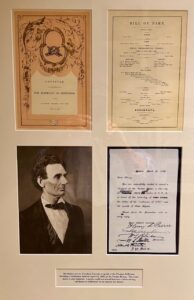 Abraham Lincoln became nationally famous in large part because of the Lincoln-Douglas Debates, the series of joint political debates between himself and incumbent Senator Stephen A. Douglas in 1858. Lincoln lost that senate race to Douglas, but it positioned him as a potential presidential candidate. The following spring, Lincoln was invited along with other likely presidential contenders to attend an April 1859 dinner in Boston celebrating Thomas Jefferson’s birthday. That may have been a recognition of his minor celebrity status following the debates, but later that year, business magnate and influencer Jesse Fell coaxed Lincoln into providing an autobiographical sketch that was expanded and widely distributed across the country. In addition to enough viability to garner an invitation to give the Cooper Union speech, several of his New England hosts introduced him as presidential or vice-presidential material.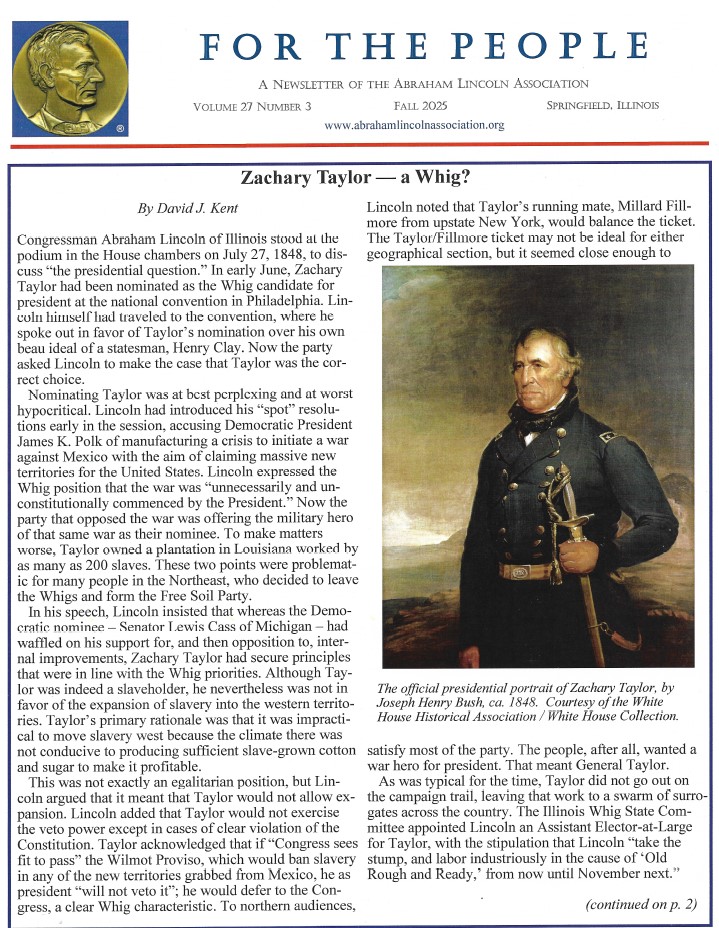

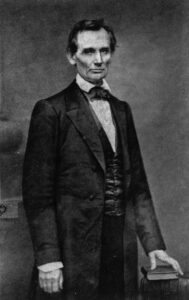 Abraham Lincoln often warned about the dangers of allowing certain Americans to act as “kings.” Lincoln harkened back to the Declaration of Independence and its self-evident truths “that all men are created equal” and endowed “with certain unalienable Rights, that among these are Life, Liberty and the pursuit of Happiness.” It was on this basis that the united colonies declared their separation from Britain. After the soaring preamble, the remainder of the document is a list of grievances against the British King.
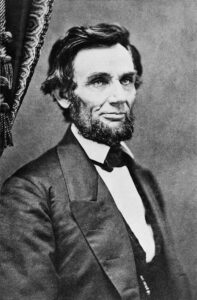 Abraham Lincoln made his way to Washington, D.C. by a roundabout rail route in February 1861. Among his many stops was the city of Philadelphia, where on George Washington’s birthday he raised the American flag at Independence Hall. Lincoln acknowledged the import of the spot where the Declaration of Independence was signed: