 Abraham Lincoln understood the value of science to ordinary Americans.
Lincoln’s life spanned one of the greatest periods of scientific and technological growth in our national history. Lincoln not only lived through it, he recognized and encouraged it. Most know he grew up on farms, but not how much science he learned there. Most know his formal education “did not amount to one year,” but not how his self-study led to an understanding and skill in mathematics far above his peers. Most know he completed two flatboat trips, but not the extent of his life on the waters. Many have heard he is the only president with a patent, but not how he pressed for technological improvements that would change the face of the Midwest, and in the process growing Chicago from a tiny lakeside hamlet into a pivotal hub for transportation and economic development. Some may know about his life as a lawyer on the circuit, but not how he set legal precedents critical to the future of westward American expansion. We know he emancipated enslaved people, but not how science and technology facilitated the expansion of slavery in the United States, and Lincoln’s struggles to contain it.
The state of science in early nineteenth century United States was far behind that of Europe. Most American men of science received their training by studying with the great scientists in Germany, England, or France. Science was the realm of the elite, wealthy men with the money and leisure time to spend hours studying what was often esoteric, of little value to the immediate needs of the majority of Americans. Most pure science never trickled down to the masses. In fact, Europeans and some eastern United States scientists saw little need to bring science to the public, who they felt were too ignorant and incapable to make use of it. Renowned scientists like James Hall, James Dana, John Torrey, and Asa Gray all preferred writing for other scientists only, the “ivory tower” in which scientific jargon limited comprehension only to those trained in the particular fields of endeavor. To satisfy the “vulgar appetites of the people,” James Dana complained, required science to be “diluted and mixed with a sufficient amount of the spirit of the age.” Some exceptions like mathematician Elias Loomis felt that the “scientific taste of the community” was important to cultivate. Others such as Louis Agassiz conducted public lectures, believing that education of the masses was an overall benefit to society. But mostly, science was a luxury of the leisure class.
Many politicians also thought America was becoming too democratic, that too much power was devolving to the masses. The aging Charles Carroll, a signer of the Declaration of Independence, warned Alexis de Tocqueville in 1831 that “a mere democracy is but a mob.” He disdained the masses and longed for the “old aristocratic institutions” that helped make him wealthy and politically powerful. Lincoln felt differently. While he would himself warn against the dangers of mob rule, he joined former president James Madison in his faith in the people’s power of self-government.
Lincoln was not a scientist. He was not even the first president to have an interest in science. Thomas Jefferson was more of an inventor, concocting everything from clocks, a revolving bookstand, a plow, and scientific instruments, although he never obtained any patents. Jefferson, like George Washington before him, did some surveying, a hobby that Lincoln would learn as a trade early in his adult life. Jefferson also kept meticulous records of the weather around Monticello, his Virginia estate. Jefferson’s scientific knowledge was unequalled in his time. But Jefferson believed the economy should be primarily based on agriculture. While he claimed to envision “the rolling out of a republic in which small independent farmers would become foot-soldiers of the infant nation and the guardians of its liberty,” in reality he owned a large plantation and enslaved more than six hundred men, women, and children in his lifetime. Slave labor enabled Jefferson the privilege of intellectual pursuit. Jefferson may have been more of a scientist than Lincoln, but Jefferson saw science as a benefit for the few while Lincoln saw its potential to benefit the many.
Lincoln had more in common with our sixth president, John Quincy Adams. Adams was not a scientist himself but wrote a treatise on the reform of weights and measures. His nearly religious promotion of astronomical observatories helped create the study of astronomy in America, pushing in an 1843 oration the practical value of astronomy. He reminded humanity to look “heavenward” as if “the special purpose of their creation” was “observation of the stars.” During his tenure as a congressman following his presidency, Adams fought against both anti-British and anti-federalist biases to get the Smithson bequest devoted to scientific research. Like Adams, Lincoln saw science and technology as something that could improve the lives of all Americans. He saw a mechanism by which all men could better their condition.
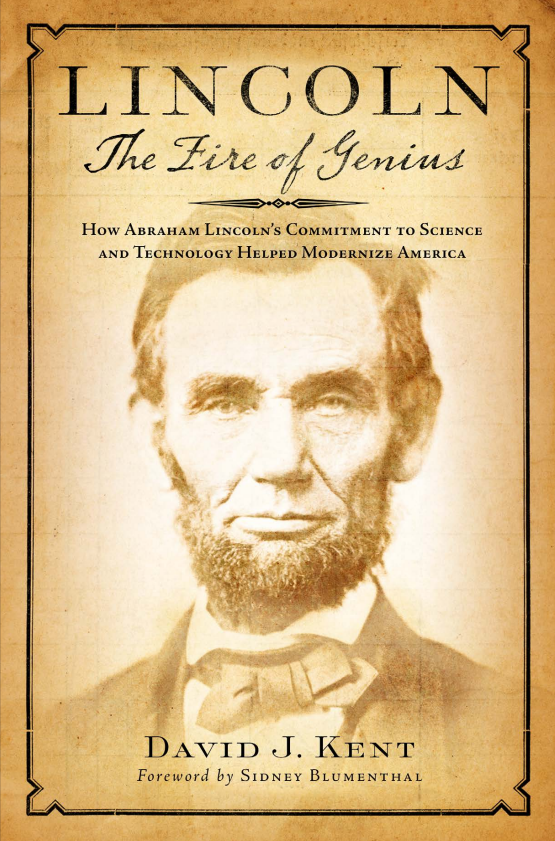
[The above is adapted from the Introduction of my forthcoming book, Lincoln: The Fire of Genius: How Abraham Lincoln’s Commitment to Science and Technology Helped Modernize America.]
There is still time to win one of ten free print copies of Lincoln: The Fire of Genius on Goodreads. Click here and follow the directions to Enter the Giveaway!
Lincoln: The Fire of Genius will be officially released on September 1st. You can pre-order it on the websites of Rowman & Littlefield, Amazon, Barnes & Noble, your favorite independent bookstore, and everywhere else books are sold.
Want to come to a book signing? Check out my scheduled events (more being added daily).
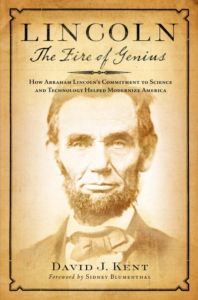 Release date for Lincoln: The Fire of Genius is September 1, 2022.
While you’re here, check out the various posts on Lincolnian.org related to our recent Lincoln Memorial Centennial program. For those who missed it, C-SPAN will be replaying the event at 3 pm on June 18th on CSPAN2.
The book is available for pre-order on the Rowman & Littlefield website (Lyons Press is a trade imprint of Rowman). You can also pre-order it on Amazon and Barnes and Noble (click on the respective links to pre-order). Release date is scheduled for September 1, 2022.
The book is also listed on Goodreads, the database where I keep track of my reading. Click on the “Want to Read” button to put it on your reading list. That will also ensure you get informed of the release date AND will let you try for one of ten free hardcover copies of the book that I’ll be giving away. I’ll also be giving away as many as a hundred e-books. [The book will also be put out on audio]
You also follow my author page on Facebook.
I’ll have much more about the book over the next few months, so join my mailing list here to keep informed.
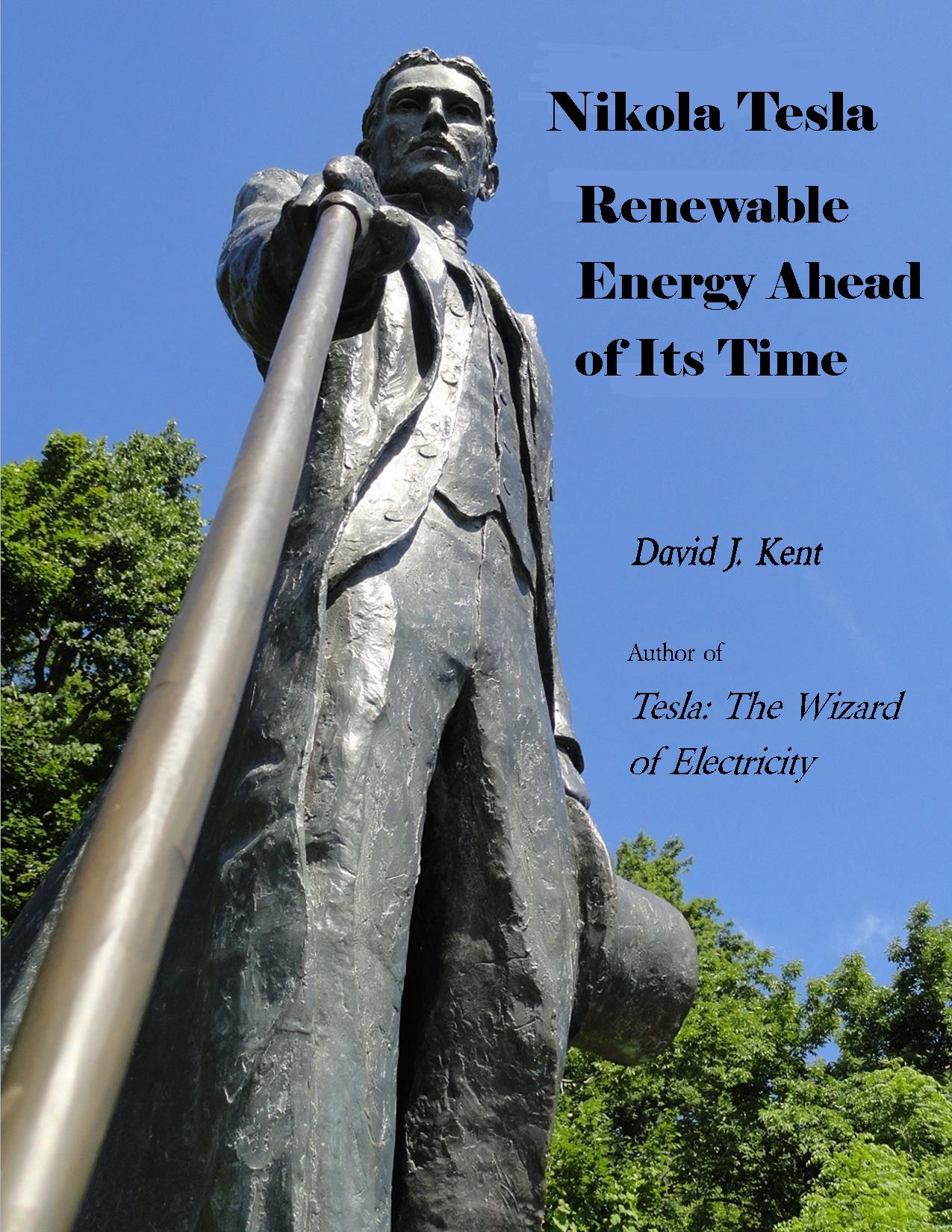
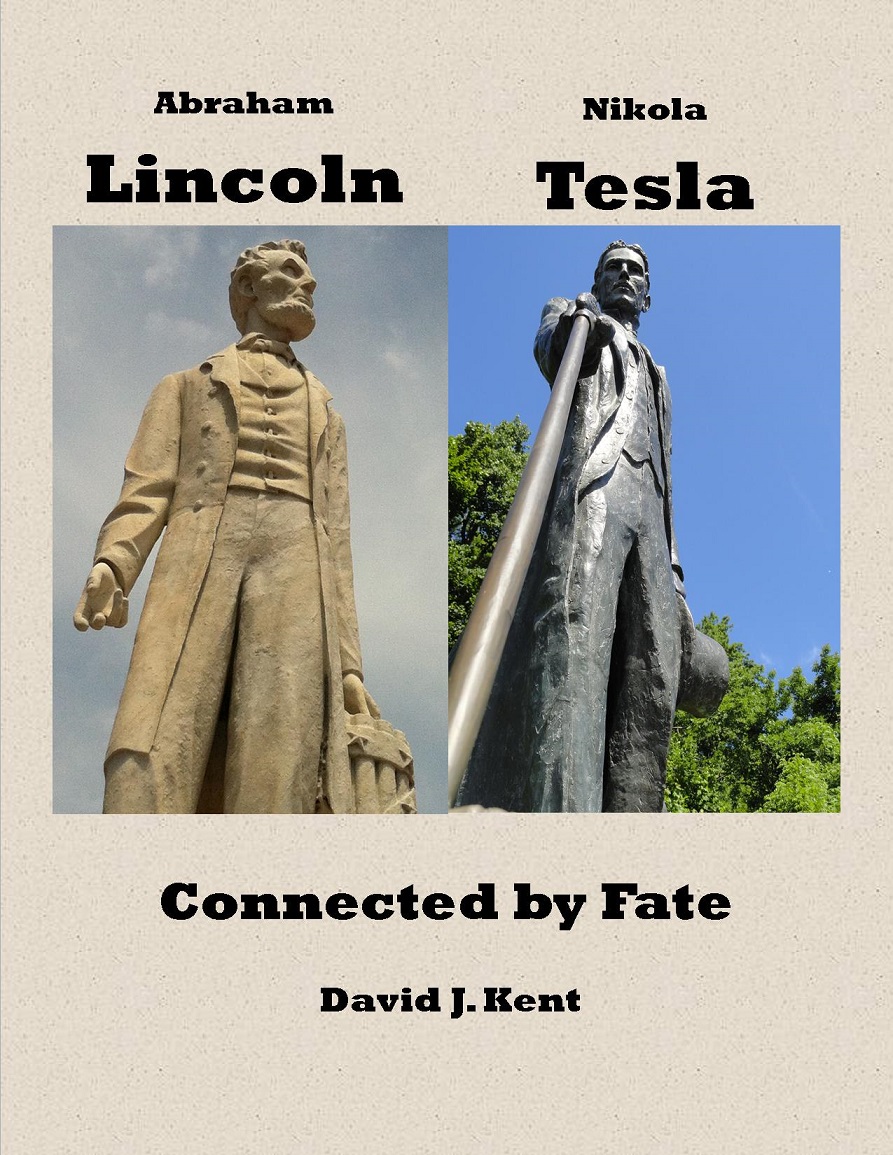
David J. Kent is President of the Lincoln Group of DC and the author of Lincoln: The Man Who Saved America. His previous books include Tesla: The Wizard of Electricity and Edison: The Inventor of the Modern World and two specialty e-books: Nikola Tesla: Renewable Energy Ahead of Its Time and Abraham Lincoln and Nikola Tesla: Connected by Fate.
Check out my Goodreads author page. While you’re at it, “Like” my Facebook author page for more updates!
 As the countdown begins for the September 1st release of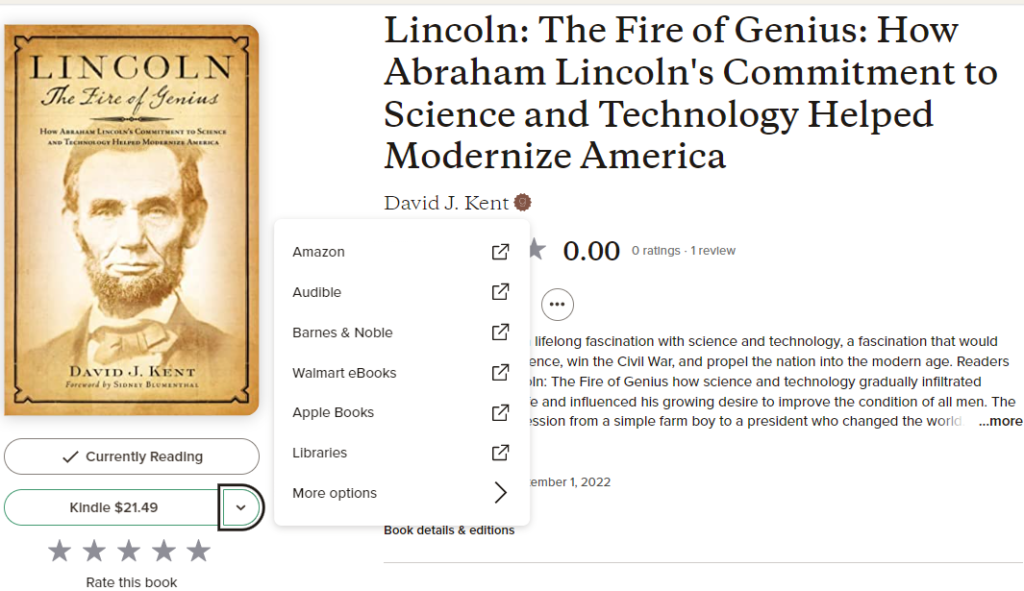
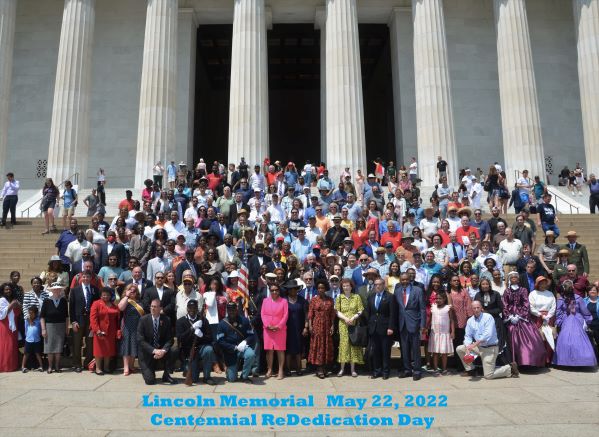 As I mentioned a few weeks ago, I had the privilege of being the
 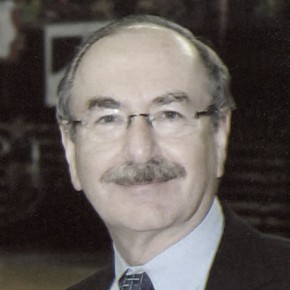 One chapter of my new book, Lincoln: The Fire of Genius, is called Institutionalizing Science. Much of the focus is on the Smithsonian Institution’s first Secretary, Joseph Henry, and his relationship with Abraham Lincoln. I am very happy that Marc Rothenberg, the former Editor of The Papers of Joseph Henry, as well as past Historian at the National Academy of Sciences, has provided the following praise for the book:
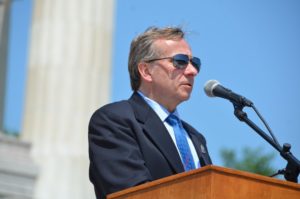 The Lincoln Memorial reaches its centennial this month and this past week was the culmination of a year’s worth of work to celebrate the iconic structure’s 100th birthday. Around this time last year, the Lincoln Group of DC, of which I am the current president, decided that we must have a magnificent event on the Memorial steps. We had done something similar in 2015 for the sesquicentennial of Abraham Lincoln’s second inaugural speech so we followed the basic format. There were differences of course. We couldn’t really have a Lincoln reenactor for a memorial to his life and death, especially since it wasn’t dedicated until 57 years after his assassination. We also couldn’t just recapture the Civil War theme, nor did we want to exactly recapture the segregationist Jim Crow-era time of 1922. Plus, we would be working with the National Park Service, which would prefer not to be overly controversial. Still, there were issues from that 1922 dedication we wanted to address and there has been 100 years of history we wanted to show.
 Part of the process of putting together a book is asking prominent experts to read an advance copy and provide back cover “blurbs.” A few weeks ago, I reported that
 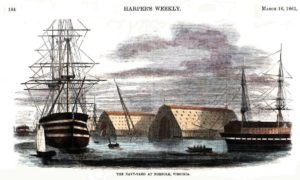 May 10, 1862 was a busy day for President Abraham Lincoln. He had arrived at Fortress Monroe days before and today, along with Secretaries Chase and Stanton, accompanied General Wool to a landing place where troops were preparing to march on Norfolk. Lincoln served as his own commanding general in Hampton Roads, directing and pushing for the taking of Norfolk and the Gosport Navy Yard in nearby Portsmouth. He even guided a landing party on Confederate-held soil in search of a spot for the Union Army to make their trek into the city as it was being abandoned by the Confederates. Following this excursion, Lincoln returned to Fortress Monroe and remained there the rest of the day.
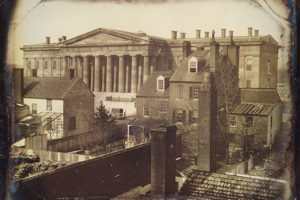 At noon on Thursday, May 2, 1861, President Abraham Lincoln raised the flag over the Patent Office at 7th and F streets, NW, Washington, DC.