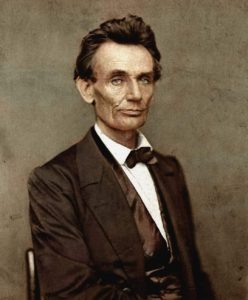
 Abraham Lincoln was not happy. He had worked hard to get Zachary Taylor elected as president as a Whig, and yet he was being passed over for the lucrative General Land Office job. Worse, he was being ignored, something the man who had been Whig leader in the Illinois legislature and recent representative to Congress. On May 16, 1849, he made his dissatisfaction with Taylor’s appointment of Justin Butterfield to the Land Office in Illinois.
Always a Whig in politics (to that point), Lincoln had used his time between sessions of his single term in the U.S. House of Representatives to stump for Zachary Taylor in Massachusetts. Taylor was a strange choice for the Whigs, who had generally disapproved of the Mexican War as a transparent attempt to enlarge the territory in which to expand slavery. But the Whigs felt he was the only candidate who could win (both major parties courted him) and that he would be pliable (he professed no firm political views), so they chose him over perennial candidate, Lincoln’s beau ideal of a statesman, Henry Clay. That wasn’t the only problem. As a Southern slaveowner, Taylor rankled the antislavery sensibilities of the liberal wing of the Whig party in Massachusetts, although the more conservative Whigs (e.g., textile mill owners who depended on the availability of Southern cotton) were less concerned. Disaffected Whigs had built a Free Soil movement to promote an antislavery candidate and Lincoln was sent to smooth over ruffled feathers in an attempt to keep party leaders in the Whig camp. Lincoln was well received and did seem to convince many Whigs, and although the central part of Massachusetts with its more stringent Free Soil passions voted for former president Martin Van Buren as the Free Soiler candidate, the full contingent of Massachusetts’s electoral votes went to Taylor. Taylor became president.
Lincoln continued to stump for Taylor once he returned home to Illinois. Which is why he was so rankled. After first suggesting others for the Land Office job, he switched to seeking the office for himself to ensure that a strong supporter of Taylor would get the prime position. He was ignored. Taylor (or more accurately, those in the administration making the appointment recommendations) had gotten it into their heads to appoint Justin Butterfield of Chicago. Lincoln was incensed. Writing to the Secretary of the Navy William B. Preston on this date, Lincoln argued that Butterfield had done nothing to get Taylor elected:
“[W]hen you and I were almost sweating blood to have Genl. Taylor nominated, this same man was ridiculing the idea . . . and when Gen: T. was nominated, if [Butterfield] went out of the city of Chicago to aid in his election, it is more than I ever heard, or believe. . . . If there is one man in this state who desires B’s appointment to any thing, I declare I have not heard of him.”
His pleading fell on deaf ears. Butterfield got the job, and Lincoln was out of political office for the next twelve years. He would build a steady legal practice, get aroused back into politics by the Kansas-Nebraska Act, fail in two senate races, and then – after another tour of New England in 1860 – get elected as the 16th President of the United States.
Those two tours of New England bracketed the most contentious and critical decades in our nation’s history. Lincoln was vastly different men from one tour to the next, as was the country.
Stay tuned!
[Photo credits: Public Domain]
Coming in February 2026: Unable to Escape This Toil
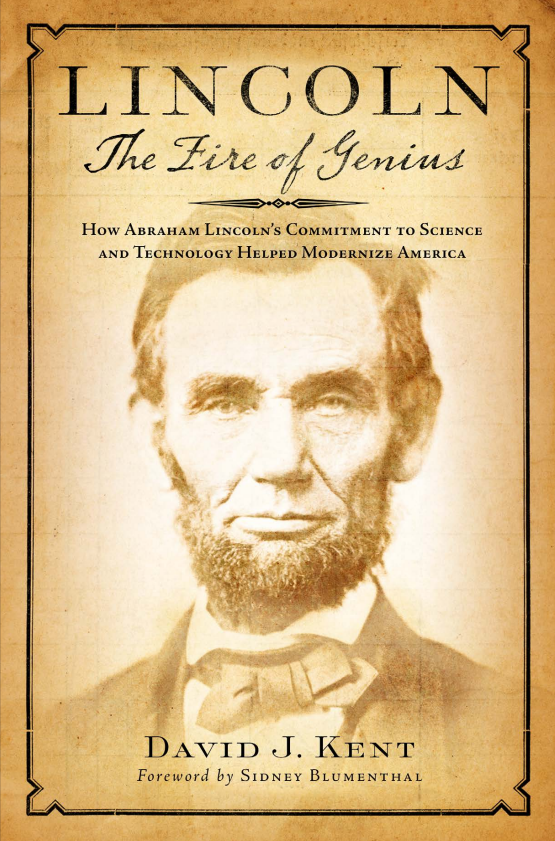
Available now – Lincoln: The Fire of Genius: How Abraham Lincoln’s Commitment to Science and Technology Helped Modernize America is available at booksellers nationwide.
Limited signed copies are available via this website. The book also listed on Goodreads, the database where I keep track of my reading. Click on the “Want to Read” button to put it on your reading list. Please leave a review on Goodreads and Amazon if you like the book.
You also follow my author page on Facebook.
David J. Kent is Immediate Past President of the Lincoln Group of DC and the author of Lincoln: The Fire of Genius: How Abraham Lincoln’s Commitment to Science and Technology Helped Modernize America and Lincoln: The Man Who Saved America.
His previous books include Tesla: The Wizard of Electricity and Edison: The Inventor of the Modern World and two specialty e-books: Nikola Tesla: Renewable Energy Ahead of Its Time and Abraham Lincoln and Nikola Tesla: Connected by Fate.
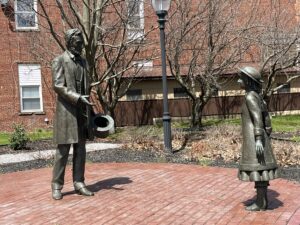 Abraham Lincoln traveled through upstate New York in early 1861 on his way to Washington, DC for his inauguration, stopping in Westfield, Buffalo, Albany, Peekskill, and New York City. Twelve years before, in 1848, he stopped in Buffalo and saw Niagara Falls on his way home between sessions of congress after he toured around eastern Massachusetts giving speeches in support of Zachary Taylor as the Whig nominee for president [Spoiler: Taylor won] In late April of this year, traveled much the same route in northern New York on my way to the Lincoln Forum spring conference at Hildene in Manchester, Vermont.


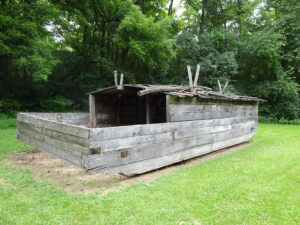 In 1828, nineteen-year-old Abraham Lincoln and neighbor Allen Gentry made what was the first of Lincoln’s two flatboat trips to New Orleans. Gentry’s father funded the trip. A typical investment required about $75 (over $2000 today) for the flatboat alone. The cargo could be worth over $3000 ($82,000 today). A successful trip could be immensely profitable; an unsuccessful one financially devastating.
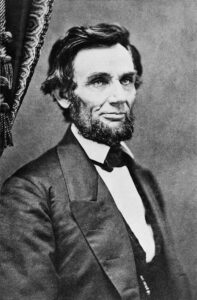 On April 10, 1861, two days before the Confederacy opened fire on Fort Sumter, Ambrose W. Thompson met with Lincoln to gain support for a coal mining project in the Chiriqui region of the Granadian Confederation (now Panama near the border with Costa Rica). Thompson headed a corporation that had been created to provide coal to the U.S. Navy. Lincoln again relied on Smithsonian Secretary Joseph Henry for scientific advice. Henry wrote to John Peter Lesley, one of the leading geologists in the United States and an expert on coal. In his confidential letter he said he was writing on behalf of President Lincoln and Secretary of State Seward to get Lesley’s opinion on the value of the coal deposit in the Chiriqui district. Interest in the coal was two-fold. It was needed for coal-fired boilers for steam ships and railroad locomotives, but it also offered itself as a possible solution to the likely emancipation of enslaved people. Lincoln and others had hoped that freed slaves (and other free blacks) could be relocated to avoid the problems of a racially mixed society. Should the Chiriqui coal be viable, it could serve as an economic basis for such a colony. Henry asked Lesley to give him “in addition to your opinion derived from general scientific principles any reliable information you may possess relative to this matter.”
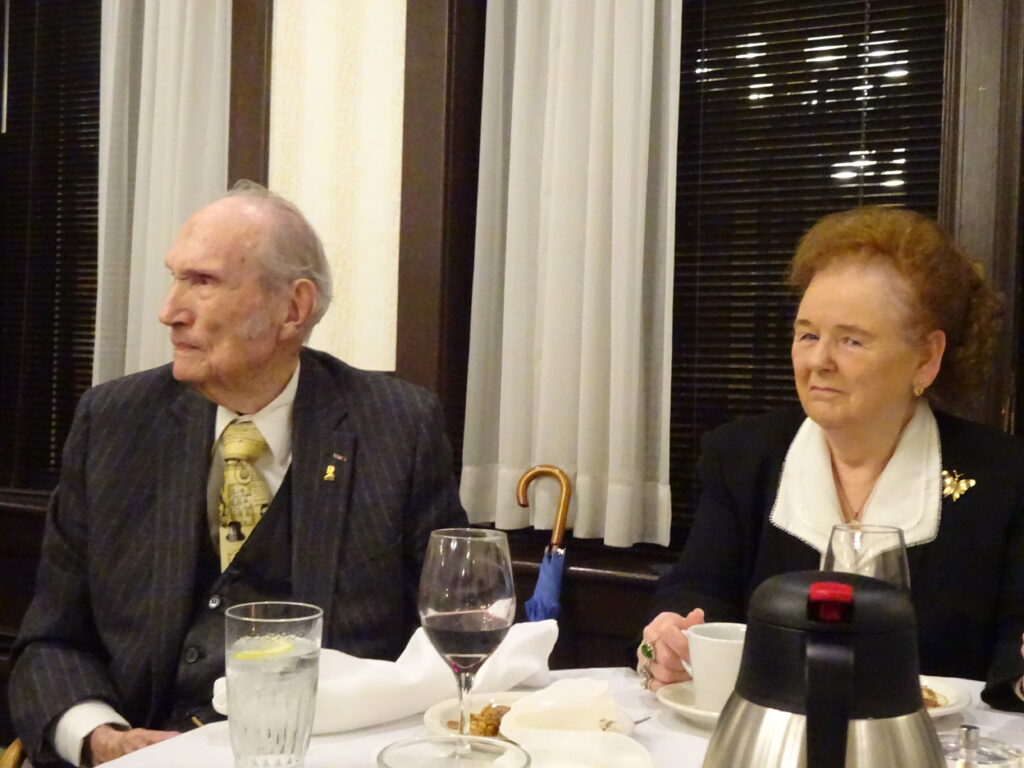 The dean of all Abraham Lincoln scholars passed away on March 31, 2025. He was 101. Wayne Calhoun Temple, known to everyone as “Doc,” celebrated his 101st birthday on February 5th.
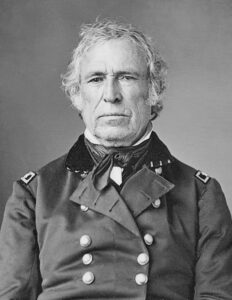 Abraham Lincoln stood at the podium in the U.S. House of Representative chambers on July 27, 1848. His topic – the presidential question. Notwithstanding the negative reaction to his previous “spot resolutions” speech, Lincoln was still considered an effective speaker and thus was called upon to help convince people that Zachary Taylor was the correct choice as the Whig nominee for president. Lincoln had strongly supported the nomination of Taylor over the aging Henry Clay, previously Lincoln’s beau ideal of a statesman. He even spoke at the nominating convention in favor of Taylor.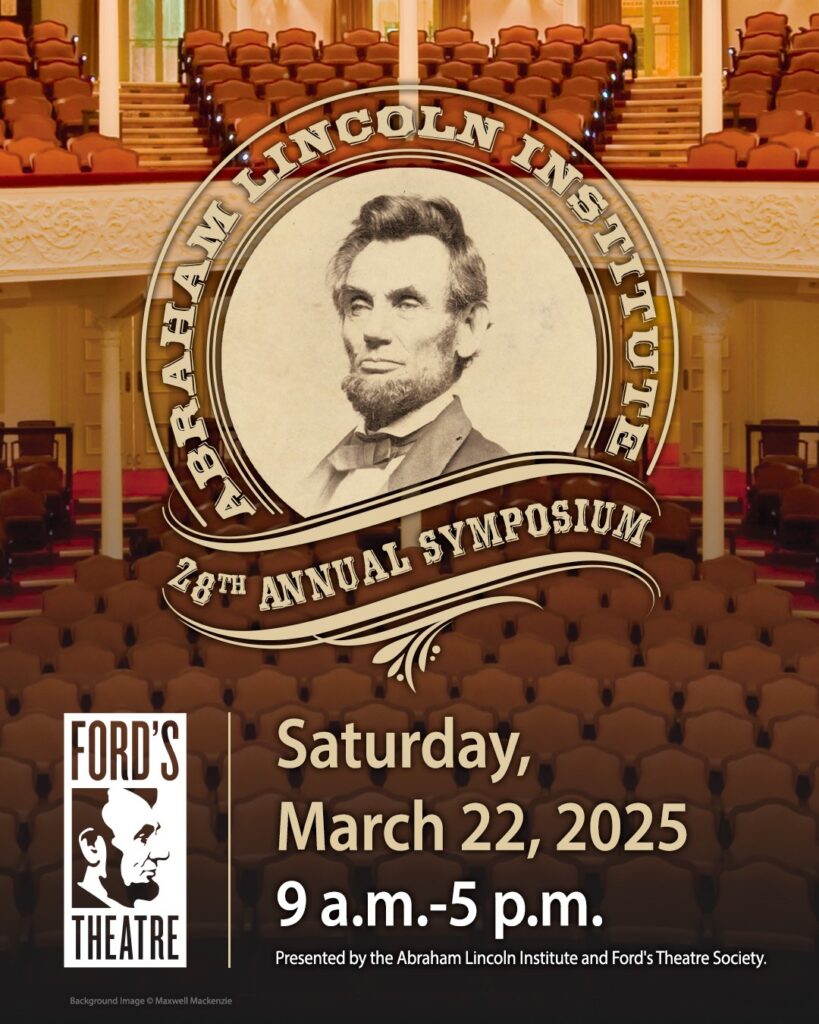
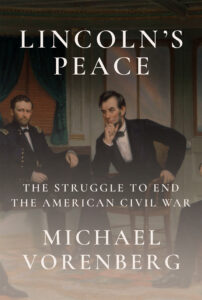 Join me and author Michael Vorenberg on Thursday, March 13, 2025, for the White House Historical Association’s History Happy Hour. The program is free and begins at 6 pm ET.
 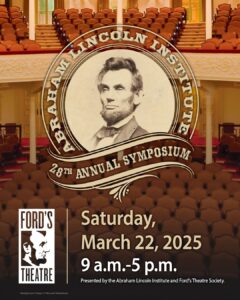 The Annual Abraham Lincoln Institute (ALI) Symposium is set for March 22, 2025, at historic Ford’s Theatre in downtown Washington, DC. The full day program starts at 9 am and runs to 5 pm.
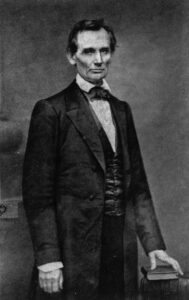 In February 1860, the western-bred Abraham Lincoln must have been astonished by the hustle and bustle around lower New York City. Having crossed the Hudson River from Jersey City to Manhattan, Lincoln made his way to the Astor House, one of most luxurious hotels in New York City, conveniently located near City Hall and Publishers Row (aka, Newspaper Row or Printing House Square) housing the city’s most important newspapers. New York City had grown by over fifty percent just in the last decade, many of whom were immigrants from Ireland, Germany, and other European nations. If Lincoln’s room was on the ground floor of the Astor House, he would have looked out on St. Paul’s Chapel, built in 1766 and where George Washington attended services immediately after taking the oath of office as the first president of the United States. No doubt Lincoln would have looked into the chapel. Today, from a vantage point on Broadway, you can see the new One World Trade Center looming behind the Chapel’s historic spire. From the other side, standing in the burying ground facing the skyscraper, is a “Bell of Hope” rung every year on September 11 to reflect both the mourning of that day and the Chapel’s role as a refuge during that warm, clear cataclysmic day in 2001.