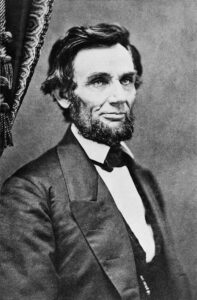
 The newly bearded President-Elect Abraham Lincoln is making his way from Springfield, Illinois to Washington for his inauguration as president of the United States. But today, February 18, 1861, he was spending an eventful day traveling to Albany, New York.
It was a long train ride, having left Springfield on February 11th, he had passed through pars of Illinois, Indiana, Ohio, and now to Buffalo, New York. He had spent the day yesterday in Buffalo with former President Millard Fillmore, joining him at church before picking up Mrs. Lincoln and dining at Fillmore’s residence. Today, several hundred people and a military escort watch Lincoln’s train depart at the weary hour of 5:45 am. New-York Tribune editor Horace Greeley is on board with Lincoln as the train makes stops in the New York towns of Batavia, Rochester (where Frederick Douglass may or may not have seen him), Clyde, Syracuse, Utica, Little Falls, Fonda, Amsterdam, and Schenectady. NY Governor Edwin D. Morgan has assigned five members of his staff to accompany Lincoln, who dines in a special car fitted for dinner on a train used a few months previously by the Prince of Wales (Lincoln’s son, Robert, is not so complementarily labeled, the “Prince of Rails”).
At Syracuse, a crowd of 10,000 waits by a platform erected in front of the Globe Hotel, only to be disappointed when Lincoln speaks from the back of train instead. By this time, he is exhausted and, while he acknowledges remarks by the mayor of Utica, does not rise to speak on a platform built for that purpose in Schenectady.
But then there is Albany, capital of the state. After exchanging short speeches on the train platform with Mayor George H. Thatcher, Lincoln rides to the state Capitol to be welcomed by the governor. Here he addresses a joint meeting of the state legislature, saying:
“It is true that while I hold myself without mock modesty, the humblest of all individuals that have ever been elevated to the Presidency, I have a more difficult task to perform than any one of them. . . . I still have confidence that the Almighty, the Maker of the Universe will . . . bring us through this as He has through all the other difficulties of our country.”
Then it is off to the Delavan House, his home for the evening, where he meets with Thurlow Weed (a William Seward handler) and is greeted by the Rail Splitters political club. A committee escorts him to call on various New York dignitaries and sightseeing. Afterwards, the Lincoln and Governor Morgan families have an evening meal at the governor’s mansion. But he isn’t done yet. At 9 pm he is back at the Delavan House for a levee (aka, a meet-and-greet party) at which he greets about 1,000 people. Then he also visits a separate levee held for ladies.
Finally, he can get some rest. But not much. He and Mrs. Lincoln will leave Albany at 7:45 am the next morning, and as reported by journalist Henry Villard, “grateful for safe deliverance and resolved never to return,” because a rivalry between the governor and members of the legislature for the honor of entertaining Lincoln has made their visit burdensome. Tomorrow the family will continue to New York City, making stops in Rhinebeck, Hudson, Poughkeepsie, Fishkill, and Peekskill before finally arriving in New York City mid-afternoon.
There is still a long way to go before getting to Washington. And there is a murder plot afoot trying to keep that from happening.
[Photo credit: By German, Christopher S. – Library of Congress, Public Domain, https://commons.wikimedia.org/w/index.php?curid=25149728]
Coming in February 2026: Unable to Escape This Toil
Available now – Lincoln: The Fire of Genius: How Abraham Lincoln’s Commitment to Science and Technology Helped Modernize America is available at booksellers nationwide.
Limited signed copies are available via this website. The book also listed on Goodreads, the database where I keep track of my reading. Click on the “Want to Read” button to put it on your reading list. Please leave a review on Goodreads and Amazon if you like the book.
You also follow my author page on Facebook.
David J. Kent is President of the Lincoln Group of DC and the author of Lincoln: The Fire of Genius: How Abraham Lincoln’s Commitment to Science and Technology Helped Modernize America and Lincoln: The Man Who Saved America.
His previous books include Tesla: The Wizard of Electricity and Edison: The Inventor of the Modern World and two specialty e-books: Nikola Tesla: Renewable Energy Ahead of Its Time and Abraham Lincoln and Nikola Tesla: Connected by Fate.
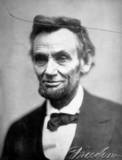 While Abraham Lincoln had a well-deserved reputation as a soft touch during the Civil War, readily finding excuses to offer mercy to Union soldiers who had fallen asleep or abandoned their posts, he also approved the hanging of the only slave trader ever to be executed by the United States. Captain Nathaniel Gordon was a repeat offender, caught with nearly 900 enslaved men, women, and children crammed into the tiny space below decks off the coast of Congo. But Gordon wasn’t particularly worried. For the first 40+ years of the law that made international slave trading illegal and punishable by death, no man was ever executed. Why now? And why by Lincoln?
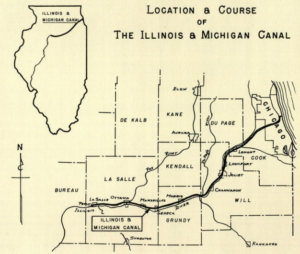 Abraham Lincoln was a steady proponent of Internal Improvements projects in Illinois. That said, there were problems. The few projects initiated randomly to encourage widespread district support resulted in a hodgepodge of disconnected rail lines, many of which ran only a few miles to nowhere in particular. Most projects simply disappeared.
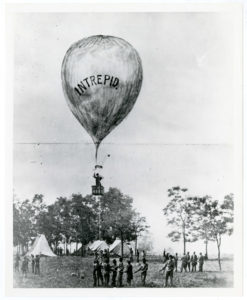 Abraham Lincoln was always interested in technology, so when the Civil War arrived as soon as he was inaugurated, he worked hard to convince the usually conservative military to employ the latest technological advances. One such advance caused him to look to the skies to give every advantage to Union troops. That was the use of balloons in war.
 As 2024 comes to an end, it’s time to recap how it all went in the writer’s life. At least for this one writer. Once again, it was a busy year, with some residual events related to Lincoln: The Fire of Genius, some new obligations, and some really big news (really!). You can check out my other year-end posts by reading about
  How time flies. The year 2024 is almost over and I think I’ve finished accumulated new books for the year, to it’s time for my annual Abraham Lincoln book acquisitions post. As you’ll quickly see, my goal to reduce the number of books I buy has been relatively successful-the total number of books acquired is definitely fewer-coming in at 25 new acquisitions. Reducing the total number of books? Not so successful. You can read about past years acquisitions by
 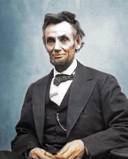 On this date, December 11, 1862, Abraham Lincoln transmitted to the U.S. Senate his response to their request that he “furnish the Senate with all information in his possession touching the late Indian barbarities in the State of Minnesota, and also the evidence in his possession upon which some of the principal actors and head men were tried and condemned to death.”
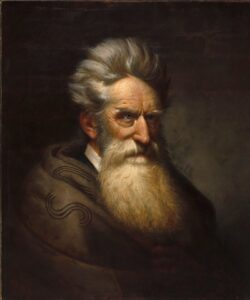 Back in the days when inciting an insurrection against the government was considered disqualifying, on December 2, 1859, abolitionist John Brown was hanged.
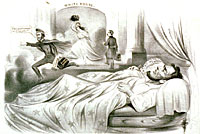 Abraham Lincoln’s “few appropriate remarks” at Gettysburg on November 19, 1863, which we now know as the Gettysburg Address (i.e., “Four score and seven years ago today…”) is a major milestone in Lincoln’s historical legacy. Less remembered is that Lincoln was weak and dizzy as he rose to speak, with the symptoms intensifying on the train back to Washington. Back pains developed, and by the fourth day of being bedridden he experienced a scarlet rash, which soon became vesicular. Lincoln had virus-induced smallpox, or at least a less virulent form called variola or varioloid. Over the next three weeks, lesions appeared and worsened, finally drying and peeling. He remained in bed recovering for weeks.
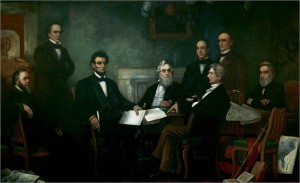 No doubt everyone in the Lincoln world has heard repeatedly about the document we’ve all come to know as the “blind memorandum.” But what about the “reveal party” when Lincoln showed his cabinet what he had written? That event happened on November 11, 1864.