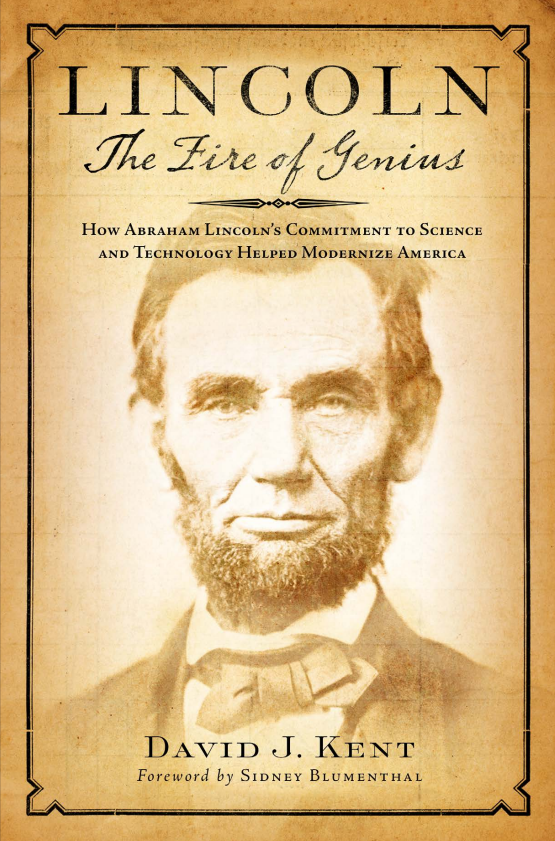
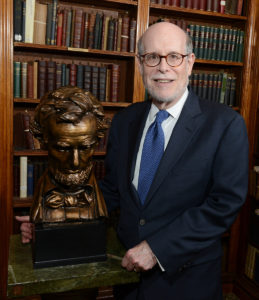
 One part of the process of putting together a book is asking prominent experts in the field to read an advance copy and provide back cover “blurbs.” I am very happy to report that one of the most highly respected and prolific leaders on Abraham Lincoln – Harold Holzer – has offered the following praise for Lincoln: The Fire of Genius:
Abraham Lincoln has seldom been known as a “technology president,” but as David J. Kent so ably demonstrates in this eye-opening volume, he should be. At first an inventor, geometry aficionado, fan of meteorology, and ultimately as a student of advanced weaponry, Lincoln grew into an ardent, indeed society-altering, advocate for both science and science education. David Kent has melded deep research, genuine expertise, and a fine way with an anecdote to produce a study that fills a long-missing niche in the Lincoln literature.
Holzer is the 2015 winner of the Gilder Lehrman Lincoln Prize for his book, Lincoln and the Power of the Press: The War for Public Opinion (Simon & Schuster). The Lincoln Prize is the most prestigious award given to writings on Abraham Lincoln. He is the author, co-author, or editor of over 50 books on Abraham Lincoln, plus more than 600 articles and chapters in another 60 books. To say he is the leading Lincoln scholar in the nation is an understatement.
In addition to his writing, Harold Holzer is the current chairman of the Lincoln Forum, past chair of the Lincoln Bicentennial Foundation, and a prolific speaker. He was awarded the National Humanities Medal in 2008 by President George W. Bush, as well as so many other awards that it’s impossible to even begin to list them (check out his website for a selected list).
I’m happy to say that Holzer will also be one of the primary speakers at the Lincoln Memorial Centennial celebration on May 22, 2022 sponsored by the Lincoln Group of DC, of which I currently serve as president. More information on that event can be found on the Lincoln Group website.
I have also received several other items of praise for Lincoln: The Fire of Genius from other prominent Lincoln scholars, which I’ll highlight here over the next few weeks. I was fortunate to have journalist Sidney Blumenthal – himself the author of three award-winning volumes on the political life of Abraham Lincoln – write the foreword for the book. Read more about that here.
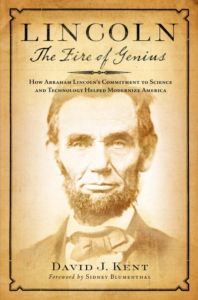 The book is available for pre-order on the Rowman & Littlefield website (Lyons Press is a trade imprint of Rowman). You can also pre-order it on Amazon and Barnes and Noble (click on the respective links to pre-order). Release date is scheduled for September 1, 2022.
The book is also listed on Goodreads, the database where I keep track of my reading. Click on the “Want to Read” button to put it on your reading list. That will also ensure you get informed of the release date AND will let you try for one of ten free hardcover copies of the book that I’ll be giving away this summer. I’ll also be giving away as many as a hundred e-books. [The book will also be put out on audio]
You also follow my author page on Facebook.
I’ll have much more about the book over the next few months, so join my mailing list here to keep informed.
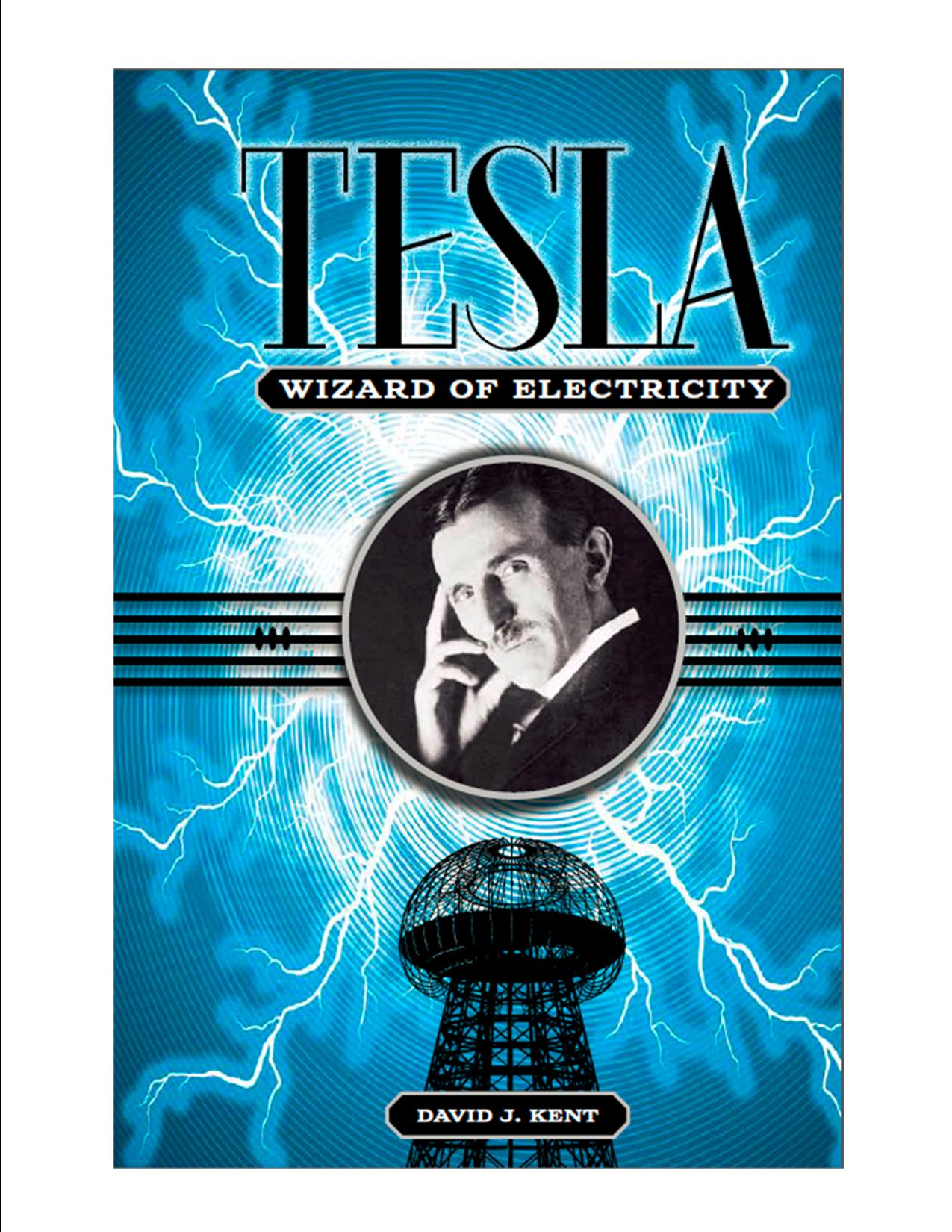
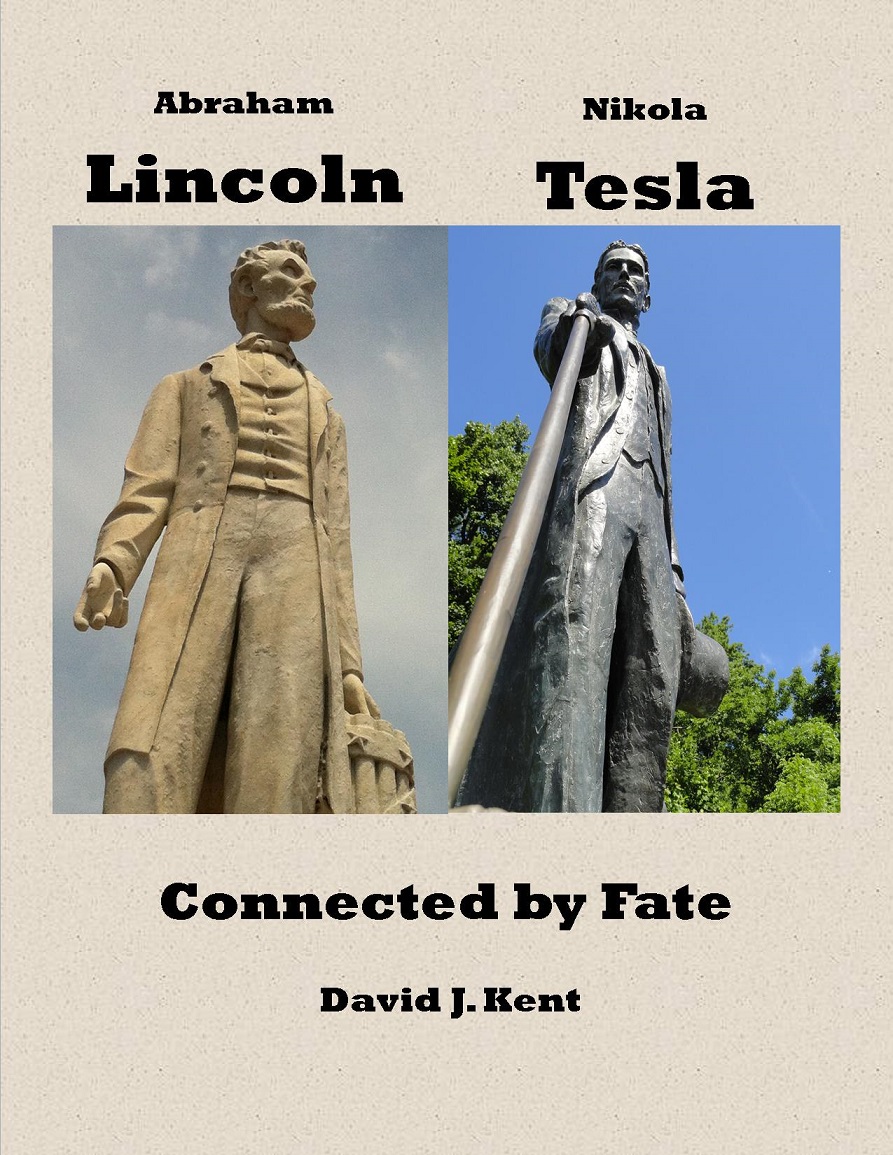
David J. Kent is President of the Lincoln Group of DC and the author of Lincoln: The Man Who Saved America. His previous books include Tesla: The Wizard of Electricity and Edison: The Inventor of the Modern World and two specialty e-books: Nikola Tesla: Renewable Energy Ahead of Its Time and Abraham Lincoln and Nikola Tesla: Connected by Fate.
Check out my Goodreads author page. While you’re at it, “Like” my Facebook author page for more updates!
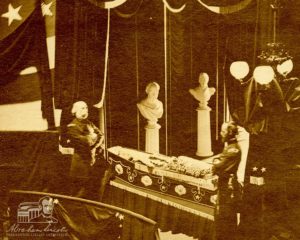 Abraham Lincoln died at 7:22 am on the morning of April 15, 1865. The final chapter in Lincoln: The Fire of Genius is called “Assassination Science.” It starts this way:
 I will be giving a presentation on April 13, 2022, titled “
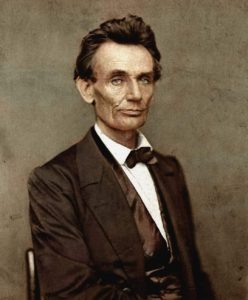 Abraham Lincoln once advised in the prosecution of Isaac Wyant, who had his arm amputated after being shot in a border dispute with Anson Rusk. Following his recovery, Wyant sought out and shot Rusk four times, then pleaded not guilty by reason of temporary insanity. Lincoln’s old friend Leonard Swett was on the side of the defense.
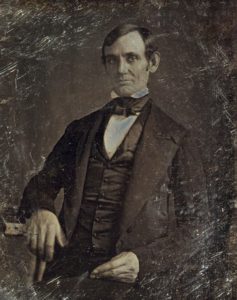 On March 23, 1860, one of Lincoln’s more famous cases came to trial in the U.S. District Court. Johnston v. Jones & Marsh, more commonly known as the Sand Bar case, was important both because of its subject matter (it highlighted Lincoln’s experience with technology) and because, in an age where trial transcripts were almost never kept, journalist Robert Hitt was paid to sit through the entire trial and create a comprehensive 482-page trial transcript, although he omitted the closing arguments.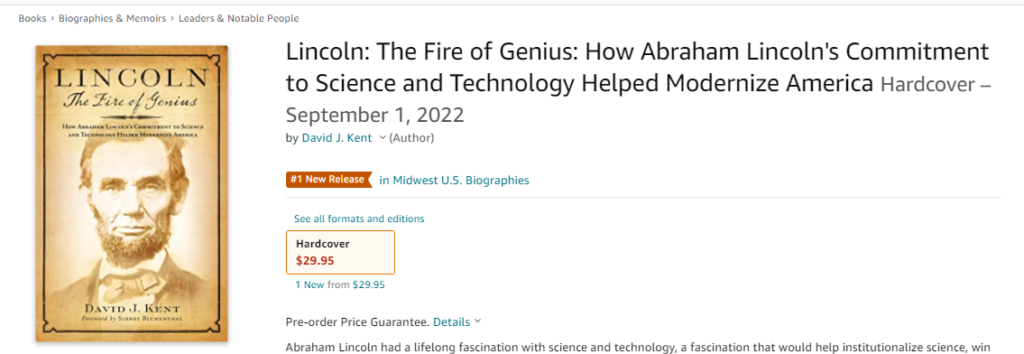
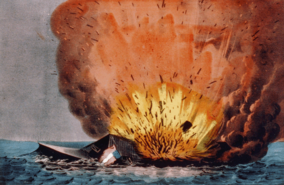 Abraham Lincoln spent much of his day on March 9, 1862 fretting over the battle of the ironclads. The Union ironclad Monitor had fought to a draw with the Confederate ironclad Virginia (former the USS Merrimack) at Hampton Roads, Virginia. The Virginia had been created from the burnt out hull of the Merrimack, left behind at Gosport Navy Yard at the beginning of the war after the state of Virginia seceded. The Merrimack was converted by the Confederate Navy into a seemingly indestructible metallic monster soon to prey on Union ships. Even though the ship was now officially the Virginia, the alliteration of Monitor and Merrimack (and the end of the Confederacy) means most people refer to the ship by its former name, both then and now.*
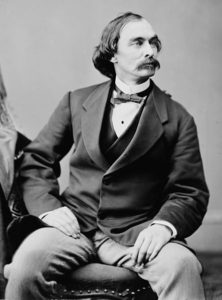 Abraham Lincoln had a knack for meeting Arctic explorers. On March 1, 1862, Lincoln wrote to Secretary of War Edwin Stanton:
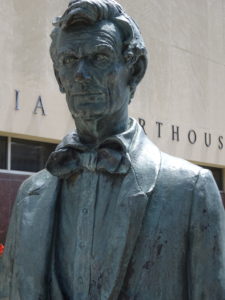 Abraham Lincoln accused Russia of being a place “where despotism can be taken pure,” openly dedicated to the exercise of absolute power and cruelly oppressive.
 On February 15, 1853, Abraham Lincoln wrote to