Calculating Niagara Falls

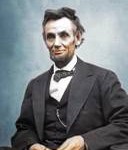
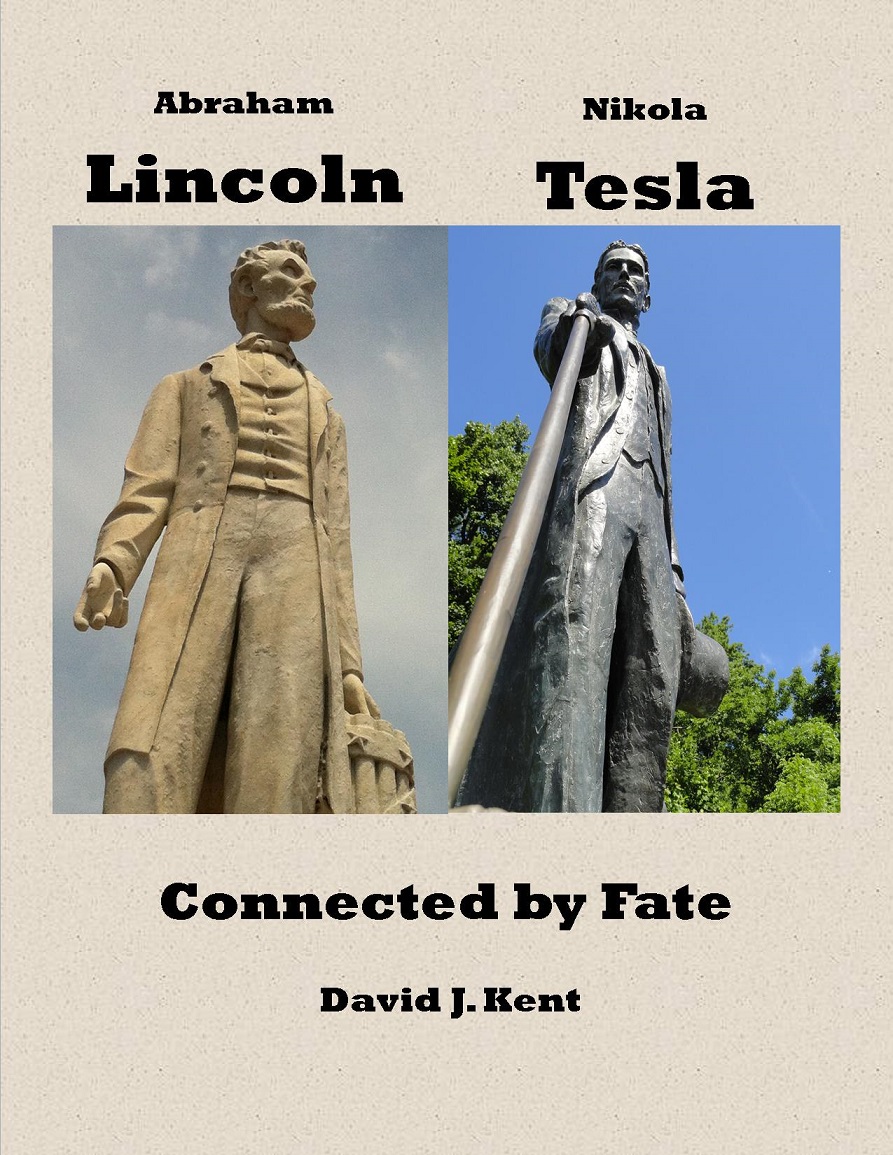
Nikola Tesla designed a way to harness the power of nature at Niagara Falls. But in my e-book Abraham Lincoln and Nikola Tesla: Connected by Fate, I note that Abraham Lincoln had a scientific connection to Niagara Falls almost fifty years before Tesla. In 1848 Lincoln was taking a circuitous route home from a successful campaign tour of New England (where he stumped for Zachary Taylor). His tour took him to Niagara Falls. Like everyone else who sees the Falls for the first time, Lincoln was duly impressed. Unlike most people, however, his naturally analytical mind seemed more impressed with the geology, math, and hydrodynamics of the falls rather than its beauty.

Niagara Falls

I’ve taken an even closer look at Lincoln’s calculations of the power of Niagara in an article just published in The Lincolnian. The article is titled “Abraham Lincoln – The Majesty and the Math of Niagara Falls” and is in the Third Quarter 2015 issue. [Members of the Lincoln Group of the District of Columbia get The Lincolnian as part of their membership.]

Here’s a snippet. After Lincoln’s law partner William Herndon sees Niagara Falls on a trip several years after Lincoln’s visit, he comes back to describe the awe-inspiring magnificence of the Falls and…

Nearly exhausted with this description, Herndon then asked Lincoln of his opinion of Niagara Falls. “What made the deepest impression on you when you stood in the presence of the great natural wonder?” he queried Lincoln, expecting something equally imagery-indulgent.

“The thing that struck me most forcibly when I saw the Falls,” Lincoln said, “was, where in the world did all that water come from?”

Dumbfounded, the humorless Herndon could not believe his ears. The beauty! The splendor! Had the man not opened his eyes to the sight before him? Had he not opened his ears to the thundering roar of the water splashing into the mist below?

Herndon’s explanation of Lincoln’s answer was that “it in a very characteristic way illustrates how he looked at everything.”

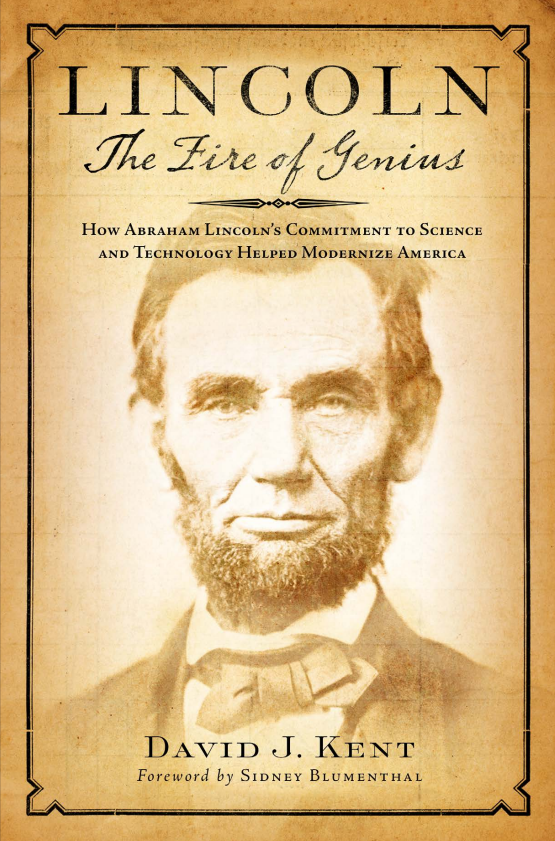
And he was right. Lincoln had an analytical and inquisitive mind. His interest in science and technology is the topic of my forthcoming book and the presentation I will give at the Lincoln Group of DC lecture event on October 20, 2015. If you’re in the area, sign up now.

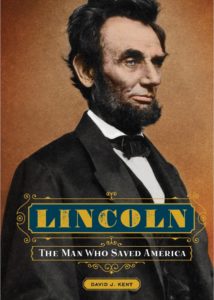
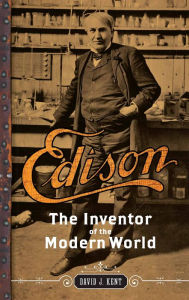
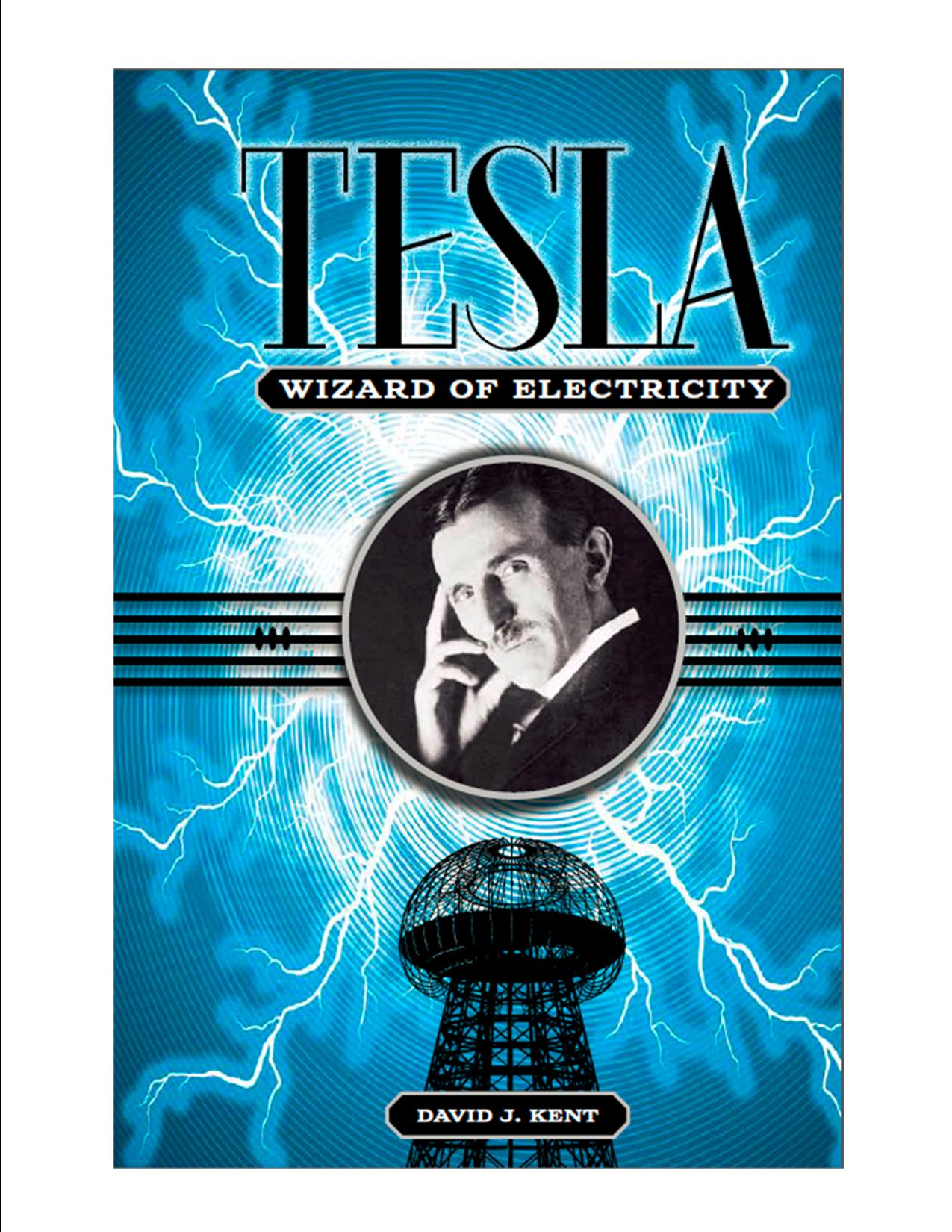
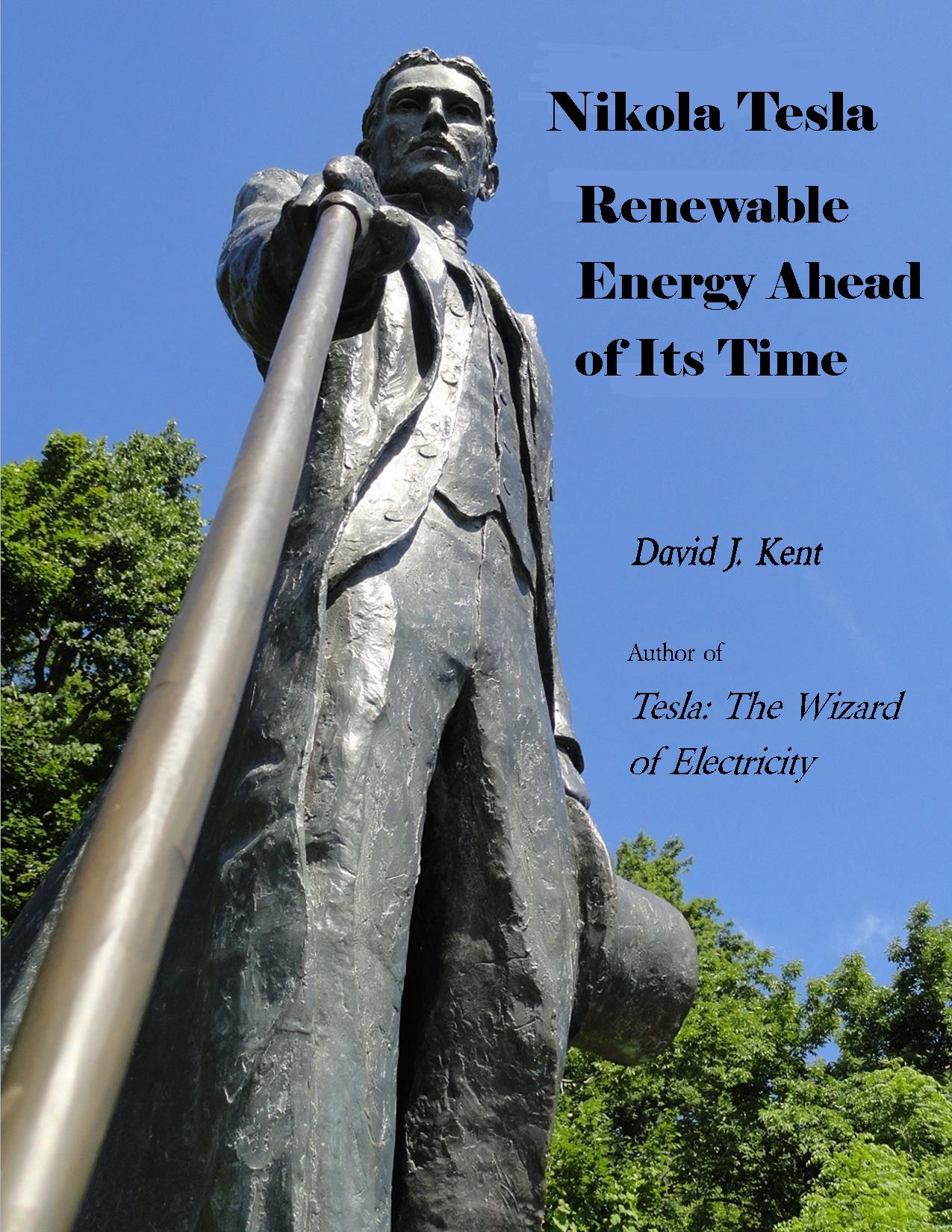
David J. Kent is the author of Lincoln: The Man Who Saved America, in Barnes and Noble stores now. His previous books include Tesla: The Wizard of Electricity (2013) and Edison: The Inventor of the Modern World (2016) and two e-books: Nikola Tesla: Renewable Energy Ahead of Its Time and Abraham Lincoln and Nikola Tesla: Connected by Fate.

Check out my Goodreads author page. While you’re at it, “Like” my Facebook author page for more updates!

[Daily Post]


Abraham Lincoln and the March of Technology

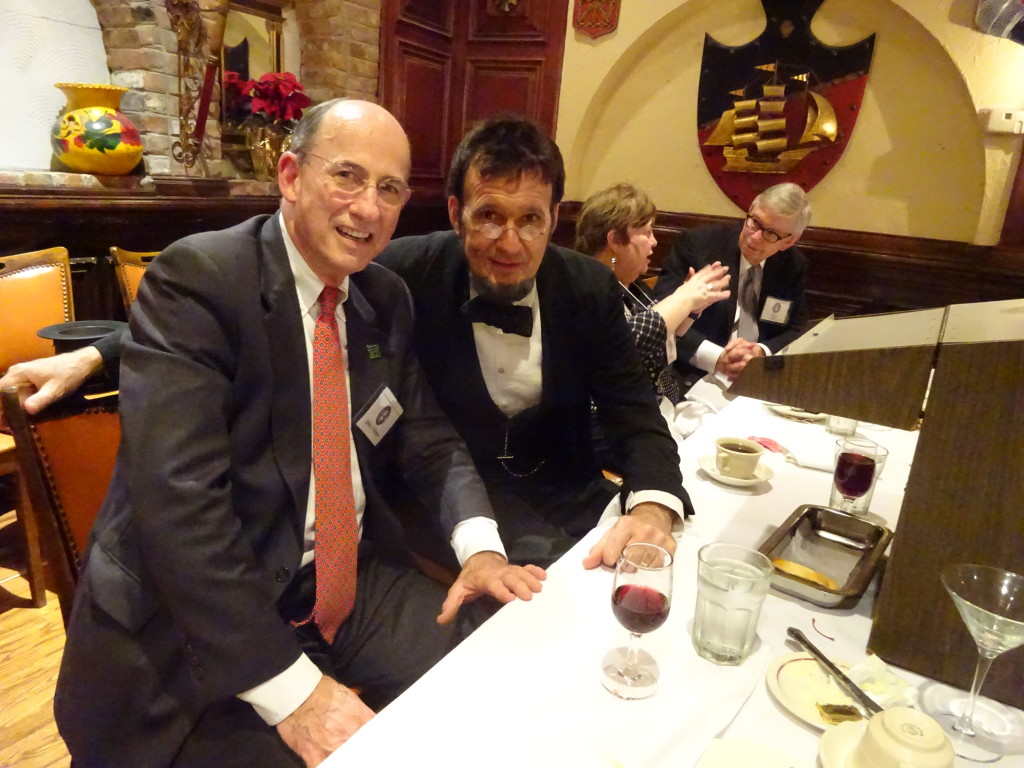
LincolnTuesday, October 20, 2015 will be a first for me. After giving well over a hundred presentations on science topics I give my first official presentation on Abraham Lincoln. I hope many more will follow.

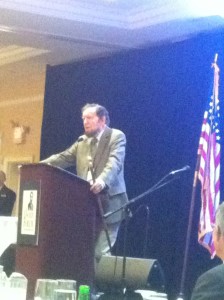
My topic is “Abraham Lincoln and the March of Technology,” and the occasion is the Lincoln Group of the District of Columbia’s monthly dinner lecture. The meeting is being held at Alfio’s Restaurant in Washington, D.C. Register to attend the dinner and lecture – or just the lecture – on the Lincoln Group website.

Many people know that Abraham Lincoln is the only President to ever have received a patent. His invention was for a device for “buoying vessels over shoals,” and received patent number 6,469. He received it as he was completing his single term as a U.S. Congressman.

Lincoln's patent

His invention never saw any practical use, but it reflects a long-standing interest Lincoln had in technology. Early on Lincoln understood the importance of education and advancement. In his very first run for political office he touted what was then the Whig party line of internal improvements – a system of subsidized canals, roads, navigable rivers, and railroads. He was fascinated by the technology growing up around him. A colleague on the law circuit said that Lincoln had “a mechanical mind.”

Over the years he continued to learn about science and technology and advocated its expansion in daily life. He became the “go-to” guy for patent and technology cases in his law career, he nearly mastered the six books of Euclid geometry in his spare time, and was instrumental in the westward expansion of the railroads. During the Civil War he was the first to use the telegraph for strategic purposes, that generations “instant communication.” As President he institutionalized science and technology in ways that still have significant ramifications today.

My presentation will touch on these topics and more, and are the basis for my forthcoming book on Lincoln and Technology. A preview of some of this can be seen in my e-book: Abraham Lincoln and Nikola Tesla: Connected by Fate.

If you’re in the Washington, D.C. area on October 20th please consider coming out to meet me and hear about Abraham Lincoln.

David J. Kent has been a scientist for thirty-five years, is an avid science traveler, and an independent Abraham Lincoln historian. He is the author of Tesla: The Wizard of Electricity (now in its 5th printing) and two e-books: Nikola Tesla: Renewable Energy Ahead of Its Time and Abraham Lincoln and Nikola Tesla: Connected by Fate. His book on Thomas Edison is due in Barnes and Noble stores in spring 2016.

Follow me by subscribing by email on the home page.  And feel free to “Like” my Facebook author’s page and connect on LinkedIn.  Share with your friends using the buttons below.


Science Traveling the Great Capitals of the World

I’ve been lucky enough in recent years to travel to three dozen countries on four continents. Over the next several weeks I’ll be science traveling in a handful of the great capitals of the world.

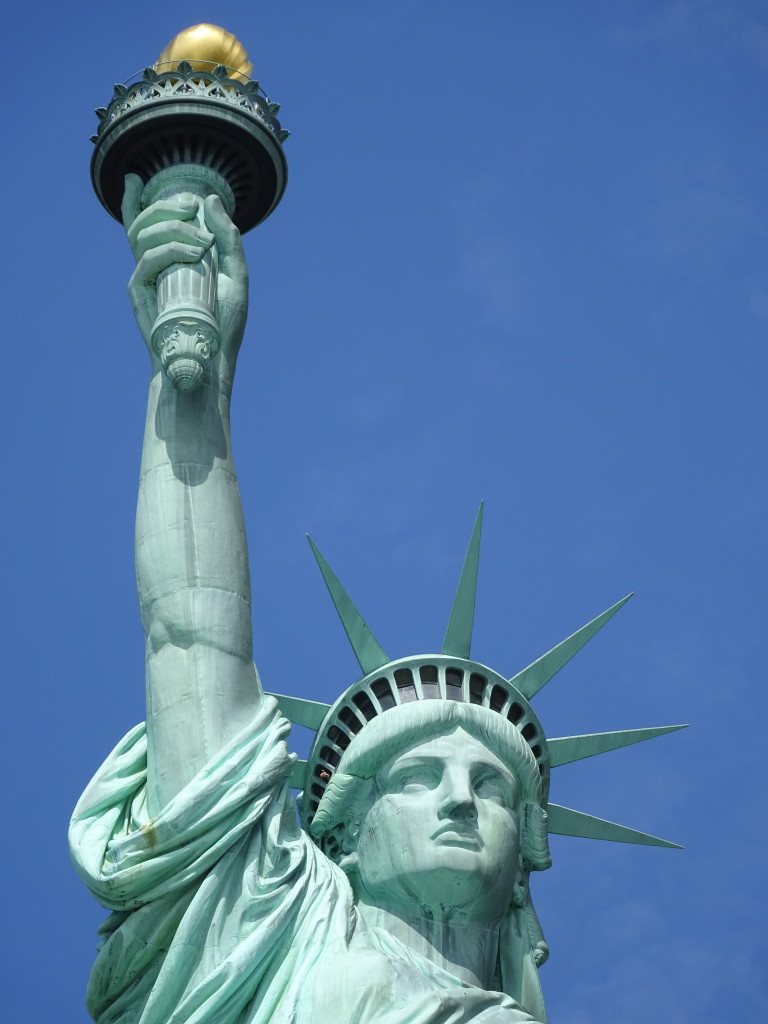
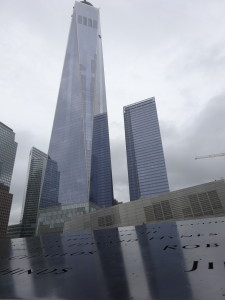
I got started on this trek a week or so ago in New York City. Technically it isn’t a capital, but if you asked any non-American (and perhaps most Americans) to name our greatest city they most likely would name New York. On this occasion I spent some touristy time at the Statue of Liberty, Empire State Building, the 9/11 Memorial, and the aircraft carrier Intrepid (which also has the Space Shuttle Enterprise).

Statue of Liberty

But NYC is the beginning of my fall travels. Next up is a weekend in Paris, the capital of France:

The artist in Paris

Followed by a week in London, the capital of the UK:

London from the Eye

To be followed immediately by Salt Lake City (the capital of Utah) for the SETAC meeting, where I’ll pick up an award. And then on to Gettysburg to attend a conference and commemorate Abraham Lincoln’s famous address.

Gettysburg Tweet

Which reminds me that I skipped an event. On October 20th I’ll be the featured speaker for the Lincoln Group of DC. My topic is “Lincoln and Technology,” which allows me to blend my two favorite topics. Sign up now on the Lincoln Group web page.

I’ll have more from the road as connections allow, and many stories after my return(s).

David J. Kent has been a scientist for thirty-five years, is an avid science traveler, and an independent Abraham Lincoln historian. He is the author of Tesla: The Wizard of Electricity (now in its 5th printing) and two e-books: Nikola Tesla: Renewable Energy Ahead of Its Time and Abraham Lincoln and Nikola Tesla: Connected by Fate. His book on Thomas Edison is due in Barnes and Noble stores in spring 2016.

Follow me by subscribing by email on the home page.  And feel free to “Like” my Facebook author’s page and connect on LinkedIn.  Share with your friends using the buttons below.

American Public Wants Science Debates, With a Caveat (from The Dake Page)

A new poll out concludes that “an overwhelming majority of Americans (87%) say it is important that candidates for President and Congress have a basic understanding of the science informing public policy issues.” This belief is bipartisan, with both Democratic and Republican voters (as well as Independents) agreeing that in our modern age science has a large and necessary role in making policy. But there are some caveats.

The poll was commissioned by ResearchAmerica (a polling organization) and ScienceDebate.org (a non-profit organization). Analysis of the data collected from over 1000 U.S. adults was done by Zogby Analytics.

Results show a clear desire by the American public for presidential candidates and members of Congress to include science in their decision-making. You can see a PDF of the summary slides at this URL. (Be sure to scroll down to see all the graphs and tables.) There are a few take-away lessons from the poll.

First, a vast majority of the public believe that public policy must be based on the best available science.

The public also believes that candidates should be required to have a basic understanding of the science necessary to govern:

And that majority is (somewhat) non-partisan, with Democrats, Republicans, and even Independents agreeing that basic science understanding is important.

[Continue reading on The Dake Page]

The above is a partial cross-post of the full article on The Dake Page. Please click on the link above to read further. Thanks.

David J. Kent has been a scientist for thirty-five years, is an avid science traveler, and an independent Abraham Lincoln historian. He is the author of Tesla: The Wizard of Electricity (now in its 5th printing) and two e-books: Nikola Tesla: Renewable Energy Ahead of Its Time and Abraham Lincoln and Nikola Tesla: Connected by Fate. His book on Thomas Edison is due in Barnes and Noble stores in spring 2016.

Follow me by subscribing by email on the home page.  And feel free to “Like” my Facebook author’s page and connect on LinkedIn.  Share with your friends using the buttons below.

Two New Series on Hot White Snow

Science Traveler is my author website where the focus is on, well, science traveling, including my books. Hot White Snow is my creative writing site. There the focus is on fiction, memoir, and more experimental work, as well as responses to writing prompts. I’ve recently started two new categories of posts in which I share relevant stories that may one day lead to memoirs.

Green head flyThere’s a Fly in My Eye: I grew up in a relatively small New England town. My Dad grew up in the even smaller adjoining town (and my Mom in another small nearby town). Over the years I’ve collected many stories of small town life: some are my Dad’s, some are my own, others come from friends and relatives, and still others are more creatively interpretations of memories. This series collects those stories. In my most recent post I explain the story behind the title: “There’s a Fly in My Eye.” Previous posts include “The Rowley Diner,” “The Trauma of First Grade,” “My Life as a Remote Control,” and others. Scrolling down this list will get you to all of them.

Sandy Hook BrickMy Life in 50 Objects: Another new series looks at my life as reflected in objects. The title was inspired by a Smithsonian series and a related book on the Civil War by renowned Lincoln historian Harold Holzer. Objects may be physical, or sometimes not, but always serve as a reminder of some story, memory, or emotion. The first in the series is “My Life in a Brick,” which takes me back to my first job as a marine biologist and how a devastating fire changed the direction of my career. There is much more to the story than just one brick, of course, and I plan to expand on these tidbits for a larger memoir at some point…after the next several books already in my pipeline.

More stories will be added regularly to each series, so check back at least weekly. Plus, there are plenty of other stories on Hot White Snow, including other memoir, light erotica, science fiction, and even poetry. Feel free to look around, or click on the categories listed in the left margin for specific sections.

David J. Kent has been a scientist for thirty-five years, is an avid science traveler, and an independent Abraham Lincoln historian. He is the author of Tesla: The Wizard of Electricity (now in its 5th printing) and two e-books: Nikola Tesla: Renewable Energy Ahead of Its Time and Abraham Lincoln and Nikola Tesla: Connected by Fate. His book on Thomas Edison is due in Barnes and Noble stores in spring 2016.

Follow me by subscribing by email on the home page.  And feel free to “Like” my Facebook author’s page and connect on LinkedIn.  Share with your friends using the buttons below.


Following in Lincoln’s Footsteps at City Point and Petersburg

Union coat and boots“Let ’em up easy,” said Abraham Lincoln when asked how to treat the citizens of Petersburg after the long siege was to leave the city defeated. Lincoln wanted to end the war, reunite the nation, and move to the future of these United States. But first the Union needed to get the job done. Not an easy task.

The Lincoln Group of DC followed in Lincoln’s footsteps as he toured Grant’s headquarters at City Point, and then as Petersburg fell, walked the streets of that city. Led by certified Washington tour guide and LGDC member Craig Howell, this was a tour that had its own trials and tribulations ahead of the actual day of victory. Postponed from its original date in June to October 3rd, Hurricane Joaquin and a Nor’easter storm seemed destined to thwart our efforts. Ah, but the tour must go on, and all the participants are glad that it did, despite overcast skies and occasional rain. Not the best conditions, but reminiscent of those that Grant’s troops battled as they fought to save the country.

Starting from King Street Metro in Old Town, Alexandria, our coach (driven by our esteemed driver Howard) streaked down to the Richmond, Virginia area for our first stop at City Point. Now a beautiful convergence of the James and Appomattox Rivers, City Point became a bustling supply port for Union forces. At any given time there could be 200 vessels lining the docks, offloading food for nearly 100,000 soldiers, weapons and gunpowder, hay and other foods for the horses and livestock, and supplies to build railroads.

At City point there is a comfortable house, home of Dr. Richard Eppes, a plantation and slave owner who nonetheless disagreed with Virginia’s decision to secede. Craig informed us that the home was used by the most important Union officer on the site – the Quartermaster, who coordinates the supply chain. General-in-Chief Ulysses S. Grant chose to set up camp in tents on the lawn beside the house; those tents became sturdier cabins once it was clear the siege would extend through the winter.

Grant's cabin City Point

At the time there were many tents, then cabins, but after the war all but one were removed as Eppes returned to his still standing but somewhat worse-for-wear home. Grant would guide his troops from there until the end of the siege. Lincoln had been there in June 1864, but for his last trip would arrive at City Point on March 24, 1865, from where he conferred with Grant, visited local hospitals, and reviewed the troops. Ray and John do there best recreation of Grant and Lincoln discussing troop movements.

In Grant's cabin

From City Point we went on to Fort Wadsworth, where Lincoln reviewed strategy and met with troops only a couple of miles from Confederate front lines. Then on to the Wallace House in Petersburg, where Lincoln and Grant sat on the front porch discussing strategy for ending the war and beginning the reconstruction. Finally, we received a tour of Centre Hill, the biggest home in Petersburg and the location of yet another meeting between Lincoln and his generals.

As always, Craig Howell regaled our group with an incredible depth of knowledge that rivals the iconic Ed Bearss. Craig’s command of all the key players, their history, of troop movements, and wonderful stories add so much to the locations we visit. A good example is his recounting of the strange case of John Maxwell, a Confederate who destroyed much of the City Point docks with a “horological torpedo” (aka, a time bomb).


John Maxwell

Our knowledge of City Point and the Petersburg campaign is assuredly greatly enhance thanks to Craig, and despite the dampness everyone had a great time following in the footsteps of Abraham Lincoln.

David J. Kent has been a scientist for thirty-five years, is an avid science traveler, and an independent Abraham Lincoln historian. He is the author of Tesla: The Wizard of Electricity (now in its 5th printing) and two e-books: Nikola Tesla: Renewable Energy Ahead of Its Time and Abraham Lincoln and Nikola Tesla: Connected by Fate. His book on Thomas Edison is due in Barnes and Noble stores in spring 2016.

Follow me by subscribing by email on the home page.  And feel free to “Like” my Facebook author’s page and connect on LinkedIn.  Share with your friends using the buttons below.

[Daily Post]

Liberty for All

A little taste of New York. Probably the only blue sky seen all day, and with a tropical storm hitting, all week.

Today probably a good day for museums. Saw the new 9/11 Museum yesterday. Very emotional impact; a lot of memories can flooding back.

More later.

I’m in a New York State of Mind

As Billy Joel once said a long, long time ago (and probably at every concert for the last four decades), I’m in a New York state of mind. And not just mind, body too. By the time you read this I should be on a train to the Big Apple, The City, the City That Never Sleeps.

New York, New York (a la Frank Sinatra).

It will either be a short week or a long week. I’ll let you know when I return. The plan is somewhat flexible, pending cooperative weather (or not) and ease of decision-making (or not). Try to Imagine the possibilities.

Lincoln


I’m sure there will be a Lincoln stop or two, and a Tesla stop or two, and maybe even an Edison stop (or not). How about the United Nations? Seems there has been a flurry of activity there – the Pope last week and Presidents of various countries this week. Perhaps I’ll run into Barack, of Vladimir, or Xi (or not).

United Nations

I’ll post updates from the ground as I can during the week.

David J. Kent has been a scientist for over thirty years, is an avid science traveler, and an independent Abraham Lincoln historian. He is the author of Tesla: The Wizard of Electricity (now in its 5th printing) and two e-books: Nikola Tesla: Renewable Energy Ahead of Its Time and Abraham Lincoln and Nikola Tesla: Connected by Fate. His book on Thomas Edison is due in Barnes and Noble stores in spring 2016.

Follow me by subscribing by email on the home page.  And feel free to “Like” my Facebook author’s page and connect on LinkedIn.  Share with your friends using the buttons below.

Revisiting Patagonia

PatagoniaPatagonia is one of the most diverse geographies on Earth. It encompasses the lower end of South America, mostly in Argentina but also spanning Chile. As such it touches on two coastlines – the Atlantic on the Argentinian east and the Pacific on the Chilean west. The area goes from the high Andes, to the low scrubland plains, the large lake filled northwest, glaciers in the southwest, and coastlines of the southeast. Animals range from the ostrich-like choiques (CHOY-kas) and camel-like guanacos (WAN-a-coes) to snakes and penguins. Yes, penguins.

Perito Moreno glacier - front and north faces

Last year I spent three weeks in Patagonia, traveling from the very north in Bariloche down through the Argentinian side of the Andes mountains to the southern glaciers at Perito Moreno. A planned visit to the Chilean side of the Andeans was quashed by an unforeseen broken ankle (my host’s, not mine), but that opened up a return trip driving east through the desert-like steppe and up the eastern coastline. Another week was split between enjoying the beautiful lakes of Bariloche and visiting various doctors and hospitals (see “unforeseen broken ankle”). I also got to visit with my host’s fisheries biology lab mates. All in all a fantastic trip.

I’ll be writing much more on Patagonia (and planning another South American trip), but to catch everyone up here are links to previous posts. Click on the titles below.

The Route: A quick tour of the plan for the trip, and some highlights.

Cueva de las Manos…the Cave of the Hands: An amazing place with 10,000 year old hand prints. It was quite a challenge to hike to, which made it all the more incredible.

Mount Fitz Roy and the Glaciers: Mountains named after the Captain of the Beagle (Charles Darwin’s ship). An amazing hike with even more amazing views.

Up Close and Personal with the Perito Moreno Glacier: One of the most iconic glaciers in the world (you’ve probably seen photos). It’s even more impressive up close.

The Gravel Roads of Patagonia: This was a road trip. Except the roads were often more in name than actuality. A good story was had by all.

Drinking Tea, aka, Mate, in Argentina: No trip to Patagonia is possible without a healthy dose of matte, the South American “tea” that is as much a social event as it is a libation.

Much more on Argentina and other points south in the future.

David J. Kent is an avid science traveler and the author of Lincoln: The Man Who Saved America, now available. His previous books include Tesla: The Wizard of Electricity and Edison: The Inventor of the Modern World (both Fall River Press). He has also written two e-books: Nikola Tesla: Renewable Energy Ahead of Its Time and Abraham Lincoln and Nikola Tesla: Connected by Fate.

Check out my Goodreads author page. While you’re at it, “Like” my Facebook author page for more updates!

Follow me by subscribing by email on the home page. Share with your friends using the buttons below.

Tenerife from the Snow

El Teide, TenerifeThe road to Tenerife is paved with four inches of snow. At least, that was the case for this trip. So while the warmth of the largest Canary Island waited off the coast of Morocco, my plane sat in the Brussels airport buried in snowflakes. At first it seemed just a minor delay – only a half hour waiting for the bus to take us to the Airbus A320. Brussels had seen snow before, I reminded myself, and this didn’t seem like that much. The snow coming in on the train was fluffy; beautiful, in fact. Okay, it was cold, even frigid, but a little ice is easy to handle. No matter, we were ready to board the transport.

“Excusez-moi, Mesdames et Messieurs.” “Neem me niet kwalijk, dames en heren.”

This can’t be good, I thought. The announcement repeated over the airport intercom. Somehow the mere introduction, in French and Dutch, was enough to create a wave of incredulous groaning from the passengers impatiently dawdling in the concourse. We all knew what was coming.

“Ladies and Gentlemen, we regret to inform you that the airport is now closed because of the weather. We will keep you posted as to when the status changes. Thank you.”

The next three hours seemed like forever. The din from hundreds of disgruntled travelers calling their bosses, spouses, paramours, and travel agents was deafening. No one was happy, but then in oft-rainy Brussels no one ever seems to be happy. Most of us wandered around, looking to see if anyone else was taking off (they weren’t) or giving up and leaving the airport (they were). I had an overnight stopover in Madrid, so knowing that I had some time to kill anyway, decided to stick it out, keeping myself company watching the television monitor documenting the snowfall accumulations.

Somehow I survived, though whether it was despite not having a cell phone of my own, or because of it, I can’t be sure. All I remember is that eventually we were told to board the bus, which took fifteen minutes to snake around the entire terminal (possibly twice) before letting us off about 50 feet from the plane. The slog through snow drifts at least a foot deep, and the climb up the slippery steps to the fuselage, was a challenge. Then more time waiting our turn at the de-icing station where we spent another ten minutes under a waterfall of what I knew from experience was not the most innocuous of chemicals. I didn’t care; we were off the ground. Tenerife or bust.

I found out later that I was in the last plane to leave Brussels that day. Only six planes took off, the rest were stranded; some as long as two days. Ironically, on my first day in the tropical paradise I would discover that Tenerife also boasted frigid cold and snow. But that’s another story.

Check out this earlier look at The Orchids of Tenerife.

[More on Tenerife and other science travel coming soon. Reposted from Hot White Snow.]

David J. Kent is an avid traveler and the author of Lincoln: The Man Who Saved America, now available. His previous books include Tesla: The Wizard of Electricity and Edison: The Inventor of the Modern World (both Fall River Press). He has also written two e-books: Nikola Tesla: Renewable Energy Ahead of Its Time and Abraham Lincoln and Nikola Tesla: Connected by Fate.

Check out my Goodreads author page. While you’re at it, “Like” my Facebook author page for more updates!

Follow me by subscribing by email on the home page. Share with your friends using the buttons below.