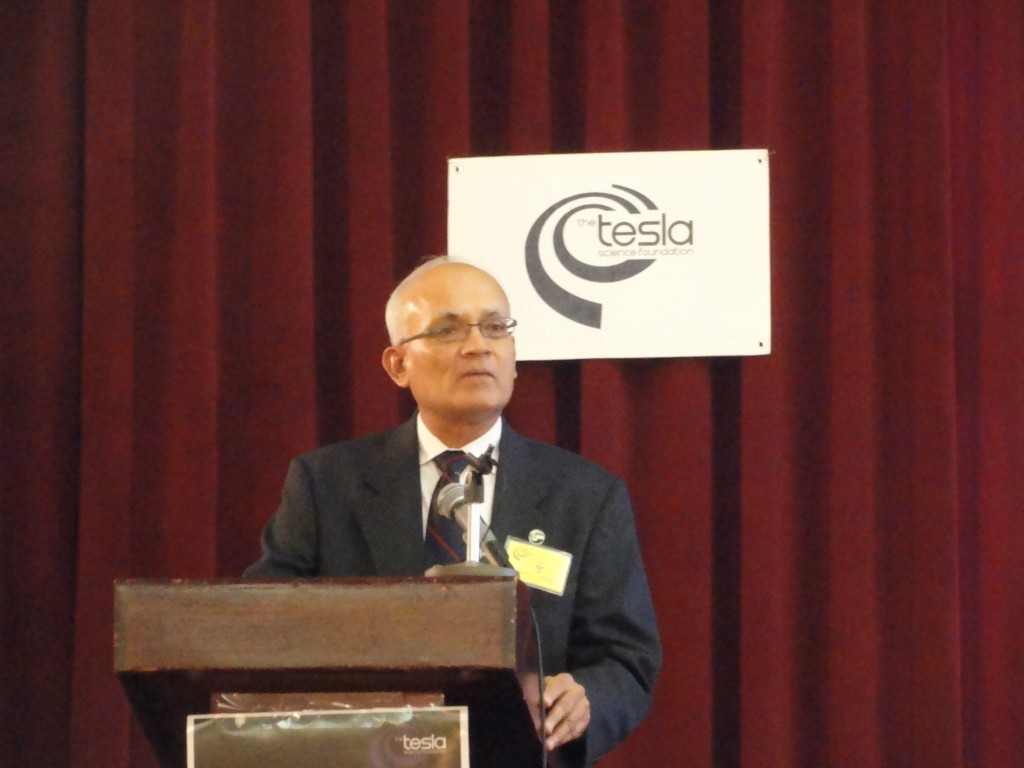
I had the distinct pleasure of spending this past weekend in the company of many of the most influential experts and enthusiasts of the great Serbian-American inventor, Nikola Tesla. Held in the New Yorker Hotel on the 70th anniversary of Tesla’s death, the conference consisted of two full days of presentations, preceded by a gala Spirit Awards Benefit Reception. By all measures the conference was a great success.
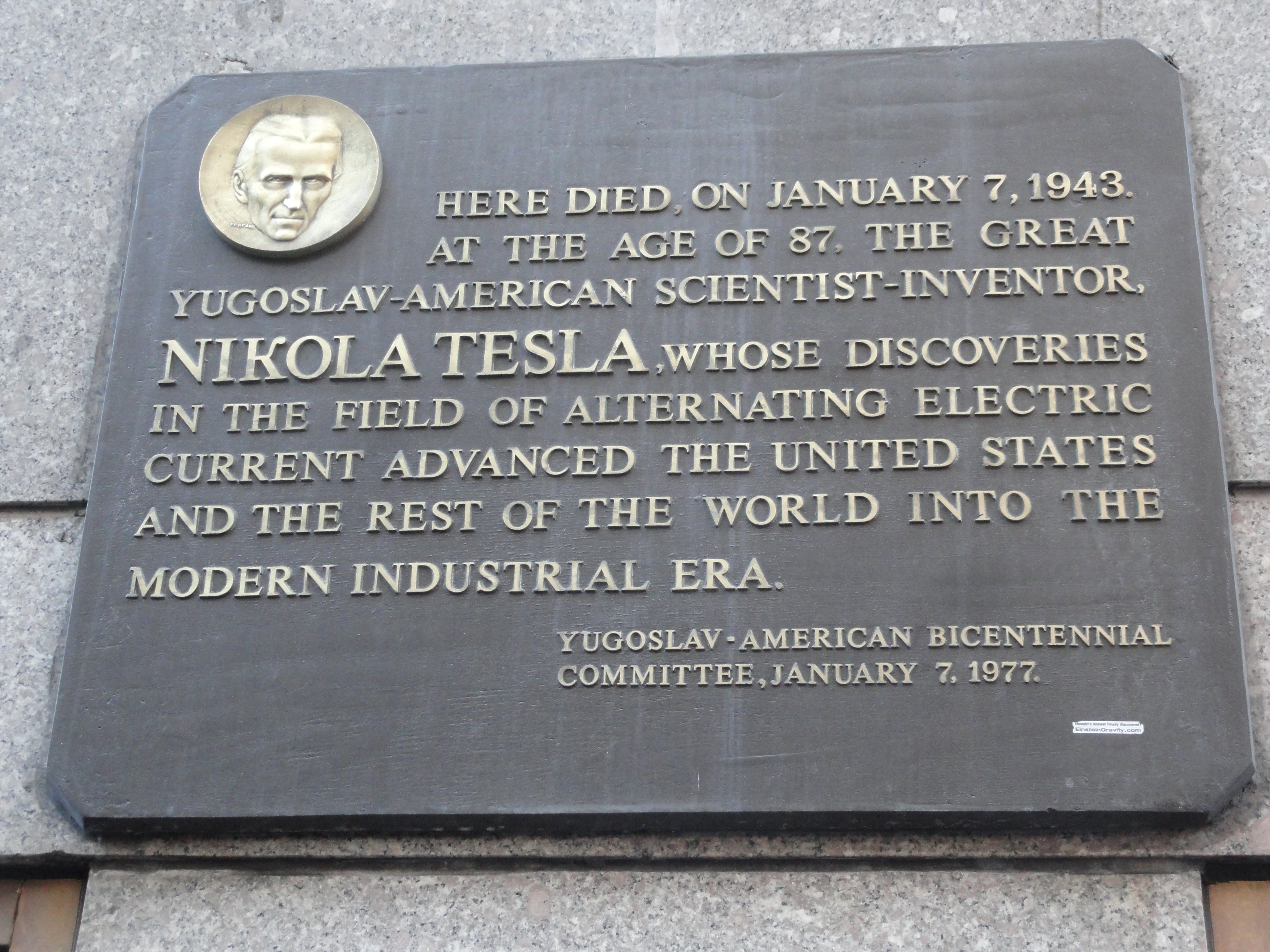
Tesla Science Foundation, under the leadership of President Nikola Lonchar, Executive Director Marina Schwabic, and Chairman David Vujic, sponsored the event, along with support by the New Yorker Hotel, the Institute of Electrical and Electronics Engineers (IEEE), Westinghouse, and the General Consulate of Serbia. Those who know about Nikola Tesla will have heard that he lived the last ten years of his life in Room 3327 of the New Yorker. There is a plaque on his door.
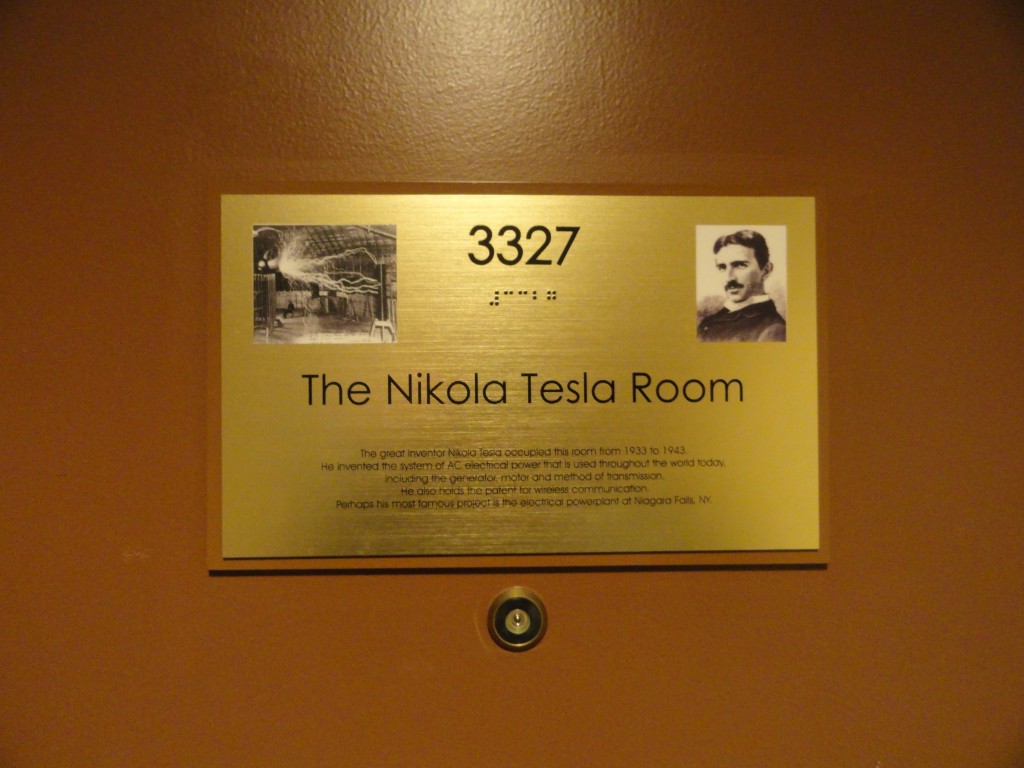
For this event I was lucky enough to have the room immediately next to the Tesla room. From 3326 I was able to see and hear a stream of people stopping by to take photos by Tesla’s door. I also learned that Tesla had a two room suite – he used Room 3328 as a study.
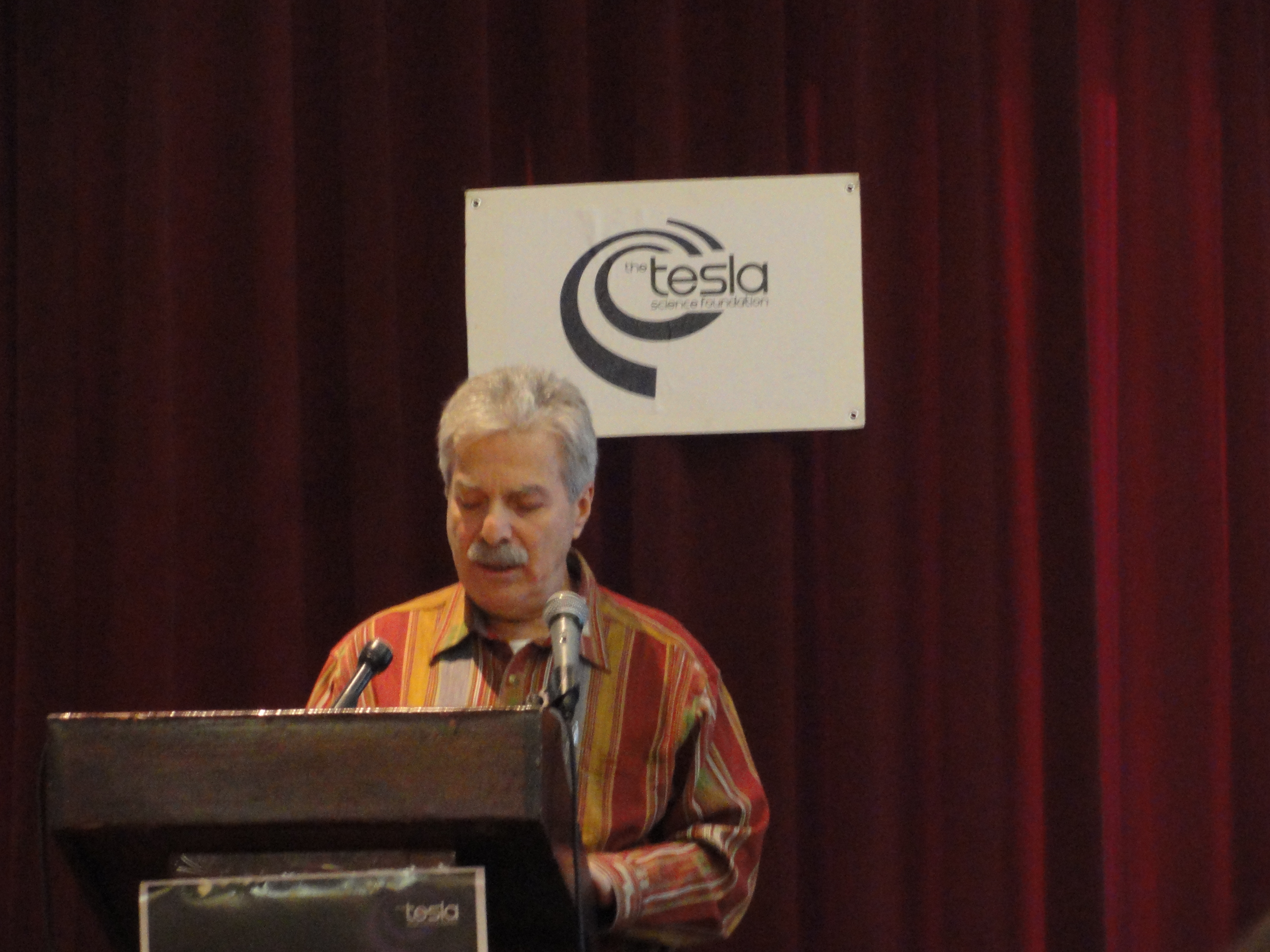
The first day of the Conference was filled with a wide variety of presentations based on the theme “Why Tesla Matters.” New Yorker Hotel engineer Joe Kinney opened with a history of Tesla and the hotel. He was followed by one of the most fascinating and inspiring talks of the day, by 12-year old Kyle Driebeek (I’ll have more on Kyle in a future piece). Other highlights of the first morning were presentations by Tesla expert and author Marc Seifer and his screenwriting partner Tim Eaton, updates on a movie in development by award-winning filmmaker Joe Sikorski, Tesla as artistic inspiration by Miriam Seidel, Terry O’Reilly and Melissa Dunphy, and Tesla in film by Milan Knezevic.
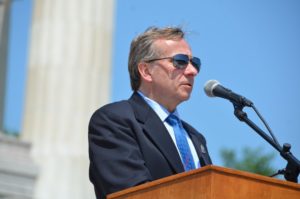
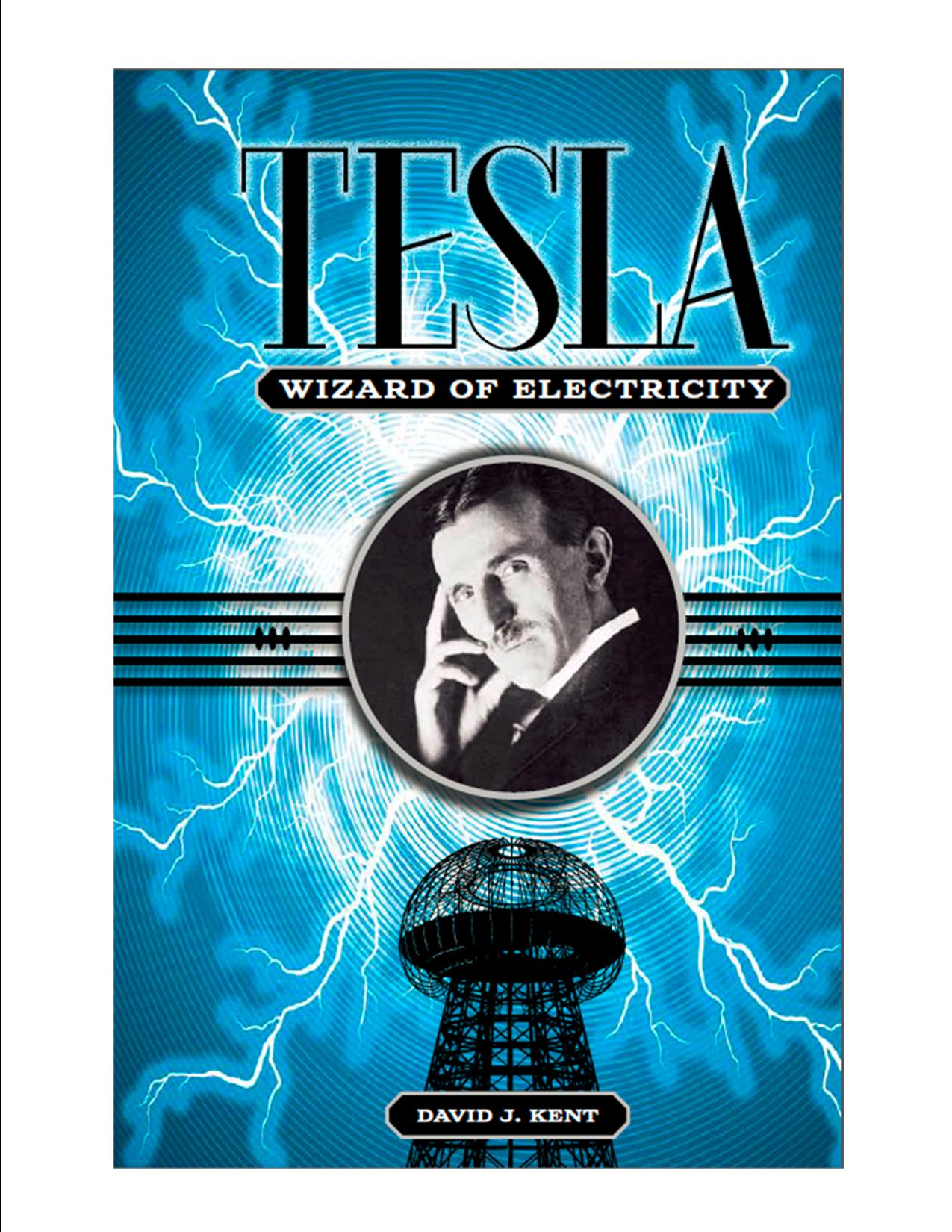
I also made a presentation on my forthcoming book, Tesla: Wizard of Electricity. The recording of my presentation can be viewed on this website (skip to about the 10:50 mark to see me literally trip up the stage steps).
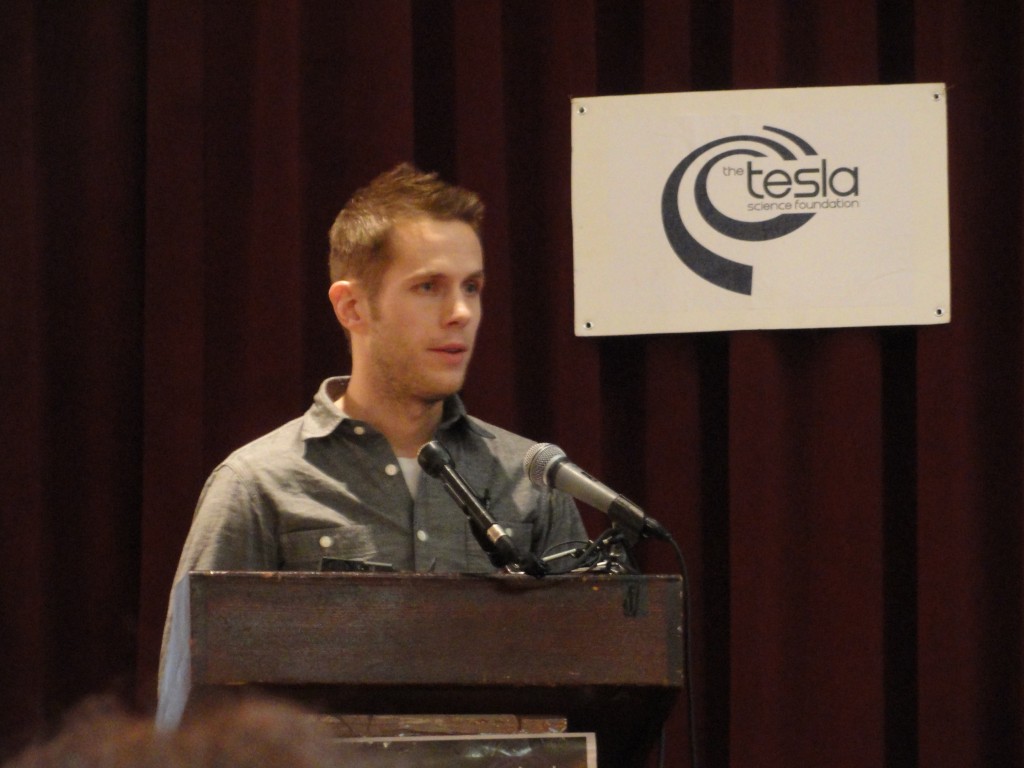
The biggest highlights of the day were the presentations by Jane Alcorn, President of the Tesla Science Center at Wardenclyffe, and Matt Inman, creator of The Oatmeal. Jane provided an update on the progress in purchasing Tesla’s last laboratory, the Wardenclyffe property in Shoreham, Long Island. The contract is nearing completion and the Science Center is hard at work drawing up plans for the renovation and restoration of the property. Photos of the facility show that age and vandalism have taken a toll so this will be a long-term project, likely achieved in a series of steps. Following her presentation Jane introduced The Oatmeal, aka Matt Inman. Matt had used the reach of his wonderful comic site and the power of crowdfunding to help raise nearly $1.4 million within 45 days, all of which is being used to fund the purchase of Wardenclyffe. In three days of applause for the speakers, Matt Inman is the only person to receive a full standing ovation from the crowd. His efforts were clearly very much appreciated.
After Inman was a very special surprise guest that wasn’t on the agenda. While Nikola Tesla never married, and in fact lived a celibate life, his sister had a son, Tesla’s nephew. That son married and had a son, Tesla’s grand-nephew. And Mr. William H. Terbo, Nikola Tesla’s grand-nephew, graced the conference with his ebullient presence.
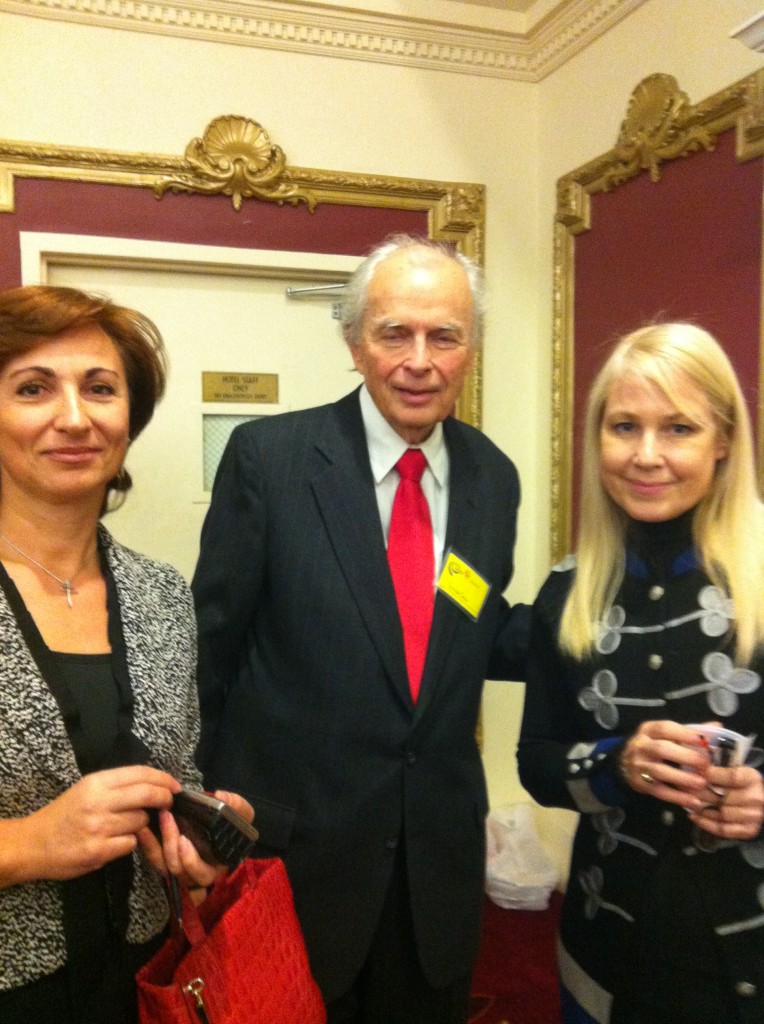
Terbo is Executive Secretary of the Tesla Memorial Society and enjoys every chance to help continue his grand-uncles name and heritage. He talked of the many dedications of statues and plaques, including the one on the outside of the New Yorker Hotel. He even related the story of meeting Tesla in 1940, when Mr. Terbo was 10 years old. I had the pleasure of a delightful conversation with Mr. Terbo, who promised to read my book as soon as it was available.
Rounding out the first day were short presentations by other writers and visual art creators, updates on the UNESCO activities honoring Tesla, the IEEE’s Tesla Award, a heartfelt homage to the contributions of Serbs in America, and the activities of the Tesla Memorial Society of New York.
Phew. As I look back, this was a packed program – and it was only the first day of presentations! I’ll have more on the second day in a follow up article, including live Tesla coils on stage.
More on Tesla: Wizard of Electricity.
Follow me by subscribing by email on the home page. And feel free to “Like” my Facebook author’s page and connect on LinkedIn. Share with your friends using the buttons below.


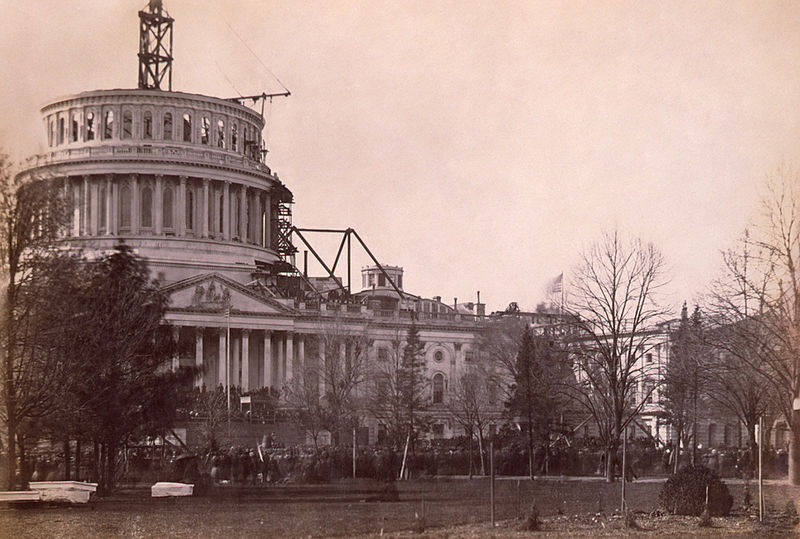 Obama did not mention Lincoln by name during his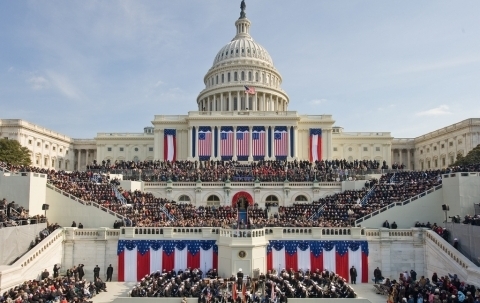
 This is Part Two of a series about inauguration speeches, in particular that of Abraham Lincoln, whose bible was used by President Barack Obama for both his first and second inaugurations. It is best to
  Barack Obama, our first African-American President, took his oath of office in 2013 on the day we celebrated the birthday of the great civil rights leader,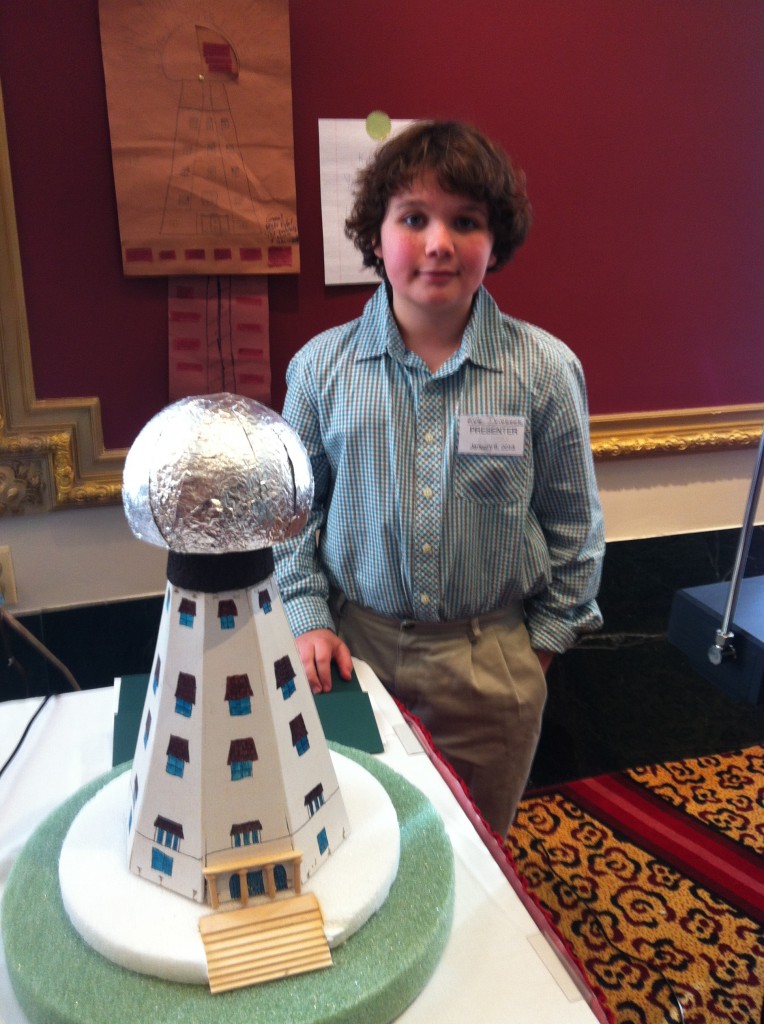
 Dr. Frank Smith, Jr. will be the speaker at the
 Nikola Tesla is one of the most prolific inventors of all time, and yet many have never heard of him. Born in the little village of Smiljan in what is now Croatia, Tesla’s family was actually Serbian. From a young age Tesla liked to experiment, even to the point of gluing June bugs to sticks to create a self-propelled windmill. He later went on to work for