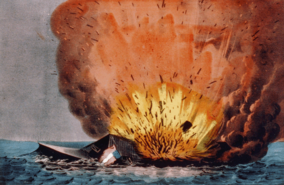
 Abraham Lincoln spent much of his day on March 9, 1862 fretting over the battle of the ironclads. The Union ironclad Monitor had fought to a draw with the Confederate ironclad Virginia (former the USS Merrimack) at Hampton Roads, Virginia. The Virginia had been created from the burnt out hull of the Merrimack, left behind at Gosport Navy Yard at the beginning of the war after the state of Virginia seceded. The Merrimack was converted by the Confederate Navy into a seemingly indestructible metallic monster soon to prey on Union ships. Even though the ship was now officially the Virginia, the alliteration of Monitor and Merrimack (and the end of the Confederacy) means most people refer to the ship by its former name, both then and now.*
The day’s consternation started early as Lincoln received a report from General Wool at Fortress Monroe that the Merrimack had destroyed the USS Cumberland and the USS Congress, two Navy frigates, whose wooden hulls and lack of maneuverability were no match for the ironclad behemoth the Confederacy had created. A dispatch received later in the day, described the arrival of the Monitor in time to save USS Minnesota from destruction, then engagement in a pitched battle with the Merrimack. Both vessels were damaged and there was no clear winner. Ironically, both vessels would retreat for repairs and would never fight another battle before their destruction – the Monitor in a storm and the Merrimack/Virginia by its crew.
During the day there was quite some excitement in Washington. Hampton Roads is within easy steaming distance of the Capitol and many in the city were fearful it would simply come up the Potomac and attack. Secretary of War Edwin Stanton was particularly anxious about this possibility, and while there was no actual attempt to do so, the fear of an attack kept everyone busy. At one point, Lincoln took a carriage with Senator Browning to the Washington Navy Yard to confer with Commander John Dahlgren, a recurring technical advisor who Lincoln called on repeatedly. While Stanton began plans to block river traffic, word came in that relieved those fears. Lincoln followed reports from his regular perch in the War Department’s telegraph office.
Lincoln had played a major role in cutting through the mutual disgust between the Monitor‘s designer John Ericsson and the Navy Department – the Navy had scapegoated Ericsson for a cannon mishap on the USS Princeton in 1844, which resulted in the deaths of two cabinet members and nearly injuring then-President John Tyler – and he would play a major role in the destruction of the Merrimack/Virginia two months later. I’ll have more on that incident in Lincoln: The Fire of Genius.
*Sometimes the spelling leaves off the “k” to make it Merrimac, but having grown up near the Merrimack River for which it is named, the “k” stays in. To confuse matters more, there was a USS Merrimac during the Civil War, a sidewheel steamer first used by the Confederate Navy but captured and used by the United States Navy.
Pre-order Lincoln: The Fire of Genius now on Amazon and Barnes and Noble (click on the respective links to pre-order). The price is likely to drop before the final shipment, and any pre-orders will automatically get charged the lower price at fulfillment. Pre-ordering now helps the publisher get a sense of the interest, which could mean a bigger print run. So please go ahead and pre-order without worries. While you’re there, check out my other books.
The book is also listed on Goodreads, the database where I keep track of my reading. Click on the “Want to Read” button to put it on your reading list. That will also ensure you get informed of the release date AND will let you try for one of ten free hardcover copies of the book that I’ll be giving away this summer. I’ll also be giving away as many as a hundred e-books. [The book will also be put out on audio]
You also follow my author page on Facebook.
I’ll have much more about the book over the next few months, so join my mailing list here to keep informed.
David J. Kent is President of the Lincoln Group of DC and the author of Lincoln: The Man Who Saved America. His previous books include Tesla: The Wizard of Electricity and Edison: The Inventor of the Modern World and two specialty e-books: Nikola Tesla: Renewable Energy Ahead of Its Time and Abraham Lincoln and Nikola Tesla: Connected by Fate.
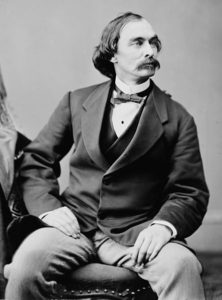 Abraham Lincoln had a knack for meeting Arctic explorers. On March 1, 1862, Lincoln wrote to Secretary of War Edwin Stanton:
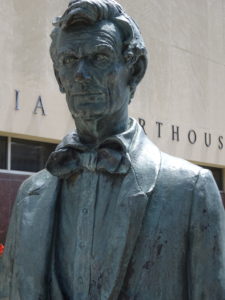 Abraham Lincoln accused Russia of being a place “where despotism can be taken pure,” openly dedicated to the exercise of absolute power and cruelly oppressive.
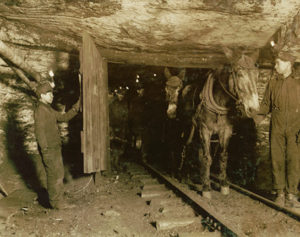 On February 15, 1853, Abraham Lincoln wrote to
 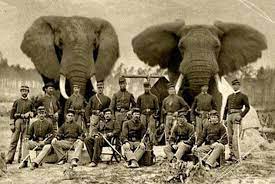 Abraham Lincoln rejects gift of elephants from Siam by pointing out the advantages of steam power. Lincoln would promote many scientific and technological improvements in his lifetime and his presidency.
 As mentioned last time, Lincoln: The Fire of Genius is now open for pre-order on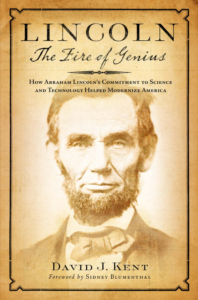
 The year in a writer’s life actually went much more to plan than
 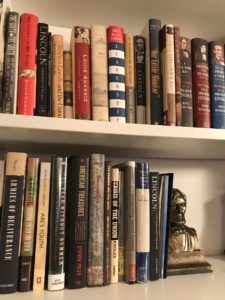 The biggest feature of my Abraham Lincoln book acquisitions for 2021 is that most of the books I acquired aren’t even mine. As usual, I begin my annual “Year in the Life” posts with my Lincoln book collection. You can
 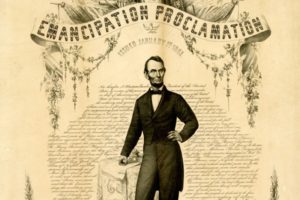 Few people know that Abraham Lincoln was also a philanthropist. We remember him for saving the union and the