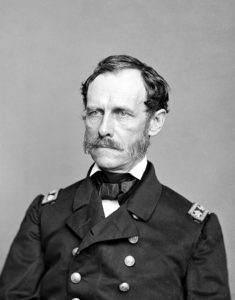
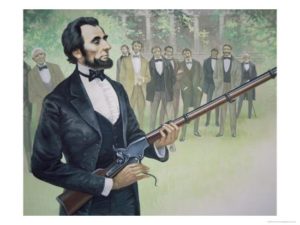
 Lincoln liked John A. Dahlgren, his weapons guy, of sorts. On December 8, 1862, Lincoln sent a telegram to the Washington Navy Yard with the succinct request: “Will Capt. Dahlgren please call and see me at once?”
What they discussed on that particular occasion is unknown, but Lincoln often conferred with Dahlgren about the war effort. A few weeks into the war, he had pressed Dahlgren on a new gun presented by Orison Blunt. After encouraging Dahlgren to “please see Mr. Blunt,” Lincoln wrote “What do you think of it? Would the government do well to purchase some of them?” When Dahlgren replied positively the same day, Lincoln endorsed the envelope with another prod for action: “I saw the gun myself, and witnessed some experiments with it,” Lincoln wrote, adding “I really think it worthy the attention of the government.” Presumably these were the Enfield-patterned rifles Blunt made for the Army a year later.
Not long before the mysterious 1862 telegram, Lincoln had visited Dahlgren at the Navy Yard along with Secretary of State William Seward, and Secretary of Treasury Salmon P. Chase. Dahlgren took the group down to the banks of the Anacostia River to witness testing of the Hyde rocket. Instead of shooting off across the river as planned, the rocket exploded, nearly sending shrapnel into the group of distinguished leaders, all of whom escaped unharmed. Lincoln skipped the next trial two days later when the rocket flew out of control and landed on the roof of a nearby blacksmith shop.
Lincoln had also consulted with Dahlgren to discuss the veracity of claims by one of Lincoln’s old friends, Isaac Diller, who had proposed “a new and secret art of making gunpowder.” Diller was acting as an agent for a German developer of a chlorate-based gunpowder as an alternative to that based on saltpeter (potassium nitrate). Satisfied with Dahlgren’s assessment, Lincoln entered into an agreement with Diller authorizing additional secret testing in a rented building on Timber Creek in New Jersey.
Dahlgren was such an asset to Lincoln that after Lincoln signed into existence the new National Academy of Sciences, Dahlgren was assigned as one of the fifty charter members, alongside another Lincoln science advisor, Joseph Henry, Secretary of the Smithsonian Institution. It was no surprise then that Lincoln and Mary’s carriage ride on April 14, 1865, took them to the Navy Yard to talk strategy with Dahlgren, who by that time had risen to the rank of Admiral. While there, Lincoln viewed three ironclad ships recently damaged in action at Fort Fisher, North Carolina, including the Passaic-class monitor, USS Montauk. After touring the vessels and talking with Navy Yard staff, the Lincolns returned to the White House and shortly thereafter set out again for what they had hoped would be a relaxing night at the theater. Our American Cousin, a comedy, should lift their spirits as this long grueling Civil War appeared to be coming to an end.
The rest, as they say, is history.
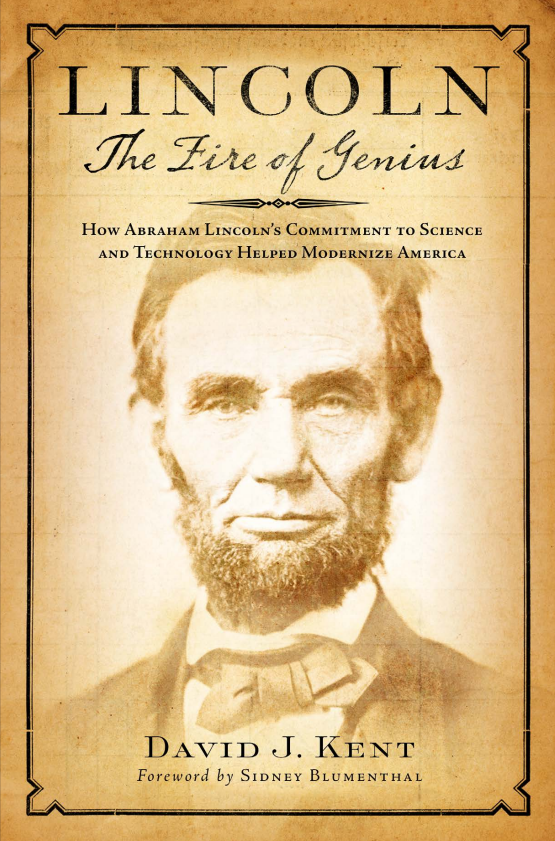
[Adapted from Lincoln: The Fire of Genius, due out in September 2022]
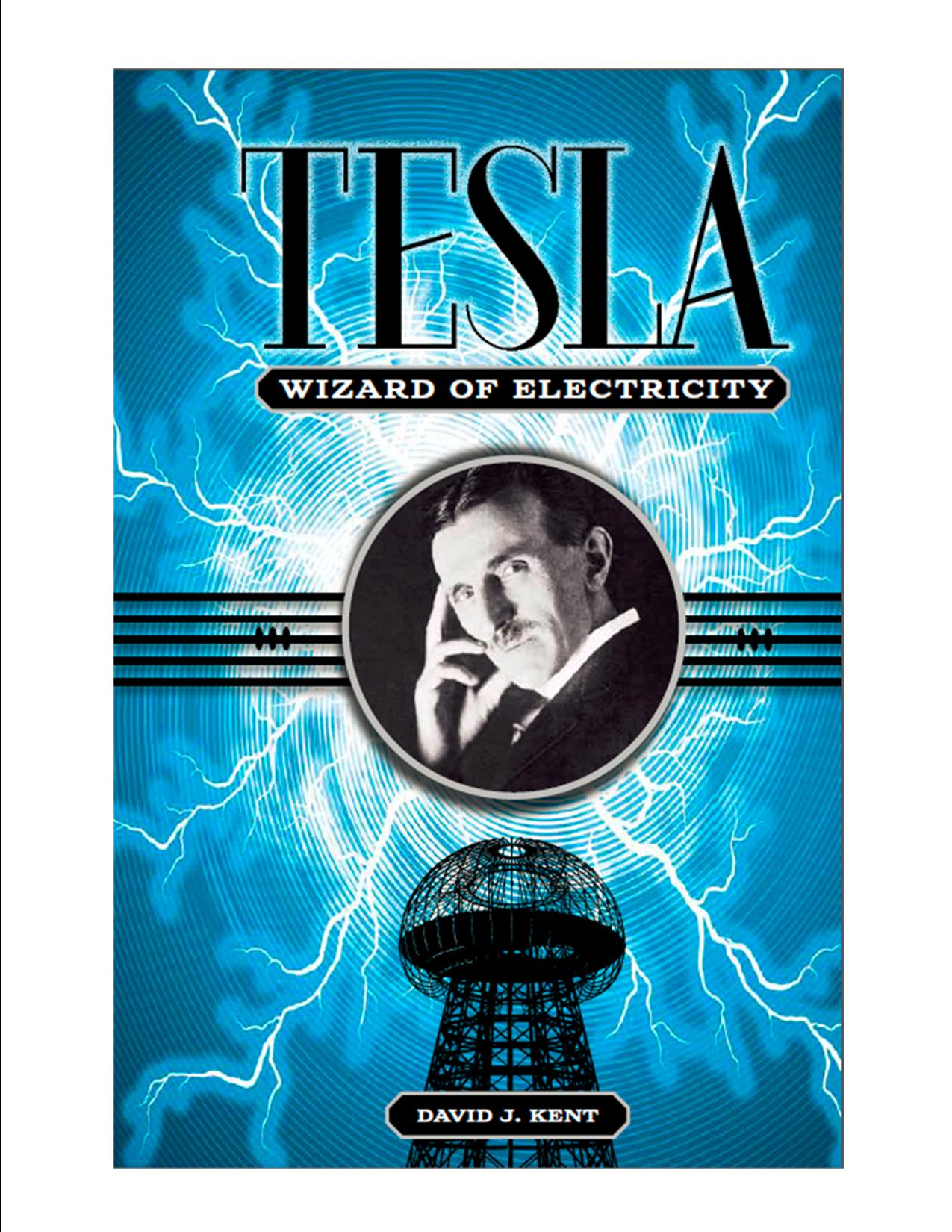
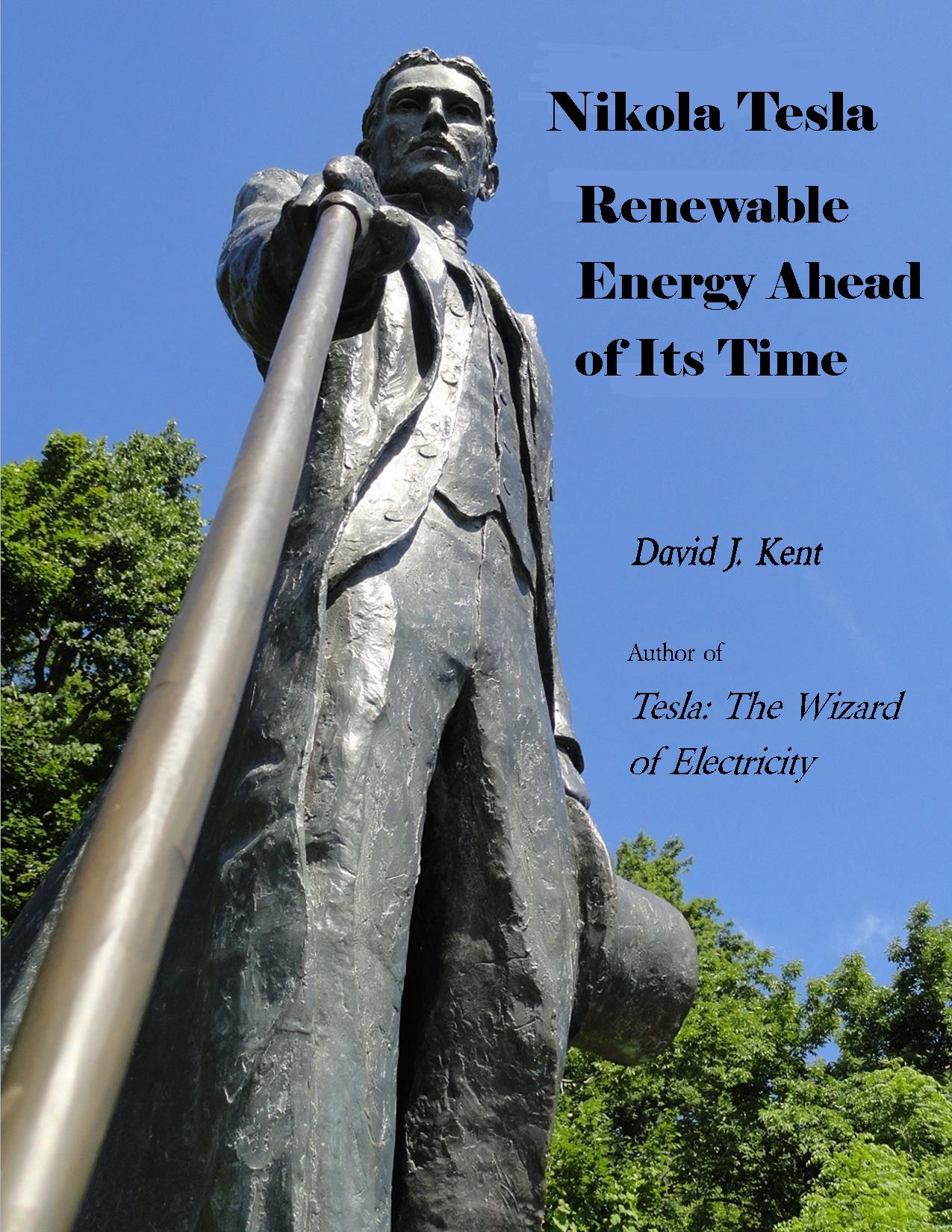
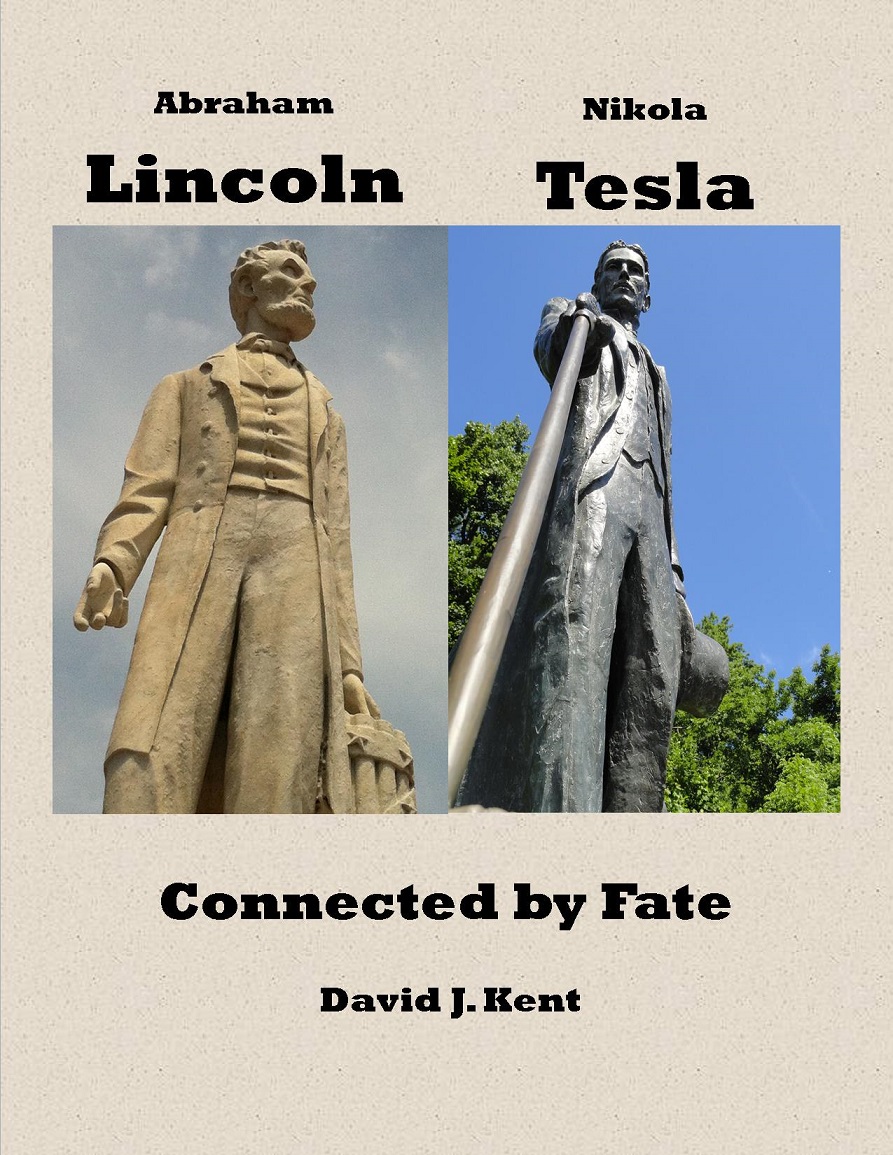
David J. Kent is President of the Lincoln Group of DC and the author of Lincoln: The Man Who Saved America. His previous books include Tesla: The Wizard of Electricity and Edison: The Inventor of the Modern World and two specialty e-books: Nikola Tesla: Renewable Energy Ahead of Its Time and Abraham Lincoln and Nikola Tesla: Connected by Fate.
Check out my Goodreads author page. While you’re at it, “Like” my Facebook author page for more updates!
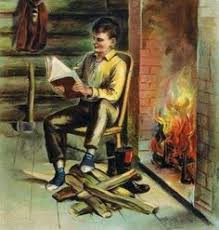 “Upon the subject of education,” Abraham Lincoln wrote in his Communication to the People of Sangamo County in 1832, “I can only say that I view it as the most important subject which we as a people can be engaged in.”
 Lincoln took a scientific approach to military strategy. The Anaconda plan’s focus was on securing the coastlines and the Mississippi River. Recognizing New Orleans as the hub of the cotton trade and commerce, Lincoln saw it as the first port to be targeted for blockade. He also hoped to block southern ship traffic from Charleston, South Carolina to cut off Confederate attempts to woo Great Britain and France to their side. Helping him make this happen was Alexander Dallas Bache and the Coast Survey. The Coast Survey had been authorized by Thomas Jefferson, and Bache, who was Benjamin Franklin’s great-grandson, was quick to send nautical charts of the Chesapeake Bay to Lincoln. He also forwarded two terrestrial maps produced by the Survey that had far-reaching influence on Lincoln’s decisions on emancipation and military strategy.
 Abraham Lincoln spoke these words in a speech generally referred to as the
 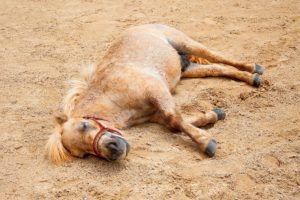 I have just read your dispatch about sore tongued and fatigued horses. Will you pardon me for asking what the horses of your army have done since the battle of Antietam that fatigue anything? A. LINCOLN
 Technically, Lincoln didn’t attend the exhibition, but on this date, October 14, 1861, a committee of commissioners for the industrial exhibition in England visits President Lincoln in the White House and asks use of a government vessel to transport American contributions to the fair. Lincoln had supported United States participation.
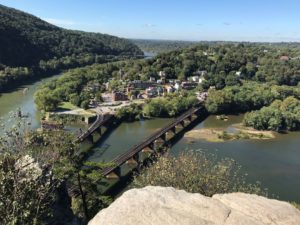 President Lincoln took a special train to Harpers Ferry on October 1, 1862. I drove my car to the National Park Service visitors center on October 1, 2021. Lincoln reviewed the troops on Bolivar Heights. I climbed to the overlook on Maryland Heights. One hundred and fifty-nine years separated us, but I still felt his presence.
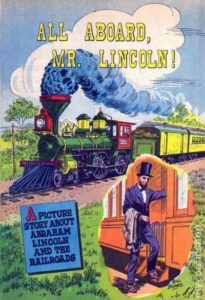 On June 23, 1854, Abraham Lincoln draws on his account at the Illinois Central Railroad. The ICRR had been a repeat source of work for the Lincoln, who had been focusing on his legal career after being relegated to the sidelines politically. He would not be in an elected position for eleven years. He did a variety of work for several railroads, but the ICRR by far was the most prolific and profitable. Still, he wasn’t making much money per case.
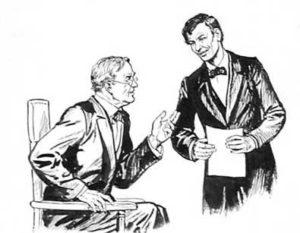 On September 10, 1856, Abraham Lincoln wrote an affidavit in a medical malpractice case that involved chicken bones. It was the first medical malpractice case in McLean County.
 I see you printed that long letter I sent you a spell ago—I’m quite encouraged by it, and can’t keep from writing again.