The Abraham Lincoln Group of the District of Columbia has a book club. And this past weekend we finished reading Herndon’s Lincoln, the book that we’ve been discussing for the last nine months. In my earlier review I noted that this particular edition of the book was greatly enhanced by the incredible editorial annotation by Douglas L. Wilson and Rodney O. Davis. Even more invaluable was the input from the book members themselves.
I should emphasize that our Lincoln Group book club includes several historians, archivists, researchers, and all-around Abraham Lincoln scholars. We also had people who had little previous knowledge of Lincoln. Each of us brought our own preconceptions, backgrounds, and opinions, which when informed further by the personal insights of Herndon and others who knew Lincoln, made for lively and sometimes surprising discussions. Arising from the three-quarter-year analysis was a much deeper understanding of both the book and Abraham Lincoln. I think everyone in the group would agree that it was a worthwhile and special experience.
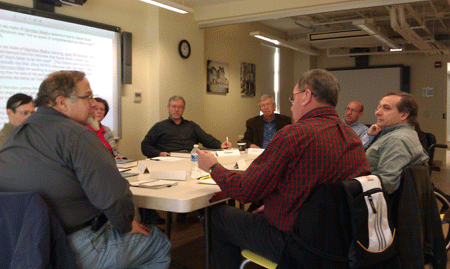
This last session was special in another sense as well. Because of a last minute scheduling conflict we were not able to use the room that has been our home base for the last nine months. Normally we meet on the 5th floor of the Ford’s Theatre Center for Education and Leadership, across the street from the famous site of Lincoln’s assassination and next to the Petersen House, where Lincoln died.
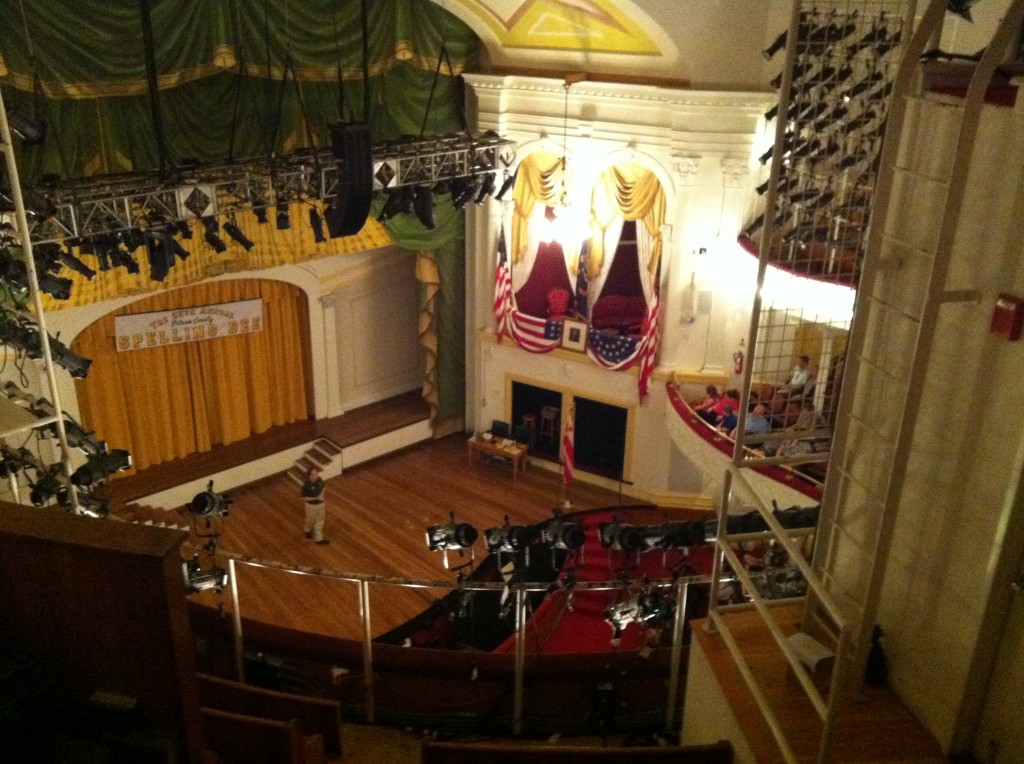
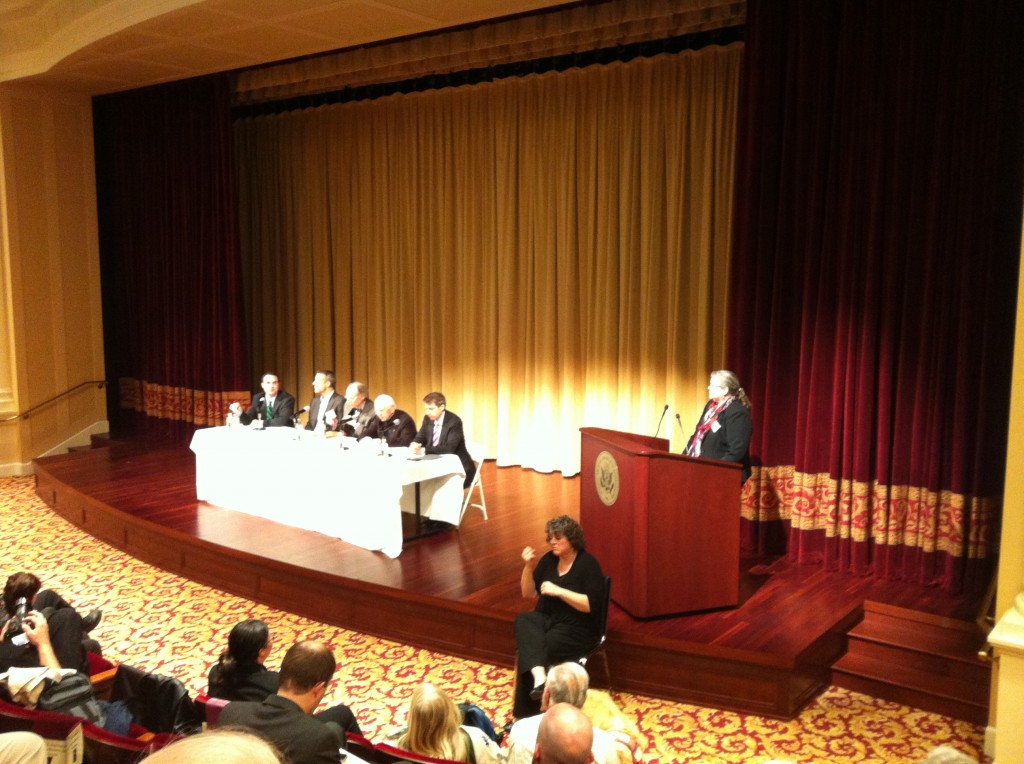
Our backup plan was Ford’s Theatre itself, or more accurately, the conference room on the top floor of Ford’s Theatre. Bypassing the lines queued up for the matinee of The 25th Annual Putnam County Spelling Bee, we found the entrance to an elegant conference room tucked into the rafters of the theater. Here is the view from the top as the audience filed in for the performance.
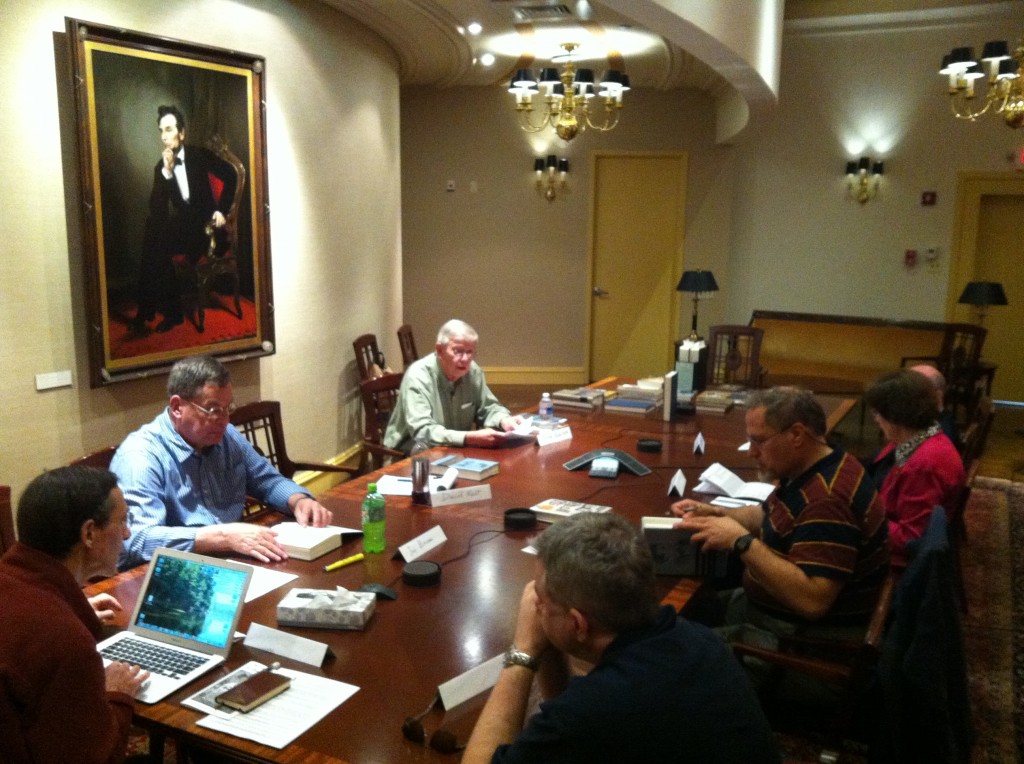
George Healey’s famous painting of Abraham Lincoln loomed over our group as we discussed the final chapters. Imagine sitting in a room discussing the motivations of the man gazing in thoughtful contemplation over your left shoulder. No, we weren’t intimidated. Much.
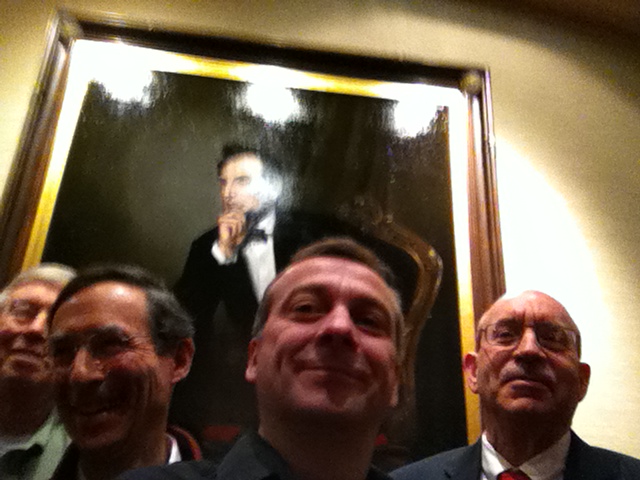
Abe did photobomb the apparently requisite selfie at such grandiose events. Left to right are John Elliff, Richard Margolies (our esteemed discussion leader), Abe, Me, and Rodney Ross.
While a bit of Lincolnesque melancholy was felt with the ending of this past year’s discussion, a new birth of excitement was in the air because we had chosen the next book for discussion – The Inner World of Abraham Lincoln by noted Lincoln scholar, Michael Burlingame. Even more exciting is that, thanks to Rod Ross, Michael Burlingame has agreed to speak to our discussion group on November 1st. Check out the LGDC site for more details as they emerge.
For those in the Washington DC area with an interest in Abraham Lincoln, please consider our Lincoln Group book club. You don’t have to be a Lincoln expert to join; you just have to read the book. It doesn’t get much easier than that. And the rewards?
Priceless!
David J. Kent is an avid Lincolnophile and the author of Tesla: The Wizard of Electricity. You can order a signed copy directly from me, download the ebook at barnesandnoble.com, and find hard copies at Barnes and Noble bookstores, as well as online at B&N.com and Amazon.com.
Follow me by subscribing by email on the home page. And feel free to “Like” my Facebook author’s page and connect on LinkedIn. Share with your friends using the buttons below.
 This is an extraordinary book, for several reasons. First, William H. Herndon was Abraham Lincoln’s law partner for sixteen years prior to Lincoln becoming President. Second, because Herndon spent several years after Lincoln’s assassination writing to and interviewing scores of people who knew Lincoln during his life and career up to the presidency. Third, because editors
 Tesla world has been equally busy. I continue to work on the Tesla and Renewable Energy ebook I expect to release in June. The ebook format will keep the cost low and allow reaching out to the large number of people who haven’t yet discovered the great inventor. Meanwhile, the second printing of my
  I’ve been documenting on these pages some of the highlights of my February 2014 trip to
 Abraham Lincoln lived in the White House from March 1861 until his assassination in April 1865. Or did he? In fact, he spent most of the summer months of 1862 through 1864 – about a quarter of his presidency – living in the Soldier’s Home. Author Elizabeth Smith Brownstein gives us a fascinating, as well as delightful, look at Lincoln’s Other White House.
 Put two hundred Abraham Lincoln scholars and followers in a room and what do you get? On March 22, 2014 you get the 17th Abraham Lincoln Institute Annual Symposium highlighting the latest in Lincoln scholarship. The day-long symposium featured five speakers discussing their latest books, and the audience included some of the biggest names in the field.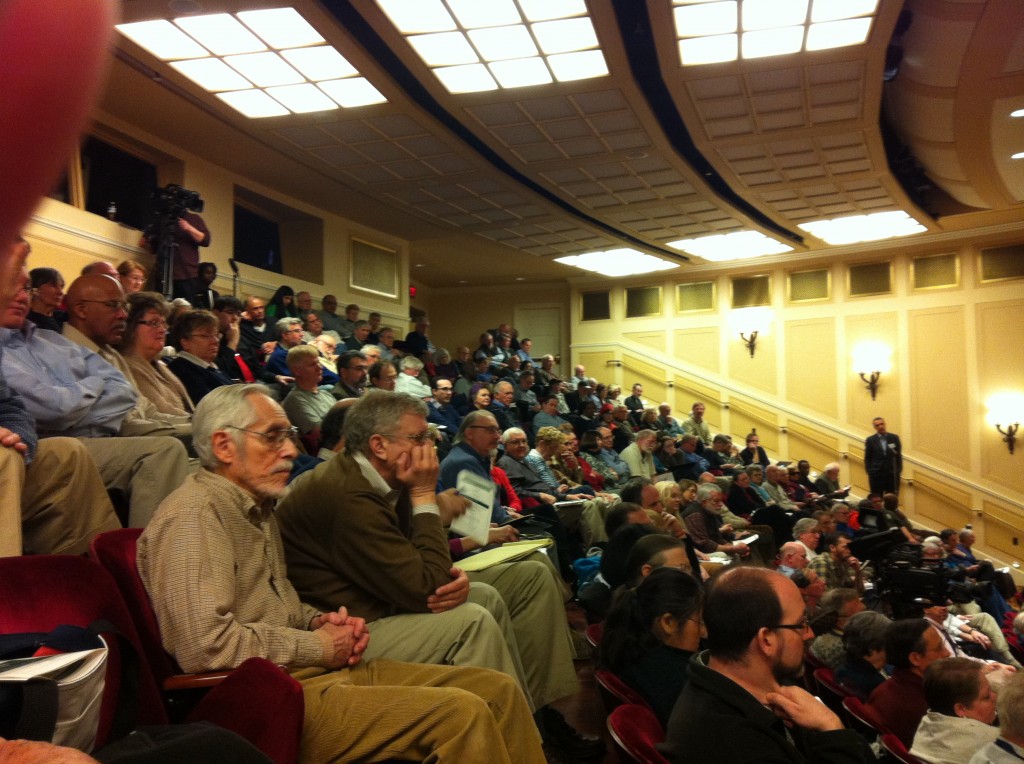
 This 1992 book is somewhat uneven and could have used some better editing, but it does provide some excellent insights into Abraham Lincoln’s rhetorical style. The author, Lois J. Einhorn, was an Associate Professor of Rhetoric at the State University of New York.
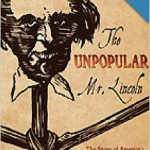 This book, The Unpopular Mr. Lincoln: The Story of America’s Most Reviled President, is a rather extraordinary look at Abraham Lincoln. And a remarkably pleasant surprise given the uncustomary view of Lincoln, as well as the providence of the author. Larry Tagg is not whom you might expect to be writing a biography of Abraham Lincoln. Some will recognize the name from the music world and Tagg’s band Bourgeois Tagg, or from his many years touring with Todd Rundgren, Hall & Oates, and opening for Robert Palmer, Belinda Carlisle and others. Now a high school English and drama teacher in California, Tagg surprises the reader with his deep understanding of Lincoln and his times. And he tackles an often overlooked and difficult facet of how Lincoln was viewed by contemporaries.
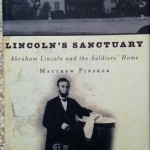 When most people think of Abraham Lincoln, they think of him toiling away in the White House, occasionally making his way to the adjoining War Department to check telegraph news from the front. Few know that Lincoln and his family actually spent much of the summers of 1862, 1863 and 1964 living at the “Soldier’s Home” and commuting daily to the White House.