 The world woke up this morning to the news of the untimely death of actor, comedian, and humanitarian Robin Williams. Having been a fan of his since his first appearance as Mork on the sitcom Happy Days, before he spun the character off into his own show Mork and Mindy, his demise comes as a shock. The world mourns.
One of the ways many people are honoring his life’s work is by posting a clip of Williams from the movie Dead Poet’s Society. It features a passage from Walt Whitman’s extended metaphor poem, “O Captain! My Captain!”
It’s a poignant moment in the movie. It’s also a poem Whitman wrote about the death of Abraham Lincoln.
Walt Whitman lived in Washington during the Civil War and often watched President Lincoln ride by horseback, later by carriage, to and from his summer living quarters in the Soldier’s Home (now called the Lincoln Cottage). He admired Lincoln, and after the assassination Whitman composed “O Captain! My Captain!” to mourn the loss of such a great man. According to the Wiki article:
The captain in the poem refers to Abraham Lincoln who is the captain of the ship, representing the United States of America. The first line establishes a happy mood as it addresses the captain. The phrase “our fearful trip is done” is talking about the end of the Civil War. The next line references the ship, America, and how it has “weathered every rack”, meaning America has braved the tough storm of the Civil War, and “the prize we sought”, the end of slavery, “is won”. The following line expresses a mood of jubilation of the Union winning the war as it says “the people all exulting”; however, the next line swiftly shifts the mood when it talks of the grimness of the ship, and the darker side of the war. Many lost their lives in the American Civil War, and although the prize that was sought was won, the hearts still ache amidst the exultation of the people. The repetition of heart in line five calls attention to the poet’s vast grief and heartache because the Captain has bled and lies still, cold, and dead (lines six through eight). This is no doubt referencing the assassination of Abraham Lincoln and Whitman’s sorrow for the death of his idol.
Such a sad, yet exalting, eulogy for the fallen President. And somehow, a fitting elegy for the tormented Robin Williams. Such a trial was his internal life; such a treasure was his gift to all of us.
As Williams’ character in Dead Poet Society puts it, the poem encourages us to think:
That you are here—that life exists, and identity;
That the powerful play goes on, and you will contribute a verse.
This begs the question: “What will your verse be?”
Robin Williams’ verse was cut short. For us the living, our verse is still to be written.
David J. Kent is a lifelong Lincolnophile and is currently working on a book about Abraham Lincoln’s interest in science and technology. He is also the author of Tesla: The Wizard of Electricity and an ebook Nikola Tesla: Renewable Energy Ahead of Its Time.
 Abraham Lincoln and Charles Darwin were born on the same day, February 12, 1809. Both became icons of change and are will be remembered throughout history for their contributions. The book is subtitled: Shared Visions of Race, Science and Religion. While their views were not so much shared as contrasted, author James Lander deftly flips back and forth between Darwin’s and Lincoln’s lives as they experience their separate travels, coming of age, development of ideas, and eventual breakthroughs into the public eye as they dramatically change history.

 Everyone knows Abraham Lincoln, in part because of the diligent work done by his two secretaries – John G. Nicolay and John Hay. But little has been done to illuminate the two men themselves. Zeitz has done us all a favor by accomplishing just that.
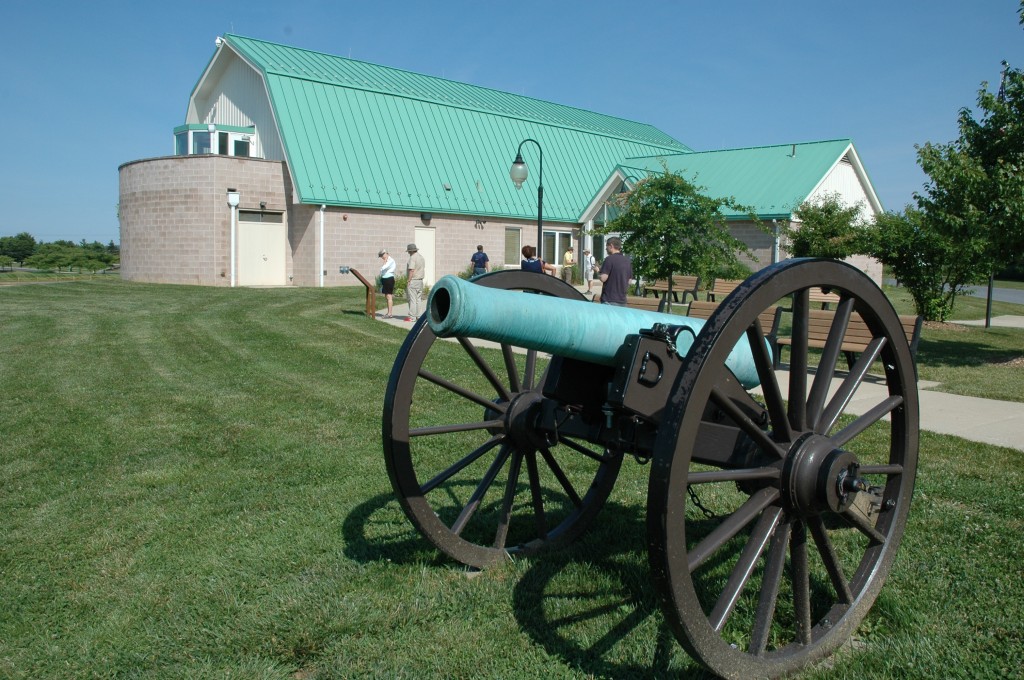
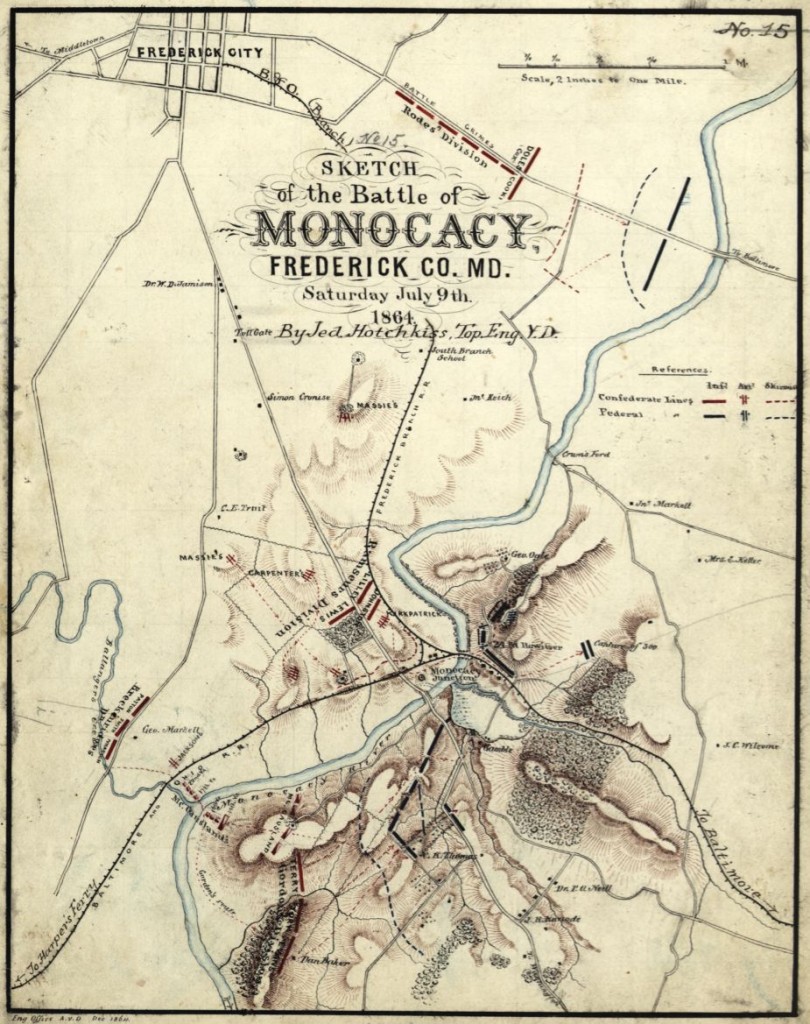

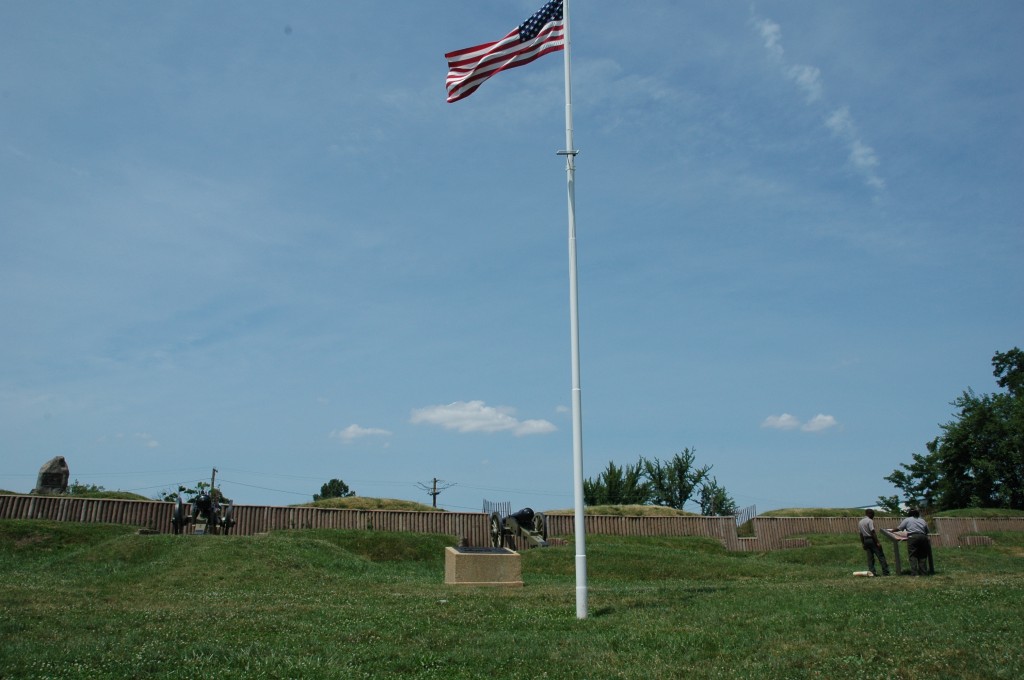 After a delightful open-air lunch at the Urbana Park, we were on to Fort Stevens. Located inside the District line from Silver Spring, Maryland (and not far from the modern day horror of the “DC sniper”), Fort Stevens is a series of low dirt mounds lined with Union cannon. Here was not only the repelling of Early’s forces but the site of one of Abraham Lincoln’s most famous incidents.
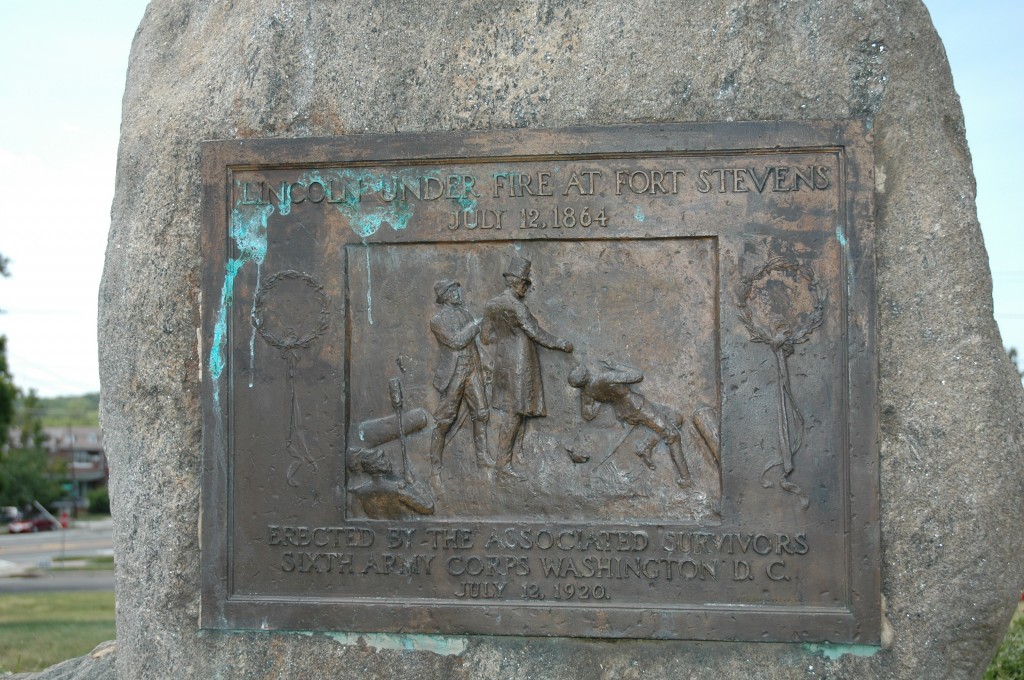 Living not far away at the Soldier’s Home, Lincoln had decided to see the action first hand. Ignoring the risk, Lincoln stood his 6-foot, 4-inch frame (plus tall top hat) on top of the mound to get a view. A medical officer standing beside him was hit with a bullet, after which the infamous (and possibly apocryphal) line was blurted out: “Get down you fool.” Whether it was this or a more respectful imploring for the President to get out of the line of fire we will likely never know, but thankfully he did get down and was unharmed.
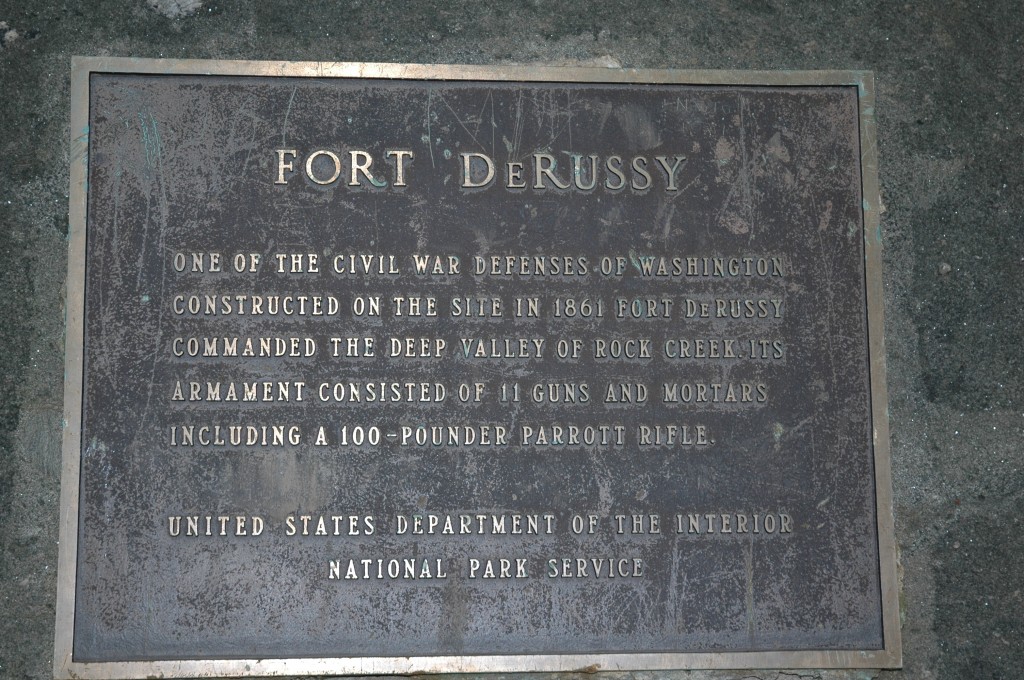 Our last stop was at Fort DeRussy, another of the small forts that served as a perimeter around Washington DC during the war. Earthenwork like Fort Stevens, DeRussy also boasted a “100-pounder,” a rifled Parrott cannon that could fire accurately for up to 4 miles.Many thanks to Craig Howell for being such a fantastic and knowledgeable tour guide, to Beltway Transportation for the comfortable bus and daring driver, and to Karen Needles, Susan Dennis, and everyone else in the Lincoln Group who arranged the tour. As the saying goes, a great time was had by all.
 Founded in 1935, the Lincoln Group of the District of Columbia (LGDC) has been instrumental in celebrating the life and times of our 16th President – Abraham Lincoln. And now LGDC is going digital. Yes, Abraham Lincoln has a
 It’s been a busy weekend/week/month/year. On this site I write about Nikola Tesla, Abraham Lincoln, Travel, and Aquariums, but I also write on other sites and I’ll be adding more sites shortly. At the same time I’ll be consolidating. Make sense? Keep watching this space for more information.
 I have a lot of
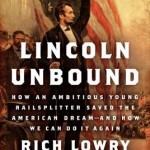 Two books in one. The first works; the second doesn’t.
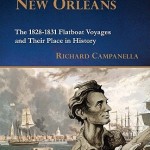 An exceptionally well researched book recreating Abraham Lincoln’s flatboat trips to New Orleans. Campanella is an expert on New Orleans, and has expanded his expertise upstream to develop a detailed account of Lincoln’s two trips down the Mississippi River. No small feat given that the sum total of all the first person reminiscences of the trips by Lincoln and participants wouldn’t fill a page of text. Campanella’s recreation, like many efforts based on such scant direct information, is not however contrived in the least. On the contrary, the effort he has put into collecting and analyzing fragmented – and often contradictory or dubious – accounts is exemplary.