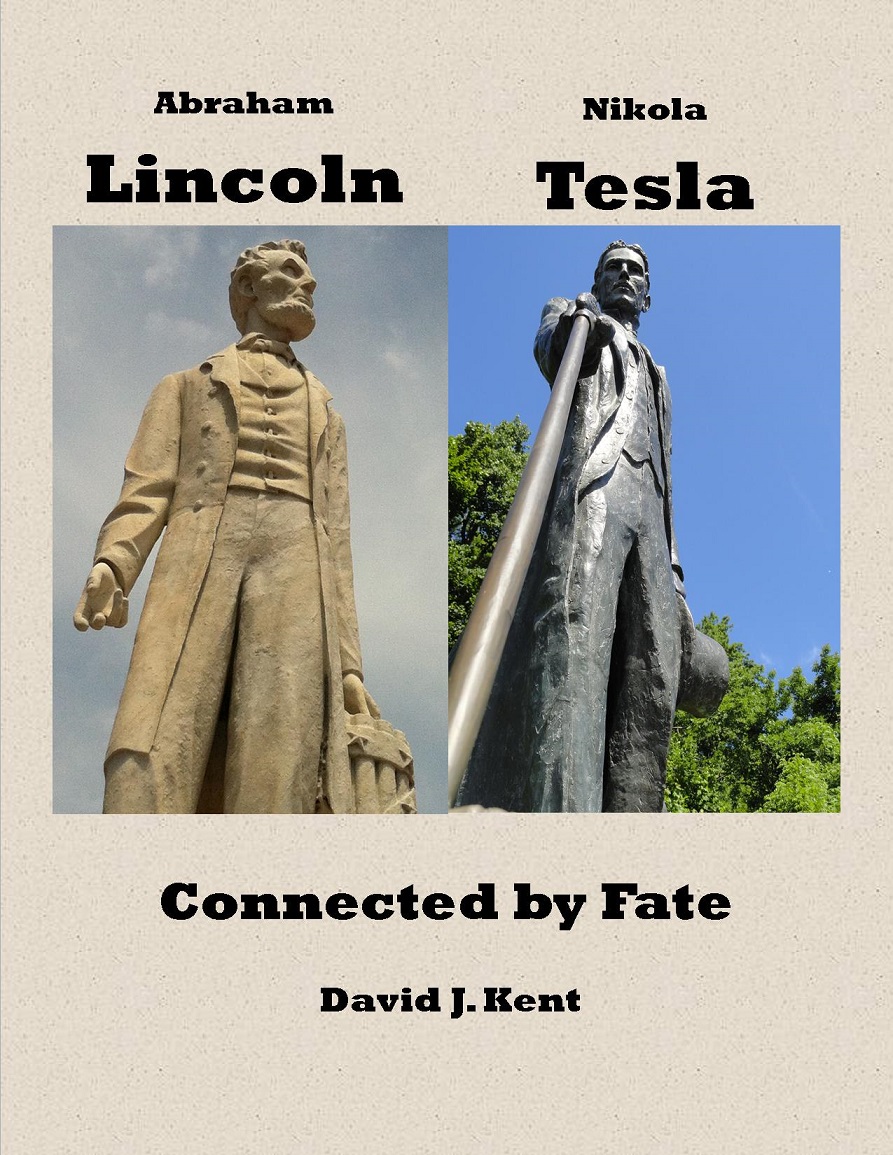
 Mary Todd, the future Mary Lincoln, was born on December 13, 1818 in Lexington, Kentucky. She would go on to become one of the most broken-hearted, and often reviled, women in history.
The fourth of seven children, Mary Todd was born into a wealthy slave-holding family. Her mother died when she was only 6 years old. Within two years her father, Robert Smith Todd, remarried and had another nine children with his new wife. Mary Todd and her siblings all had difficult relationships with their stepmother, who essentially ignored them while favoring her own growing brood. Despite these difficulties, Mary grew up in comfort and privilege. The celebrated statesman Henry Clay owned a plantation called Ashland down the road from the Todd household. When she was 13, Mary rode her new pony to Ashland, and Clay, the perennial presidential candidate, noted to his guests, “If I am ever President I shall expect Mary Todd to be one of my first guests.” The precocious Mary said she would enjoy living in the White House.
Robert Todd was rather progressive for a nineteenth-century southern slave owner, and he encouraged his daughters as well as sons to get an education. In part because her stepmother wanted her out of the way, 14-year-old Mary was sent to live at Madame Mantelle’s finishing school for young ladies. There she received a classical education that concentrated on French and literature. She became fluent in French and also studied dance, drama, music, and, of course, the social graces needed to attract a suitable husband. Unlike most women of the time, she also took a keen interest in politics, becoming both knowledgeable and ambitious—and Whiggish. But like all women, politically she had to live vicariously through her husband.
In the fall of 1839 Mary moved from Kentucky to Springfield to live with her older sister Elizabeth, who had married Ninian W. Edwards, son of the former Governor of Illinois. The Edwards home was the center of Springfield’s social scene, and given that the city had far more single men than eligible women, their home was the place to shop for a well-heeled husband. Mary was in her element. Her advanced education gave her the advantage of choosing which of her many suitors she might spend time with, among them Stephen A. Douglas and Abraham Lincoln.
Although Lincoln’s six-foot-four-inch lankiness towered over Mary’s five-foot-two-inch roundness, the two began courting over the winter of 1839–40. The courtship was somewhat one-sided. Lincoln remained a rough, uncouth, awkward man who alternated between sitting quietly and blurting out inappropriate faux pas. He was charmed by Mary’s knowledge and wit, often staring at her in apparent awe as she led the conversation. Still, she saw something in him and their unlikely courtship blossomed…and eventually became engaged.
A Hiatus
And then they stopped. Somewhere between late 1840 and early 1841 they abruptly, although mutually, called off the engagement. Many agreed that Lincoln backed out, fearing he could not suitably meet any wife’s needs as a husband because of his distracted nature. Whatever the reason, they were no longer courting throughout 1841 and into 1842.
Marriage and Family
Sometime in 1842 Mary and Lincoln began secretly courting again. To the astonishment of the Springfield social set, Lincoln and Mary suddenly decided they would get married—that night. Elizabeth Edwards claimed the wedding occurred with only two hours’ notice, and indeed the marriage license was issued that very day. Lincoln had a “deer in the highlights” look as he approached the hurried ceremony in the Edwards parlor. According to friends, when Lincoln was dressing for ceremony he was asked where he was going, to which he replied, “I guess I’m going to hell.” At least one Lincoln scholar believes Mary may have seduced Lincoln the night before into doing something that obligated him to marriage. Whatever the reason, they were married on November 4, 1842. A week later he seemed resigned to the fact, closing a business letter with, “Nothing new here except my marrying, which to me, is matter of profound wonder.”
A Sad Life
Mary lived a life of recurring sadness. Her husband spent six months out of every year on the circuit, traveling from town to town as a lawyer…that is, when he wasn’t away as a state legislator, then U.S. Representative, or stumping for other candidates. Their son Eddy died as a toddler. Willie would die in the White House. And then the tragedy of having her husband assassinated next to her as they watched Our American Cousin at Ford’s Theatre. [Tragedy would extend to their companions that night: Major Henry Rathbone would later kill his then-fiancée, Clara Harris and spend the rest of his days in an insane asylum.] Mary would find herself in an asylum as well, put there by her only remaining son, Robert, as her life spiraled out of control. Eventually she would settle with her sister in Springfield, where she would die of a stroke on July 16, 1882, passing away in the very same house where she and Abraham Lincoln had been married so many years ago.
By the way, Mary never went by Mary Todd Lincoln. She was Mary Lincoln or Mrs. Lincoln. Only after her death did her family, the still influential Todds of Kentucky, start referring to her at Mary Todd Lincoln in an effort to firmly connect the wealthy family to the Lincoln name.
[Adapted from Lincoln: The Man Who Saved America]
David J. Kent is an avid science traveler and the author of Lincoln: The Man Who Saved America, in Barnes and Noble stores now. His previous books include Tesla: The Wizard of Electricity and Edison: The Inventor of the Modern World and two specialty e-books: Nikola Tesla: Renewable Energy Ahead of Its Time and Abraham Lincoln and Nikola Tesla: Connected by Fate.
Check out my Goodreads author page. While you’re at it, “Like” my Facebook author page for more updates!
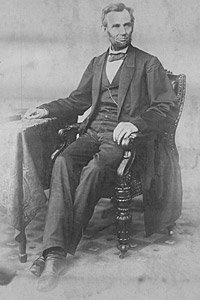 Abraham Lincoln may have been a “merely country lawyer,” as some of his critics avowed, but he had many far-reaching interactions with the U.S. Supreme Court that changed the face of jurisprudence. I’m reminded of this today because on December 6, 1864, Lincoln nominated former Treasury Secretary, and constant foil, Salmon P. Chase to be the next
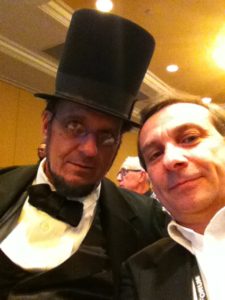 A funny thing happened on the way to the Lincoln Forum. After a career as a scientist, I became a Lincoln historian. And in a few days I’ll have the chance to join 300 of my colleagues at the annual Abraham Lincoln Forum.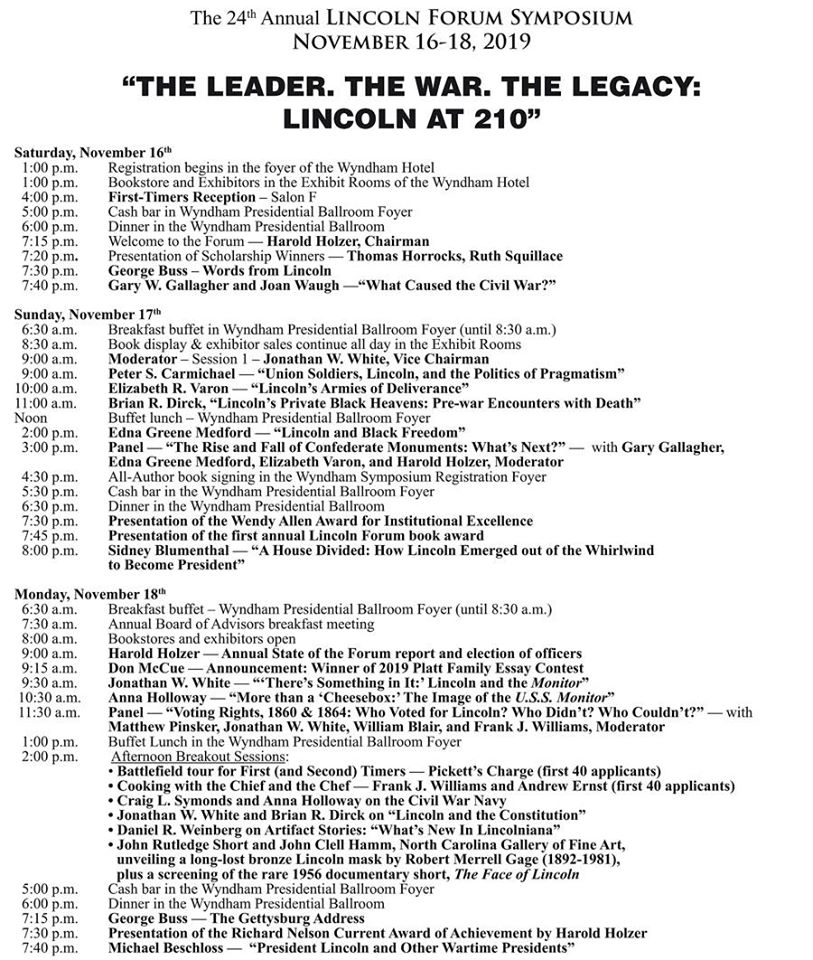
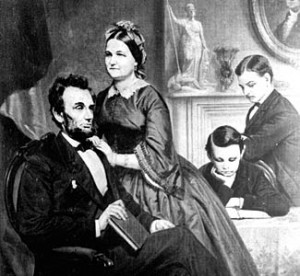 Abraham Lincoln married Mary Todd on November 4, 1842. It came as a surprise to many, possibly even Lincoln himself.
 In October 1861, California Chief Justice Stephen Johnson Field reportedly sent a message to Abraham Lincoln via the newly completed transcontinental telegraph. The event was a milestone that predated the later transcontinental railroad.
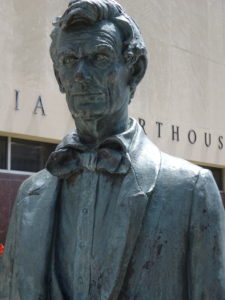 On October 18, 1854 Lincoln rose to the forefront of the Republicans with a speech he gave first in Springfield, and then a dozen days later in


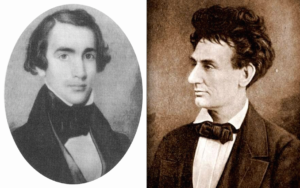 On September 27, 1841, Abraham Lincoln wrote a letter to